Tree services
Tree removal
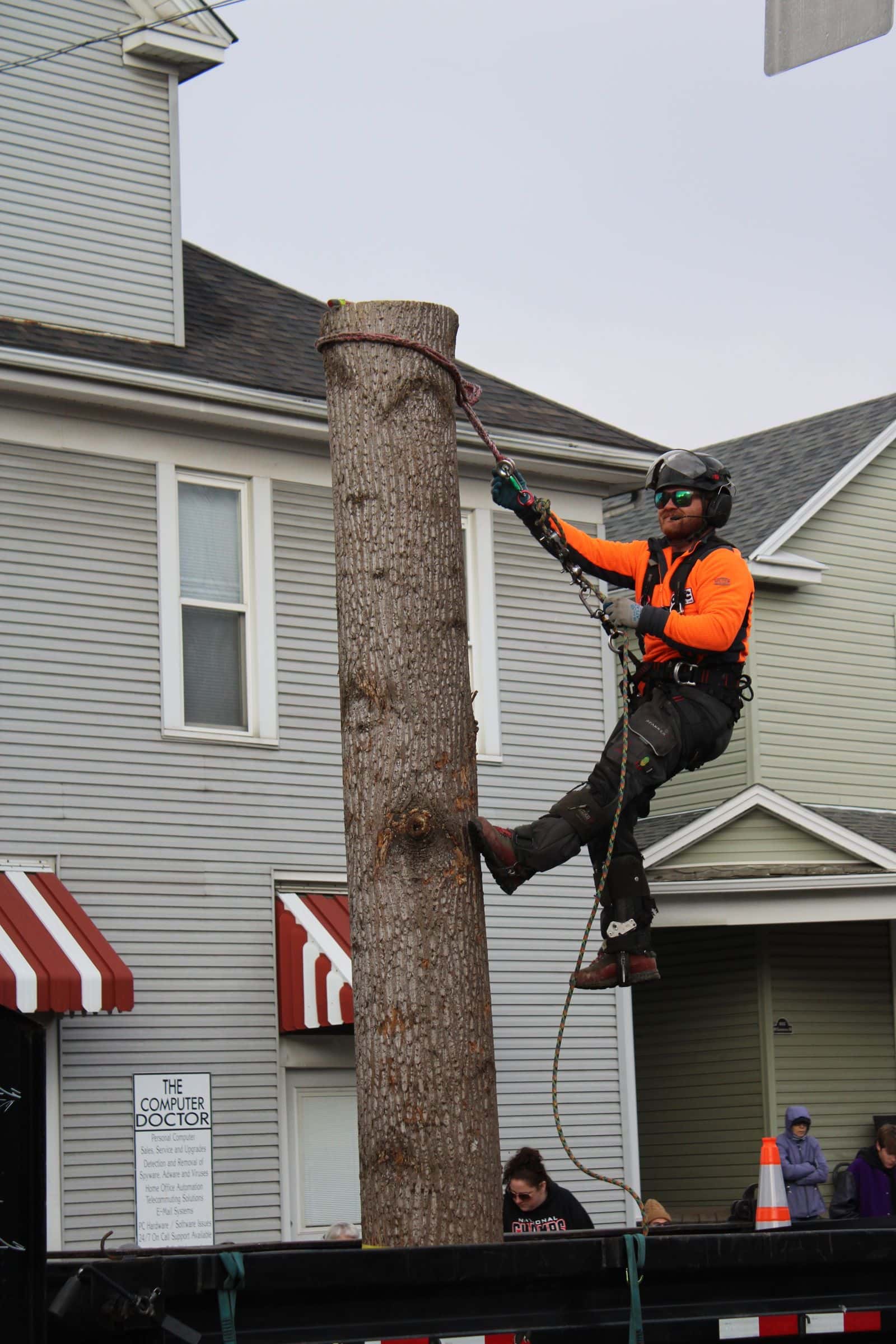
Tree removal is cutting down a tree and hauling it away. Near houses, fences or wires, that usually means climbing or lifting the tree and taking it down in sections rather than felling it whole. It's the right choice when a tree is dead, structurally failing, or causing damage that pruning can't fix.
Reviewed and updated
Signs a tree may need to come down
- The tree is dead, or more than about half of the crown is dead or bare in the growing season.
- There are large cracks, a split between two main trunks, or a cavity that's hollowing the trunk.
- Mushrooms or conks are growing at the base or on the roots, which often signals root or butt rot.
- The tree has started to lean recently, especially with soil heaving or cracking on the opposite side.
- It's damaging a structure or utility in a way that pruning or root work can't solve.
Removal or a lesser fix? Alternatives worth comparing
Removal is final, and a mature tree takes decades to replace. Before committing, compare the options with an arborist:
One large dead limb
- Possible alternative
- Deadwood pruning
- When removal still makes sense
- Dead wood throughout the crown
Branches over the roof
- Possible alternative
- Clearance pruning or crown reduction
- When removal still makes sense
- The trunk itself leans over the house
Weak fork between two trunks
- Possible alternative
- Cabling and bracing
- When removal still makes sense
- The fork is already cracked
Roots lifting a walkway
- Possible alternative
- Root pruning or rerouting the path
- When removal still makes sense
- Cutting roots would destabilize the tree
Three ways a tree comes down
The method depends on space, the tree's condition and what's underneath. It's the biggest single factor in how long a removal takes.
Felling in one piece
- When it's used
- Open ground with room for the full height to land
- What it means for you
- Fastest; needs a clear drop zone and some lawn repair
Sectional removal by climber or lift
- When it's used
- Near houses, fences, wires or other trees
- What it means for you
- Pieces are cut and lowered on ropes; slower but controlled
Crane-assisted removal
- When it's used
- Big, heavy or decayed trees over structures, or no room to lower wood
- What it means for you
- Each piece is held by the crane before it's cut; needs setup space. See [large tree removal](/services/large-tree-removal/)
How a removal job runs from quote to cleanup
- 1
Assessment and quote
The company looks at the tree, the drop zone, access for equipment, and nearby targets like the roof, wires and fences. The written quote should say what's included.
- 2
Permits and utilities
If your jurisdiction requires a permit, it's secured first. If the tree is near power lines, the utility may need to make the line safe before anyone climbs.
- 3
Removal
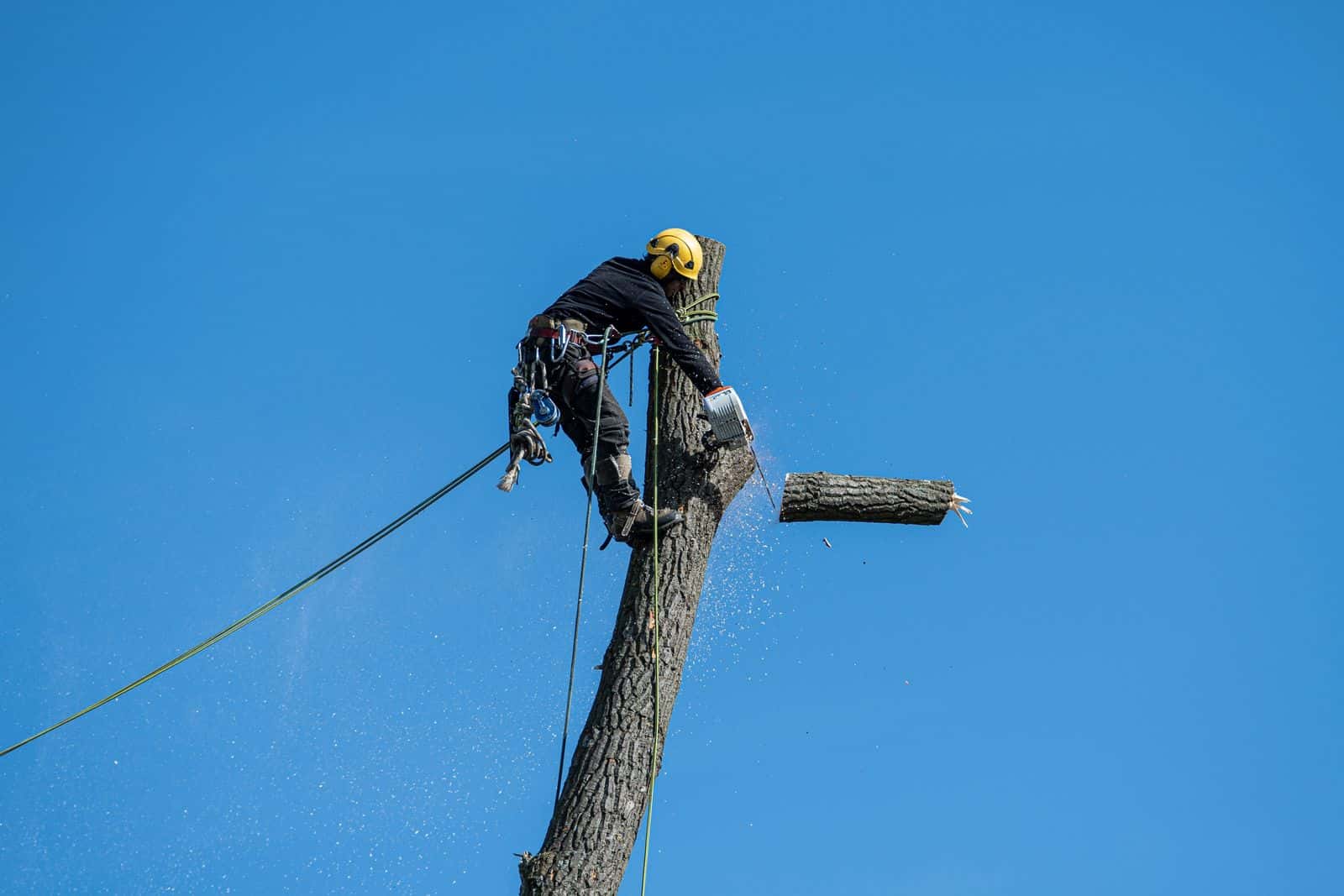
Limbs come off first, then the trunk in sections. Pieces are lowered on ropes or lifted out with a crane. Ground crew keep everyone out of the drop zone.
- 4
Cleanup
Brush is chipped, wood is hauled or left as agreed, and the site is raked. The stump is cut low unless grinding is part of the job.
What moves the price of a removal
Removal prices vary more than almost any home service, because two trees of the same height can be completely different jobs. The quote is mostly a measure of time, risk and equipment:
- Height and trunk diameter, which set how much wood there is and how long the job takes
- What's underneath: a tree over a house or power line needs slow, rigged sectional work
- Access. Whether a bucket truck or crane can reach it, or everything has to be carried out by hand
- Condition. Dead or decayed wood is less predictable to climb and rig
- Cleanup scope: hauling all wood versus leaving firewood, and whether the stump is ground
Permits, protected trees and whose tree it is
Before price or method, settle two questions: is this tree yours to remove, and does anyone have to approve it? Most single-family yards in most U.S. cities need no permit, but the exceptions are common enough that checking takes priority over booking.
- Keep a written arborist finding if the tree is dead or dangerous; many ordinances waive or speed up permits for documented hazards.
- Florida is a special case: state law lets owners of residential property remove a tree an arborist documents as dangerous without a local permit.
- The tree removal permit guide explains how to find your city's rule in a few minutes.
Tree between the sidewalk and street, or in a parkway
- Who decides
- Usually the city or park department
- What to check
- Many cities own these trees; removing one yourself can bring a fine. See [New York City](/tree-removal/new-york/new-york-city/) or [Minneapolis](/tree-removal/minnesota/minneapolis/)
Large or native species in a city with a tree ordinance
- Who decides
- City arborist or planning office
- What to check
- Protected size thresholds and replacement rules, as in [Austin](/tree-removal/texas/austin/) or [Atlanta](/tree-removal/georgia/atlanta/)
Trunk on the property line
- Who decides
- Both owners
- What to check
- Shared trees generally need both owners' consent
Condo, townhome or HOA community
- Who decides
- The association
- What to check
- Architectural or landscape approval, sometimes for trees on your own lot
Tree touching power lines
- Who decides
- The electric utility
- What to check
- Only line-clearance-qualified crews may work within set distances of energized lines
What's left after the tree comes down
A quote that says "remove tree" can mean anything from cutting it to the ground and leaving everything, to a clean lawn with no trace of the tree. Ask which of these are included, because they're often priced separately:
- Stump: left a few inches above grade unless stump grinding is added. Grinding leaves chips and a shallow depression; it doesn't remove the main roots.
- Wood: hauled away, cut into firewood lengths and stacked, or left in rounds. Hauling is a large share of the cost on big trees.
- Lawn and soil: ruts from equipment, a sunken spot where the stump was, and a patch of lawn that will now get full sun.
- Nearby trees: neighbors that grew up shaded can sunscald or catch more wind once a big tree is gone.
Tree removal questions
How long does it take to remove a tree?
A small, open tree can take under an hour. A large tree over a house, taken down in rigged sections, can take a full day or more for a crew. Stump grinding and cleanup add time.
Do I need a permit to remove a tree on my own property?
Sometimes. Many cities regulate trees above a certain trunk diameter, certain native species, or trees in the strip between the sidewalk and street. Rules vary widely. Check with your city or county before any work, and see our permit guide.
Does tree removal include the stump?
Usually not. Most quotes cut the stump a few inches above the ground. Grinding it below grade is typically a separate line item, so ask for it in writing if you want it.
Can a tree be removed without damaging the lawn?
Some ruts from equipment are common, but crews can reduce them with plywood mats, smaller loaders, or by carrying wood out by hand. Discuss it before the job if the lawn matters to you.
Who is responsible if a tree company damages my property?
The company's general liability insurance should cover damage it causes. That's why you should verify the certificate of insurance before work begins, not after.
Removal rules and conditions by city
Whether a removal needs a permit, and which trees are protected, is set city by city. These pages cover the rules, common species and storm patterns where they've been researched.
Related services
- Dead Tree Removal: dead wood can't be trusted to hold a climber, which changes the method and the urgency
- Large Tree Removal: for trees over houses or too heavy to rig by rope, usually with a crane
- Stump Grinding & Removal: almost always a separate line item; decide before the crew leaves
- Tree Risk Assessment: an independent opinion before you remove a tree you'd rather keep
Need help with a tree?
Call to speak with a local tree-service provider about removal, trimming, stumps or storm damage. Describe the tree and what it's near, and they'll explain the next step.