
Fort Worth, TX · Tarrant County
Tree removal in Fort Worth
Fort Worth's native post oaks and blackjack oaks, plus spring hail, downbursts and ice, drive most tree calls. Single-family lots under an acre are exempt from the city's private tree-removal permit, and owners may remove one dead, dying, diseased or hazardous tree a year without notifying the city.
Post oaks are the signature tree of older Fort Worth neighborhoods and the city's western edge. They're long-lived but notoriously sensitive to root disturbance; construction, grade changes or new driveways can trigger decline years later. Live oaks and red oaks bring Texas oak wilt into the picture as well.
The February 2021 winter storm damaged many less cold-tolerant trees across Tarrant County, and spring storms regularly bring large hail and straight-line winds. Clay soils east of the city swell and shrink, which stresses roots through wet and dry cycles.
Reviewed and updated
Post oaks, hail and oak wilt
Post oak sensitivity
Cross Timbers post oaks decline after root disturbance from construction, trenching or grade changes.
Hail and downbursts
Spring storms strip leaves and snap limbs across the metro.
Oak wilt
Live and red oaks in the area are at risk; follow Texas oak pruning timing.
Winter freezes
The February 2021 freeze damaged less hardy species and stressed many others.
Old alley lots and new edge subdivisions
Older neighborhoods like Arlington Heights and Fairmount have alley-served lots with mature trees; newer subdivisions on the edges have larger lots, younger trees and construction-disturbed post oaks.
In new subdivisions, post oaks left standing during construction often begin declining a few years later. If you bought a newer home with large post oaks, an early check can catch root damage before limbs start dropping.
Post oak, live oak and pecan: what each one needs
Post oak
- Main sensitivity
- Root disturbance, grade changes, compaction
- Care priority
- Keep construction, parking and new watering patterns away from its roots
Live oak
- Main sensitivity
- Oak wilt through wounds and shared roots
- Care priority
- Prune July through January; paint every wound
Pecan
- Main sensitivity
- Heavy limbs that break in storms
- Care priority
- Deadwood removal and weight reduction on long limbs over roofs
Fort Worth's tree permit rules
- Fort Worth requires a Development Services tree removal permit for private land, except single-family residential property under one acre, which is exempt.
- Single-family owners on lots under one acre may take down one dead, dying, diseased or hazardous tree per year without notifying the city.
- The Park & Recreation Department oversees trees on city property and in public rights-of-way.
Sources (checked 2026-10-01)
Rules change and details depend on your exact property. Confirm with the city or county before work starts. This isn't legal advice.
Post oaks, live oaks, pecans and cedar elms
- Post oak
- Native Cross Timbers oak; sensitive to root damage
- Live oak
- Common yard tree; oak wilt risk
- Pecan
- Large, heavy limbs; storm breakage
- Cedar elm
- Tough native street tree
- Bradford pear
- Splits as it matures
The February 2021 freeze: trees that never fully recovered
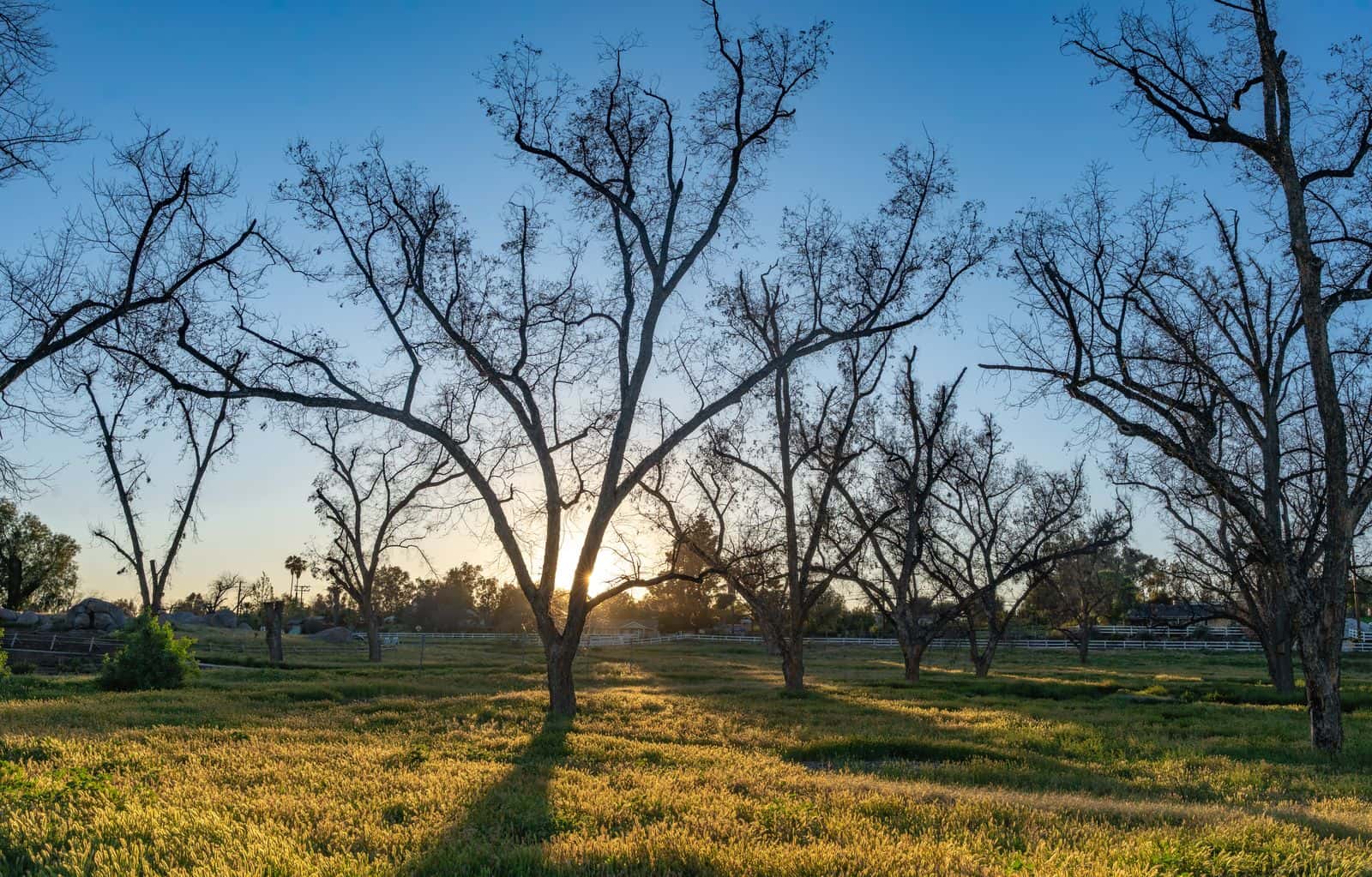
The 2021 winter storm brought days of hard freeze to Tarrant County. Many trees leafed out late that spring and looked fine afterward; others, especially less cold-hardy species and already-stressed trees, have declined since.
If a tree has had thin crowns and dead branch tips every year since, freeze injury combined with drought may be the cause. An arborist can tell whether it's recovering slowly or failing.
Fort Worth services and the trees behind them
Declining post oaks and storm-damaged trees.
Oak pruning on the oak wilt calendar.
Hail and downburst damage.
Post oaks near new construction.
After removals on single-family lots.
Fort Worth questions
Do I need a permit to remove a tree on my Fort Worth home lot?
Not if it's a single-family lot under an acre; those are exempt from the private tree-removal permit. Larger lots and other property types need a Development Services permit. Right-of-way trees fall under Park & Recreation.
Why is my post oak dying after we added a driveway?
Post oaks are very sensitive to root cuts, compaction and grade changes. Decline often shows up two to five years after construction. A certified arborist can assess whether it's still safe.
Can post oaks be pruned like other oaks?
Lightly. Post oaks react badly to heavy cuts and to any work that disturbs roots, so the usual advice is minimal pruning, done in the cooler months, with nothing piled or driven over the root zone. Live and red oaks nearby still follow the state's oak wilt timing.
Calls are routed to independent local tree-service providers. How calling works
More local guides
Need tree help in Fort Worth?
Call to speak with a local tree-service provider about removal, trimming, stumps or storm damage. Describe the tree and what it's near, and they'll explain the next step.