
Tree services
Oak tree removal services
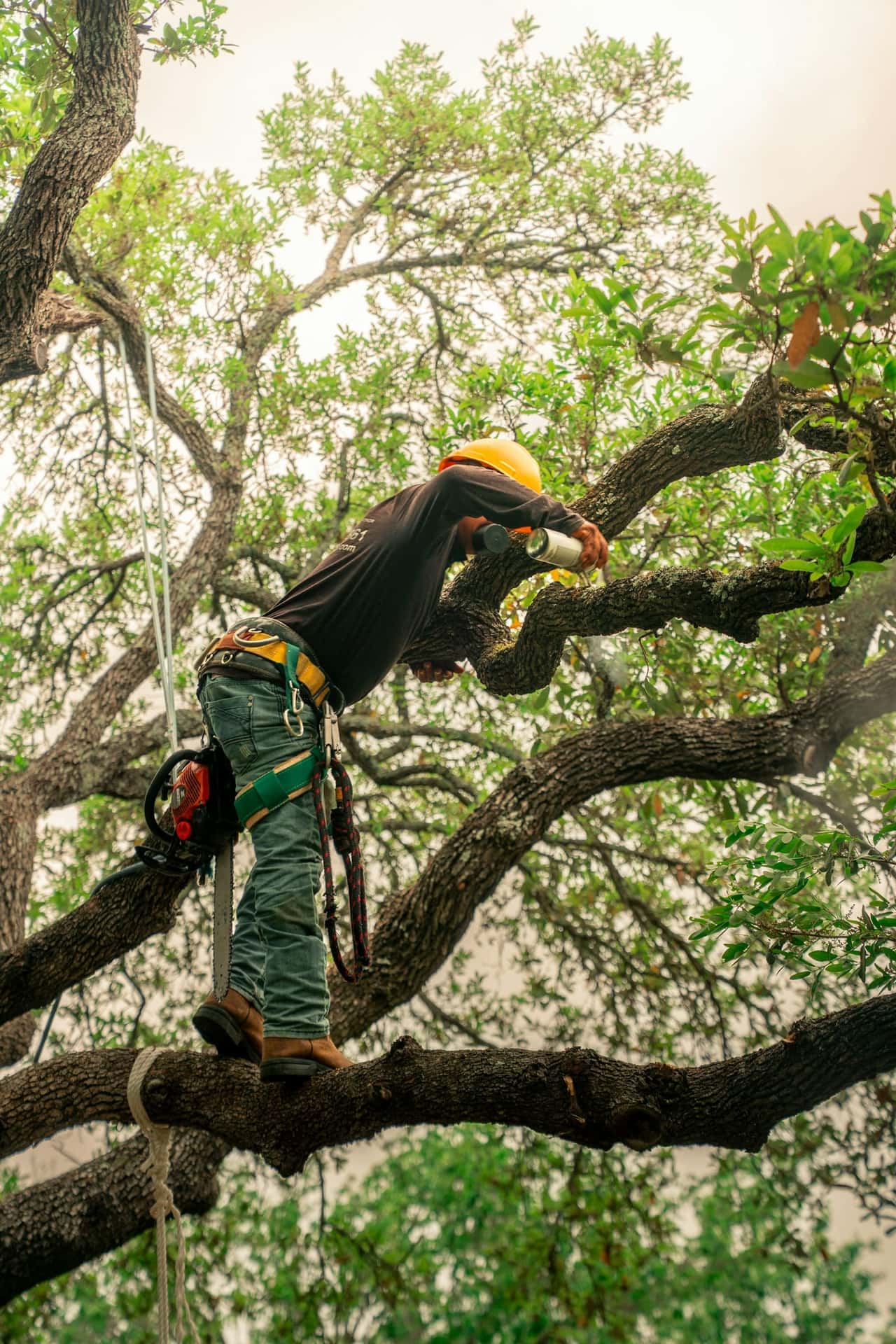
Removing an oak usually involves more rules and more rigging than other trees. Many cities protect large or native oaks and require a permit, oak wilt makes spring and early summer the worst time to cut red oaks in affected states, and oak wood is dense and heavy, so big limbs must be lowered carefully. Check the local rules before planning the removal.
By calling, you agree that your call may be recorded and routed to an independent local tree-service provider, who may call or text you back about your request. Calling is free and does not obligate you to hire anyone. See our Privacy Policy.
Who needs oak tree removal
Oaks with permits, oak wilt timing and heavy wood to plan around.
Often needed with: tree risk assessment, large tree removal, tree trimming & pruning, dead tree removal.
Call and we'll connect you with a tree-service provider for oak tree removal in your area.
Call for tree serviceWhat to confirm in a oak tree removal quote
Quotes differ mostly in what they include. Ask each provider to put these in writing so you can compare like for like:
- Who obtains the permit, and any replacement planting
- Timing relative to oak wilt season where relevant
- Rigging or crane for heavy limbs
- Wood handling: kept, milled or hauled
- Stump grinding and root barriers if oak wilt is present
Last updated
Signs an oak may need to come down
- Leaves wilt and drop in summer, browning from the edges inward (a possible oak wilt sign).
- Large dead limbs in the upper crown.
- Fungal conks or cavities at the base or on the trunk.
- Cracks or a new lean after a storm.
- Construction damage to roots in the past few years, followed by dieback.
- The tree is crowding a foundation, septic or driveway in a way pruning won't fix.
Protected oaks and permits
Oaks are among the trees most often protected by local ordinance. Some cities protect any oak above a certain trunk diameter; others protect native oak species of any size, or designate individual heritage trees. Removal can require a permit, an arborist's report, and replacement planting or a fee.
Check the rules before asking for quotes, and get the permit in hand before work starts.
Oak wilt and sudden oak death
Oak wilt is present in much of the eastern half of the country, from Texas through the Upper Midwest. It kills red oaks quickly and spreads through root grafts and through sap beetles drawn to fresh wounds. Where it's present, oaks aren't cut or pruned during the spring and early-summer infection season, and infected wood isn't moved as firewood.
On the West Coast, sudden oak death affects tanoaks and several oak species in coastal California and southwestern Oregon. Quarantine rules restrict moving host wood out of affected counties.
How an oak is removed
- 1
Check the local rules
Protected-oak ordinances, permit requirements and replacement-tree rules are confirmed before work is scheduled.
- 2
Assess and time the job
An arborist confirms the oak needs to come down, and the cut is timed outside the oak wilt infection season where the disease is present.
- 3
Rig and lower
Heavy oak limbs are cut into manageable pieces and lowered on ropes or lifted out by crane near structures.
- 4
Handle the wood
Wood from diseased oaks is kept local, covered, or disposed of per state guidance; healthy oak can be kept as firewood or milled.
- 5
Treat the stump and nearby oaks
The stump is ground, and where oak wilt is present, root graft barriers may be recommended to protect nearby oaks.
Before you decide to remove an oak
Safe for a homeowner
- Ask your city whether the oak is protected before getting quotes.
- In oak wilt states, avoid any pruning or wounding of oaks in spring and early summer.
- Keep the root zone clear of parking and construction while you decide.
Leave these to professionals
- Don't remove a protected oak without a permit; fines and replacement requirements can be steep.
- Don't move firewood from a diseased oak to other properties.
- Don't let a crew climb with spikes on an oak that's staying.
Why oak removal often costs more
Oak removal tends to cost more than removing a similar-sized tree of another kind, for these reasons:
- Trunk diameter and spread; mature oaks are big, heavy trees
- How much of the wood must be lowered on ropes or lifted by crane
- Permits, arborist reports and replacement planting
- Disease handling for oak wilt or sudden oak death
- Access, and what's under the canopy
- Stump grinding of a large stump with big surface roots
Alternatives to removing a valuable oak
A large oak that looks troubled isn't always a removal. Deadwood removal, crown reduction, cabling a weak union, or fixing compacted soil around the roots can keep a valuable tree safe for years.
A tree risk assessment is worth the cost before removing a big oak, especially one that's protected or shades the house.
Oak removal questions
Do I need a permit to remove an oak tree?
In many places, yes. Cities often protect oaks above a certain trunk size, and some protect native oaks of any size. Rules differ widely, so check with the city or county before scheduling removal.
When is the best time to remove an oak?
Where oak wilt is present, late fall and winter, when the beetles that spread it are inactive. Avoid wounding red oaks in spring and early summer.
How do I know if my oak has oak wilt?
Red oaks often wilt and drop leaves quickly in summer, with leaves browning from the tip and edges. Texas live oaks show yellow-to-brown veins. A lab test on a branch sample confirms it; a state forestry or extension office can help.
Can oak wilt spread to my other oaks?
Yes, through connected root systems and through beetles carrying spores to fresh wounds. Removing an infected tree is often paired with trenching or other root barriers to protect nearby oaks.
Why is removing an oak more expensive?
Oak wood is dense, so big limbs are heavier than the same-sized limbs of many other trees, and lowering them takes more rigging or a crane. Permits and disease handling add cost too.
Can I keep the oak wood for firewood?
Healthy oak makes excellent firewood after seasoning. Wood from oak wilt or sudden oak death trees should stay local or be handled under state guidance so it doesn't spread disease.
Is there an alternative to removing my oak?
Often. Deadwood removal, crown reduction, cabling or correcting soil problems can keep a valuable oak safe. A tree risk assessment is worth it before removing a large, healthy-looking oak.
What is sudden oak death?
A disease caused by a water mold that kills tanoaks and several oak species in coastal California and southwestern Oregon. Quarantine rules restrict moving host wood and plants out of affected counties.
Will my oak stump sprout?
Some oaks sprout from the stump, especially younger trees. Grinding the stump below grade usually stops it, and any sprouts can be cut as they appear.
What oak tree removal can include
- Assessment
- What the tree could hit, its condition, and access.
- Job planning
- Whether it can be felled or must come down in sections.
- Sectional removal and rigging
- Limbs and trunk lowered on ropes near buildings.
- Crane work when needed
- For big or decayed trees over structures.
- Brush and debris cleanup
- Chipping branches and raking the work area.
- Wood hauling or leaving rounds
- Agree in advance which you want.
- Stump options
- Grinding is usually a separate line item.
- Property protection
- Mats, plywood or careful drops to protect lawns and drives.
Before you call about oak tree removal
These answers let a provider tell you on the first call what the job involves and roughly how it'll be done.
- Oak type
- Red, white or live oak if known
- Trunk size
- Diameter at chest height
- Symptoms
- Wilting, dieback, cracks
- Permit
- Has the city said it's protected?
- What's under it
- Roof, drive, neighbor
Safety and permission checks
- Power lines: stay at least 10 feet from overhead lines (OSHA's minimum distance for unqualified workers) and call the utility; only line-clearance-qualified tree workers cut closer.
- Underground lines: call 811 a few days before stump grinding or digging so buried utilities are marked for free.
- Permits: ask the city or county before removing or heavily pruning a large tree; protected-tree sizes and street-tree rules vary by place.
- Who is responsible: a tree on your lot is usually yours, street (right-of-way) trees are usually the city's, and trees on lines are the utility's to clear.
- Doing it yourself: picking up small fallen limbs is a homeowner job; chainsaw work off a ladder, near lines or on anything that could hit a building is not.
Have your answers ready? Call and we'll connect you with a provider serving your area.
Call for tree serviceHow getting oak tree removal works
- 1
Tell us what's happening
Call and describe the tree, where it is and how urgent it is.
- 2
Get connected
Your call goes to an independent tree-service provider serving your area.
- 3
The tree is assessed
The provider looks at the tree, what's around it, and access for equipment.
- 4
Scope and price are discussed
You get the plan and price directly from the provider, before any work.
- 5
You decide
There's no obligation; you choose whether and when to go ahead.
TreeRemovalServices.net is a referral service and doesn't perform tree work. How it works
Related tree services
- Tree Risk Assessment servicesAn arborist's opinion on whether a tree can stay, before you remove it.
- Large Tree Removal servicesBig trees close to structures that need rigging or a crane.
- Tree Trimming & Pruning servicesPruning for clearance over roofs and drives, deadwood removal and storm preparation.
- Dead Tree Removal servicesDead or dying trees that turn brittle and get riskier to climb every season.
- Tree Removal servicesTaking down a tree you no longer want or can't keep, in sections near buildings.
- Emergency Tree Removal servicesA tree on the house, car, driveway or a line, or one about to fall.
- Storm Damage Tree Removal servicesUprooted, split or snapped trees and hanging limbs after wind, ice or hurricanes.
- Hazardous Tree Removal servicesLeaning, cracked or decayed trees that could hit something if they fail.
- Stump Grinding & Removal servicesGrinding stumps below grade so you can replant, sod or build.
- Commercial Tree ServicesTree work for HOAs, property managers and commercial sites.
- Land Clearing servicesClearing brush, trees and stumps from a lot by mulching or excavation.
- Stump Removal servicesDigging out the stump and root ball where something will be built or planted.
- Tree Cutting servicesBringing a tree down safely: felled in one piece or cut down in sections.
- Palm Tree Removal servicesDead, diseased or unwanted palms, crown first, then the trunk.
- Pine Tree Removal servicesTall, beetle-killed or storm-damaged pines near the house.
- Emergency Tree Trimming servicesBroken, hanging or cracked limbs over a roof, drive or path.
- Emergency Tree Cutting servicesCutting a fallen tree off a car, driveway, fence or road.
Tell us what's happening and we'll connect you with a tree-service provider serving your area.
Call for tree serviceWhy these services go together
- Tree Risk Assessment: before removing a large oak that might be saved
- Large Tree Removal: cranes and heavy rigging for mature oaks
- Tree Trimming & Pruning: deadwood removal and reduction instead of removal
- Dead Tree Removal: oaks already killed by disease
Before removing an oak
Oak Tree Removal by location
By state (51)
- Texas
- Florida
- California
- Arizona
- Georgia
- North Carolina
- Washington State
- Minnesota
- New York
- Colorado
- Illinois
- Ohio
- Pennsylvania
- Michigan
- Tennessee
- Louisiana
- Missouri
- Virginia
- Maryland
- Washington, DC
- New Jersey
- Massachusetts
- Wisconsin
- Kentucky
- South Carolina
- Alabama
- Oklahoma
- Oregon
- Utah
- Indiana
- Nevada
- Iowa
- Arkansas
- Mississippi
- Kansas
- Connecticut
- New Mexico
- Idaho
- Nebraska
- Alaska
- Delaware
- Hawaii
- Maine
- Montana
- New Hampshire
- North Dakota
- Rhode Island
- South Dakota
- Vermont
- West Virginia
- Wyoming
By city (57)
- Dallas, TX
- Houston, TX
- Austin, TX
- San Antonio, TX
- Miami, FL
- Orlando, FL
- Tampa, FL
- Los Angeles, CA
- San Diego, CA
- Sacramento, CA
- Phoenix, AZ
- Atlanta, GA
- Charlotte, NC
- Raleigh, NC
- Seattle, WA
- Minneapolis, MN
- New York City, NY
- Denver, CO
- Chicago, IL
- Columbus, OH
- Cleveland, OH
- Philadelphia, PA
- Pittsburgh, PA
- Detroit, MI
- Nashville, TN
- New Orleans, LA
- St. Louis, MO
- Kansas City, MO
- Fort Worth, TX
- Jacksonville, FL
- Virginia Beach, VA
- Baltimore, MD
- Jersey City, NJ
- Boston, MA
- Milwaukee, WI
- Louisville, KY
- Charleston, SC
- Birmingham, AL
- Tulsa, OK
- Cincinnati, OH
- Memphis, TN
- Richmond, VA
- Fort Lauderdale, FL
- Tucson, AZ
- Portland, OR
- Salt Lake City, UT
- Indianapolis, IN
- Las Vegas, NV
- Tacoma, WA
- San Jose, CA
- San Francisco, CA
- Buffalo, NY
- Cedar Rapids, IA
- Wichita, KS
- Albuquerque, NM
- Boise, ID
- Omaha, NE
By county (14)
By town and neighborhood (8)
Need help with a tree?
Call to speak with a local tree-service provider about removal, trimming, stumps or storm damage. Describe the tree and what it's near, and they'll explain the next step.
By calling, you agree that your call may be recorded and routed to an independent local tree-service provider, who may call or text you back about your request. Calling is free and does not obligate you to hire anyone. See our Privacy Policy.