Maricopa County, AZ
Tree removal in Maricopa County, Arizona
In Maricopa County, the main rule on tree removal is the Arizona Native Plant Law: protected natives like palo verde, mesquite and ironwood need notice to the Arizona Department of Agriculture before they're destroyed. Other private yard trees generally need no permit. Once a tree grows within 10 feet of SRP's lines, it's SRP's to prune; APS serves other parts of the Valley. Monsoon storms cause most emergencies.
Maricopa County at a glance
- Native plants
- Notice to Arizona Dept. of Agriculture before destroying protected natives
- SRP lines
- SRP prunes once trees grow within 10 ft of pole-to-pole lines
- Monsoon
- June 15–September 30 (NWS); 30–60% of annual rain
- Cities
- Phoenix, Mesa, Scottsdale and others have their own right-of-way rules
Reviewed and updated
The Arizona Native Plant Law
Arizona's Native Plant Law protects species including palo verde, mesquite, ironwood, saguaro and other cacti. Destroying or removing a protected native requires prior notice to the Arizona Department of Agriculture; for areas under one acre, that notice period is 20 days. It applies across the county, in cities and unincorporated areas alike. Pruning doesn't require notice.
SRP and APS: who trims near the lines
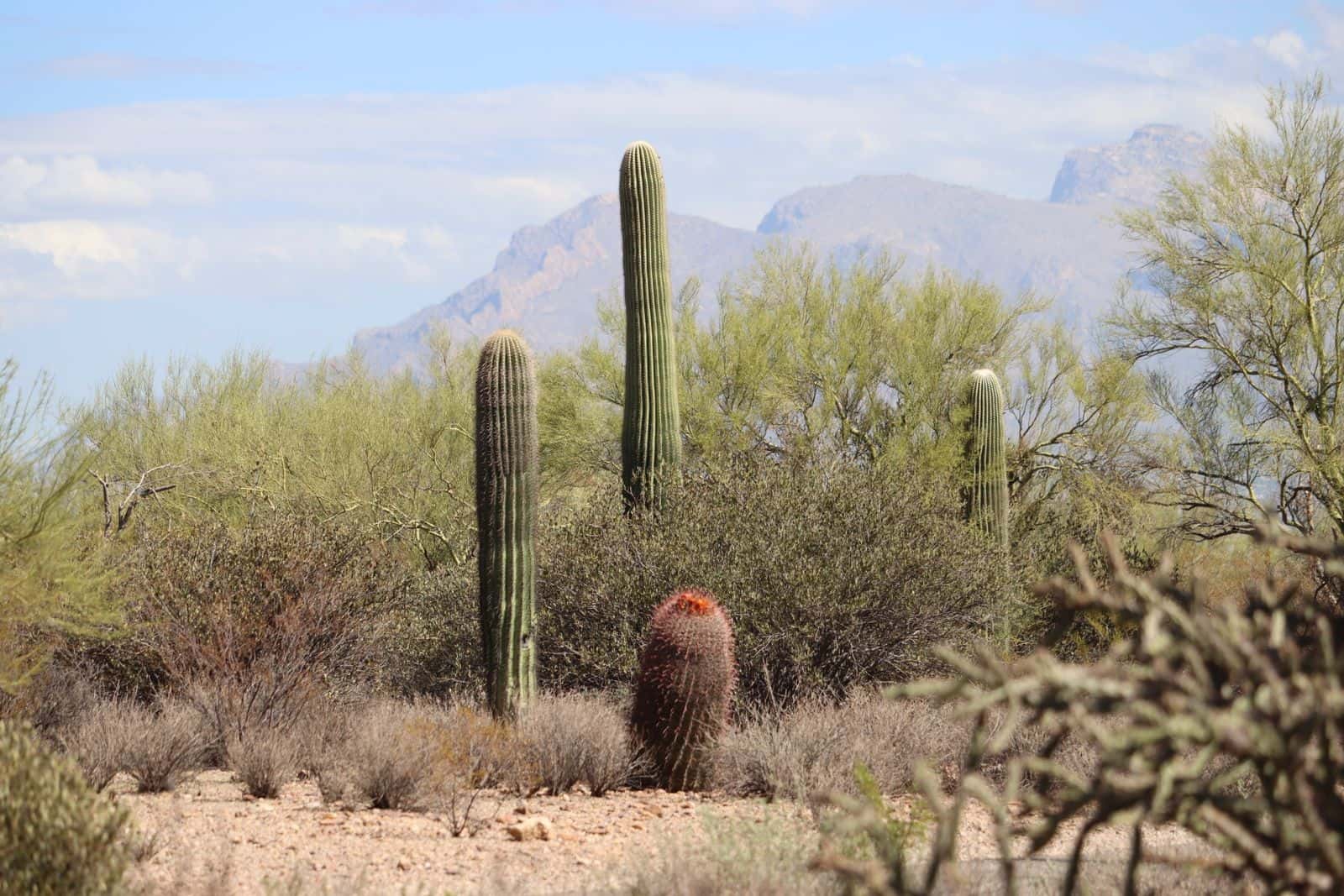
Salt River Project serves much of the central and east Valley, and APS serves other areas. SRP's vegetation management team prunes and removes trees that pose a risk to the system, and once a tree has grown within 10 feet of its pole-to-pole lines, pruning it becomes SRP's responsibility. Never hire a regular crew to work near energized lines; call the utility.
Monsoon damage across the Valley
The monsoon brings 30 to 60 percent of the Valley's annual rain, often in violent bursts with microburst winds and dust storms. Top-heavy hybrid mesquites and over-watered trees with shallow roots topple, and limbs come down on walls, pools and lines. Spring thinning and deep, infrequent watering are the best prevention; see monsoon tree damage in Phoenix.
Monsoon safety: do and don't
Safe for a homeowner
- Photograph the tree and anything it's leaning toward. It helps with quotes and insurance.
- Measure around the trunk at chest height (4.5 ft). Dividing by 3.14 gives the diameter many permit rules use.
- Clear cars, furniture and pets away from the tree before the crew arrives.
- Ask each company for its certificate of insurance, sent directly from the insurer.
Leave these to professionals
- Don't cut a tree yourself if it could hit anything on the way down, or if any part is within 10 feet of a power line.
- Don't climb with a chainsaw. Aerial cutting is one of the most dangerous jobs in tree work.
- Don't remove a protected tree without checking local rules. Fines and replanting requirements can be significant.
Removal in walled desert yards
- 1
Assessment and quote
The company looks at the tree, the drop zone, access for equipment, and nearby targets like the roof, wires and fences. The written quote should say what's included.
- 2
Permits and utilities
If your jurisdiction requires a permit, it's secured first. If the tree is near power lines, the utility may need to make the line safe before anyone climbs.
- 3
Removal
Limbs come off first, then the trunk in sections. Pieces are lowered on ropes (rigging) or lifted out with a crane. Ground crew keep everyone out of the drop zone.
- 4
Cleanup
Brush is chipped, wood is hauled or left as agreed, and the site is raked. The stump is cut low unless grinding is part of the job.
Unincorporated areas and HOAs
Unincorporated communities like Sun City, Sun City West, Anthem and parts of the far east and west Valley don't have city tree rules, but many have HOAs with landscape rules. Check HOA requirements before removing trees, and remember that native plant notice applies everywhere.
Palms, citrus and non-native shade trees
Not everything in a Valley yard is protected. Palms, citrus, eucalyptus, Aleppo pine, African sumac and ficus are common non-native trees that can be removed without native-plant notice. Big Aleppo pines and eucalyptus in older neighborhoods suffer in extreme heat and drop limbs in monsoon winds; tall palms need dead fronds removed so they don't become fire fuel or falling hazards. If you're not sure whether a tree is a protected native, a local arborist can identify it before you file anything.
Services across Maricopa County
Spring thinning before the monsoon.
After microbursts and dust storms.
For top-heavy hybrids and declining non-natives.
After removal.
Valley city guidance
Phoenix's guide covers monsoon damage, palms and the city's right-of-way rules; Tucson's covers Pima County's own rules further south.
Monsoon damage, palms and right-of-way trees.
Pima County rules and monsoon prep to the south.
Maricopa County tree questions
Do I need a permit to remove a tree in Maricopa County?
Not usually for non-protected trees on private property. Protected natives like palo verde, mesquite and ironwood need notice to the Arizona Department of Agriculture first.
How long is the native plant notice period?
For areas under one acre, 20 days before the plants are destroyed.
Is a mesquite leaning into my wall after a monsoon storm an emergency?
If it moved in the storm and the soil is lifted on one side, yes: keep people and cars away and get it removed before the next storm. Mesquite is protected, so give native plant notice when time allows, or document the emergency.
Should I replace a fallen hybrid mesquite with another one?
Consider a slower-growing native with a less dense crown, and water deeply and infrequently so roots anchor well.
When does SRP trim my tree?
Once it has grown within 10 feet of SRP's pole-to-pole lines, pruning it becomes SRP's responsibility.
Does the native plant law apply to pruning?
No. Pruning protected natives doesn't require notice; destroying or removing them does.
When is monsoon season in Maricopa County?
The National Weather Service defines it as June 15 to September 30.
Do HOAs in Sun City or Anthem regulate trees?
Many do. Check HOA landscape rules before removing trees.
Why do mesquites blow over in the monsoon?
Fast-growing hybrids with dense crowns on shallow, frequently watered roots topple in microburst winds.
Who removes trees near me in Maricopa County?
Insured local tree services familiar with native plant rules. You can call us to reach an independent provider.
Sources for the local facts on this page
- Arizona Department of Agriculture: Native plants (checked 2026-10-03)
- SRP: Trimming trees near power lines (checked 2026-10-03)
- SRP blog: The power of vegetation management (checked 2026-10-03)
Tree service in Maricopa County
Call to speak with a local tree-service provider about removal, trimming, stumps or storm damage. Describe the tree and what it's near, and they'll explain the next step.