Pittsburgh, PA · Allegheny County
Tree removal in Pittsburgh
Pittsburgh tree work is hillside work. Steep lots, retaining walls and long staircases limit equipment access, and removing big trees on slopes can affect how the hillside holds together after heavy rain. Street trees belong to the city: you request work through 311, and removing or cutting a street tree yourself needs a Department of Public Works permit, with private-contractor work supervised by an ISA Certified Arborist.
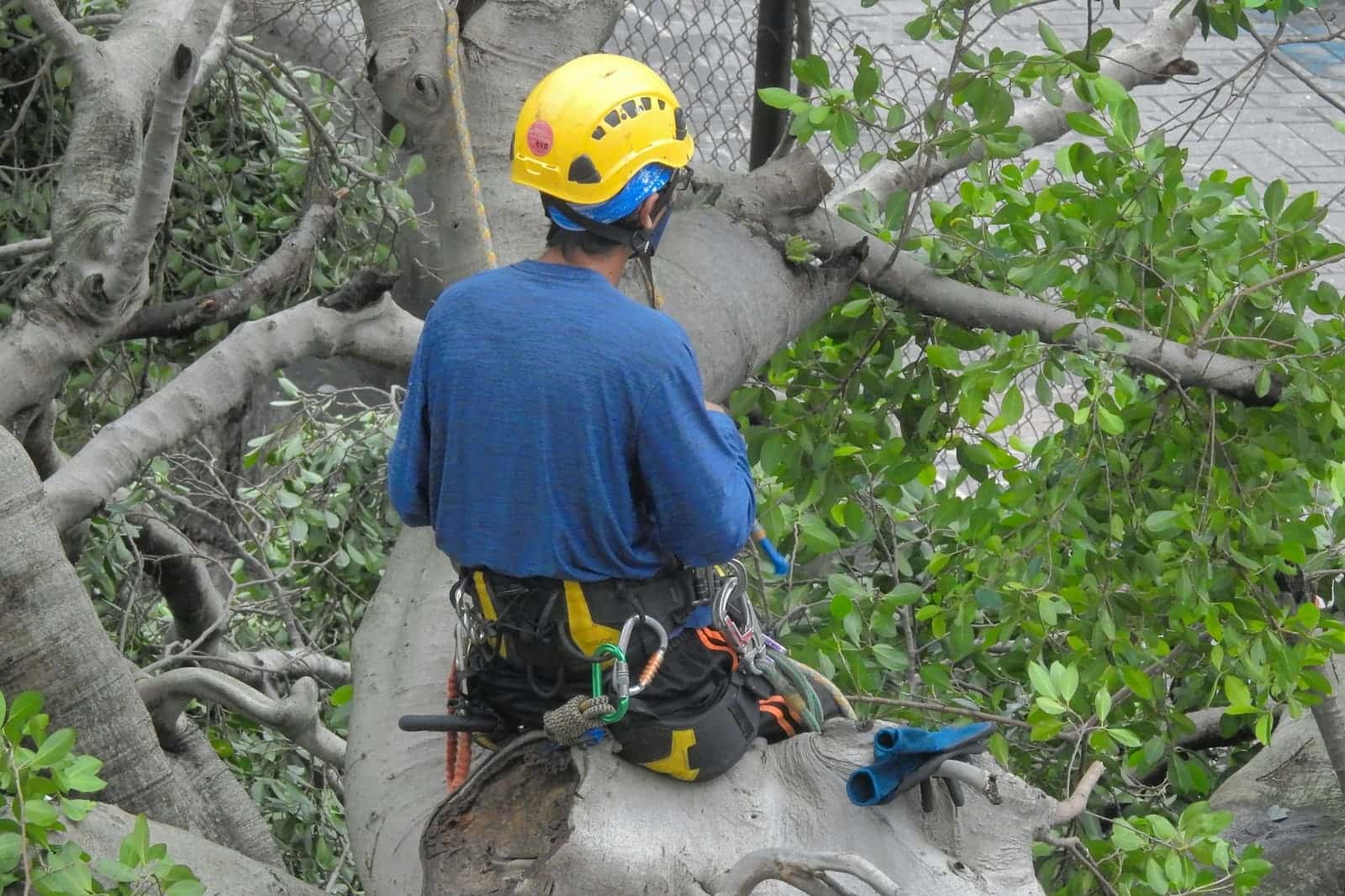
Many Pittsburgh neighborhoods are built on slopes so steep that a bucket truck can't reach the backyard. Trees there are climbed and rigged down, or lifted out by crane from the street above or below. Wood often has to be lowered by rope or carried down steps.
Heavy rain in 2018 set off a wave of landslides across the region. On unstable slopes, tree roots help hold soil, so whether to grind a stump or leave it, and what to replant, are real questions. Tree-of-heaven and black locust volunteer heavily on vacant and steep ground.
Reviewed and updated
Steep slopes, landslides and street trees
Steep slopes
Limited access means more climbing, rigging and crane work, and wood often has to be carried out by hand.
Landslide-prone hillsides
Heavy rain can destabilize slopes; removing trees and stumps changes how they drain and hold.
City street trees
Street and park tree work is requested through 311; private work requires a permit and arborist supervision.
Invasive volunteers
Tree-of-heaven and other fast-growing invasives fill vacant lots and hillsides.
Before removing a tree on a Pittsburgh slope
Removing a tree from a hillside changes how that slope drains and holds together. Look for these first:
- Cracks or bulges in the ground, a tilted fence or retaining wall, or trees leaning downhill in a group, which can mean the slope is already moving.
- Wet spots or seeps on the slope after rain.
- Whether the tree's roots are holding a wall or a cut bank in place.
- Where the wood will go; dropping logs on an unstable slope can start a slide.
Pittsburgh's rules for street and park trees
- No one may remove or cut down a tree in a public street or other public place without a permit from the Department of Public Works.
- To use a private contractor on a city tree, call the Forestry Division first; if approved, apply for a tree work permit and pay the fee. All work must be supervised by an ISA Certified Arborist.
- Request city pruning, removal or stump grinding of street or park trees through 311.
Sources (checked 2026-10-01)
Rules change and details depend on your exact property. Confirm with the city or county before work starts. This isn't legal advice.
Hillside volunteers: black locust and tree-of-heaven
Vacant lots and steep backyards across the city fill with fast-growing volunteers. Tree-of-heaven is invasive, brittle and a spotted lanternfly host. Black locust is a native pioneer tree with thorny young growth and wood that resists rot, but it's often weakened by locust borers and drops branches.
Both resprout from roots after cutting. On slopes that's sometimes useful, since roots keep holding soil, but it means removal is a process rather than a single visit.
Stairs, walls and backyards that drop away
Houses on steep streets with stairs instead of driveways, retaining walls, and backyards that drop away sharply. Expect sectional removal, rope lowering and hand carrying, or a crane from the street.
Expect a slope job to be priced by the day rather than by the tree, because how long it takes depends on how far each piece has to travel by hand or rope.
Pittsburgh services on steep ground
Rigged and hand-carried removals on hillside lots.
Cranes from the street above or below.
Deciding whether a hillside tree is safer staying or going.
Deadwood and clearance where removal would destabilize a slope.
Trees brought down by saturated slopes after heavy rain.
Maples, tree-of-heaven, black locust and oaks
- Norway and red maple
- Very common street and yard trees
- Tree-of-heaven
- Invasive on hillsides and vacant lots; lanternfly host
- Black locust
- Fast-growing volunteer on steep ground
- Pin oak and London planetree
- Large street trees in older neighborhoods
- Ash
- Emerald ash borer losses
Pittsburgh questions about slopes and city trees
Should I grind the stump after removing a tree from my Pittsburgh hillside?
Not always. On a steep or unstable slope, the stump and roots help hold soil while new plantings establish. Talk through erosion and replanting before grinding.
Can I hire a private company to remove a city street tree in Pittsburgh?
Only with permission. Call the Forestry Division first. If a private contractor is approved, you'll need a tree work permit, and an ISA Certified Arborist must supervise the work.
Why do Pittsburgh tree removals take longer?
Slopes, stairs and walls rule out most machinery. Crews climb, rig and lower wood, and often carry it out by hand, which takes more time than a flat-lot job.
Calls are routed to independent local tree-service providers. How calling works
More local guides
Need tree help in Pittsburgh?
Call to speak with a local tree-service provider about removal, trimming, stumps or storm damage. Describe the tree and what it's near, and they'll explain the next step.