Tree services
Hazardous tree removal
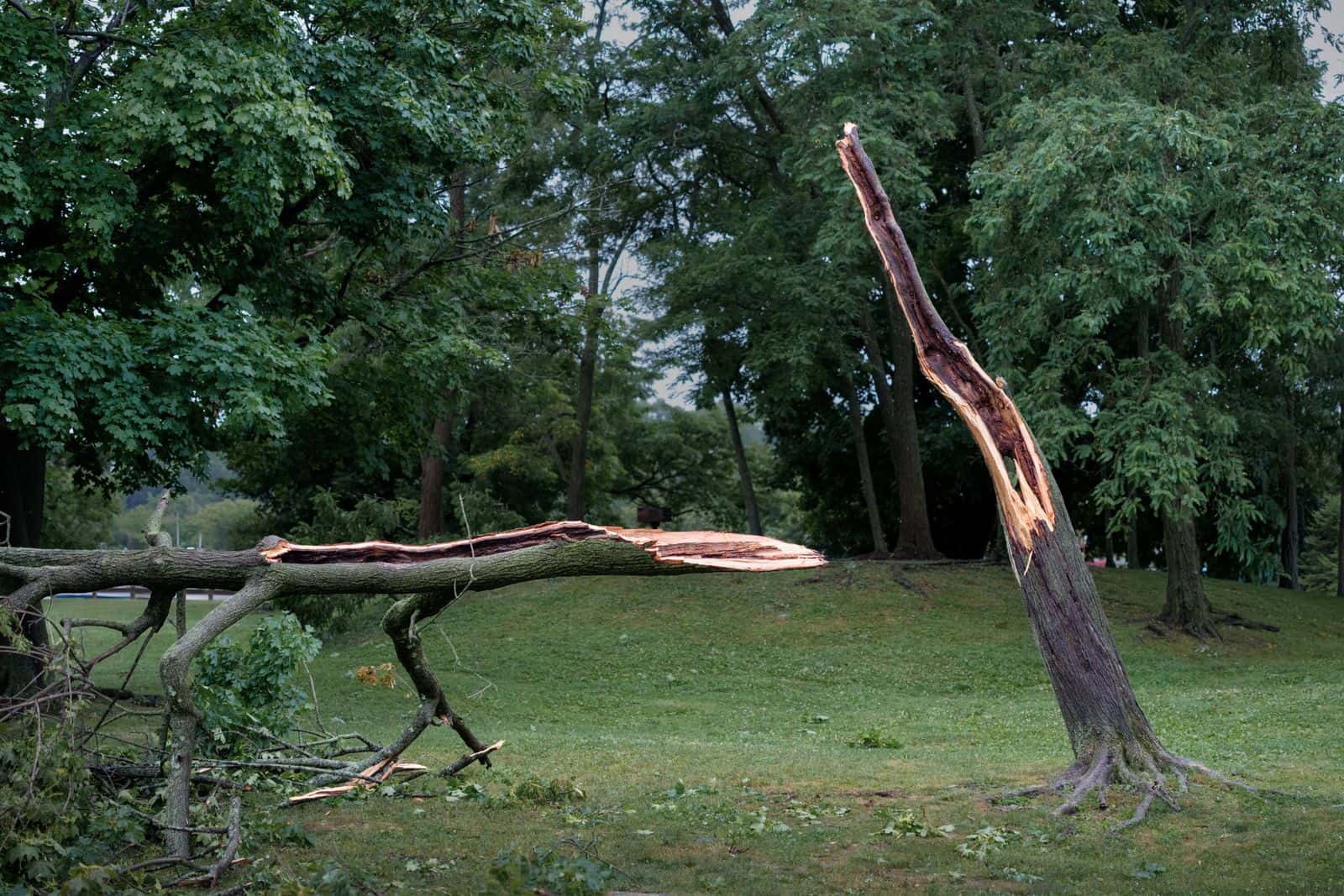
A hazardous tree is a living tree with a defect, such as a crack, decay, a failing root plate or a new lean, that makes it likely to fail onto something that matters: a house, a driveway, a street or a place people use. Removing one is slower than an ordinary removal, because the tree can't be trusted to behave predictably while it's being cut.
Reviewed and updated
Warning signs of a dangerous tree
- The tree has started leaning, or leans more than it did, especially with cracked or raised soil opposite the lean.
- There's a crack running through the trunk or down from a large fork.
- Two trunks meet in a tight V with bark pinched between them, and the joint has begun to split.
- Mushrooms, conks or soft, crumbly wood appear at the base or on the roots.
- Large dead limbs or broken branches hang over the house, driveway or street.
- Roots were cut in the last few years for a driveway, trench, addition or foundation repair.
Which defects are urgent and which can wait
New lean with cracked or lifted soil on the opposite side
- Urgency
- Act now; keep people out of reach
- Why
- The root plate is failing and the tree can go over without more wind
Large crack through the trunk or a main fork
- Urgency
- Act within days
- Why
- A crack is a failure in progress
Broken limb hanging in the crown over a walkway or roof
- Urgency
- Act within days
- Why
- Hangers fall in light wind
Mushrooms or conks at the base, cavity in the trunk
- Urgency
- Get it assessed soon
- Why
- Decay may be extensive; testing shows how much sound wood is left
Dead limbs scattered in an otherwise healthy crown
- Urgency
- Plan pruning
- Why
- Usually fixed without removing the tree
Lean, roots and soil: when a tree is close to tipping
Most trees that fall whole fail at the roots, not the trunk. The warning signs are at ground level: soil that's cracked or heaved on the side away from the lean, roots that have lifted or snapped, a trunk that's leaning more than it did last season, or a gap opening between the soil and the base of the trunk.
Risk rises sharply when the ground is saturated, when roots were cut for a driveway, trench or foundation within the last few years, and when the trees that used to shelter it have been removed. A tree that has started to tip rarely stabilizes on its own. Keep people out of the area it could reach and have it looked at before the next storm.
How a hazardous tree is taken down safely
- 1
Assess the tree and its fall zone
The crew works out which way the tree or its parts could fail and what's in the way before anyone starts cutting.
- 2
Choose a method that doesn't rely on the defect
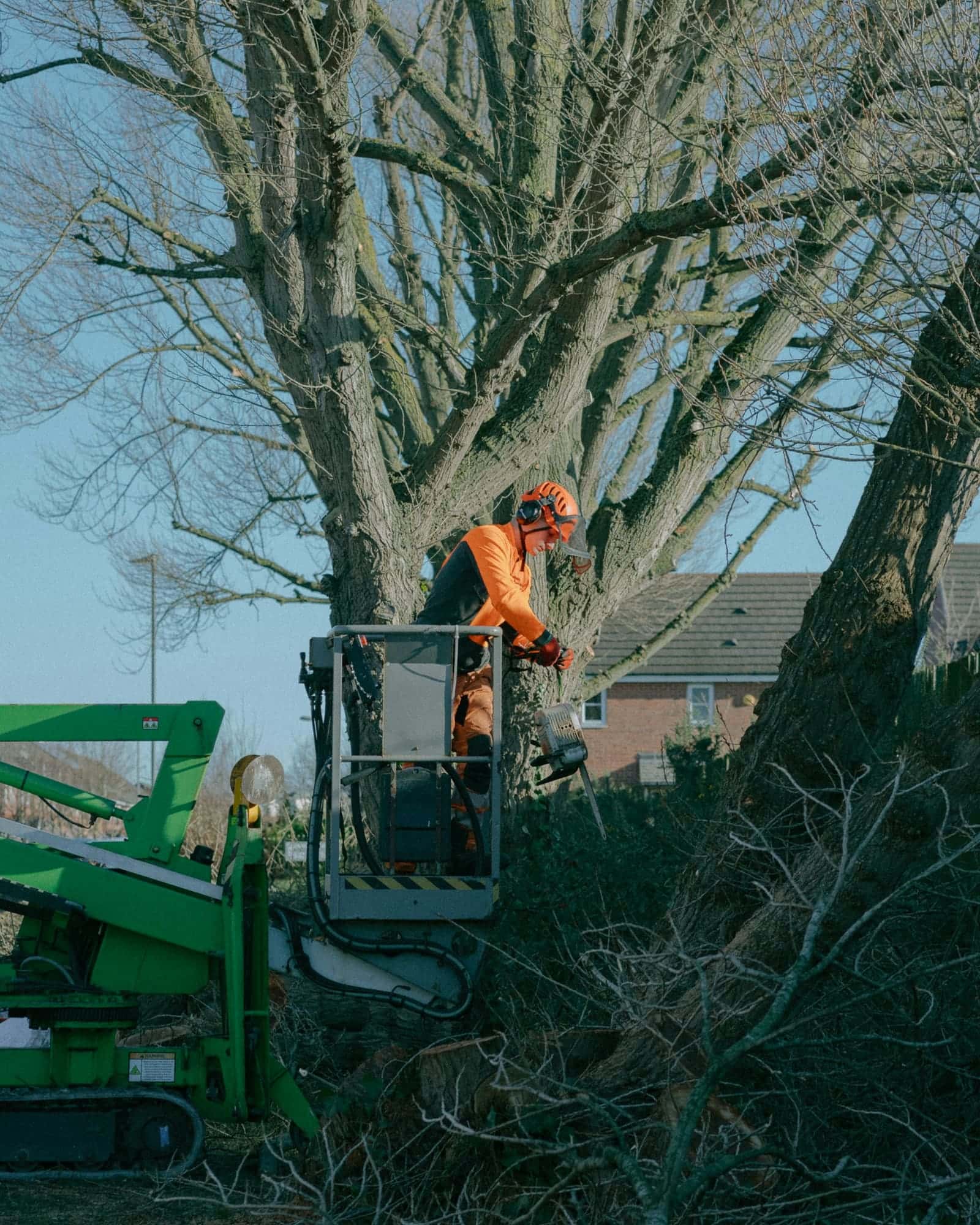
A cracked or decayed tree may not hold a climber's weight or rigging, so lifts and cranes are used to take it apart from outside the tree.
- 3
Make it safe in stages
The most dangerous parts, such as hanging limbs or the heavy side of a leaning tree, come off first to reduce the load.
- 4
Finish and clean up
The remaining trunk is taken down in sections, wood is hauled or left as agreed, and the stump is cut low or ground.
Until it's dealt with
Safe for a homeowner
- Keep people, pets and cars out of the area the tree could reach, roughly its height in every direction.
- Photograph the defect now and over the following weeks; changes help an arborist judge urgency.
- Call your electric utility if the tree threatens power lines.
- Tell your neighbor in writing if the tree is on your property and could fall onto theirs.
Leave these to professionals
- Don't climb or cut a cracked, leaning or decayed tree yourself; it can fail without warning when cut.
- Don't pile soil or park vehicles around the base of a leaning tree.
- Don't wait through storm season if the tree can reach the house.
Why hazardous removals are priced differently
A hazardous removal is usually priced higher than a sound tree of the same size, because the safe methods are slower and need more equipment:
- Whether the tree can be climbed at all, or needs a lift or crane
- How close the defect leans toward a house, line or street
- Utility coordination when the tree threatens power lines
- How quickly it needs to be done, since urgent scheduling costs more
- Cleanup scope and stump grinding
Things that look alarming but usually aren't hazards
Not every odd-looking tree is dangerous. These are common reasons people call about a tree that doesn't need to come down:
- An old, steady lean. Trees that grew toward light often lean and add wood to compensate. A lean that hasn't changed in years, with no soil movement at the base, is usually stable.
- Lichen and moss on the bark. They live on the surface and don't harm the tree.
- Small dead twigs inside the crown. Shaded inner twigs die naturally; scattered small deadwood is a pruning job.
- Surface roots in the lawn. Shallow roots are normal for many species, especially in compacted or wet soil.
- Peeling bark on sycamores, birches and river birch. It's how they grow.
- Sap flowing from a pruning cut on a maple or birch in late winter. It looks dramatic but doesn't hurt the tree.
Questions about dangerous trees
How do I know if a tree is dangerous or just old?
Age alone isn't a defect. Look for cracks, decay, a new or worsening lean, heaving soil at the base, and dead or hanging limbs. If any of those are present and the tree could reach something important, have it assessed.
Can a leaning tree be saved?
Often, if the lean is old and stable. A lean that's new or getting worse, with roots or soil lifting on the far side, usually can't be corrected on a mature tree. The leaning tree guide shows how to read the soil and the trunk.
Is the homeowner liable if a hazardous tree falls on a neighbor's house?
It can depend on whether the owner knew, or should have known, the tree was dangerous. A visible defect that was ignored can shift responsibility to the owner, which is why neighbor tree claims often turn on prior notice.
Will my city let me remove a hazardous tree without a permit?
Many cities have a faster path or an exemption for documented hazards, and Florida's state law exempts residential trees an arborist documents as dangerous. Check locally, and keep the arborist's written finding.
Is a hazardous tree the same as a dead tree?
No. A dead tree is a hazard because its wood decays over time. A hazardous tree can be fully alive and green but have a crack, decay pocket or failing roots. See dead tree removal for trees that have died.
Related services
- Tree Risk Assessment: an independent opinion on whether the defect can be managed instead
- Dead Tree Removal: when the tree has died rather than developed a defect
- Emergency Tree Removal: when the tree has already failed onto something
- Large Tree Removal: crane work for big hazardous trees over houses
Need help with a tree?
Call to speak with a local tree-service provider about removal, trimming, stumps or storm damage. Describe the tree and what it's near, and they'll explain the next step.