
Nashville, TN · Davidson County
Tree removal in Nashville
Nashville has been hit by two destructive tornadoes in four years: March 2020 through North Nashville, Germantown and East Nashville, and December 2023 through Madison and on toward Hendersonville. Storm damage, uprooting on thin limestone soils, and aging hackberries and Bradford pears drive most calls. Homeowners on single-family or duplex lots usually don't need a Metro permit, but right-of-way, protected and heritage trees do.
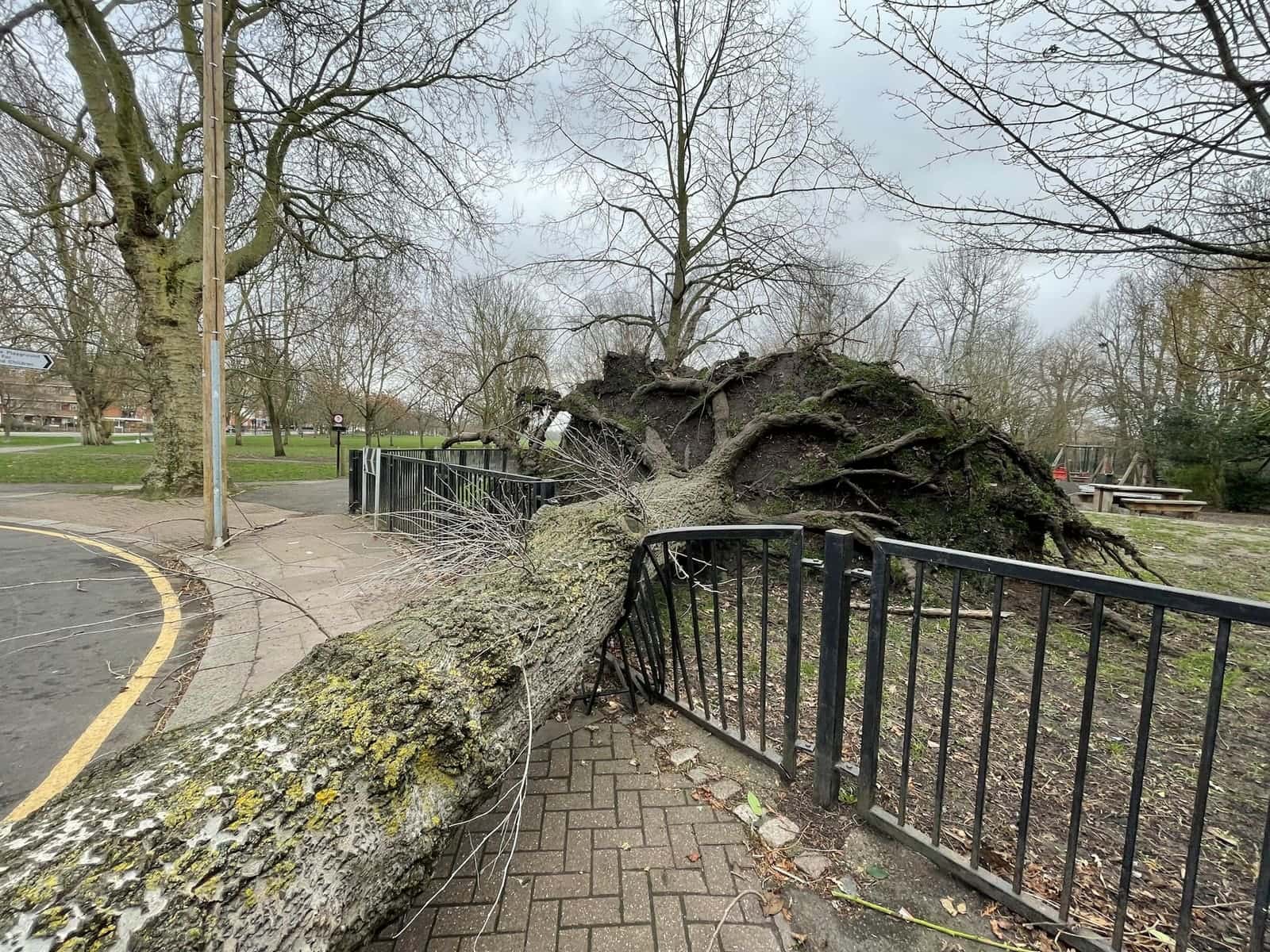
The Nashville Basin has shallow soil over limestone, so roots spread outward instead of down. After heavy rain, even big trees can tip over with their root plates intact. That's why Nashville storm cleanup so often involves whole uprooted trees resting on roofs and fences.
Rapid infill construction has also changed the canopy. Older lots in neighborhoods like East Nashville, Sylvan Park and the 12 South area have large oaks and hackberries next to new tall-and-skinny homes, and construction damage to roots can cause decline years later.
Reviewed and updated
Tornadoes, limestone and infill
Tornadoes
The March 2020 and December 9, 2023 tornadoes snapped and uprooted trees across North and East Nashville and Madison.
Thin soil over limestone
Shallow roots make trees more likely to uproot in saturated ground.
Infill construction
Root damage from new construction can lead to decline and dieback a few years later.
Aging hackberry and pear
Hackberries decay with age; Bradford pears split at narrow forks.
Hackberries, pears, oaks and redcedars
- Hackberry
- Very common; decay-prone; frequent storm failures
- Bradford pear
- Splits as it matures; common in subdivisions
- White oak and Shumard oak
- Large, valuable shade trees
- Sugar maple
- Common yard tree; drought stress on thin soils
- Eastern redcedar
- Thrives on limestone glades and fence lines
The morning after a tornado warning
Even when a tornado misses your street, straight-line winds around it can leave hidden damage. Before letting kids play in the yard:
- Scan crowns for broken limbs hung up in other branches.
- Look at the base of each big tree for soil that's cracked or lifted on one side.
- Check hackberries and pears for split forks.
- Note any tree leaning more than it did yesterday; on shallow limestone soil, that can mean the roots have let go.
Why so many Nashville hackberries come down
Hackberry is one of Middle Tennessee's most common yard trees because it seeds in everywhere and grows fast. It's also relatively short-lived for a large tree and prone to decay, especially where old limbs were cut badly.
A big hackberry with cavities, mushrooms at the base or dead upper limbs near a house is a common removal recommendation. Healthy ones can stay with regular deadwood pruning.
Metro Nashville's tree permits
- Single-family and duplex owners in Davidson County generally don't need a Metro permit to remove a tree on their own land.
- Exceptions: trees in the public right-of-way (which need Urban Forestry approval), designated protected or heritage trees, and trees on active subdivisions or approved site plans.
Sources (checked 2026-10-01)
Rules change and details depend on your exact property. Confirm with the city or county before work starts. This isn't legal advice.
Mature lots and infill builds
A mix of older lots with mature trees and dense infill with little room for equipment. Rock close to the surface can complicate stump grinding and replanting.
If you're building on an infill lot, protecting the root zones of trees you plan to keep has to happen before demolition. Once equipment has compacted the soil and cut roots, decline can take years to show.
Nashville services after storms and construction
Tornado and straight-line wind cleanup.
Uprooted trees on roofs and cars.
Decaying hackberries and split pears.
Trees stressed by nearby construction.
Limestone near the surface can stop the grinder short.
Nashville tree questions
Do I need a permit to remove a tree in Nashville?
Usually not, if it's on your own single-family or duplex lot. You do need approval for right-of-way trees, and protected or heritage trees and development sites have separate rules.
Can stump grinding hit rock in Nashville?
Often. Limestone sits close to the surface in much of Davidson County, so grinders may only reach a few inches in places. Ask the company how deep they can go.
My oak was near new construction and is now dying back. Why?
Construction often cuts or compacts roots. Decline can show up two to five years later as thinning and dead limbs. A certified arborist can judge whether the tree is still safe.
Calls are routed to independent local tree-service providers. How calling works
More local guides
Need tree help in Nashville?
Call to speak with a local tree-service provider about removal, trimming, stumps or storm damage. Describe the tree and what it's near, and they'll explain the next step.