Urgent situations
Emergency tree removal
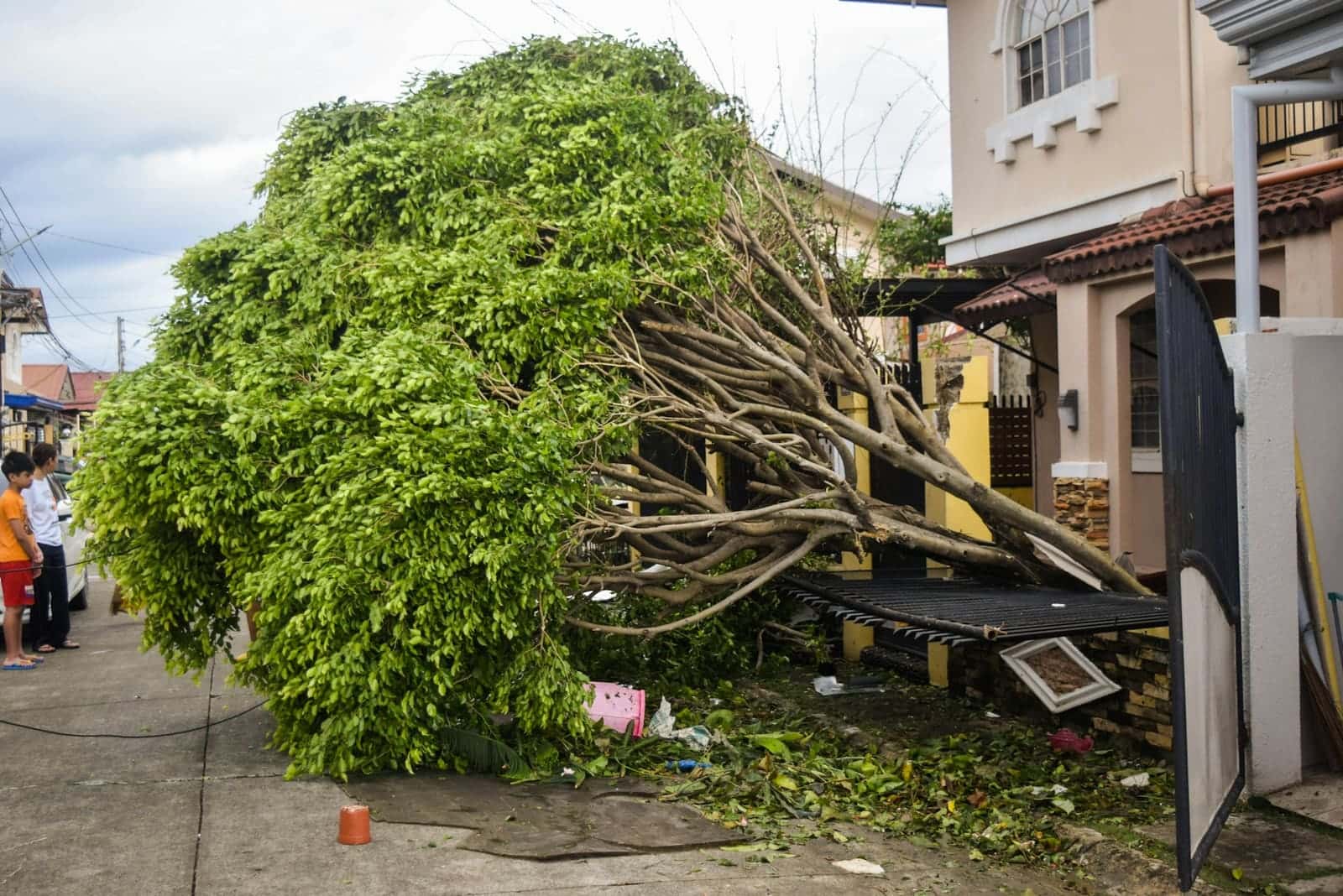
If a tree is on your house, across power lines or blocking an exit, get everyone out of the affected area first. Call 911 if anyone is hurt or a line is down, and your utility for anything touching wires. Then call a tree service for emergency removal. Stay away from the tree until professionals arrive.
Reviewed and updated
If a tree just came down: first steps
Do this now
- Get people and pets out of rooms under or near the tree.
- Shut off gas at the meter if you smell gas, and leave the house.
- Photograph the scene from a safe distance before anything is moved.
- Call your insurer early. Many policies want to know before major work.
Never do this
- Never go near or touch a tree that's touching a wire. Treat every line as live.
- Don't try to cut a tree off a roof yourself. The weight can shift without warning.
- Don't stand under hanging or cracked limbs to look at the damage.
- Don't let anyone pressure you into signing a contract or assigning insurance benefits at the door.
Is this an emergency, or can it wait for morning?
- A tree or large limb has fallen onto a house, garage, vehicle or fence.
- A tree is resting on or tangled in power, cable or phone lines.
- A fallen tree blocks your only driveway, a door, or emergency access.
- A large broken limb is hanging in the canopy over a place people walk (a "hanger").
- A storm has left a tree cracked at the base or visibly lifting its roots.
What an emergency crew does when it arrives
- 1
Make it safe
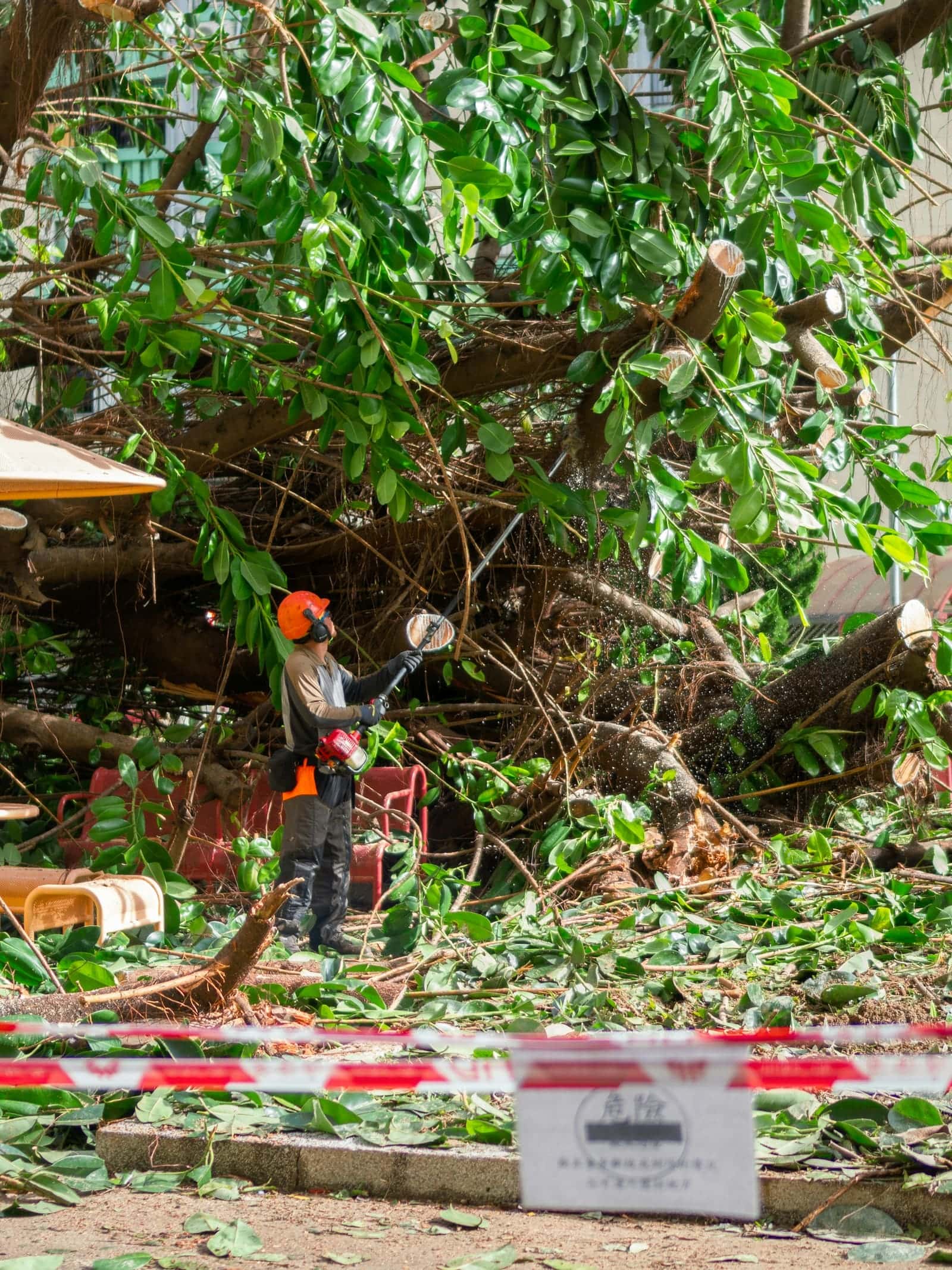
Utilities de-energize lines. The crew sets a work zone and checks the structure for stability before climbing or rigging.
- 2
Stabilize the tree
Ropes, a crane, or a loader take the weight so that cutting doesn't cause it to shift or roll.
- 3
Remove in sections
Limbs and trunk pieces come off top-down and are lowered or lifted clear of the damaged area.
- 4
Secure and document
The roof is tarped or openings covered (often by a separate contractor), and you get photos and an itemized invoice for your insurer.
Insurance and paperwork after a tree hits your house
- 1
Photograph everything first
Take pictures of the tree, the damage and the surrounding area before anything is moved, from several angles and at a safe distance.
- 2
Call your insurer early
Many policies expect to hear before major work begins, and they can tell you what's covered. How coverage splits between your policy and a neighbor's is explained in who pays when a tree falls.
- 3
Prevent further damage
Tarping a roof or boarding a window is usually expected of the homeowner and often reimbursed; keep the receipts.
- 4
Get an itemized invoice
Ask the tree company to separate removal from the structure, debris hauling and stump work. Insurers often cover these differently.
Storm chasers and contracts to avoid
After big storms, out-of-area crews and door-knockers show up quickly. Many are legitimate, and some are not. Before anyone starts cutting, get a written price, confirm the company carries liability and workers' compensation insurance, and be careful with any document that assigns your insurance benefits to the contractor. Your state attorney general and insurance department publish post-storm consumer warnings, and they're worth a read.
Why emergency removal costs more
Emergency work costs more than the same tree on a calm weekday. Insurers know this, and a covered claim often pays for the removal portion. What moves the bill:
- Whether a crane is needed to lift the tree off a structure
- Night, weekend or storm-surge timing, when crews are stretched
- Utility involvement and waiting for lines to be made safe
- How the tree is lying: pinned, split and under tension is slower than resting
- Debris volume and whether you want the wood hauled
Who to call, in what order
Making the calls in this order avoids the two most common mistakes: a crew arriving to a tree that's still tangled in live wires, and an insurer questioning work that was done before anyone documented the damage.
1
- Call
- 911
- When
- Anyone hurt or trapped, fire, a gas smell, or a line down across a road
2
- Call
- Your electric utility
- When
- Any limb on or near a line, including the service drop to the house; stay well back
3
- Call
- Your city's non-emergency line (often 311)
- When
- A street or parkway tree is down, or a public road is blocked
4
- Call
- Your insurer
- When
- The tree hit the house, garage, fence or a car; ask what they need before work starts
5
- Call
- A tree-service provider
- When
- To make the structure safe and remove the tree once lines are de-energized
Emergency tree removal questions
Who do I call when a tree falls on my house?
Call 911 if anyone is hurt or you see a downed line. Then call a tree service to remove the tree, and your homeowners insurer to open a claim. If the tree is touching any wire, call the utility before anyone works near it.
Does homeowners insurance pay for emergency tree removal?
Often, when a tree falls on a covered structure like your house or detached garage, removal is covered up to a policy limit. A tree that falls in the yard without hitting anything usually isn't. Read your policy or ask your agent; who pays when a tree falls covers neighbor trees and claim limits.
Can I get a tree removed at night?
Some companies take night calls, but most won't cut in the dark unless there's immediate danger. Overnight, the usual goal is stabilizing and tarping, with removal at first light.
Who removes a tree that fell on a power line?
The electric utility, or a line-clearance contractor working for it, handles trees in contact with its lines. Once the line is safe, the utility often leaves the wood for the property owner to deal with, and that's when a tree service comes in.
Is the tree company or the city responsible for a tree blocking the road?
Trees blocking public streets are usually cleared by the city, county or state road crew. Report it to them. A tree on your property blocking only your driveway is your responsibility.
Emergency guidance for specific cities
Who clears a fallen street tree, how storm debris is collected and which utility to call all depend on where you live.
Related services
- Storm Damage Tree Removal: for sorting the trees still standing after the emergency is cleared
- Tree Removal: how planned removals differ, once there's no immediate danger
- Large Tree Removal: crane work, which most trees resting on a roof require
- Tree Risk Assessment: deciding whether damaged trees near the house can stay
Need help with a tree?
Call to speak with a local tree-service provider about removal, trimming, stumps or storm damage. Describe the tree and what it's near, and they'll explain the next step.