Fairfax County, VA
Tree removal in Fairfax County, Virginia
In Fairfax County, you generally don't need a county permit to remove a tree on your own property. Exceptions: land disturbance over 2,500 square feet needs a permit, HOAs often restrict removals, and timber harvesting is regulated by the state. Trees along most roads are in VDOT's right-of-way, so report those to VDOT at 800-367-7623.
Fairfax County at a glance
- Yard trees
- No county permit for most single-tree removals
- Permit trigger
- Land disturbance over 2,500 sq ft
- HOAs
- Many restrict tree removal; check covenants
- Road trees
- Mostly VDOT: 800-367-7623
- Hazard to the public
- County can require removal via code enforcement
Reviewed and updated
Do you need a permit in Fairfax County?
Virginia generally doesn't prohibit removing individual trees on your own property, and Fairfax County doesn't require a permit for most yard tree removals. A permit is required for any land-disturbing activity, including removing trees, over 2,500 square feet. Timber harvesting is regulated by the Virginia Department of Forestry.
The bigger constraint for many homeowners is the HOA. Many Fairfax County communities restrict removing trees, especially in common areas and buffers, and require approval first. Read your covenants or ask the association before you schedule work.
VDOT, not the county, owns most roadside trees
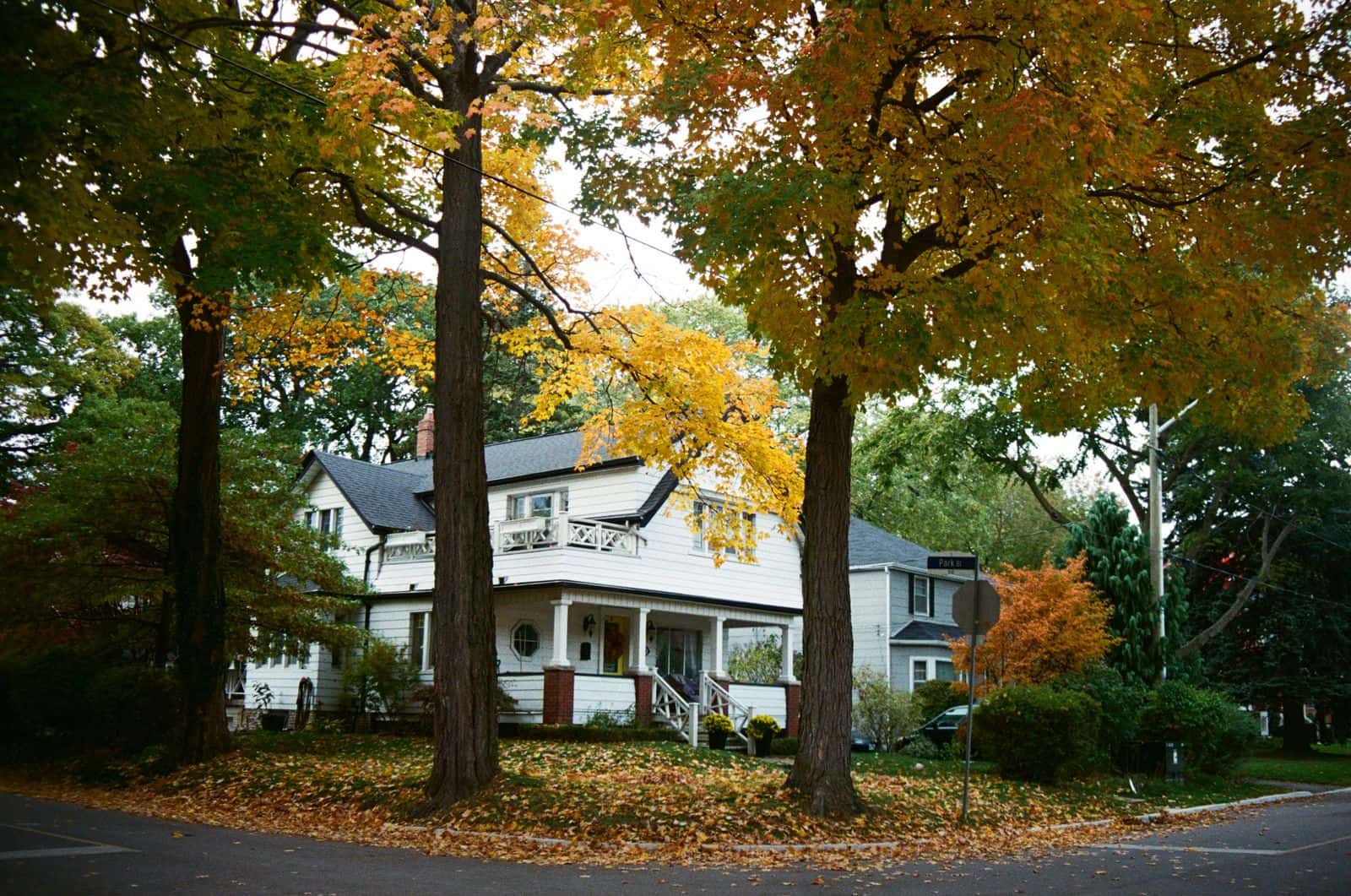
Unlike most counties in the region, Fairfax County doesn't maintain its roads; VDOT does. That means trees in the right-of-way along most Fairfax streets are VDOT's responsibility. Report a dangerous or fallen roadside tree to VDOT at 800-367-7623. Incorporated towns and the City of Fairfax, which is independent of the county, have their own rules and permits.
Hazardous trees on a neighbor's property
Fairfax County has no authority to make a private owner remove a hazardous tree unless it threatens the public at large, such as a public street or sidewalk. In that case, you can file a complaint through the county's PLUS system; if the tree is found to be a public hazard, the county issues a code violation and requires the owner to remove it.
For a tree threatening only your property, it's a matter between neighbors. Document the tree's condition, ideally with an arborist's written assessment, and put your concern in writing. See who pays when a tree falls.
What brings Fairfax trees down
Summer derechos and thunderstorms, heavy wet snow like January 2022's storm that toppled trees across the county, and ice cause most emergency calls. Tulip poplars, oaks and other tall hardwoods are common in older neighborhoods and can fail when roots have been damaged by construction or the soil is saturated. Dead ash killed by emerald ash borer are a growing hazard along yards and trails.
Dominion Energy and power lines
Most of Fairfax County is served by Dominion Energy, which clears vegetation around its lines. Never let an ordinary crew work near energized lines. Report a tree on a line to the utility and call 911 for sparks or fire.
Stream buffers: Resource Protection Areas
Fairfax County's Chesapeake Bay Preservation Ordinance designates Resource Protection Areas (RPAs) along streams and wetlands, where clearing vegetation is restricted to protect water quality. Many backyards in older neighborhoods back onto an RPA. Removing a dead, diseased or dangerous tree there is generally allowed, but clearing healthy trees or grinding and regrading in the buffer can require county review and replanting.
If your lot borders a stream, check the county's RPA maps before scheduling removals near the back of the property, and ask the tree company to leave stumps and root systems in place in the buffer when the goal is only to remove a hazard.
What happens on removal day in Fairfax
- 1
Assessment and quote
The company looks at the tree, the drop zone, access for equipment, and nearby targets like the roof, wires and fences. The written quote should say what's included.
- 2
Permits and utilities
If your jurisdiction requires a permit, it's secured first. If the tree is near power lines, the utility may need to make the line safe before anyone climbs.
- 3
Removal
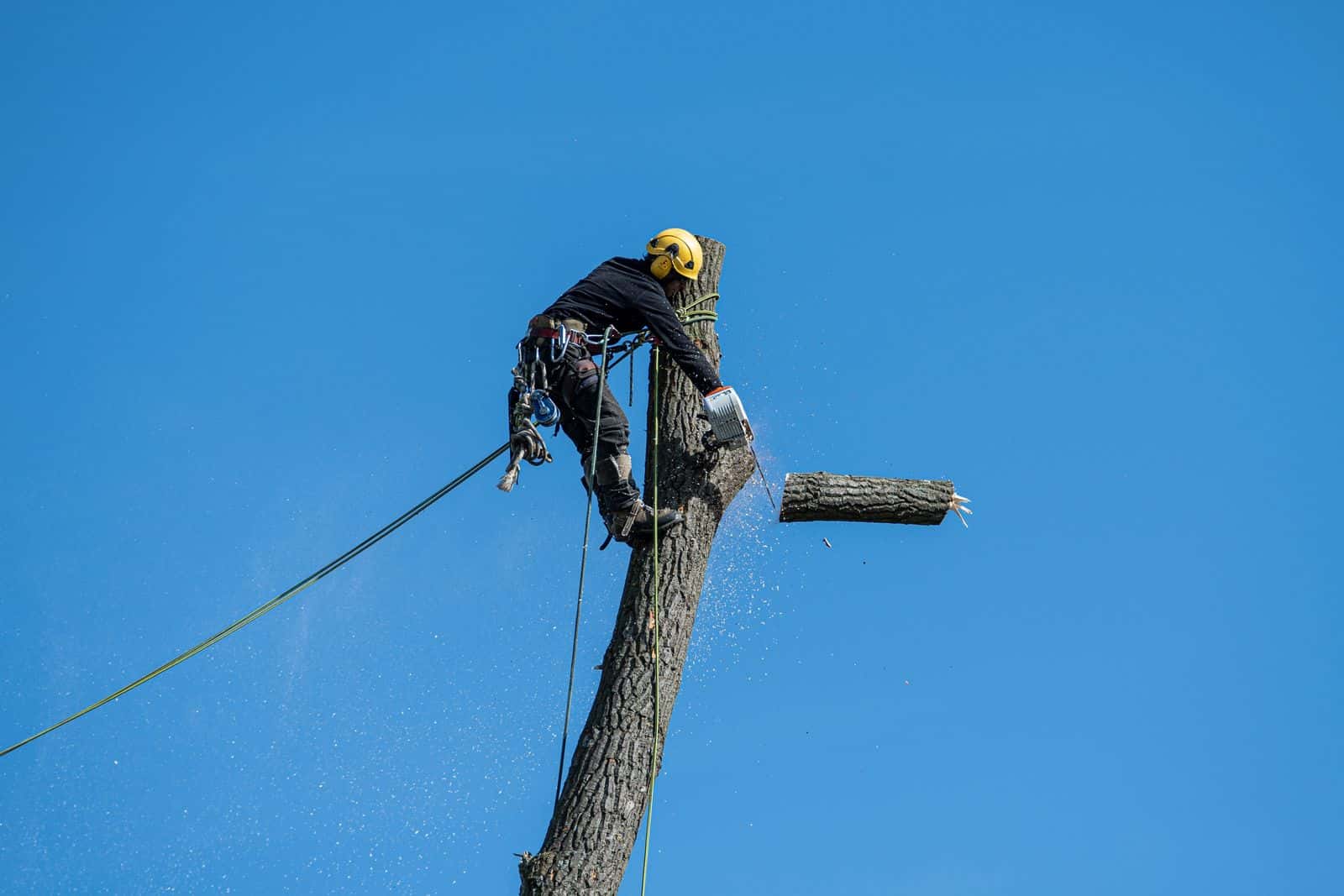
Limbs come off first, then the trunk in sections. Pieces are lowered on ropes (rigging) or lifted out with a crane. Ground crew keep everyone out of the drop zone.
- 4
Cleanup
Brush is chipped, wood is hauled or left as agreed, and the site is raked. The stump is cut low unless grinding is part of the job.
Derecho cleanup: what homeowners should and shouldn't do
Safe for a homeowner
- Photograph the tree and anything it's leaning toward. It helps with quotes and insurance.
- Measure around the trunk at chest height (4.5 ft). Dividing by 3.14 gives the diameter many permit rules use.
- Clear cars, furniture and pets away from the tree before the crew arrives.
- Ask each company for its certificate of insurance, sent directly from the insurer.
Leave these to professionals
- Don't cut a tree yourself if it could hit anything on the way down, or if any part is within 10 feet of a power line.
- Don't climb with a chainsaw. Aerial cutting is one of the most dangerous jobs in tree work.
- Don't remove a protected tree without checking local rules. Fines and replanting requirements can be significant.
Services in Fairfax County
For dead ash and cracked trees over houses.
After derechos and heavy snow.
To keep limbs off roofs and away from service drops.
After removal; call Miss Utility (811) first.
Other Virginia guidance
Virginia's independent cities run their own street-tree and storm programs, unlike Fairfax, where VDOT maintains most roads. These pages cover two of them.
Richmond's urban forestry and storm rules.
Coastal storms and Virginia Beach rules.
Fairfax County tree removal questions
Do I need a permit to cut down a tree in my yard in Fairfax County?
Usually not. Fairfax County doesn't require a permit for most single-tree removals on your property, but land disturbance over 2,500 square feet needs one, and your HOA may have its own rules.
Why did my healthy-looking tree fall in a Fairfax storm?
Usually because of something you can't see: rain-saturated soil that lets roots slip, roots cut by construction or utility trenching years earlier, or decay inside the trunk or root flare. Trees near recent work deserve a closer look after any big storm.
Who removes a fallen tree on a road in Fairfax County?
VDOT maintains most roads in Fairfax County. Report fallen or dangerous roadside trees to VDOT at 800-367-7623. If it fell from your yard, the part on your property is still yours to clear; VDOT handles what's blocking the road.
Can Fairfax County make my neighbor remove a dangerous tree?
Only if it threatens the public, like a street or sidewalk. File a complaint through PLUS; if it's a public hazard, the county can require removal. Otherwise it's between neighbors.
Does my HOA have to approve tree removal in Fairfax County?
Many do. Check your covenants and get approval in writing before removing trees, especially in buffers or common areas.
Is the City of Fairfax under county tree rules?
No. The City of Fairfax is independent of the county and has its own tree removal permit process.
Who handles a tree on a power line in Fairfax County?
Usually Dominion Energy. Stay away from the line and call 911 if there are sparks or fire. No tree crew can start until the utility has made the line safe, so call the utility before the tree service.
Should I remove dead ash trees in Fairfax County?
If they can hit a house, driveway, trail or road, yes. Ash killed by emerald ash borer become brittle and unpredictable, and removal gets riskier over time.
How much does tree removal cost in Fairfax County?
There's no single price. Tree size, how close it is to the house or lines, backyard access and crane use drive the cost, and HOA or RPA requirements can add time. See the tree removal cost guide.
Do I need to call 811 before stump grinding in Virginia?
Yes. Contact Virginia 811 (Miss Utility) before grinding so underground lines can be marked. The service is free. It doesn't mark private lines like sprinklers, lighting or lines to a shed, so flag those yourself.
What should I do after a derecho knocks trees down in Fairfax?
Check for lines first, report road trees to VDOT, photograph damage, then call a tree service for trees on structures. See what to do after a storm.
Who removes trees near me in Fairfax County?
Insured local tree services, ideally with an ISA-certified arborist. You can call us to reach an independent provider.
Sources for the local facts on this page
- Fairfax County Land Development Services: Hazardous trees on private property (checked 2026-10-03)
- Fairfax County Public Works: Urban forestry (checked 2026-10-03)
Tree service in Fairfax County
Call to speak with a local tree-service provider about removal, trimming, stumps or storm damage. Describe the tree and what it's near, and they'll explain the next step.