
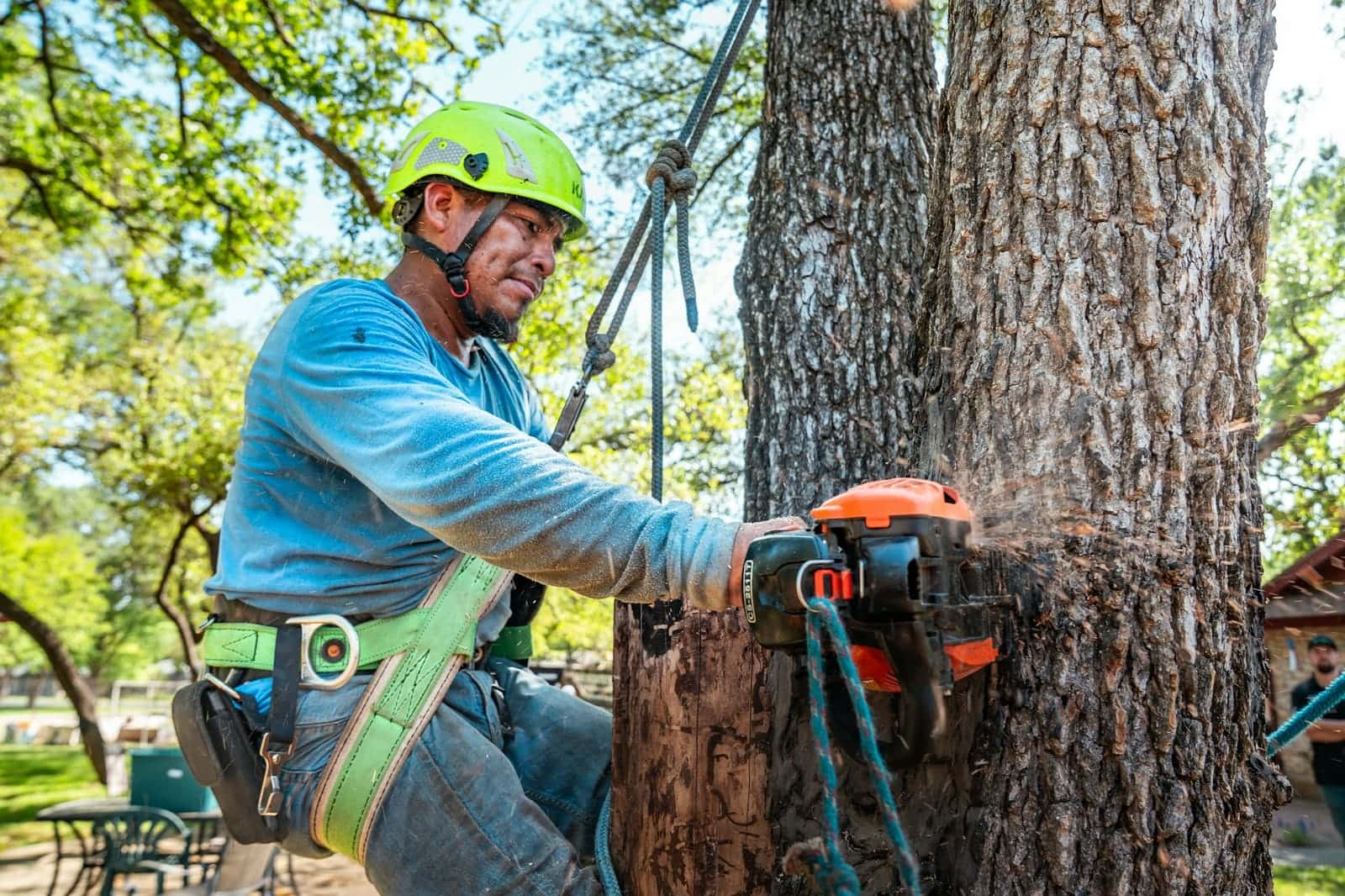
San Antonio, TX · Bexar County
Tree removal in San Antonio
In San Antonio, oak wilt and drought are the main reasons trees decline, and spring storms and occasional ice cause most emergency calls. The city's tree preservation ordinance is aimed at development: trees on lots with completed single-family homes are exempt from its preservation requirements, so most homeowners don't need a city permit to remove a yard tree.
The north side of San Antonio climbs into the Hill Country, where live oaks grow in thin, rocky soil over limestone. The south and east sides have deeper soils and more pecans, cedar elms and mesquites. Across the city, live oaks share root systems, so oak wilt can spread through an entire street of trees once it arrives.
Repeated droughts, including the severe 2011 and 2022 droughts, left many trees weakened. Dead and declining oaks, especially red oaks, are a common reason for removal calls here.
Reviewed and updated
Oak wilt, drought and hail on San Antonio's thin soils
Oak wilt in live oak stands
Root-connected live oaks let the disease spread tree to tree. Trenching, careful pruning timing and removal of infected red oaks are standard tools.
Drought on thin soils
North-side trees on limestone have little soil water to draw on and decline in dry years.
Spring storms and hail
Severe thunderstorms bring hail and damaging winds, mainly in spring.
Mesquite and hackberry volunteers
Fast-growing volunteer trees crowd fences and foundations and are frequent removals.
Live oaks, pecans and the mesquite on the north side
- Live oak
- Dominant native; oak wilt spreads through connected roots
- Texas red oak
- Very susceptible; dies within weeks of infection
- Pecan
- Large and heavy-limbed; river bottoms and older neighborhoods
- Mesquite
- Drought-tough; heavy, spreading limbs
- Cedar elm
- Resilient native; ice and storm breakage
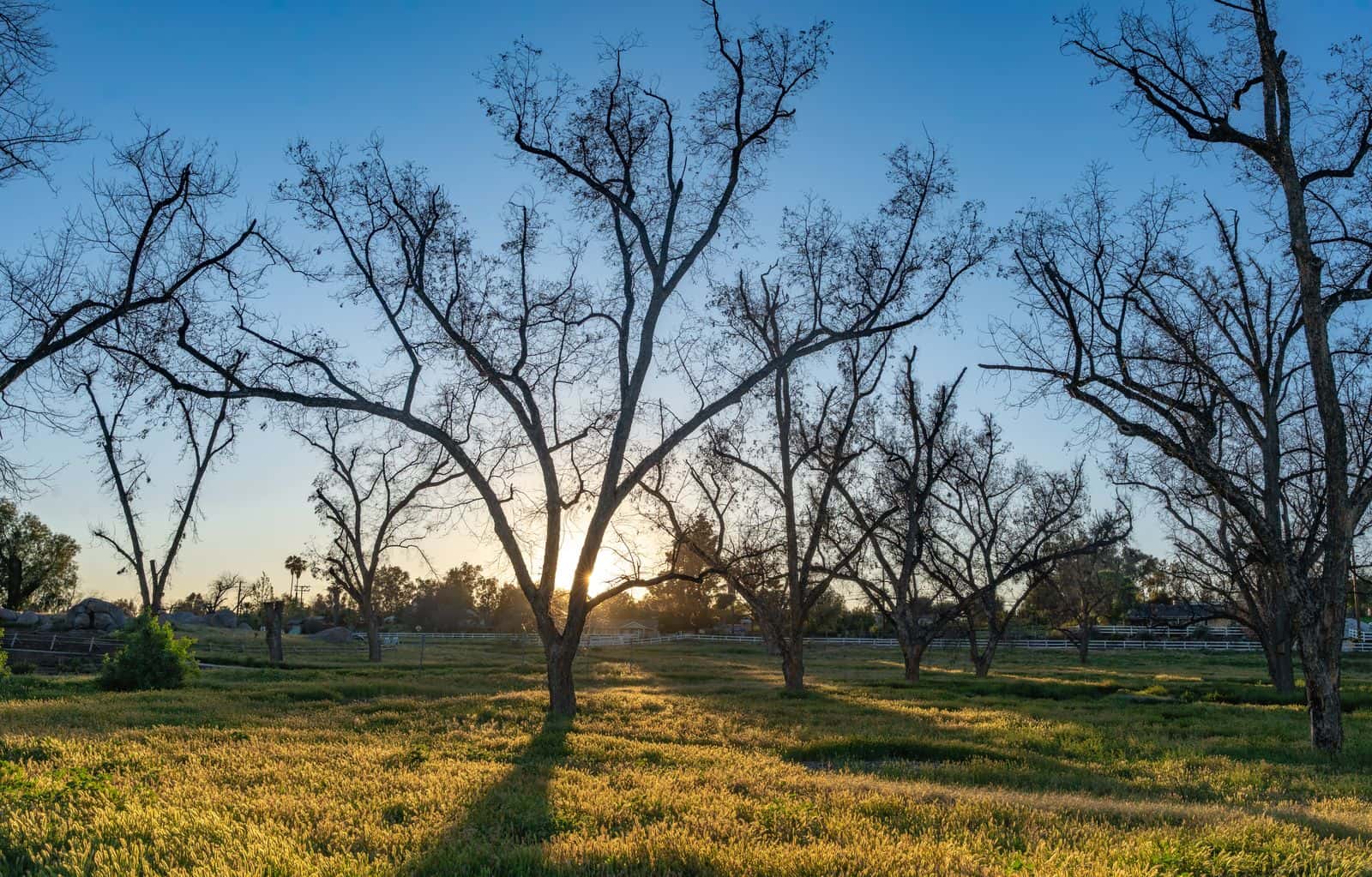
Oak wilt in a neighborhood live oak stand
Live oaks in older San Antonio subdivisions often grow as one connected stand, with roots grafted from yard to yard. When one tree gets oak wilt, the disease can move through those roots to its neighbors over the following months and years.
Containing it usually takes more than one property. Specialists cut deep trenches beyond the infection front to sever root connections, and remove diseased red oaks that would otherwise produce spore mats. A single homeowner treating one tree has limited effect if the trees around it share roots, so it pays to talk to neighbors early.
Drought-killed or just dormant? Checking a tree after a dry summer
After the 2011 and 2022 droughts, plenty of San Antonio trees looked dead and weren't. Before paying for removal:
- Wait for spring. Mesquite in particular leafs out late, and a bare mesquite in March isn't necessarily dead.
- Scratch a twig. Green under the bark means that part is alive.
- Look at where it's dead. Dieback in the top third with healthy lower limbs often means pruning, not removal.
- Check for bark beetles or borers on stressed trees, which can finish off a tree that would otherwise recover.
Hill Country limestone and historic central lots
North-side lots on limestone make stump grinding and root work harder and slower. Older central neighborhoods like Alamo Heights and Monte Vista have very large oaks and pecans near historic homes, where careful rigging is needed.
Because north-side roots run shallow across rock, construction and trenching near a live oak do more damage here than in deep soil. If you're building, fencing or adding a driveway near a big oak, set up root protection before the work starts.
Services San Antonio homeowners call about
Oak wilt and drought losses, especially red oaks that die within weeks.
Declining live oaks near houses and mesquite or hackberry volunteers.
Oak pruning outside February–June, with wounds painted.
Deciding which drought-stressed trees can recover.
Slow on limestone; ask about depth before the job.
San Antonio's tree preservation rules for homeowners
- San Antonio's tree preservation ordinance (Unified Development Code §35-523) sets rules for significant and heritage trees (24 inches and larger) mainly during development and permitting.
- Lots where construction of one- to three-family dwellings is complete are exempt from those preservation requirements. Historic districts and development projects may still involve review.
Sources (checked 2026-10-01)
Rules change and details depend on your exact property. Confirm with the city or county before work starts. This isn't legal advice.
San Antonio questions about permits and oak wilt
Do I need a permit to remove a tree at my San Antonio home?
Generally not for a lot with a completed single-family home, which is exempt from the tree preservation ordinance's requirements. Development projects, historic districts and right-of-way trees are different. Confirm with the city's Development Services Department if unsure.
My neighbor's red oak died of oak wilt. What should I do?
Infected red oaks can produce fungal mats that spread the disease, so they're often removed and the wood handled carefully (not stored as firewood with bark). Contact an oak wilt specialist or Texas A&M Forest Service about your own oaks.
Calls are routed to independent local tree-service providers. How calling works
More local guides
Need tree help in San Antonio?
Call to speak with a local tree-service provider about removal, trimming, stumps or storm damage. Describe the tree and what it's near, and they'll explain the next step.