Tree services
Tree trimming and pruning
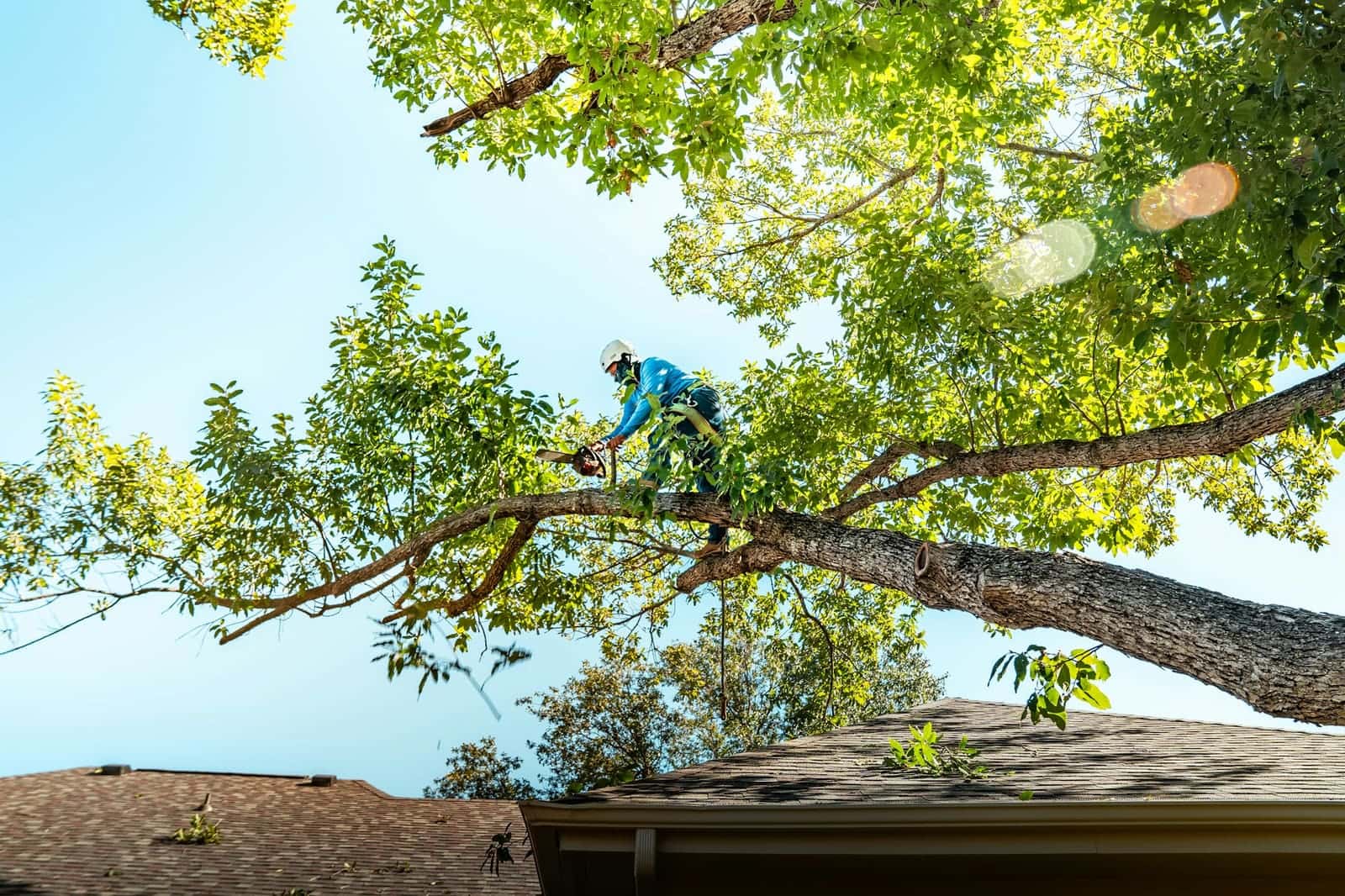
Tree trimming (or pruning) is selectively removing branches to make a tree safer, clear it from structures, or improve its health and shape. Good pruning removes the least wood needed to reach a clear goal, using cuts at the branch collar. Topping, meaning cutting main stems back to stubs, is not pruning and weakens trees.
Reviewed and updated
Pruning types and what each one removes
Ask the company which of these they're proposing. It tells you what you'll see when they're done.
Cleaning
- What's removed
- Dead, dying, broken and diseased branches
- Why
- Safety and health; the most common residential job
Raising
- What's removed
- Lower limbs
- Why
- Clearance over lawns, driveways, sidewalks and roofs
Thinning
- What's removed
- Selected live branches throughout the crown
- Why
- More light and air; slightly less wind resistance
Reduction
- What's removed
- Branch ends cut back to lateral branches
- Why
- Smaller crown away from a structure, without topping
Structural
- What's removed
- Competing leaders and weak forks on young trees
- Why
- Prevents future splits
Signs a tree needs pruning
- Dead branches larger than a broom handle anywhere over a roof, driveway or play area.
- Limbs touching or overhanging the roof, gutters or chimney.
- Branches blocking streetlights, signs, sidewalks or sight lines at the driveway.
- Crossing or rubbing branches, or a narrow V-shaped fork with bark pinched inside.
- Storm damage: broken stubs and torn limbs that need clean cuts.
When to prune which trees
Dead or dangerous wood can come out any time. For routine pruning, timing depends on the tree:
Oaks in oak wilt areas
- Best timing
- Dormant season; avoid spring and early summer
- Why
- Fresh wounds attract the beetles that spread oak wilt
Most shade trees
- Best timing
- Late winter while dormant
- Why
- Structure is easy to see and wounds close quickly in spring
Maples and birches
- Best timing
- Late winter or summer
- Why
- Late-winter cuts can drip sap; it looks alarming but doesn't harm the tree
Spring-flowering trees
- Best timing
- Right after they bloom
- Why
- Pruning earlier removes the flower buds
Palms
- Best timing
- Remove dead fronds as needed
- Why
- Leave green fronds; over-pruning weakens palms
How a good pruning job is done
- 1
Set the objective
Agree on what the pruning is for (safety, clearance, light, or structure) and roughly how much will be removed.
- 2
Access
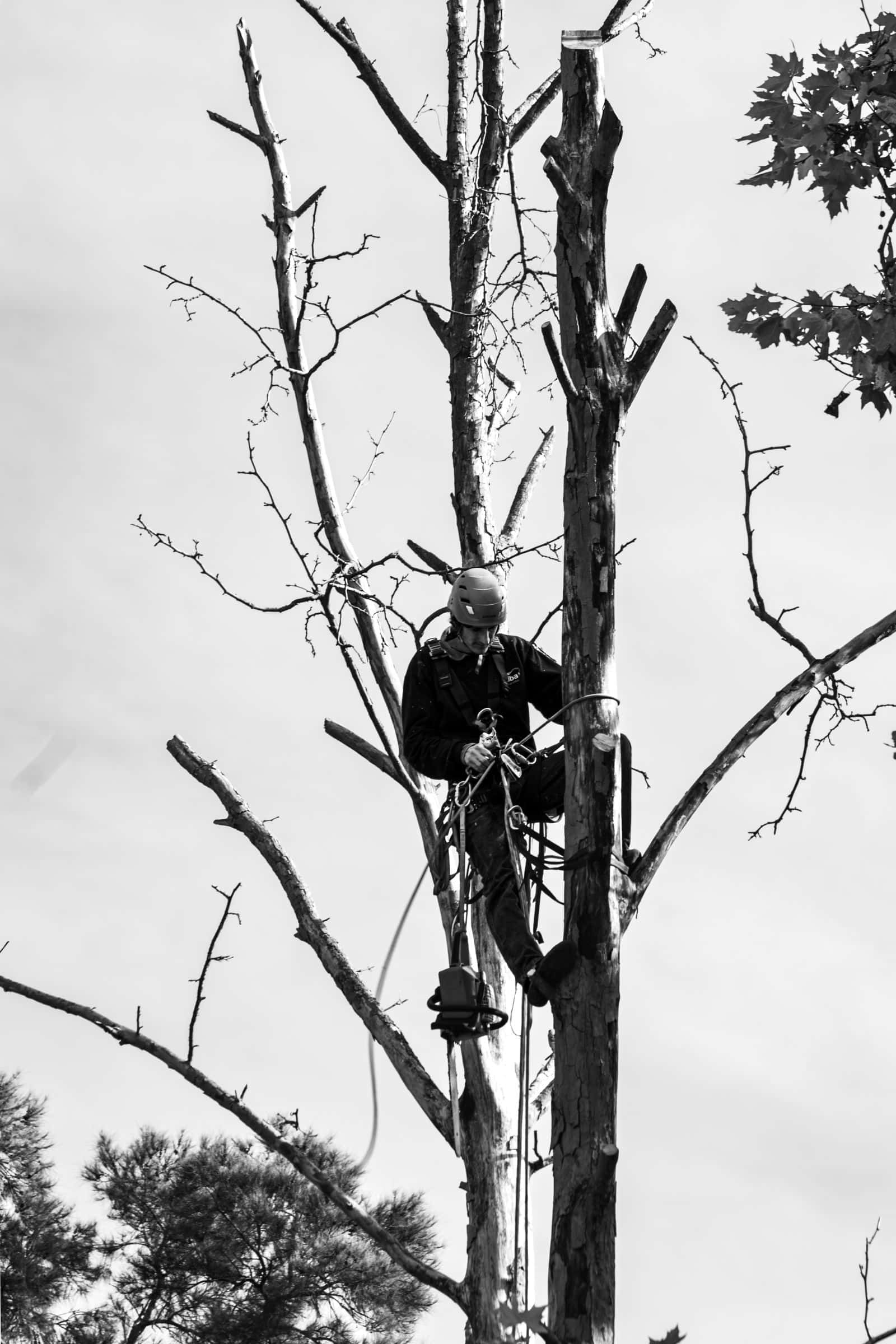
Climbers use ropes and saddles; bucket trucks work where they can reach. Spikes shouldn't be used on trees that are staying.
- 3
Make proper cuts
Cuts are made just outside the branch collar. Large limbs are removed with a three-cut method so bark doesn't tear.
- 4
Clean up
Brush is chipped and hauled, and the yard is raked. Chips are often left on request as mulch.
What affects the cost of trimming
Pruning is priced on time aloft, and that depends far more on the tree and the goal than on a per-tree rate:
- Tree height and how much of the crown is being worked
- Pruning type: cleaning deadwood is faster than detailed structural work
- Access for a bucket truck versus climbing
- Proximity to wires. Only utility-qualified line-clearance workers may prune near energized lines
- Number of trees done in the same visit
Cuts that harm trees: topping, lion-tailing and over-thinning
Some trimming leaves a tree weaker than before, even when the job looks tidy from the street. Professional pruning in the U.S. follows the ANSI A300 standard, which calls for cuts at branch unions and limits on how much live foliage comes off at once. Watch for these on a quote or in progress:
Topping (hat-racking)
- What it looks like
- Big limbs cut back to stubs to make the tree shorter
- Why it backfires
- Dense sprouts grow from the stubs, weakly attached and quick to break; stubs decay
Lion-tailing
- What it looks like
- Inner branches stripped so foliage is only at the limb ends
- Why it backfires
- Weight and wind load move to the tips, so limbs snap more easily
Over-thinning
- What it looks like
- A large share of the live crown removed in one visit
- Why it backfires
- The tree loses food-making leaves and responds with stress sprouts
Flush cuts
- What it looks like
- Branches cut flat against the trunk
- Why it backfires
- Removes the branch collar the tree needs to seal the wound
Spiking a tree that isn't being removed
- What it looks like
- Climbing spurs used for pruning
- Why it backfires
- Leaves wounds up the trunk; spurs are meant for removals
What to prune yourself and what to leave alone
Safe for a homeowner
- Prune small branches (under about 2 inches) on young trees from the ground with sharp hand tools.
- Remove dead twigs you can reach without a ladder.
- Photograph the trees you want worked on and mark the limbs that concern you.
Leave these to professionals
- Don't prune anywhere near power lines. Call the utility or a qualified line-clearance arborist.
- Don't use a chainsaw on a ladder.
- Don't hire anyone who suggests topping a healthy tree.
- Don't remove more than about a quarter of a mature tree's live crown in one season unless an arborist says there's a reason.
Tree trimming questions
Is tree trimming the same as pruning?
In everyday use, yes. Some people use "trimming" for shaping hedges and small trees and "pruning" for more technical work on large trees. What matters is the objective and the cutting technique. The terms are compared in trimming vs. pruning.
When is the best time to trim trees?
For most deciduous trees, late winter while they're dormant: wounds close faster in spring and it's easier to see structure. Oaks in oak-wilt areas should not be pruned in spring. Dead or dangerous branches can be removed any time.
Why is topping bad for trees?
Topping cuts large stems to stubs. The tree responds with fast, weakly attached sprouts and decay in the stubs, so within a few years it's taller, denser and more dangerous than before. Crown reduction achieves size control properly.
Who trims trees near power lines?
Utilities maintain clearance around their distribution lines, often on a multi-year cycle, using qualified line-clearance crews. If a tree on your property touches a line, call the utility. Homeowners and ordinary tree crews should not work within 10 feet of lines.
How much should be cut off a tree when trimming?
Usually as little as achieves the goal. Many arborists avoid removing more than about 25% of a mature tree's living foliage in a single year.
Pruning calendars that change by city
Oak wilt, hurricane season and protected-tree rules move the best pruning window from one region to another.
Related services
- Tree Risk Assessment: if you're pruning because you're worried a limb or the whole tree could fail
- Tree Removal: when pruning can't fix the problem
- Storm Damage Tree Removal: clean-up cuts after wind or ice tears limbs
- Commercial Tree Services: cyclical pruning plans for HOAs and managed properties
Need help with a tree?
Call to speak with a local tree-service provider about removal, trimming, stumps or storm damage. Describe the tree and what it's near, and they'll explain the next step.