
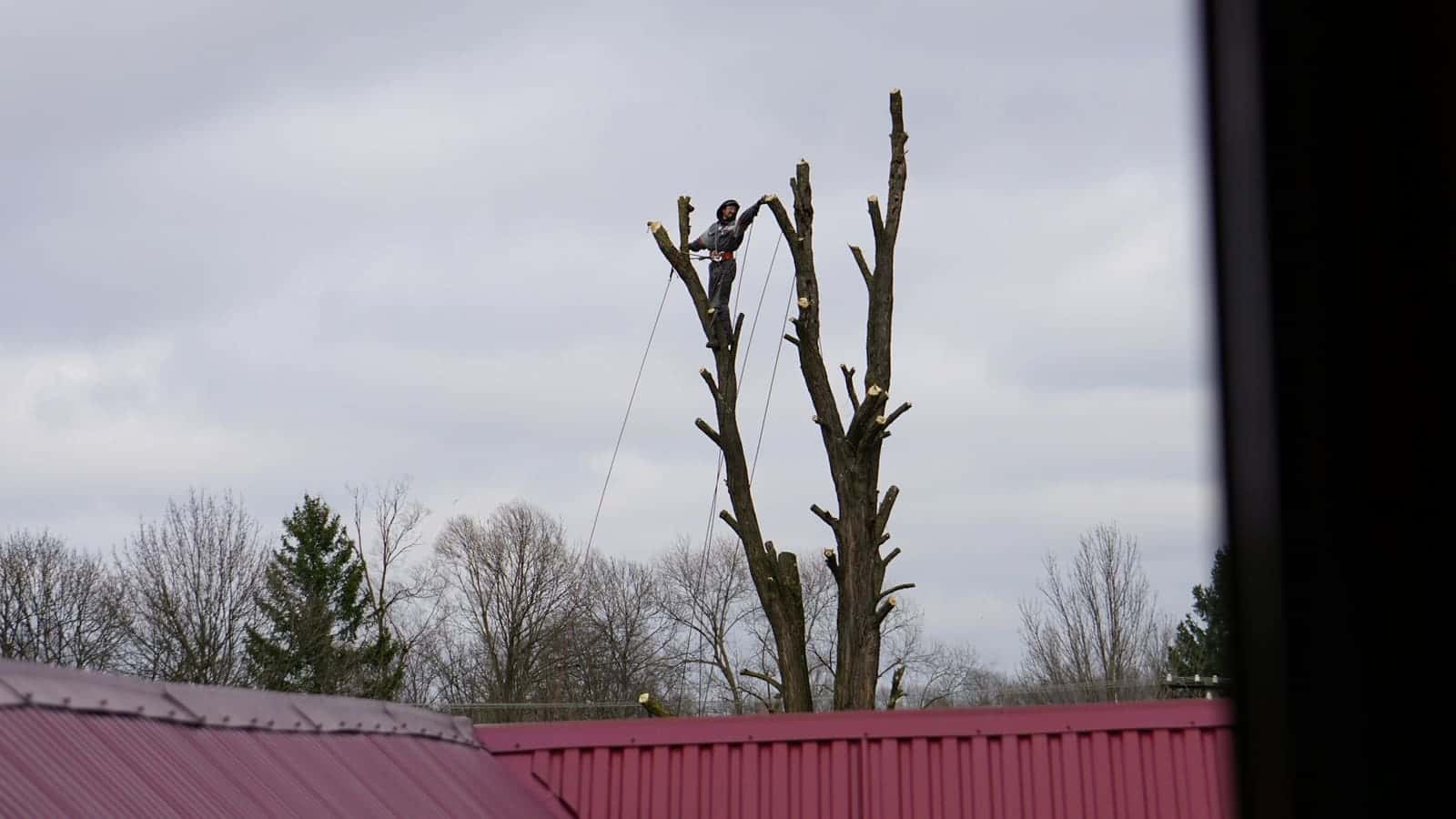
Pacific Northwest region
Tree removal and tree care in Alaska
Most Alaska tree work around homes comes from three things: spruce killed by the spruce beetle outbreak that has spread across Southcentral Alaska since 2016, windstorms that drop shallow-rooted spruce and birch, and heavy, wet snow that bends and breaks birch. Dead spruce near houses also add wildfire fuel, so removal often doubles as defensible-space work.
Alaska's residential trees are mostly white and black spruce, paper birch, aspen and balsam poplar or cottonwood. The spruce beetle outbreak in the Mat-Su, Anchorage and Kenai areas has killed spruce over more than a million acres, and beetle-killed trees dry out, turn gray and become both a fall hazard and a fire hazard within a few years.
Shallow soils over permafrost or glacial till give spruce shallow root plates, so strong wind events, including the downslope winds that hit Anchorage's hillside, can tip whole trees. The working season is short, and crews book up quickly in late spring after snowmelt reveals winter damage.
Reviewed and updated
Alaska's spruce beetle outbreak
Since about 2016 the spruce beetle has killed white and Lutz spruce across Southcentral Alaska, from the Mat-Su Valley through Anchorage to the Kenai Peninsula, over more than a million acres. Trees die within a year or two of attack, and the gray snags that follow stand for several years before failing.
For homeowners, the questions are which dead spruce can reach something, and which live spruce are worth protecting. Removing dead trees near the house reduces both fall risk and fire fuel.
Beetles, wind, snow and fire in Alaska
Spruce beetle
Beetle-killed spruce stand gray and dry, then snap or tip, often years after dying.
Windstorms
Shallow-rooted spruce and birch tip over in strong downslope and storm winds.
Heavy wet snow
Early and late snow bends and breaks birch and loads spruce crowns.
Wildfire
Dead spruce and dense black spruce near homes carry fire toward structures.
Spruce, birch, aspen and cottonwood
- White spruce
- Main spruce beetle host; shallow roots
- Black spruce
- Very flammable; common in wet lowlands
- Paper birch
- Bends and breaks under heavy snow
- Aspen
- Prone to decay and trunk failures with age
- Balsam poplar and cottonwood
- Large, fast-growing; heavy limb drop
Alaska services by risk
For beetle-killed spruce.
After windstorms and heavy snow.
For leaning spruce over homes.
To triage a stand of dead spruce.
Alaska's short working season
Snowmelt in late spring shows what winter broke, and crews fill their calendars quickly. Summer is the main season but overlaps with wildfire risk; frozen ground in winter can make access easier for crews that work through it.
- Late spring
- Snowmelt reveals winter breakage; crews book quickly
- Summer
- Main working season; wildfire season
- Fall–winter
- Windstorms and early snow; frozen ground helps access
Defensible space around Alaska homes
- Remove dead spruce and dead lower limbs within about 30 feet of the house.
- Thin dense black spruce so crowns don't touch.
- Favor birch and aspen near the house; they burn less readily than spruce.
- Keep firewood and slash piles away from the structure.
Alaska tree rules
- Alaska has no statewide permit for removing trees on private residential land; check with your borough or municipality for local rules and for trees in rights-of-way.
- The Alaska Division of Forestry and Fire Protection provides guidance on spruce beetle and wildfire defensible space around homes.
Sources (checked 2026-10-04)
Rules change and details depend on your exact property. Confirm with the city or county before work starts. This isn't legal advice.
Alaska tree questions
Should I remove beetle-killed spruce near my Alaska home?
Usually yes when they're within reach of the house, driveway or power lines. Dead spruce dry out, become brittle and fail unpredictably, and they add fire fuel near the structure.
How can I tell if spruce beetles killed my tree?
Look for red or fading needles, boring dust and pitch tubes on the trunk, and later gray, needleless crowns. Woodpeckers flaking the bark are another sign.
Can I keep firewood from beetle-killed spruce?
Generally, but cut, split and dry it in the sun or cover it with clear plastic so beetles in the bark don't move to live trees nearby.
When is the best time for tree removal in Alaska?
Late spring through fall for most work; winter removal on frozen ground can reduce yard damage where crews work through the cold.
Do I need a permit to cut trees on my lot in Alaska?
Not statewide for private lots. Some municipalities have rules for rights-of-way or subdivisions, so check locally.
How much does tree removal cost in Alaska?
Prices tend to run higher than in the Lower 48 because of travel, equipment and a short season. See the tree removal cost guide.
Need tree help in Alaska?
Call to speak with a local tree-service provider about removal, trimming, stumps or storm damage. Describe the tree and what it's near, and they'll explain the next step.