
Cincinnati, OH · Hamilton County
Tree removal in Cincinnati
In Cincinnati, steep clay hillsides prone to landslides and city-owned street trees shape most tree jobs. Any work on a public tree, including the street tree in front of your house, needs a Cincinnati Parks Urban Forestry permit. Trees fully on private property generally need none.
Cincinnati is a city of hills. Much of it sits on the Kope Formation, a shale-heavy bedrock that weathers into a thick clay soil and is associated with frequent landslides wherever it's exposed on slopes. Trees on those hillsides matter beyond shade: their roots add strength to the clay. Clearing a slope or cutting trees at its toe or crest can change how it behaves, so removals on steep lots in neighborhoods like Price Hill, Mount Adams, Clifton and along the river bluffs deserve more thought than a flat-yard job.
The city's street trees are managed by Cincinnati Parks' Urban Forestry team and paid for in part by a front-foot assessment on property in the Urban Forestry Maintenance District. Emerald ash borer moved through southwest Ohio more than a decade ago, so many dead and declining ash trees, public and private, have already come down; the ones that remain are often brittle.
Reviewed and updated
Hillside clay, ash loss and Ohio Valley storms
Landslide-prone hillsides
Clay soils over Kope Formation shale slide on steep slopes; tree removal, cutting the toe of a slope or loading its top can make it worse.
Ash loss from emerald ash borer
Southwest Ohio's ash have been dying for years; remaining dead ash are brittle and harder to remove safely.
Summer thunderstorms and wind
Severe storms bring down limbs and uproot trees in saturated clay.
Freezing rain and wet snow
Winter ice events load limbs, especially on silver maples and Callery pears.
Removing trees on a Cincinnati hillside
On flat ground, removing a tree is about the tree. On a Kope Formation slope, it's also about the soil. Research on Cincinnati's hillsides lists the usual triggers for landslides: water building up in the slope, weak clay soil, steepness, cutting into the bottom of a slope, and adding weight to the top. Tree roots work against all of that by binding the upper soil.
- Remove the trees that are hazardous and leave the rest, rather than clearing a whole slope.
- Cut stumps low and leave the root systems in place on the slope instead of digging them out.
- Don't pile logs, chips or fill soil at the top of a slope, or dig into the bottom of one to make room for equipment.
- Replant or let native groundcover and shrubs establish soon after removals, before heavy rain.
- If you see cracks in the ground, tilting retaining walls or trees leaning downhill together, talk to a geotechnical engineer before any clearing.
Steep lots, retaining walls and narrow streets
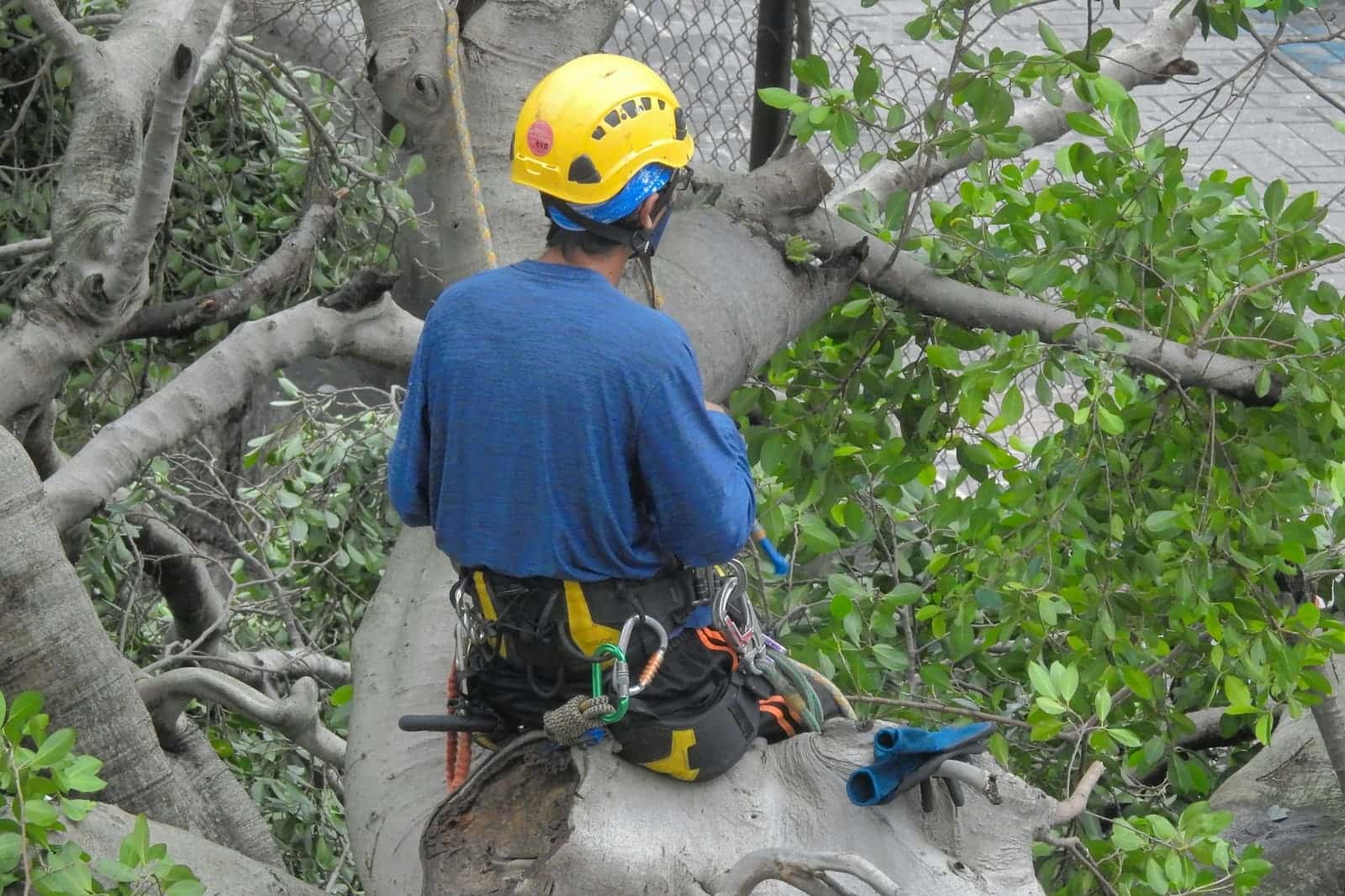
Steep lots, retaining walls and narrow streets with on-street parking make equipment access the main planning question. Many hillside removals are done by climbers and rigging because a lift or crane can't set up on the slope, and wood is carried up or down by hand. Older neighborhoods have alleys and overhead Duke Energy lines in the back.
Street trees and the Urban Forestry permit
- No operation involving a public tree (a street tree or other tree on public property) may begin without an Urban Forestry permit from the director. There's no fee when the estimated cost of the work is $500 or less.
- Properties in the Urban Forestry Maintenance District pay a front-foot assessment that funds planting, pruning and removal of public trees along streets.
- Disputes over private trees affecting a neighbor (not the right-of-way) are handled by the Department of Buildings & Inspections as code enforcement.
Sources (checked 2026-10-01)
Rules change and details depend on your exact property. Confirm with the city or county before work starts. This isn't legal advice.
Getting a public tree pruned or removed
- 1
Ask the city first
Cincinnati Parks Urban Forestry takes pruning and removal requests for public trees through 311. Stumps on public property can be requested the same way.
- 2
Or hire it out with a permit
If you want the work done sooner, a tree company can apply for an Urban Forestry permit; it's free when the work is estimated at $500 or less.
- 3
Wait for approval before cutting
No operation involving a public tree may start without the permit, including root cutting for sidewalk or driveway work.
Silver maples, sycamores and street plantings
- Silver maple
- Large and weak-wooded; frequent storm breakage
- Pin oak and red oak
- Common shade and street trees
- Sycamore
- Huge trees along creeks and valley floors
- Callery (Bradford) pear
- Splits at narrow forks; invasive in Ohio
- Honeylocust and London planetree
- Common street trees in newer plantings
Cincinnati services by situation
Deciding which hillside trees are hazards and which are holding the slope.
Rigged removals on lots where a lift can't set up.
Remaining ash killed by emerald ash borer.
Summer thunderstorm and ice cleanup.
Flat yards only; slope stumps are usually cut low and left.
Cincinnati tree questions
Can I remove the street tree in front of my Cincinnati house?
Not on your own. Any work on a public tree needs an Urban Forestry permit from Cincinnati Parks. You can also request pruning or removal of a public tree through 311.
Will removing trees on my hillside cause a landslide?
It can contribute. Roots help hold Cincinnati's hillside clay, and removing trees or cutting into the toe of a slope can make it less stable. On a steep lot, talk with a geotechnical engineer before clearing, and consider removing only the hazardous trees.
Why does my Cincinnati tax bill include a tree assessment?
Properties in the Urban Forestry Maintenance District pay a front-foot assessment that funds the city's care of public street trees, including planting, pruning and removal.
Calls are routed to independent local tree-service providers. How calling works
More local guides
Need tree help in Cincinnati?
Call to speak with a local tree-service provider about removal, trimming, stumps or storm damage. Describe the tree and what it's near, and they'll explain the next step.