
Tree services
Dead tree removal
A dead tree should be removed if it could hit anything when it falls, such as a house, driveway, road, fence or play area. Dead wood dries, loses strength and becomes brittle, so dead trees get more dangerous every season. They also get more dangerous for climbers to remove, so it's generally safer and simpler to act sooner.
Reviewed and updated
How to tell a tree is dead
- No leaves during the growing season, or only a few clusters.
- Bark falling off in large sheets, exposing bare wood.
- Brittle twigs that snap cleanly instead of bending.
- Fungal conks or mushrooms on the trunk or around the base.
- Woodpecker holes, D-shaped exit holes (emerald ash borer), or pitch tubes (bark beetles).
Why dead trees become more dangerous every year
A tree that has just died is still fairly strong. Over the following seasons, decay fungi and insects break down the wood. Twigs and small branches drop first, then larger limbs, and eventually the trunk and roots weaken until the whole tree can fail.
The timeline varies by species and climate. Ash killed by emerald ash borer, for example, are known to become brittle quickly. Dead trees also become harder to remove: a climber can't trust dead limbs to hold rigging, so crews switch to lifts or cranes, and that costs more the longer the tree stands.
What killed it? Common causes by region
Knowing the cause matters, because some of them threaten the trees nearby:
Emerald ash borer
- Trees affected
- Ash
- Where it's common
- Midwest, Northeast, Mid-Atlantic and spreading; see [Minneapolis](/tree-removal/minnesota/minneapolis/) or [Detroit](/tree-removal/michigan/detroit/)
Oak wilt
- Trees affected
- Red oaks especially; live oaks in Texas
- Where it's common
- Texas and the Upper Midwest
Bark beetles
- Trees affected
- Pines
- Where it's common
- Southeast after drought or lightning; Western mountains
Drought
- Trees affected
- Many species, especially on thin soil
- Where it's common
- Texas, California, the Southwest
Root damage
- Trees affected
- Any tree near construction
- Where it's common
- Anywhere; decline often shows two to five years later
How dead trees are removed safely
- 1
Confirm it's dead
An arborist checks for live tissue and looks for the cause, which matters if nearby trees of the same species are at risk.
- 2
Choose the method
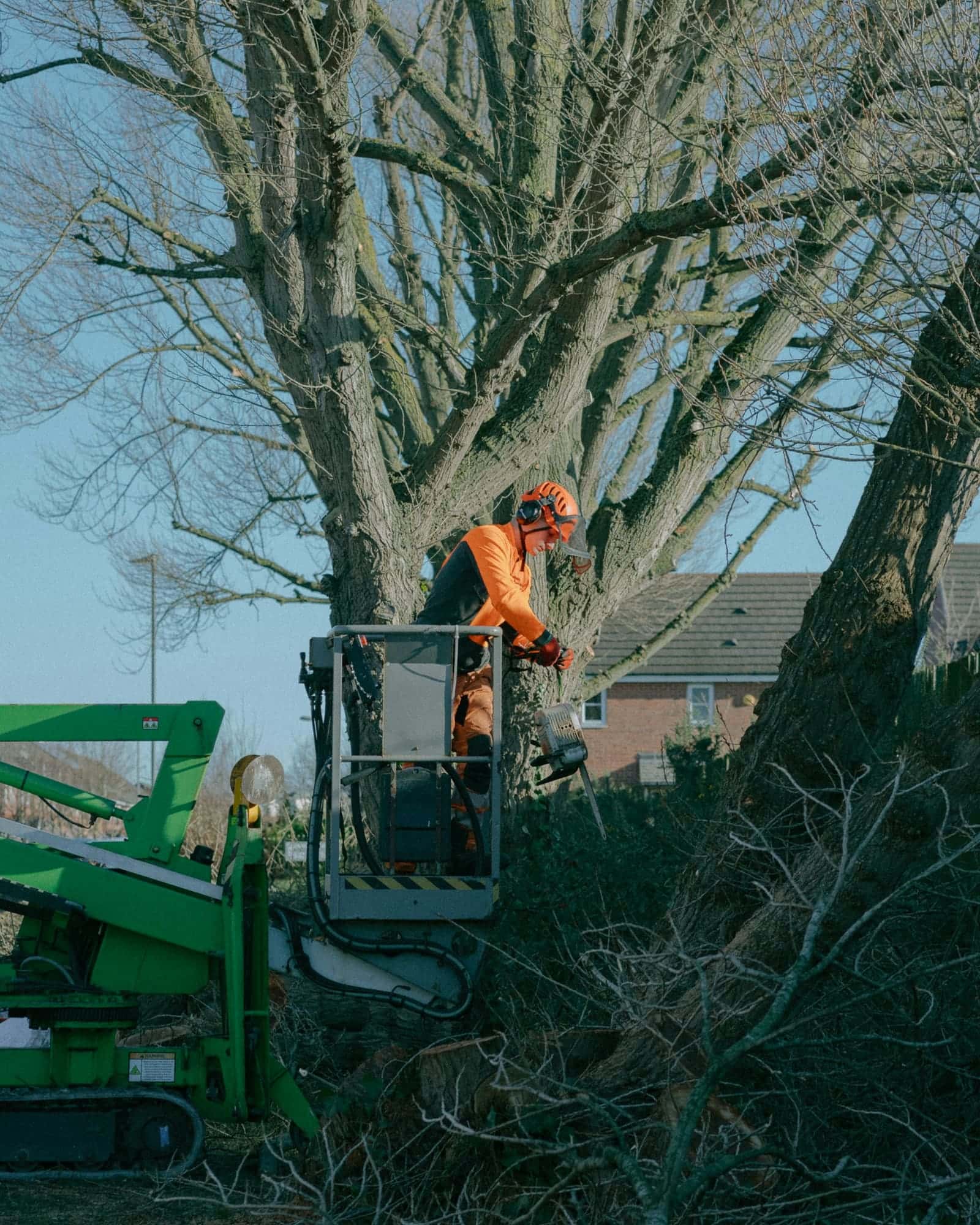
Bucket truck, crane or controlled felling instead of climbing, when the wood is too weak to trust.
- 3
Remove
Sections are taken down or the tree is felled in a planned direction.
- 4
Dispose properly
Wood from trees killed by invasive pests may be subject to firewood movement rules. Don't haul it across county or state lines.
Why a dead tree can cost more to remove
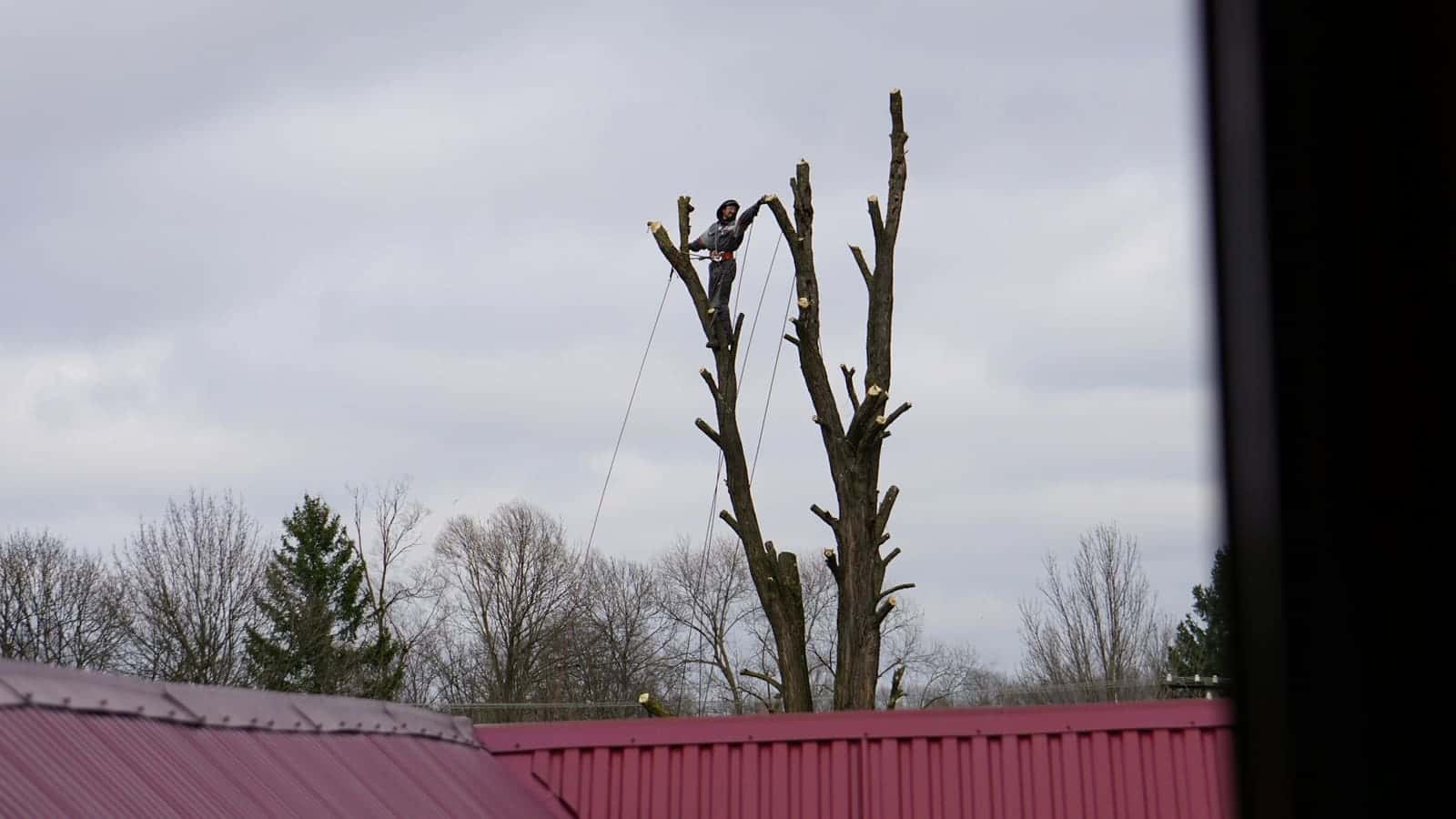
A dead tree is often more expensive than a live one of the same size, and the gap grows the longer it stands, because the safe methods change:
- How long the tree has been dead (older is more brittle and harder to rig)
- Whether equipment can reach, since dead trees often need a bucket truck or crane
- Targets underneath
- Size and cleanup scope
Until it comes down
Safe for a homeowner
- Keep people out of the area the tree could reach if it fell (about its height in every direction).
- Look at neighboring trees of the same species. Pests like emerald ash borer spread.
- Use local firewood only; don't move it long distances.
Leave these to professionals
- Don't climb a dead tree to cut it.
- Don't leave a dead tree that can reach the house standing into hurricane, ice or thunderstorm season; dead wood only gets weaker.
Can a dead tree be left standing?
Sometimes, and it can be good for wildlife. Standing dead trees, called snags, give woodpeckers, owls, bats and other cavity-nesting animals places to nest and feed. Forestry and wildlife agencies encourage leaving them where they can't hurt anyone.
The test is the same one that drives every dead-tree decision: what could it hit? A snag at the back of a large lot or in a woodland, more than its own height from houses, roads, fences, play areas and paths, can often be left. Some owners have a dead tree near the house cut down to a safe height, leaving a tall stump for wildlife instead of removing it entirely.
If a dead tree is anywhere it could fall onto people or property, removal is the safer choice, and it gets more expensive the longer the wood decays.
Dead tree questions
How long can a dead tree stand before it falls?
It's unpredictable. It can be years or it can be the next windstorm, depending on species, cause of death, root decay and weather. That's why dead trees near targets should be treated as a priority.
Is dead tree removal more expensive?
It can be, because brittle wood often requires a bucket truck, crane or slower rigging instead of simple climbing. The longer the tree stands dead, the more that tends to apply.
Who pays to remove a dead tree on the property line?
Trees on a line are typically shared by both owners, and a dead tree that's clearly failing puts both on notice. Talk to your neighbor first, and see who pays when a tree falls.
Do I need a permit to remove a dead tree?
Many cities exempt dead or hazardous trees from permits, but some still require notice or proof. Atlanta, for example, requires a permit even for dead trees on private property. Check locally.
Where dead trees are most common
Emerald ash borer, oak wilt, drought and bark beetles kill different trees in different regions, and some cities can order a diseased private tree removed.
Related services
- Tree Removal: how removal works when the wood is still sound
- Tree Risk Assessment: if you're not sure the tree is actually dead, or why it died
- Stump Grinding & Removal: dead stumps can host pests; grinding finishes the job
- Large Tree Removal: big dead trees near houses are prime crane jobs
Is the tree dead, dying or just dormant?
Need help with a tree?
Call to speak with a local tree-service provider about removal, trimming, stumps or storm damage. Describe the tree and what it's near, and they'll explain the next step.