
King County, WA
Tree removal in King County, Washington
In unincorporated King County, you need a clearing permit to remove trees in or near a critical area, such as a steep slope, wetland or stream buffer, or on property under urban clearing standards. Clearing more than 7,000 square feet on rural (RA) land, or cutting 5,000 board feet of merchantable timber, also needs a permit. Cities like Seattle, Bellevue and Sammamish have their own tree codes.
King County at a glance
- County permit
- Clearing and grading permit, King County Code Title 16 and 21A
- Critical areas
- Steep slopes, wetlands, streams and their buffers
- Rural land
- Clearing over 7,000 sq ft on RA-zoned property
- Timber
- Removing 5,000 board feet of merchantable timber
- Cities
- Seattle, Bellevue, Sammamish, Kirkland and others set their own tree rules
Reviewed and updated
County rules apply only outside cities
King County's clearing rules cover unincorporated areas, such as much of the Snoqualmie Valley, Vashon-Maury Island, Fall City, Hobart and parts of the plateau east of Lake Sammamish. Seattle, Bellevue, Redmond, Sammamish, Kirkland, Issaquah and the other cities each have their own tree codes, and many require permits for significant trees on private lots.
If you're not sure, King County's parcel viewer shows whether an address is in a city.
When a King County clearing permit is required
Exemptions are listed in King County Code 16.82.050, and some hazard-tree removals are handled differently from clearing. Processing for a full clearing permit can take around 100 days, so start early if you're planning work rather than responding to an emergency.
- Removing trees or vegetation from a critical area or its buffer: steep slopes, landslide or erosion hazard areas, wetlands, streams.
- Clearing on properties subject to urban clearing standards or clearing limits in a special district overlay (KCC 21A.38).
- Clearing more than 7,000 square feet on RA (rural area) zoned land.
- Removing 5,000 board feet or more of merchantable timber.
Windstorm cleanup: safe vs. not
Safe for a homeowner
- Photograph the tree and anything it's leaning toward. It helps with quotes and insurance.
- Measure around the trunk at chest height (4.5 ft). Dividing by 3.14 gives the diameter many permit rules use.
- Clear cars, furniture and pets away from the tree before the crew arrives.
- Ask each company for its certificate of insurance, sent directly from the insurer.
Leave these to professionals
- Don't cut a tree yourself if it could hit anything on the way down, or if any part is within 10 feet of a power line.
- Don't climb with a chainsaw. Aerial cutting is one of the most dangerous jobs in tree work.
- Don't remove a protected tree without checking local rules. Fines and replanting requirements can be significant.
Steep slopes, wet soil and big conifers
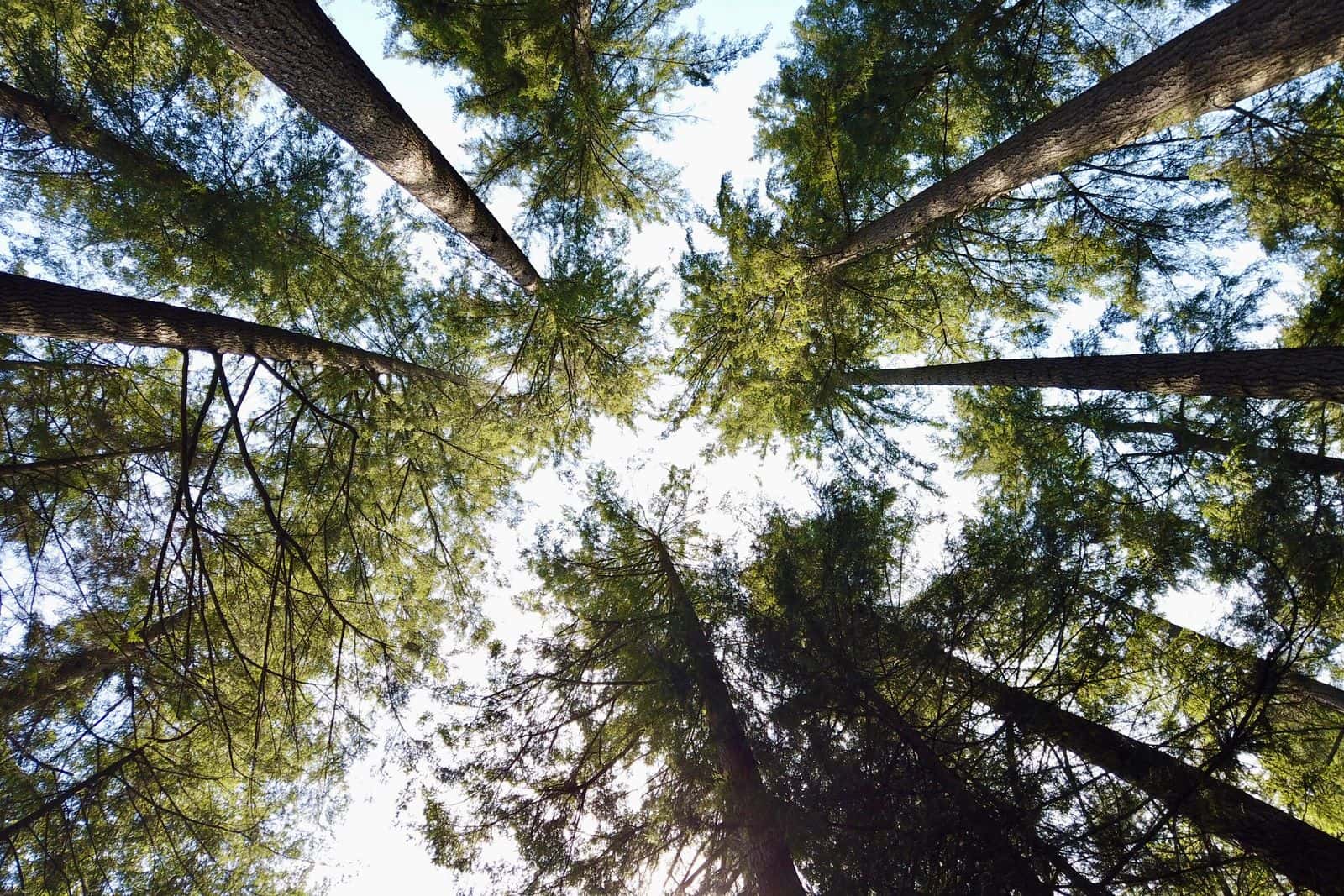
Much of the county's housing sits among tall Douglas-fir, western redcedar and western hemlock, often on slopes. Winter windstorms arrive on saturated ground, which is when large conifers uproot. Trees on steep slopes also hold soil in place, which is why the county regulates removal there: taking out the wrong trees can increase landslide and erosion risk.
A tree that's newly leaning, has cracked soil on the uphill side, or has root rot fungus at the base is a hazard. Have it assessed before the next windstorm season, and expect slope work to need extra care and sometimes a permit.
Windstorm season
Most King County tree emergencies come with fall and winter windstorms from November to February, when Pacific storms push gusts over soaked soil. Puget Sound Energy and Seattle City Light own the lines across most of the county; any tree on a line goes to the utility first.
How removal works among tall conifers
- 1
Assessment and quote
The company looks at the tree, the drop zone, access for equipment, and nearby targets like the roof, wires and fences. The written quote should say what's included.
- 2
Permits and utilities
If your jurisdiction requires a permit, it's secured first. If the tree is near power lines, the utility may need to make the line safe before anyone climbs.
- 3
Removal
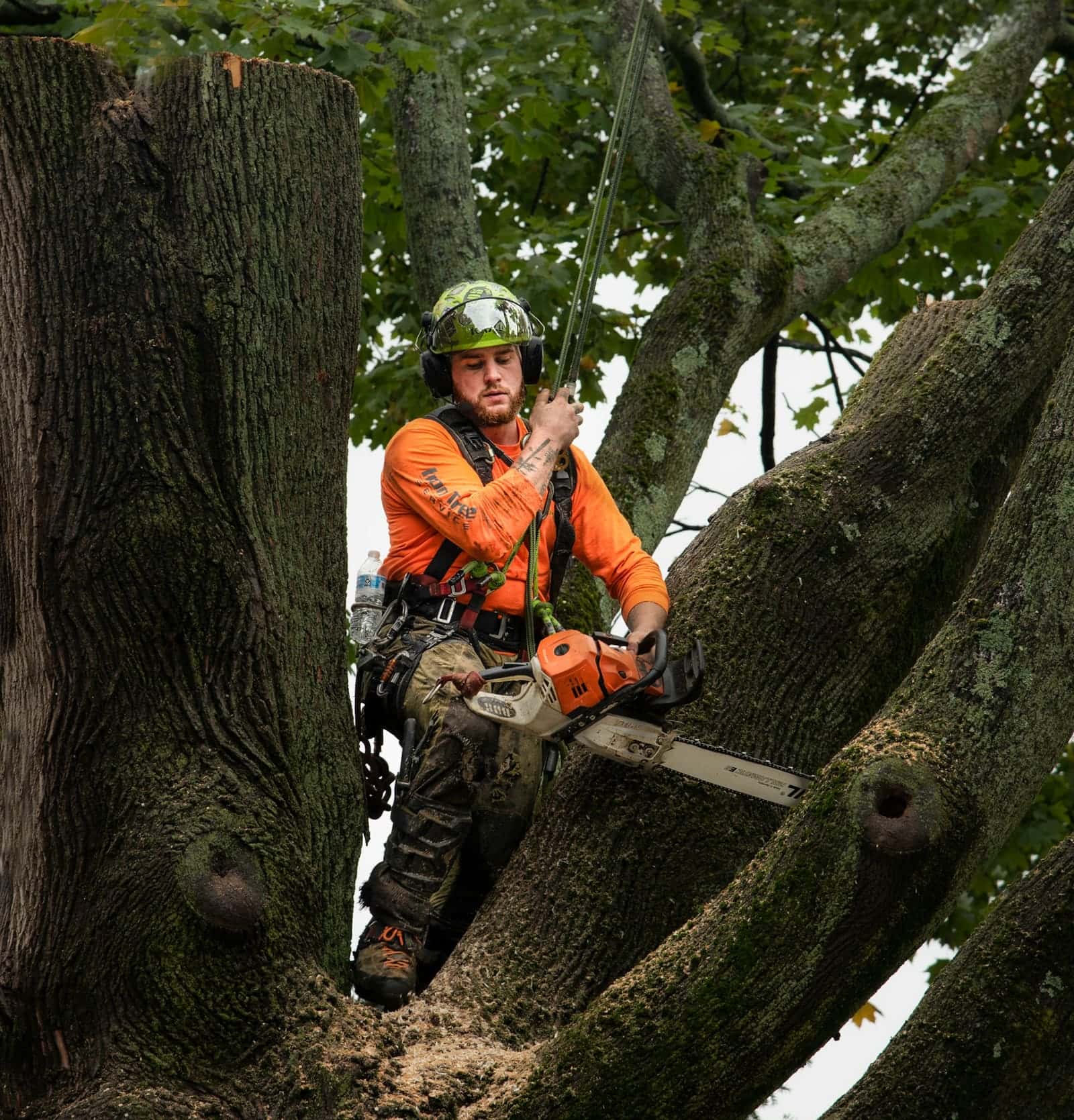
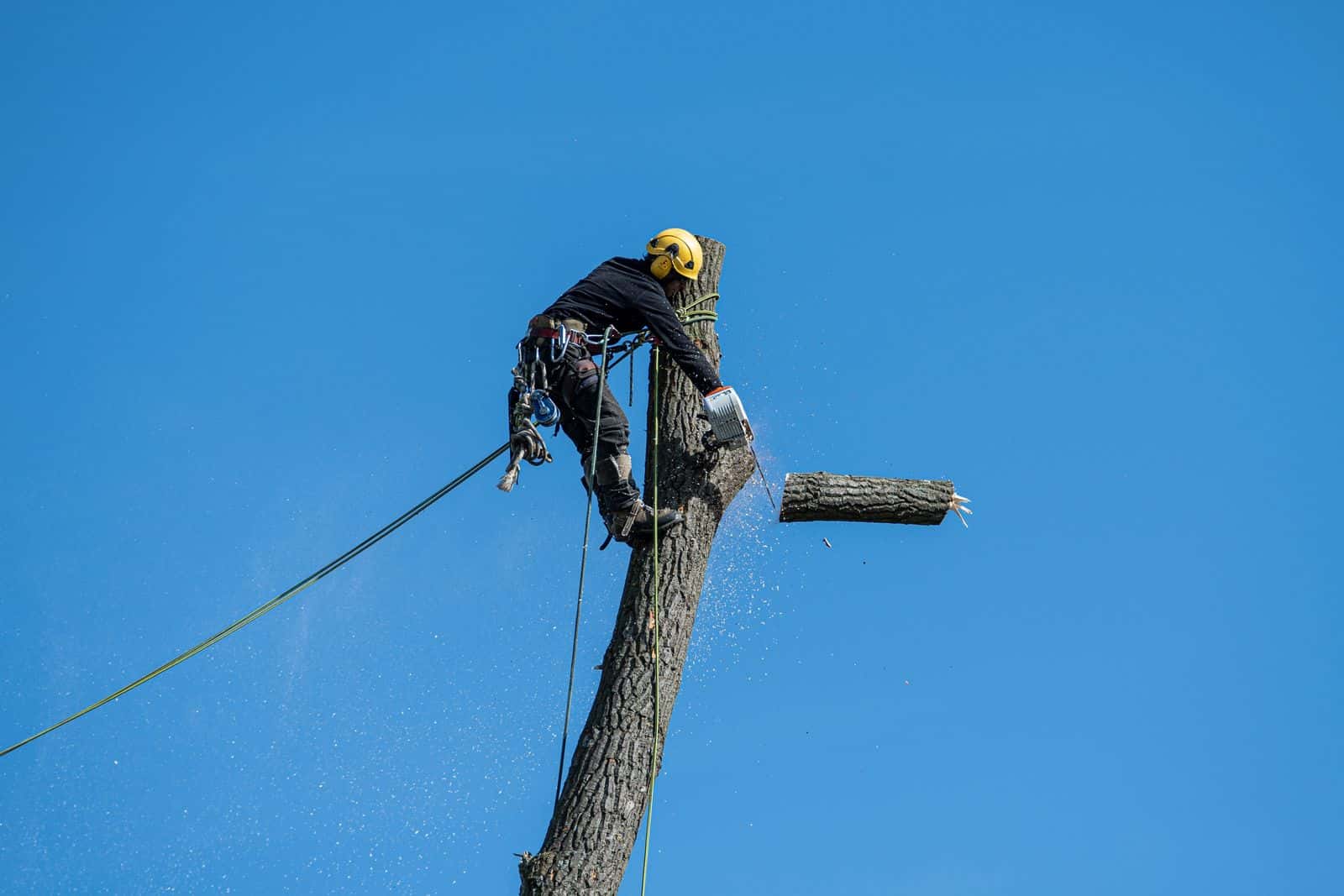
Limbs come off first, then the trunk in sections. Pieces are lowered on ropes (rigging) or lifted out with a crane. Ground crew keep everyone out of the drop zone.
- 4
Cleanup
Brush is chipped, wood is hauled or left as agreed, and the site is raked. The stump is cut low unless grinding is part of the job.
Services in King County
For leaning, rotting or cracked conifers near houses.
Before removing trees on slopes or in critical-area buffers.
After winter windstorms.
For tall firs and cedars that need climbers or cranes.
Seattle guidance
Seattle's tree protection code is separate from the county's and covers significant trees on private lots, with its own permit and replacement rules. If your address is inside Seattle, start there.
Seattle's tree code, windstorms and big conifers.
King County tree removal questions
Do I need a permit to remove a tree in unincorporated King County?
You need a clearing permit if the tree is in a critical area or its buffer, if your property is subject to urban clearing standards, if you're clearing over 7,000 square feet on rural land, or if you're cutting 5,000 board feet or more of timber. Check exemptions in KCC 16.82.050.
What counts as a critical area in King County?
Steep slopes and landslide or erosion hazard areas, wetlands, streams and their buffers, among others. Removing trees there is regulated because it can affect slope stability and water quality.
Does the county permit apply in Seattle or Bellevue?
No. Cities in King County have their own tree codes. Seattle, for example, regulates significant trees on private lots.
Can I remove a hazardous tree on a steep slope in King County?
Usually, but the process differs from ordinary clearing. Document the hazard, ideally with an arborist's assessment, and contact King County Permitting before removal unless it's an emergency.
When is windstorm season in King County?
Roughly November through February. Large conifers on saturated soil are most likely to uproot then.
Who handles a tree on a power line in King County?
Puget Sound Energy or Seattle City Light, depending on your area. Stay away and call 911 for sparks or fire.
How long does a King County clearing permit take?
Processing can take around 100 days unless environmental review is needed. Plan non-emergency work well ahead.
What are signs a big fir or cedar is unsafe?
A new lean, cracked or heaved soil at the base, mushrooms or conks on the trunk or roots, dead tops, and resin or bark falling off in patches. Have it assessed before storm season.
Who removes trees near me in King County?
Insured local tree services with climbers and equipment for tall conifers. You can call us to reach an independent provider.
Sources for the local facts on this page
- King County: Clearing and grading permits (checked 2026-10-03)
- King County: Clearing and grading land use permit process (checked 2026-10-03)
Tree service in King County
Call to speak with a local tree-service provider about removal, trimming, stumps or storm damage. Describe the tree and what it's near, and they'll explain the next step.