
Tree services
Palm tree removal services
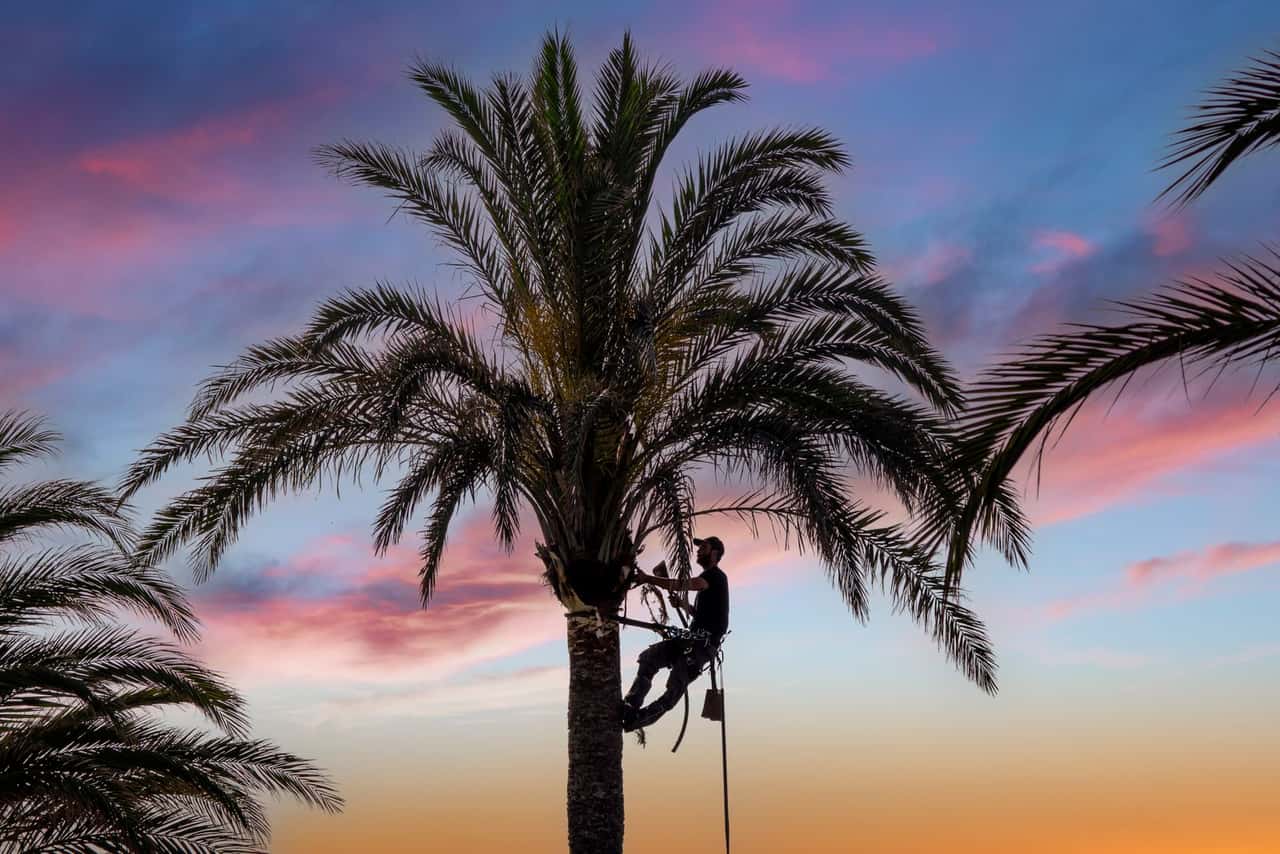
Palms are removed differently from hardwood trees. They have no branches, just a crown of fronds on a single trunk, so a crew usually cuts the crown off and then takes the trunk down in sections or fells it. Palm roots don't resprout, so the stump can be ground or dug out without regrowth. Dead and diseased palms should come down before the heavy crown drops.
By calling, you agree that your call may be recorded and routed to an independent local tree-service provider, who may call or text you back about your request. Calling is free and does not obligate you to hire anyone. See our Privacy Policy.
Who needs palm tree removal
Dead, diseased or unwanted palms, crown first, then the trunk.
Often needed with: tree removal, storm damage tree removal, stump grinding & removal, tree trimming & pruning.
Call and we'll connect you with a tree-service provider for palm tree removal in your area.
Call for tree serviceWhat to confirm in a palm tree removal quote
Quotes differ mostly in what they include. Ask each provider to put these in writing so you can compare like for like:
- Crown removal and how it's lowered
- Trunk sectioning or felling
- Disposal, especially for diseased palms
- Tool disinfection between palms if disease is suspected
- Stump grinding or digging out
Last updated
Why palms are different
A palm has no branches and no growth rings. Its single growing point, the bud at the top, makes every new frond. If that bud dies, the palm can't recover, however healthy the trunk looks.
All the weight is in the crown, and on large palms that crown is heavy. Dead crowns can drop without warning, which is why dead palms over roofs, pool cages and walkways are treated as a priority.
Signs a palm is dying or needs to come down
- The spear leaf (the newest, center frond) is dead or pulls out easily.
- The whole crown has turned bronze or brown from the bottom up.
- The trunk is narrowing to a point near the top ("pencil pointing").
- Fronds die on one side of the crown first, a sign of fusarium wilt in some palms.
- The crown is bending or the trunk is leaning toward the house after a storm.
- Freeze damage left the crown brown and no new fronds appeared in spring.
Lethal bronzing, fusarium wilt and freeze
Lethal bronzing is a bacterial disease spread by a small planthopper. It kills many palm species, including sabal (cabbage) palms, in Florida and parts of Texas, turning the crown bronze from the bottom up. Fusarium wilt kills Canary Island date palms and queen palms and spreads on pruning tools, so crews disinfect saws between palms.
Freezes in the northern edge of palm country can kill the bud. Wait until warm weather to see whether a new spear leaf emerges before deciding to remove a frozen palm.
How a palm is taken down
- 1
Assess the palm
The crew checks the crown, trunk and lean, and whether disease means debris needs special handling.
- 2
Remove the crown
A climber or lift removes fronds and fruit stalks, then the heavy crown, lowering it on a rope where needed.
- 3
Take down the trunk
The trunk is cut in sections from the top, or felled where there's room.
- 4
Handle debris
Fronds and trunk are hauled or chipped; diseased palms are disposed of without spreading the infection.
- 5
Deal with the stump
The stump is ground or dug out, and the hole filled.
What palm removal costs depend on
Palm removal is priced mostly on height and what's under the crown:
- Palm height, since tall palms need a lift or experienced climber
- Crown weight and how much must be lowered on ropes
- What's under the palm: roof, pool, pool cage, lanai
- Disposal, especially of diseased palms
- Stump grinding or digging out
- Number of palms in the same visit
Stump and replanting
Palm stumps don't resprout, but the fibrous trunk takes years to rot. Grinding or digging it out clears the space for a new planting or lawn.
Don't replant a palm of the same susceptible species in the spot where one died of lethal bronzing or fusarium wilt. Ask a local nursery or extension office which species are less susceptible.
Under a dead or diseased palm
Safe for a homeowner
- Keep people out from under dead palms; the crown can drop without warning.
- Ask whether a healthy palm could be transplanted instead of removed.
- Tell the crew about pool cages, screens and lanais under the crown.
Leave these to professionals
- Don't climb a palm to cut it yourself; falls and crown drops cause serious injuries.
- Don't move fronds or wood from a diseased palm to your compost.
- Don't cut palms near power lines; call the utility.
Palm removal questions
Can a dying palm be saved?
Sometimes. A palm stressed by cold, drought or nutrient deficiency can recover if the spear leaf and bud are still alive. Once the bud is dead, the palm can't grow new fronds and won't recover. Palms killed by lethal bronzing or fusarium wilt should be removed.
What is lethal bronzing?
A bacterial disease spread by a planthopper insect that kills many palm species, including sabal (cabbage) palms, in Florida and parts of Texas. Fronds turn bronze from the bottom of the crown upward and the spear leaf dies. There's no cure for infected palms.
Do palm stumps need to be ground?
Palm stumps don't send up new shoots, but they're tough and take years to rot. Grinding or digging them out clears the space for planting, paving or lawn.
Can I transplant a palm instead of removing it?
Many healthy palms transplant well because their roots regrow from the base. It takes heavy equipment for large palms, but it can be worth asking about for valuable species.
Why do people remove palms near the house?
Heavy crowns over roofs and pool cages, fronds and fruit falling on walkways, roots near pools and slabs, and the risk of a dead crown dropping are the most common reasons.
Is palm removal cheaper than removing a hardwood tree?
Often, for a palm of similar height, because there are no limbs to rig. Tall palms over structures, crowns that must be lowered, and diseased palm disposal can make it comparable.
Do I need a permit to remove a palm?
Some Florida and California cities and counties regulate palm removal like other trees, and a few protect specific species. Check your city or county rules before removal.
How fast can a dead palm fall?
There's no safe timeline. The crown of a dead palm can fall without warning, and an infected palm's trunk can weaken at the top. Treat a dead palm over a roof, pool cage or walkway as a priority.
What about palms after a hurricane?
Many palms bend in hurricanes and survive. Palms that lost their whole crown, snapped, or are leaning against a structure need to come down; others may recover and can be watched.
What palm tree removal can include
- Assessment
- What the tree could hit, its condition, and access.
- Job planning
- Whether it can be felled or must come down in sections.
- Sectional removal and rigging
- Limbs and trunk lowered on ropes near buildings.
- Crane work when needed
- For big or decayed trees over structures.
- Brush and debris cleanup
- Chipping branches and raking the work area.
- Wood hauling or leaving rounds
- Agree in advance which you want.
- Stump options
- Grinding is usually a separate line item.
- Property protection
- Mats, plywood or careful drops to protect lawns and drives.
Before you call about palm tree removal
These answers let a provider tell you on the first call what the job involves and roughly how it'll be done.
- Palm type
- If known
- Height
- Rough trunk height
- Condition
- Brown crown, dead spear, leaning
- What's under it
- Roof, pool cage, lanai
- How many palms
- One or several
Safety and permission checks
- Power lines: stay at least 10 feet from overhead lines (OSHA's minimum distance for unqualified workers) and call the utility; only line-clearance-qualified tree workers cut closer.
- Underground lines: call 811 a few days before stump grinding or digging so buried utilities are marked for free.
- Permits: ask the city or county before removing or heavily pruning a large tree; protected-tree sizes and street-tree rules vary by place.
- Who is responsible: a tree on your lot is usually yours, street (right-of-way) trees are usually the city's, and trees on lines are the utility's to clear.
- Doing it yourself: picking up small fallen limbs is a homeowner job; chainsaw work off a ladder, near lines or on anything that could hit a building is not.
Have your answers ready? Call and we'll connect you with a provider serving your area.
Call for tree serviceHow getting palm tree removal works
- 1
Tell us what's happening
Call and describe the tree, where it is and how urgent it is.
- 2
Get connected
Your call goes to an independent tree-service provider serving your area.
- 3
The tree is assessed
The provider looks at the tree, what's around it, and access for equipment.
- 4
Scope and price are discussed
You get the plan and price directly from the provider, before any work.
- 5
You decide
There's no obligation; you choose whether and when to go ahead.
TreeRemovalServices.net is a referral service and doesn't perform tree work. How it works
Related tree services
- Tree Removal servicesTaking down a tree you no longer want or can't keep, in sections near buildings.
- Storm Damage Tree Removal servicesUprooted, split or snapped trees and hanging limbs after wind, ice or hurricanes.
- Stump Grinding & Removal servicesGrinding stumps below grade so you can replant, sod or build.
- Tree Trimming & Pruning servicesPruning for clearance over roofs and drives, deadwood removal and storm preparation.
- Emergency Tree Removal servicesA tree on the house, car, driveway or a line, or one about to fall.
- Dead Tree Removal servicesDead or dying trees that turn brittle and get riskier to climb every season.
- Hazardous Tree Removal servicesLeaning, cracked or decayed trees that could hit something if they fail.
- Large Tree Removal servicesBig trees close to structures that need rigging or a crane.
- Tree Risk Assessment servicesAn arborist's opinion on whether a tree can stay, before you remove it.
- Commercial Tree ServicesTree work for HOAs, property managers and commercial sites.
- Land Clearing servicesClearing brush, trees and stumps from a lot by mulching or excavation.
- Stump Removal servicesDigging out the stump and root ball where something will be built or planted.
- Tree Cutting servicesBringing a tree down safely: felled in one piece or cut down in sections.
- Oak Tree Removal servicesOaks with permits, oak wilt timing and heavy wood to plan around.
- Pine Tree Removal servicesTall, beetle-killed or storm-damaged pines near the house.
- Emergency Tree Trimming servicesBroken, hanging or cracked limbs over a roof, drive or path.
- Emergency Tree Cutting servicesCutting a fallen tree off a car, driveway, fence or road.
Tell us what's happening and we'll connect you with a tree-service provider serving your area.
Call for tree serviceWhy these services go together
- Tree Removal: removing hardwoods and conifers
- Storm Damage Tree Removal: palms snapped or leaning after a hurricane
- Stump Grinding & Removal: clearing the palm stump
- Tree Trimming & Pruning: if the palm just needs dead fronds removed
Palm Tree Removal by location
By state (51)
- Texas
- Florida
- California
- Arizona
- Georgia
- North Carolina
- Washington State
- Minnesota
- New York
- Colorado
- Illinois
- Ohio
- Pennsylvania
- Michigan
- Tennessee
- Louisiana
- Missouri
- Virginia
- Maryland
- Washington, DC
- New Jersey
- Massachusetts
- Wisconsin
- Kentucky
- South Carolina
- Alabama
- Oklahoma
- Oregon
- Utah
- Indiana
- Nevada
- Iowa
- Arkansas
- Mississippi
- Kansas
- Connecticut
- New Mexico
- Idaho
- Nebraska
- Alaska
- Delaware
- Hawaii
- Maine
- Montana
- New Hampshire
- North Dakota
- Rhode Island
- South Dakota
- Vermont
- West Virginia
- Wyoming
By city (57)
- Dallas, TX
- Houston, TX
- Austin, TX
- San Antonio, TX
- Miami, FL
- Orlando, FL
- Tampa, FL
- Los Angeles, CA
- San Diego, CA
- Sacramento, CA
- Phoenix, AZ
- Atlanta, GA
- Charlotte, NC
- Raleigh, NC
- Seattle, WA
- Minneapolis, MN
- New York City, NY
- Denver, CO
- Chicago, IL
- Columbus, OH
- Cleveland, OH
- Philadelphia, PA
- Pittsburgh, PA
- Detroit, MI
- Nashville, TN
- New Orleans, LA
- St. Louis, MO
- Kansas City, MO
- Fort Worth, TX
- Jacksonville, FL
- Virginia Beach, VA
- Baltimore, MD
- Jersey City, NJ
- Boston, MA
- Milwaukee, WI
- Louisville, KY
- Charleston, SC
- Birmingham, AL
- Tulsa, OK
- Cincinnati, OH
- Memphis, TN
- Richmond, VA
- Fort Lauderdale, FL
- Tucson, AZ
- Portland, OR
- Salt Lake City, UT
- Indianapolis, IN
- Las Vegas, NV
- Tacoma, WA
- San Jose, CA
- San Francisco, CA
- Buffalo, NY
- Cedar Rapids, IA
- Wichita, KS
- Albuquerque, NM
- Boise, ID
- Omaha, NE
By county (14)
By town and neighborhood (8)
Need help with a tree?
Call to speak with a local tree-service provider about removal, trimming, stumps or storm damage. Describe the tree and what it's near, and they'll explain the next step.
By calling, you agree that your call may be recorded and routed to an independent local tree-service provider, who may call or text you back about your request. Calling is free and does not obligate you to hire anyone. See our Privacy Policy.