
Kansas City, MO · Jackson County
Tree removal in Kansas City, Missouri
Kansas City trees face winter ice and spring and summer wind, hail and tornadoes. Pruning or removing a street right-of-way tree needs KC Parks Forestry authorization, with no permit fee. Trees on your own lot need no city permit; dead ash, silver maples and Callery pears are the common removals.
Kansas City's boulevard system and older neighborhoods, such as Brookside, Waldo, Hyde Park and the Northland's older subdivisions, have big, mature trees close to homes and lines. Much of the metro sits on clay soils over limestone that shrink in drought and saturate in spring rains.
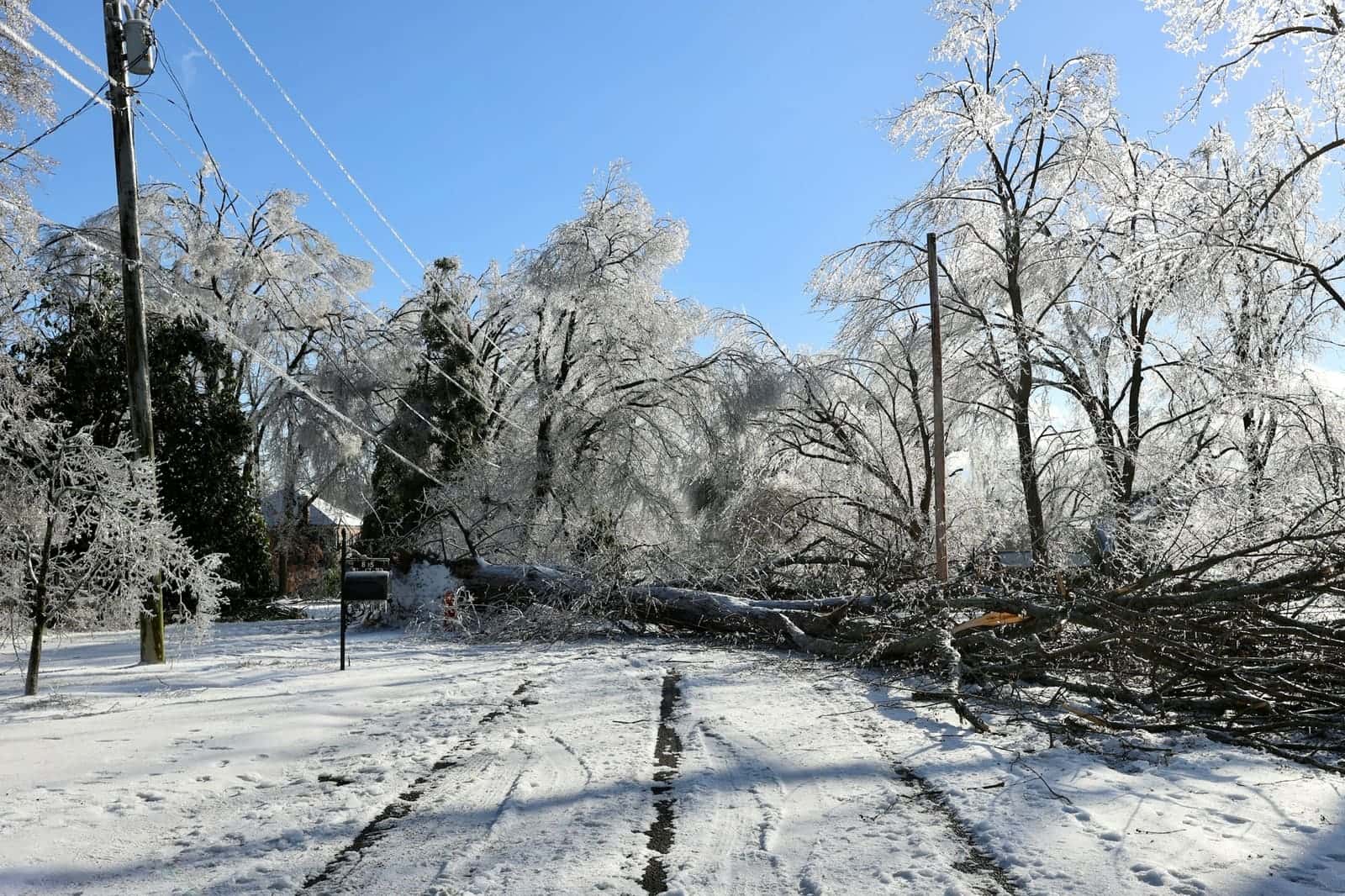
Ice storms are the storm residents remember most, with freezing rain bringing limbs onto lines across the region for days. Spring brings the opposite: straight-line winds and tornadoes hitting fully leafed trees, often on soft ground.
Reviewed and updated
Ice, spring wind and right-of-way trees
Ice storms
Freezing rain splits silver maples, pears and elms and brings limbs onto lines.
Spring winds and tornadoes
Severe thunderstorms snap and uproot leafed-out trees on rain-softened clay.
Right-of-way trees
KC Parks Forestry manages street and boulevard trees; work on them needs authorization.
Emerald ash borer
Present in the metro; untreated ash decline and become brittle.
Older lots with alleys, newer lots with slopes
Many older lots have rear alleys or narrow side yards and overhead lines; newer suburban lots have more room but fences and sloped back yards.
Sloped suburban backyards can limit where a lift or grinder can go. Ask whether the crew plans to climb or bring in equipment, because it changes the price.
Trees along Kansas City's boulevards and parkways
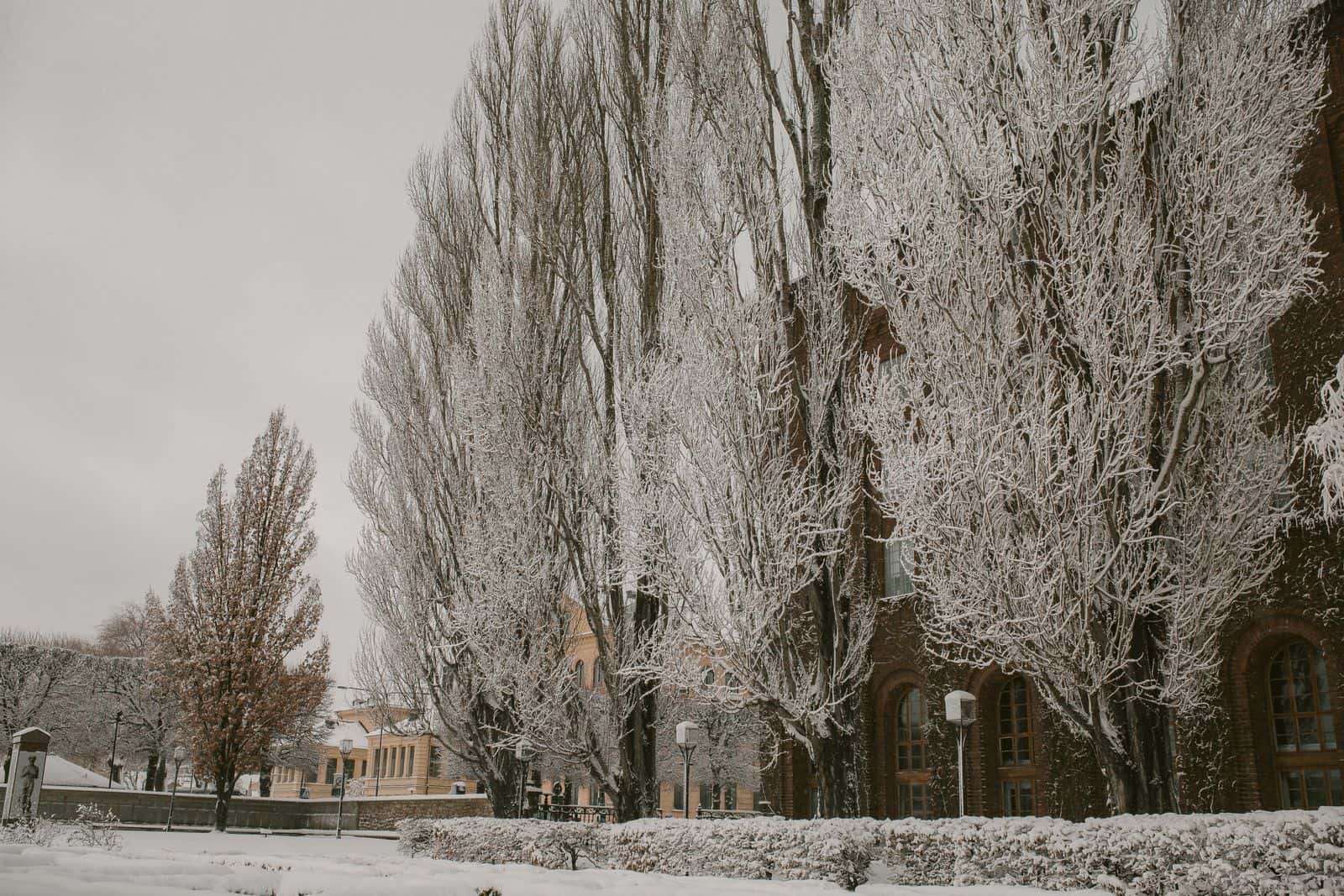
Kansas City's boulevard and parkway system, laid out more than a century ago, is lined with large shade trees in the public right-of-way. Those trees, and the ones in the strip in front of many homes, are managed by KC Parks' Forestry section.
If a boulevard tree is damaged or hanging over your property, report it rather than cutting it. Homeowners can get a free permit to prune, remove or plant right-of-way trees themselves, and removing one without authorization can mean fines and replacement.
Silver maples, pin oaks, pears and bur oaks
- Silver maple
- Large, brittle; ice breakage
- Pin oak
- Chlorosis in alkaline soil
- Callery pear
- Splits at narrow forks
- Bur oak and hackberry
- Native, durable shade trees
KC Parks rules for right-of-way trees
- KC Parks and Recreation's Forestry section oversees trees in the right-of-way along streets and boulevards; pruning, removal or planting of these trees requires its authorization.
- Foresters can issue permits to residents for pruning, removal and planting at no cost. Removing a right-of-way tree without authorization can mean fines and required replacement.
Sources (checked 2026-10-01)
Rules change and details depend on your exact property. Confirm with the city or county before work starts. This isn't legal advice.
Bur oaks and hackberries: the tough natives worth keeping
Not every big tree in Kansas City is a liability. Bur oak and hackberry are native to the area's prairie edges and handle ice, wind and dry summers better than the silver maples and pears planted around them.
- Bur oaks are long-lived and storm-tolerant; prune them in the dormant season.
- Hackberries tolerate tough sites but can decay where old limbs were cut badly; inspect older ones.
- When replacing a failed silver maple or pear, natives like these are a sturdier choice.
Kansas City services through ice and storm seasons
Ice storm and spring wind cleanup.
Failing silver maples and split pears.
Weak forks and deadwood out before ice season.
Ash killed by emerald ash borer.
After removals; right-of-way stumps need authorization.
Kansas City questions
Do I need a permit to trim the boulevard tree in front of my Kansas City home?
Yes. Right-of-way trees are managed by KC Parks Forestry, and work on them requires its authorization. Resident tree permits are free.
Should I replant ash after removing one in Kansas City?
No. Emerald ash borer is in the metro, so replanting ash invites the same problem. Bur oak, Kentucky coffeetree, hackberry, and other species suited to the area's clay and alkaline soils are better choices, and a mix protects the street from the next pest.
Why do Kansas City storms uproot so many trees?
Spring rains saturate the area's clay soils, and severe thunderstorms then hit trees in full leaf. The combination of soft ground and wind catching the canopy pulls trees over at the root plate, especially where roots were cut by past construction.
Who handles a tree on a power line in Kansas City?
Evergy, the electric utility. Stay well away from any downed or touching line and report it. Once the line is safe, any part of the tree on your own property is your responsibility to clear.
How do I protect trees from ice storms in Kansas City?
Prune out weak forks, dead limbs and badly split branches in fall, especially on silver maples and pears. During ice, stay out from under trees and away from lines; don't try to knock ice off branches.
Calls are routed to independent local tree-service providers. How calling works
More local guides
Need tree help in Kansas City?
Call to speak with a local tree-service provider about removal, trimming, stumps or storm damage. Describe the tree and what it's near, and they'll explain the next step.