Decisions
When should a dead tree be removed?
Updated · Guide by TreeRemovalServices.net
Short answer
Remove a dead tree as soon as practical if it could hit a house, driveway, road, play area, fence or a neighbor's property. Dead wood gets brittle quickly, and the longer a dead tree stands, the more dangerous and expensive it is to take down. A dead tree far from anything people use can be left as wildlife habitat.
Dead, dormant or just stressed?
Before deciding, make sure the tree is really dead. Late-leafing species and drought-stressed trees can look dead in spring.
Scratch a twig
- Alive
- Green, moist layer
- Dead
- Brown, dry
Bend a twig
- Alive
- Bends
- Dead
- Snaps
Spring leaves
- Alive
- Present, even if late
- Dead
- None while similar trees leafed out
Bark
- Alive
- Tight
- Dead
- Loose, falling off in sheets
Base
- Alive
- Firm
- Dead
- Fungus, soft wood, cavities
What makes timing urgent
How fast a dead tree needs to come down depends on what it could hit and how fast it's decaying.
- Something to hit: a house, garage, car, driveway, sidewalk, road, playset, fence or neighbor's property.
- The species: ash killed by emerald ash borer dries out and becomes brittle unusually fast.
- Climate: in hot, humid places decay moves quickly; dead pines in the Gulf South can become unclimbable within a season.
- Storm season: dead trees are the first to fail in hurricanes, ice storms and derechos.
- Lean or cracks: a dead tree that's also leaning or cracked is an emergency.
Why waiting costs more
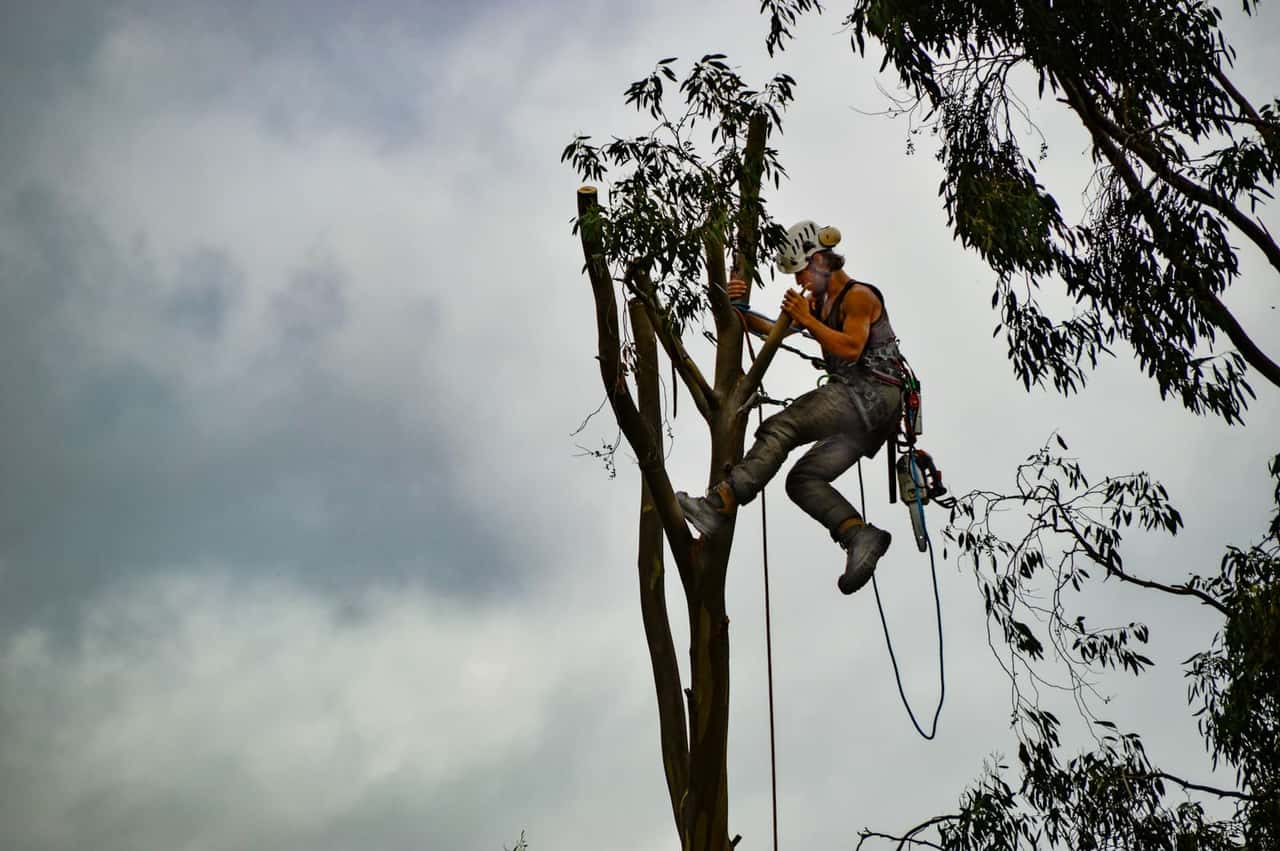
A tree that died recently can often be climbed and taken down in sections with ropes. As the wood decays, limbs can no longer hold a climber or the rigging, so crews switch to bucket trucks or cranes, which cost more and need access. Waiting a year or two can turn a routine removal into a crane job.
When leaving a dead tree is reasonable
In a back woodlot or open area where nothing and no one is within its falling distance, about one and a half times its height, a dead tree (a "snag") provides habitat for woodpeckers, owls and insects. Check it occasionally and make sure no one builds, parks or plays in its reach.
Who's responsible for a dead tree
Generally the owner of the land where the trunk stands. A dead tree that you knew about, or should have known about, can make you responsible if it falls on a neighbor's property. See who pays when a tree falls. Dead street trees are usually the city's to remove; many cities, like Philadelphia, remove dead street trees free when reported.
When to call a tree professional
Get professional help, not more reading, if the tree has any of these:
- A new or worsening lean
- Soil or roots lifting at the base
- A large crack in the trunk
- Big dead limbs over the house or drive
- Decay, cavities or fungus near the base
- Storm damage near a structure or line
- Dead Tree Removal services · Dead or dying trees that turn brittle and get riskier to climb every season.
- Hazardous Tree Removal services · Leaning, cracked or decayed trees that could hit something if they fail.
- Find tree service near you
Tell us what's happening and we'll connect you with a tree-service provider serving your area.
Call for tree serviceCommon questions
Can a dead tree spread problems to my other trees?
Sometimes. Beetle-killed pines can release beetles that attack nearby stressed pines, and pine-wilt-killed pines spread the disease. Removing those promptly protects the rest.
Is it cheaper to remove a tree before it dies completely?
Usually. A declining tree can often still be climbed and rigged; a fully dead, brittle tree may need a lift or crane.
Can I cut down a small dead tree myself?
A small dead tree in open ground, yes, with care: dead wood can break unpredictably. Anything near a house, fence or line, or taller than you can control, belongs to a professional. Some cities, like Atlanta and San Jose, require permits even for dead trees.
Editorial note: this guide is general information written for homeowners. It isn't a substitute for an on-site assessment by a qualified arborist, or for legal or insurance advice.