Act soon
My tree was damaged in a storm
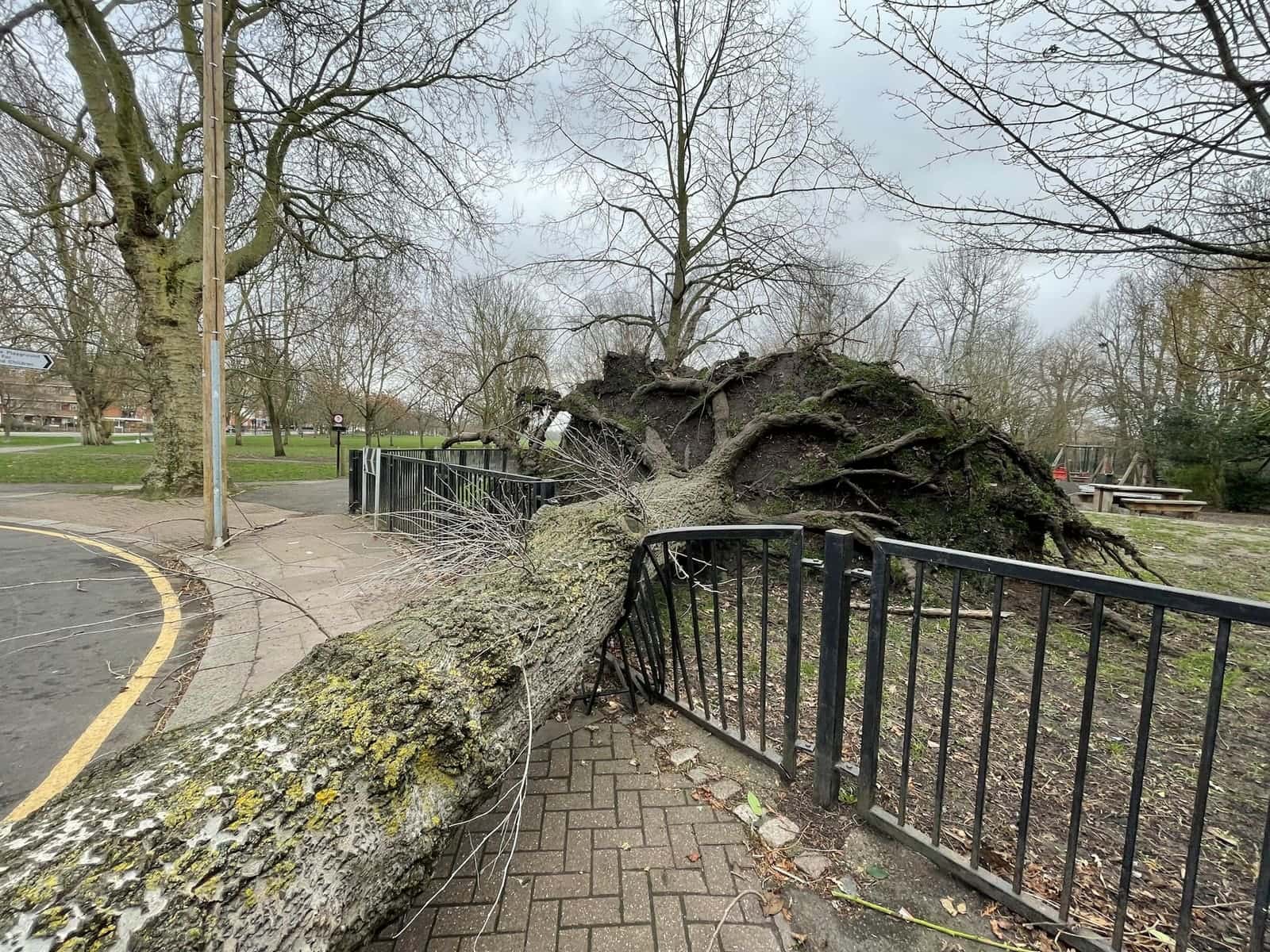
A storm-damaged tree can usually be saved if the trunk is sound, the main branch unions aren't split, the roots didn't lift, and it lost less than roughly a third of its crown. Trees that uprooted, split down the trunk, or lost most of their crown usually need to come down. Deal with hangers and anything on structures first.
What to do and what not to do
What to do
- Check for wires in or near the tree before getting close.
- Look for hangers overhead and keep people out from under them.
- Look at the base for lifted or cracked soil.
- Photograph the damage for insurance and to track changes.
What not to do
- Don't rush to remove every damaged tree; wait for an assessment of valuable trees.
- Don't let anyone top the tree to "even it out."
- Don't fertilize heavily right after damage.
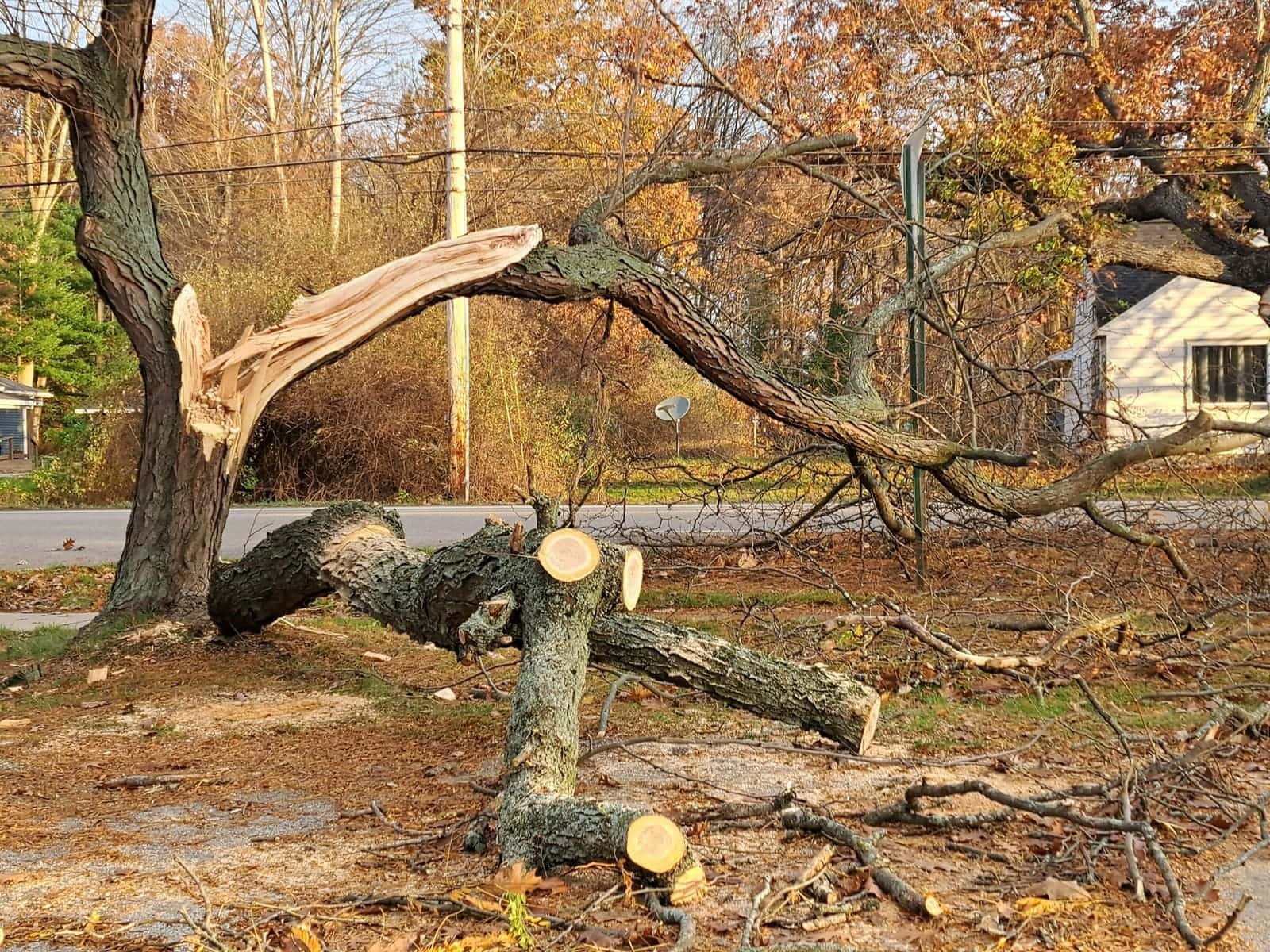
Keep, prune, or remove
Small broken branches, trunk intact
- Usual outcome
- Keep; clean-up pruning
One large limb lost, crown mostly intact
- Usual outcome
- Keep; prune to clean cuts, monitor
Main fork split or trunk cracked
- Usual outcome
- Usually remove; sometimes cabling on young trees
Root plate lifted, new lean
- Usual outcome
- Usually remove; treat as urgent
More than about half the crown gone
- Usual outcome
- Usually remove
Damage differs by storm type
Hurricanes and long windstorms on wet ground tend to uproot whole trees, so check the base and soil first. Thunderstorm downbursts and tornadoes snap trunks and twist crowns. Ice and heavy wet snow break limbs throughout the crown and leave many hangers. Knowing which kind of damage you're looking at tells you where to look for hidden problems.
Helping a damaged tree recover
After clean-up pruning, the best care is simple: water deeply during dry spells for the next season or two, spread mulch over the root zone (not against the trunk), and keep equipment off the roots. Avoid heavy fertilizing right after damage. New sprouts will appear along damaged limbs; an arborist can thin them over the next few years so the tree rebuilds a sound structure.
Can a storm-damaged tree be saved? The 50 percent rule of thumb
A healthy tree that lost less than about half its crown, with its trunk, main forks and roots intact, can usually be saved with restoration pruning. Arborists often use that half-the-crown mark as a starting point, then adjust for species, age and what the tree could hit if it fails later.
- Usually savable: broken small and medium limbs, a lost top on a young, vigorous tree, bark torn on less than a quarter of the trunk's circumference.
- Usually not: a split or cracked main trunk, a root plate that lifted, more than half the crown gone on a mature tree, or a tree that was already declining before the storm.
- Wait and see: trees that lost leaves but not limbs. Many releaf in a few weeks.
Common questions
How long should I wait before deciding about a damaged tree?
Remove immediate hazards right away. For trees with moderate damage, it's reasonable to wait for an arborist's assessment, or even until the next growing season, to see how the tree responds.
How long should I wait to decide about a storm-damaged tree?
Hazards come first: hangers, cracked trunks and leaning trees need action right away. For a tree that's stable but battered, it's reasonable to wait a growing season and see how it recovers before deciding to remove it.