
Southeast region
Tree removal and tree care in Tennessee
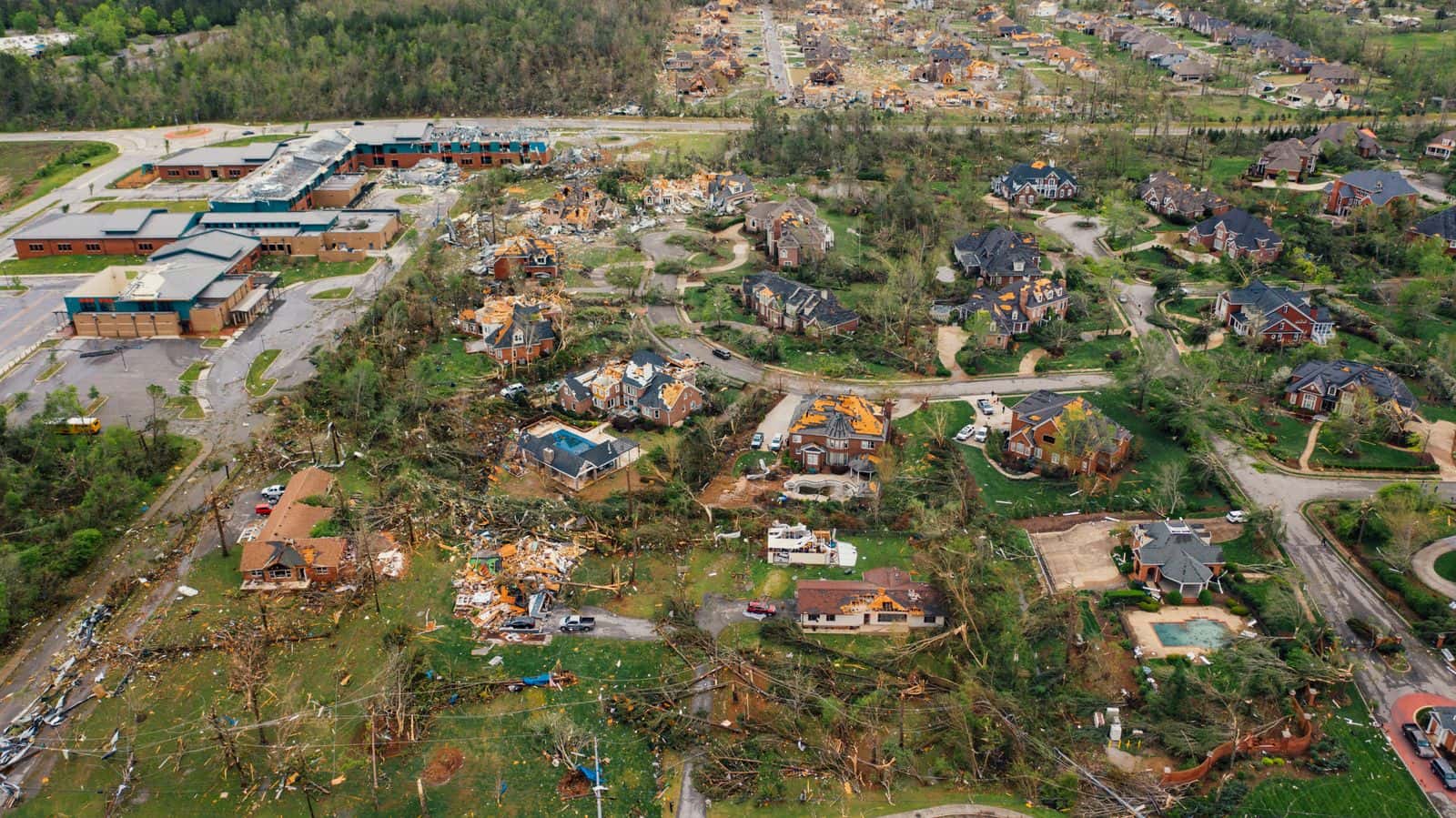
Tennessee tree damage is driven by tornadoes, like Nashville's in March 2020 and December 2023, and by ice storms. Thin soil over limestone in the Nashville Basin keeps roots shallow. Homeowners generally need no permit for a tree on their own lot, but right-of-way trees need city approval.
Middle Tennessee sits on limestone, often with only a thin layer of soil above it. Roots spread wide and shallow instead of deep, and after days of rain a big hackberry or oak can tip over with its whole root plate. That's why storm calls around Nashville often involve uprooted trees, not just broken limbs.
East Tennessee's mountains bring steep lots and heavy hardwood canopy, while West Tennessee around Memphis deals with ice storms and big, fast-growing bottomland trees. Statewide, Callery pear, hackberry and silver maple are frequent removals because they break easily as they age.
Reviewed and updated
Tornadoes, limestone and ice in Tennessee
Tornadoes and severe storms
Nashville's March 2020 and December 2023 tornadoes destroyed trees across whole neighborhoods.
Shallow soils over limestone
In Middle Tennessee, trees root shallowly and uproot in saturated ground.
Ice storms
Freezing rain splits pears, maples and hackberries and brings limbs onto lines.
Drought
Dry late summers stress shallow-rooted trees and lead to dieback.
Emerald ash borer
Present in Tennessee; ash are declining across the state.
West, Middle and East Tennessee
West Tennessee (Memphis)
- Main pressures
- Ice storms, big bottomland trees
- Typical work
- Ice damage and large-tree removal
Middle Tennessee (Nashville)
- Main pressures
- Tornadoes, thin soil over limestone
- Typical work
- Uprooted-tree cleanup, rocky stump grinding
East Tennessee (Knoxville, Chattanooga)
- Main pressures
- Mountains, steep lots, heavy hardwood canopy
- Typical work
- Hillside removals and access planning
Tennessee tree rules
- Tennessee leaves tree rules to local government; in Nashville, Metro approval is needed for right-of-way trees, not for trees in your own yard.
- In Metro Nashville, single-family and duplex owners generally don't need a Metro permit to remove a tree on their own land, unless it's in the public right-of-way, a protected or heritage tree, or part of a subdivision or site plan. Right-of-way trees need Urban Forestry approval.
Sources (checked 2026-10-01)
Rules change and details depend on your exact property. Confirm with the city or county before work starts. This isn't legal advice.
Tennessee city guides
Nashville and Memphis sit at opposite ends of the state and see different storms: Nashville tornadoes on limestone, Memphis derechos and ice on loess and clay. East Tennessee's mountains add steep slopes and pine beetles.
Tornado damage, limestone roots and infill construction.
Derechos, ice storms and MLGW line clearance.
Tennessee's storm seasons
Tennessee's tornado season peaks in spring but can return in late fall, and ice storms hit in winter. Dormant-season pruning and assessments of big trees near houses are best done before spring.
- Winter
- Dormant-season pruning; ice storm risk
- Spring
- Peak severe-storm and tornado season
- Late fall
- Secondary severe-weather season (December 2023)
Tennessee services by risk
Tornado and straight-line wind cleanup.
Uprooted trees on houses.
Split pears and decaying hackberries.
Often limited by limestone near the surface.
Tennessee's hackberries, pears, oaks and maples
- Hackberry
- Very common; decay-prone and short-lived
- Callery (Bradford) pear
- Splits at narrow forks; widespread in subdivisions
- White and southern red oak
- Large, valuable shade trees
- Sugar and silver maple
- Common yard trees; silver maple is brittle
- Eastern redcedar
- Grows on thin limestone soils across Middle Tennessee
Tennessee tree questions
Why do so many trees uproot in Middle Tennessee storms?
Much of the Nashville Basin has thin soil over limestone, so roots spread wide and shallow. When the ground is saturated, strong winds can tip a tree over with its root plate attached instead of breaking it.
Does Tennessee require a permit to cut down a tree on my property?
Not at the state level. Some cities regulate trees in the public right-of-way, protected or heritage trees, or trees on development sites, so check with your city. Metro Nashville's rules are covered on the Nashville page.
Are Bradford pears a problem in Tennessee?
Yes. They grow fast, then split at their narrow forks, often in spring storms or ice. Many Tennessee homeowners remove them before they fail and replant with stronger species.
Need tree help in Tennessee?
Call to speak with a local tree-service provider about removal, trimming, stumps or storm damage. Describe the tree and what it's near, and they'll explain the next step.