
Tree services
Pine tree removal services
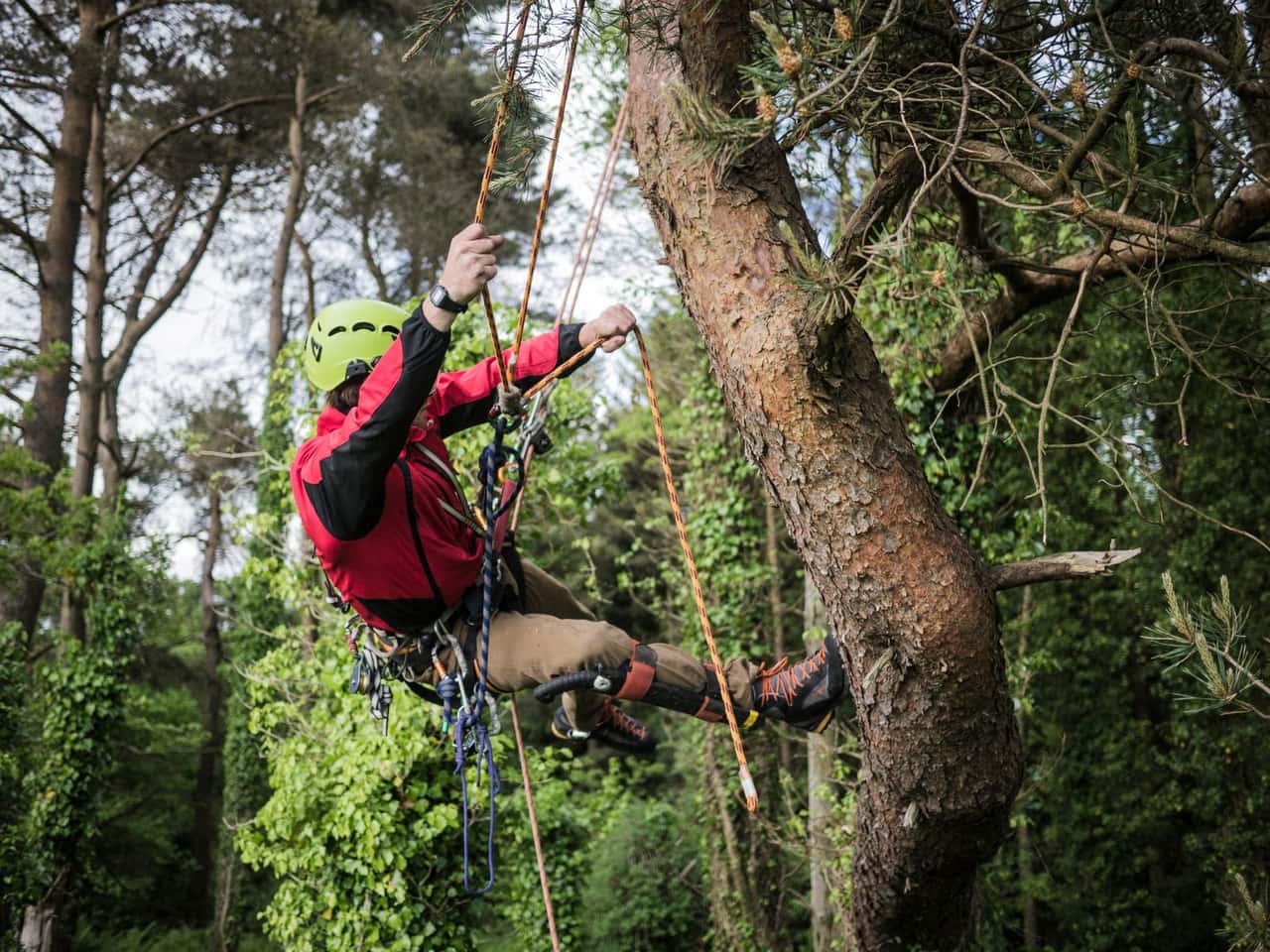
Pines are often removed because they grow very tall near houses, snap or uproot in storms, or are killed by bark beetles or pine wilt. Their straight trunks can be felled where there's room, but near a house they're usually climbed and taken down in sections. A dead or beetle-infested pine should come down quickly, because beetles can move to nearby pines.
By calling, you agree that your call may be recorded and routed to an independent local tree-service provider, who may call or text you back about your request. Calling is free and does not obligate you to hire anyone. See our Privacy Policy.
Who needs pine tree removal
Tall, beetle-killed or storm-damaged pines near the house.
Often needed with: dead tree removal, storm damage tree removal, large tree removal, tree risk assessment.
Call and we'll connect you with a tree-service provider for pine tree removal in your area.
Call for tree serviceWhat to confirm in a pine tree removal quote
Quotes differ mostly in what they include. Ask each provider to put these in writing so you can compare like for like:
- Felling or sectional removal, and why
- Beetle-infested wood disposal
- Protection for cars, decks and roofs from sap and debris
- Needle and cone cleanup
- Stump grinding
Last updated
Signs a pine is dying or needs to come down
- Needles turning yellow, red or brown across the whole crown.
- Small pitch tubes (popcorn-like resin) or boring dust on the bark.
- A long strip of missing bark or a split from a lightning strike.
- A new lean, or soil heaving at the base after a storm.
- A tall pine within reach of the house, especially on wet or shallow soil.
- Scots pines browning quickly in late summer or fall (a pine wilt sign).
Pines in storms
Pines carry their crowns high on long trunks, and in hurricanes and strong thunderstorms they're prone to snapping mid-trunk, especially where there's decay or beetle damage. In saturated soil, shallow-rooted pines can also uproot.
A healthy pine isn't automatically a hazard. Lean, root damage, decay and a history of lightning or beetles are what change the risk.
Bark beetles, pine wilt and lightning
Southern pine beetle and Ips engraver beetles attack stressed pines, especially after drought, flooding, construction damage or a lightning strike. Signs include pitch tubes on the bark and reddish boring dust. Infested trees usually die, and beetles can move on to nearby pines.
Pine wilt, spread by pine sawyer beetles, kills Scots pines and some other non-native pines, mostly in the Midwest. Infected trees are removed and the wood destroyed, not kept as firewood.
How a tall pine comes down
- 1
Check for beetles or disease
The crew looks for pitch tubes, boring dust, blue-stained wood or wilt, which affects how fast to act and how to handle the wood.
- 2
Choose felling or sectioning
Pines with a clear landing zone can be felled; most near houses are climbed and taken down in sections.
- 3
Remove
Limbs come off first, then the trunk in sections lowered on ropes or dropped into a cleared area.
- 4
Handle infested wood
Beetle- or wilt-infested wood is chipped, hauled, or kept local per state guidance so it doesn't spread to healthy trees.
- 5
Grind the stump
The stump is ground below grade; pines don't resprout from the roots.
Needles, sap and the stump
Sap sticks to cars, decks and tools, so crews often tarp work areas and you should move cars. Needles and cones are raked or blown up as part of cleanup.
Pines don't resprout from the stump. Grinding is for appearance and to clear the area for planting or lawn.
What pine removal costs depend on
Pine removal is driven by height and whether the tree can be felled or must come down in pieces:
- Height, since tall pines need longer climbs and more sections
- Lean and what's in the landing zone
- Whether it can be felled or must be sectioned
- Infested-wood disposal
- Access for lifts or cranes on very tall trees
- Cleanup of needles, cones and sap-covered debris
Protecting nearby pines and property
Safe for a homeowner
- Check nearby pines for the same symptoms once one is infested.
- Move cars and cover decks to keep sap off during removal.
- Water stressed pines during drought; stressed trees attract beetles.
Leave these to professionals
- Don't stack beetle-infested pine as firewood next to healthy pines.
- Don't fell a tall pine yourself near a house or line.
- Don't wait out a pine whose whole crown has turned red; it's dead.
Pine removal questions
Are tall pines near a house dangerous?
Not automatically. A healthy, well-rooted pine can stand for decades. The risk rises with lean, root damage, decay, lightning damage, beetles, and wet soils during storms. A risk assessment can tell you whether a specific tree is a concern.
How do I know if my pine has bark beetles?
Look for pitch tubes (small blobs of resin) on the bark, reddish boring dust in crevices or at the base, and a crown that fades from green to yellow to red. Once the crown is red, the tree is dead.
Should I remove a pine struck by lightning?
Lightning-struck pines are often attacked by bark beetles and frequently die within months. Many arborists recommend removing a struck pine near a house, or at least watching it closely for beetle signs.
Why do pines snap in storms?
Pines carry their foliage high on a long trunk, which catches wind, and trees with decay or beetle damage break more easily. In saturated soil, shallow-rooted pines can also uproot.
What is pine wilt?
A disease caused by a nematode carried by pine sawyer beetles. It kills Scots pine and some other non-native pines quickly, mostly in the Midwest. Infected trees are removed and destroyed so the beetles don't spread it.
Do pine stumps grow back?
No. Pines don't sprout from the stump or roots, so grinding is mainly for appearance and to clear the area.
Can pine needles and sap damage my house?
Needles clog gutters and sap sticks to cars and decks. These are maintenance issues, not usually reasons on their own to remove a healthy pine.
How much space does it take to fell a pine?
A clear landing zone longer than the pine's height. Most residential pines don't have that, so they're taken down in sections.
Do I need a permit to remove a pine?
Some cities protect large trees of any species, including pines; others exempt dead or diseased trees. Check local rules first.
What pine tree removal can include
- Assessment
- What the tree could hit, its condition, and access.
- Job planning
- Whether it can be felled or must come down in sections.
- Sectional removal and rigging
- Limbs and trunk lowered on ropes near buildings.
- Crane work when needed
- For big or decayed trees over structures.
- Brush and debris cleanup
- Chipping branches and raking the work area.
- Wood hauling or leaving rounds
- Agree in advance which you want.
- Stump options
- Grinding is usually a separate line item.
- Property protection
- Mats, plywood or careful drops to protect lawns and drives.
Before you call about pine tree removal
These answers let a provider tell you on the first call what the job involves and roughly how it'll be done.
- Height
- Taller than the house?
- Symptoms
- Red needles, pitch tubes, lightning scar
- Lean
- Any change after a storm
- Nearby pines
- Do others show symptoms?
- Access
- Room for a lift or crane
Safety and permission checks
- Power lines: stay at least 10 feet from overhead lines (OSHA's minimum distance for unqualified workers) and call the utility; only line-clearance-qualified tree workers cut closer.
- Underground lines: call 811 a few days before stump grinding or digging so buried utilities are marked for free.
- Permits: ask the city or county before removing or heavily pruning a large tree; protected-tree sizes and street-tree rules vary by place.
- Who is responsible: a tree on your lot is usually yours, street (right-of-way) trees are usually the city's, and trees on lines are the utility's to clear.
- Doing it yourself: picking up small fallen limbs is a homeowner job; chainsaw work off a ladder, near lines or on anything that could hit a building is not.
Have your answers ready? Call and we'll connect you with a provider serving your area.
Call for tree serviceHow getting pine tree removal works
- 1
Tell us what's happening
Call and describe the tree, where it is and how urgent it is.
- 2
Get connected
Your call goes to an independent tree-service provider serving your area.
- 3
The tree is assessed
The provider looks at the tree, what's around it, and access for equipment.
- 4
Scope and price are discussed
You get the plan and price directly from the provider, before any work.
- 5
You decide
There's no obligation; you choose whether and when to go ahead.
TreeRemovalServices.net is a referral service and doesn't perform tree work. How it works
Related tree services
- Dead Tree Removal servicesDead or dying trees that turn brittle and get riskier to climb every season.
- Storm Damage Tree Removal servicesUprooted, split or snapped trees and hanging limbs after wind, ice or hurricanes.
- Large Tree Removal servicesBig trees close to structures that need rigging or a crane.
- Tree Risk Assessment servicesAn arborist's opinion on whether a tree can stay, before you remove it.
- Tree Removal servicesTaking down a tree you no longer want or can't keep, in sections near buildings.
- Emergency Tree Removal servicesA tree on the house, car, driveway or a line, or one about to fall.
- Tree Trimming & Pruning servicesPruning for clearance over roofs and drives, deadwood removal and storm preparation.
- Hazardous Tree Removal servicesLeaning, cracked or decayed trees that could hit something if they fail.
- Stump Grinding & Removal servicesGrinding stumps below grade so you can replant, sod or build.
- Commercial Tree ServicesTree work for HOAs, property managers and commercial sites.
- Land Clearing servicesClearing brush, trees and stumps from a lot by mulching or excavation.
- Stump Removal servicesDigging out the stump and root ball where something will be built or planted.
- Tree Cutting servicesBringing a tree down safely: felled in one piece or cut down in sections.
- Palm Tree Removal servicesDead, diseased or unwanted palms, crown first, then the trunk.
- Oak Tree Removal servicesOaks with permits, oak wilt timing and heavy wood to plan around.
- Emergency Tree Trimming servicesBroken, hanging or cracked limbs over a roof, drive or path.
- Emergency Tree Cutting servicesCutting a fallen tree off a car, driveway, fence or road.
Tell us what's happening and we'll connect you with a tree-service provider serving your area.
Call for tree serviceWhy these services go together
- Dead Tree Removal: pines already killed by beetles or wilt
- Storm Damage Tree Removal: snapped or uprooted pines after a storm
- Large Tree Removal: very tall pines over houses
- Tree Risk Assessment: if you're not sure a tall pine is a risk
Pine Tree Removal by location
By state (51)
- Texas
- Florida
- California
- Arizona
- Georgia
- North Carolina
- Washington State
- Minnesota
- New York
- Colorado
- Illinois
- Ohio
- Pennsylvania
- Michigan
- Tennessee
- Louisiana
- Missouri
- Virginia
- Maryland
- Washington, DC
- New Jersey
- Massachusetts
- Wisconsin
- Kentucky
- South Carolina
- Alabama
- Oklahoma
- Oregon
- Utah
- Indiana
- Nevada
- Iowa
- Arkansas
- Mississippi
- Kansas
- Connecticut
- New Mexico
- Idaho
- Nebraska
- Alaska
- Delaware
- Hawaii
- Maine
- Montana
- New Hampshire
- North Dakota
- Rhode Island
- South Dakota
- Vermont
- West Virginia
- Wyoming
By city (57)
- Dallas, TX
- Houston, TX
- Austin, TX
- San Antonio, TX
- Miami, FL
- Orlando, FL
- Tampa, FL
- Los Angeles, CA
- San Diego, CA
- Sacramento, CA
- Phoenix, AZ
- Atlanta, GA
- Charlotte, NC
- Raleigh, NC
- Seattle, WA
- Minneapolis, MN
- New York City, NY
- Denver, CO
- Chicago, IL
- Columbus, OH
- Cleveland, OH
- Philadelphia, PA
- Pittsburgh, PA
- Detroit, MI
- Nashville, TN
- New Orleans, LA
- St. Louis, MO
- Kansas City, MO
- Fort Worth, TX
- Jacksonville, FL
- Virginia Beach, VA
- Baltimore, MD
- Jersey City, NJ
- Boston, MA
- Milwaukee, WI
- Louisville, KY
- Charleston, SC
- Birmingham, AL
- Tulsa, OK
- Cincinnati, OH
- Memphis, TN
- Richmond, VA
- Fort Lauderdale, FL
- Tucson, AZ
- Portland, OR
- Salt Lake City, UT
- Indianapolis, IN
- Las Vegas, NV
- Tacoma, WA
- San Jose, CA
- San Francisco, CA
- Buffalo, NY
- Cedar Rapids, IA
- Wichita, KS
- Albuquerque, NM
- Boise, ID
- Omaha, NE
By county (14)
By town and neighborhood (8)
Need help with a tree?
Call to speak with a local tree-service provider about removal, trimming, stumps or storm damage. Describe the tree and what it's near, and they'll explain the next step.
By calling, you agree that your call may be recorded and routed to an independent local tree-service provider, who may call or text you back about your request. Calling is free and does not obligate you to hire anyone. See our Privacy Policy.