Chicago, IL · Cook County
Tree removal in Chicago
In Chicago, the parkway tree between the sidewalk and curb belongs to the city: request inspection, trimming or removal through 311, and a Bureau of Forestry arborist decides. Trees in your yard are yours, and most private removals involve dead ash, storm-damaged silver maples, or big trees between garages and alleys.
Chicago planted ash heavily after Dutch elm disease, and emerald ash borer, first found in Illinois in 2006, has since killed or forced the removal of a huge number of them. The city has treated many parkway ash, but untreated backyard ash are often already dead. A dead ash next to a garage or over a neighbor's yard tends to get more brittle each year.
The August 2020 derecho brought gusts strong enough to uproot and split trees across the city and suburbs. Summer storms coming off the prairie, and lake-enhanced snow and ice in winter, are the usual triggers for urgent calls.
Reviewed and updated
Parkway, backyard or alley: who handles which Chicago tree
The first question on any Chicago tree job is ownership, because it decides whether you call 311 or a tree company.
Parkway, between sidewalk and curb
- Who handles it
- City Bureau of Forestry
- What to do
- Request inspection, trimming or removal through 311
Your backyard or side yard
- Who handles it
- You
- What to do
- Hire an insured tree company; no city permit is generally needed
Touching power lines
- Who handles it
- ComEd
- What to do
- Report it and stay clear; tree work near lines waits until they're safe
City-owned vacant lot
- Who handles it
- City
- What to do
- Report through 311, noting the lot location
Honeylocusts, ash, silver maples and lindens
- Honeylocust
- The most common replacement parkway tree; generally sturdy
- Green ash
- Mostly treated or removed; untreated ash are emerald ash borer casualties
- Silver maple
- Large, brittle backyard trees; frequent storm breakage
- Littleleaf linden
- Common parkway tree on older blocks
- Callery pear
- Splits at narrow forks in wind and ice
Ash borer, derechos and narrow lots
City-owned parkway trees
Parkway trees are maintained by the Bureau of Forestry. Routine removals are scheduled in the November–March season, with dead, damaged and emergency trees prioritized.
Emerald ash borer
Untreated ash in yards and alleys are often dead or declining, and dead ash break unpredictably.
Summer windstorms
Derechos and downbursts like August 2020 snap trunks and uproot trees on saturated ground.
Narrow lots and alley access
Standard 25-foot city lots with garages on the alley mean most backyard trees are rigged down in pieces.
After a summer derecho: checking trees the next day
- Look up before walking under any tree; broken limbs caught in the crown can drop days later.
- Check the base of big trees for cracked or heaved soil, a sign the roots have shifted.
- Look for split forks on silver maples and pears, which rarely recover.
- Photograph damage to garages and fences before anything is moved, for insurance.
- Report parkway trees that came down to 311 rather than cutting them yourself.
Chicago's parkway tree rules and timing
- Parkway trees are city property. Request inspection, trimming or removal through 311; a Bureau of Forestry arborist inspects and decides whether the tree comes down.
- Routine parkway removals happen in the winter season (November–March); dead, damaged and emergency trees are handled sooner.
- There's generally no city permit to remove a tree on your own private lot.
Sources (checked 2026-10-01)
Rules change and details depend on your exact property. Confirm with the city or county before work starts. This isn't legal advice.
Long, narrow lots with garages on the alley
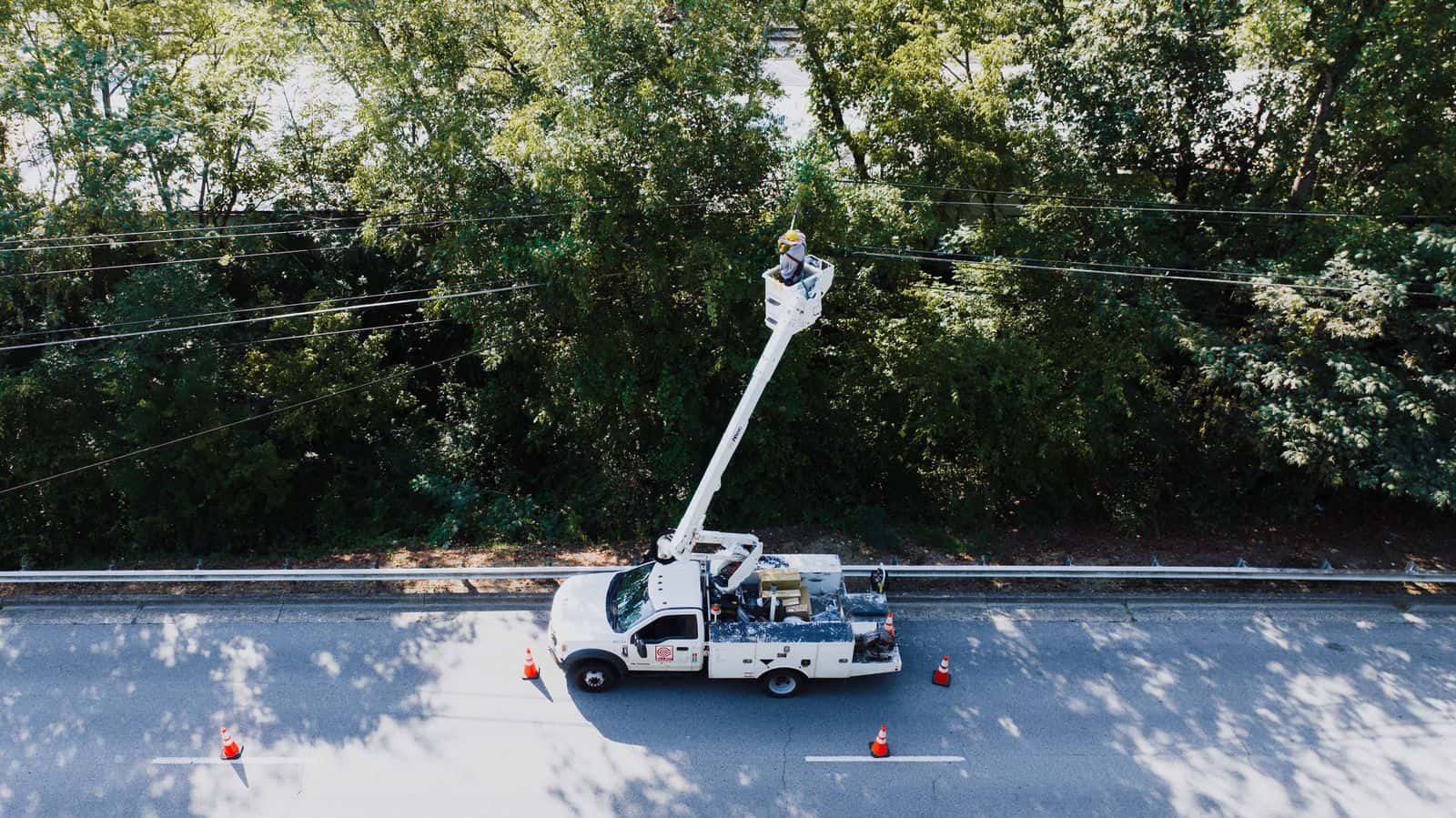
Bungalow and two-flat lots are long and narrow, with detached garages on the alley and overhead lines along it. Bucket trucks usually work from the alley, and wood often has to come out through a gangway or over the garage.
Because most backyard trees in Chicago stand between the house and a detached garage, removal usually means rigging pieces down without hitting either roof. Ask whether the price assumes alley access, and whether the alley is clear enough for a truck.
Chicago services for backyard trees
Untreated backyard ash that emerald ash borer has already killed.
Private trees between houses and alley garages.
Derecho and downburst cleanup.
Clearance over garages and roofs; parkway trees are the city's.
Backyard stumps after removal; call 811 first.
Chicago questions: parkway trees and storm damage
Can I hire a company to remove the dead tree in my Chicago parkway?
Parkway trees belong to the city, so start with a 311 request. The Bureau of Forestry inspects and, if the tree is dead or hazardous, removes it. Don't have a private company cut a city tree without the city's approval.
How long does a Chicago parkway removal take?
Routine removals are scheduled during the November–March removal season. Dead, damaged and emergency trees are processed faster. You can track your request with the number 311 gives you.
A storm dropped a limb from my backyard tree onto my garage. Who handles it?
If the tree is on your property, it's yours to deal with. Call 911 if lines are down or anyone is hurt, call ComEd for anything touching wires, and contact your insurer about the garage.
Calls are routed to independent local tree-service providers. How calling works
More local guides
Need tree help in Chicago?
Call to speak with a local tree-service provider about removal, trimming, stumps or storm damage. Describe the tree and what it's near, and they'll explain the next step.