
Desert Southwest region
Tree removal and tree care in Arizona
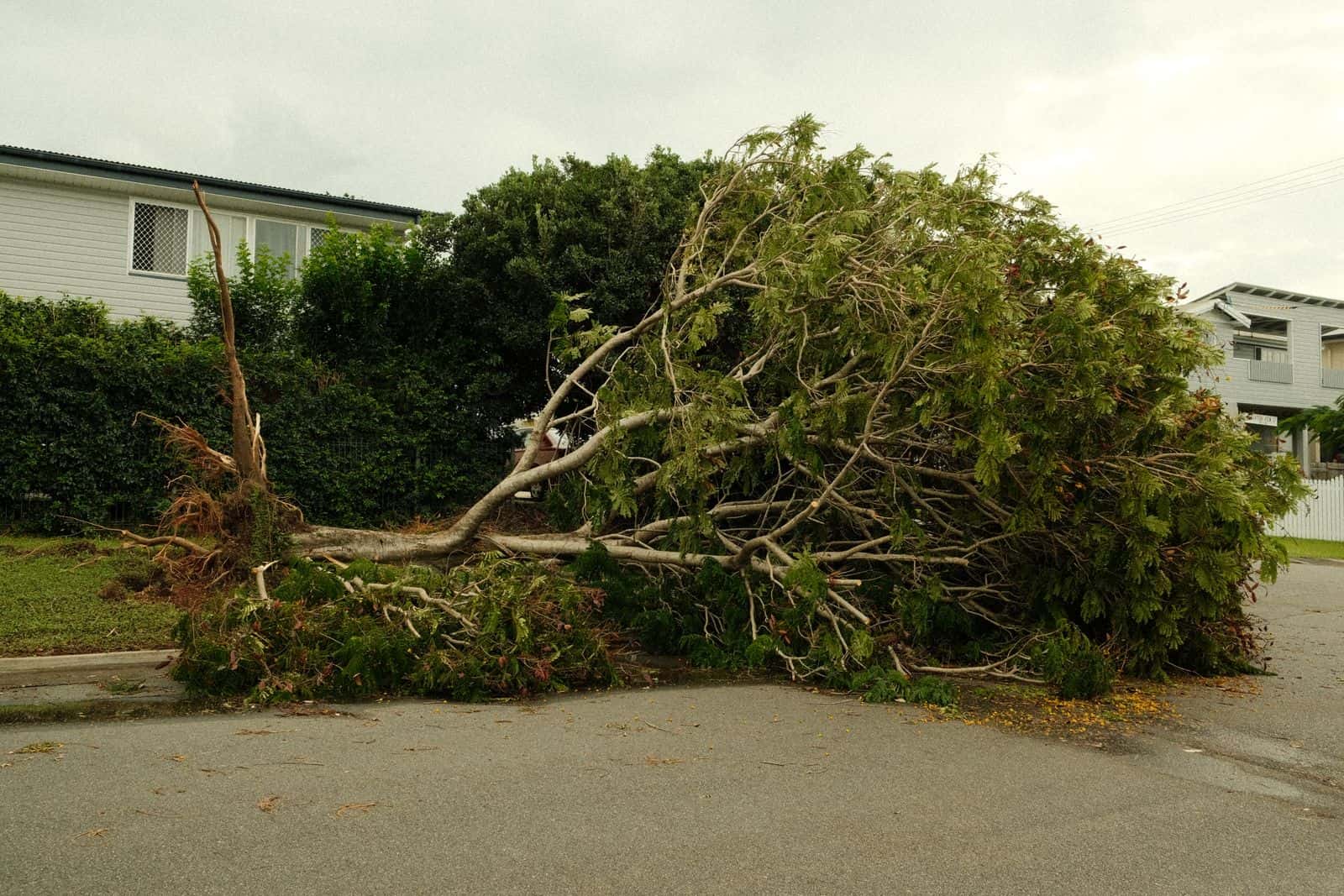
In Arizona's desert cities, the monsoon (officially June 15 to September 30) causes most tree failures: sudden microburst winds hit top-heavy, shallow-rooted trees and push them over. Many native trees, including palo verde, mesquite and ironwood, are covered by the Arizona Native Plant Law, which requires notifying the Arizona Department of Agriculture before destroying them.
Most Arizona tree failures aren't caused by weakness in the wood. They come from how trees are grown. Frequent shallow drip irrigation produces shallow roots, and fast growth under irrigation produces dense, heavy crowns. When a monsoon downburst hits, those trees act like sails on a small anchor. Proper thinning and deep, infrequent watering make a real difference.
Heat is the other constant. Sunscald on exposed bark, drought dieback, and stress-related pests are common, especially after over-pruning exposes bark that was shaded.
Reviewed and updated
Arizona's tree risks come from water and wind
Monsoon microbursts
Short, violent downbursts can exceed hurricane-force winds locally and uproot whole trees in minutes.
Shallow roots from irrigation
Drip systems that water often and shallowly leave trees poorly anchored.
Over-thinning and lion-tailing
Stripping inner branches concentrates weight at the tips and raises failure risk.
Heat and sunscald
Exposed bark cracks and dies, inviting decay.
Mistletoe
Desert mistletoe weakens mesquites and palo verdes over time.
Low desert and high country: two different Arizonas
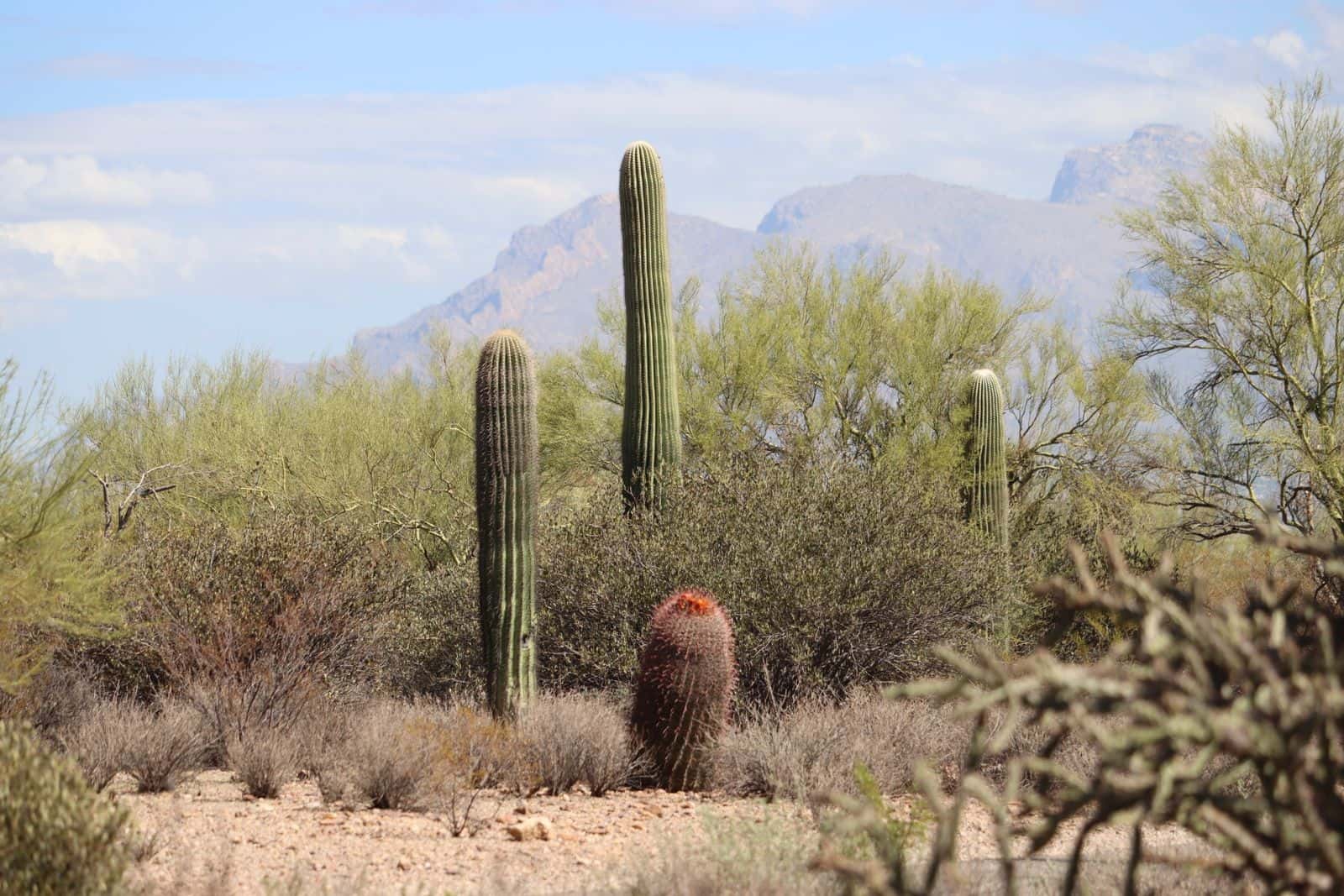
In Phoenix, Tucson and Yuma, nearly every yard tree lives on irrigation, and the monsoon is the main storm threat. Palo verde, mesquite, ironwood and palms dominate, and failures usually trace back to watering and pruning.
Above the Mogollon Rim, around Flagstaff and Prescott, the trees are ponderosa pines and oaks. There, the pressures are snow loads, bark beetles in drought years and wildfire, and tree work looks more like Colorado's than Phoenix's.
Palo verde, mesquite, ironwood and palms
- Palo verde
- Native; protected under the Native Plant Law; brittle when overgrown
- Mesquite (velvet, honey, South American hybrids)
- Hybrids especially top-heavy and monsoon-prone
- Ironwood
- Native, very slow-growing, protected
- Eucalyptus and African sumac
- Large non-natives; eucalyptus prone to wind failure
- Palms (date, fan, queen)
- Require regular dead-frond and seed-pod removal
- Aleppo and Afghan pine
- Heat and drought stress; bark beetles
Arizona's Native Plant Law and city rules
- The Arizona Native Plant Law protects many native plants on private as well as public land, including palo verde, mesquite and ironwood trees. Landowners must notify the Arizona Department of Agriculture before destroying protected plants: at least 20 days for under one acre, 30 days for one to 40 acres, and 60 days for larger areas.
- Trees in city rights-of-way generally require city permission to remove; HOAs often have their own approval rules.
Sources (checked 2026-10-01)
Rules change and details depend on your exact property. Confirm with the city or county before work starts. This isn't legal advice.
Monsoon-season timing for Arizona trees
- Winter–early spring
- Best window for structural pruning of most desert trees
- May–June
- Thin dense crowns before monsoon; avoid heavy pruning in extreme heat
- June 15–Sept 30
- Monsoon season; emergency calls peak after storms
Arizona city guides
Phoenix and Tucson share the monsoon but differ in rules: Tucson adds native-plant and pollen ordinances. Higher towns like Flagstaff and Prescott have ponderosa pine, bark beetles and wildfire defensible-space work instead of mesquite and palo verde.
Monsoon blow-overs, irrigation-shaped roots and native-plant notice.
Monsoon prep for mesquite and palo verde, TEP line clearance and Pima County pollen rules.
Arizona services for desert trees
Monsoon blow-overs and snapped limbs.
Weight reduction without over-thinning before June.
Borer-killed palo verdes and drought losses.
Trees that outgrew their space or their irrigation.
Arizona questions: native trees, monsoon and pruning
Do I need permission to remove a palo verde or mesquite in Arizona?
These are protected native plants under the Arizona Native Plant Law. Before destroying them, landowners must file notice with the Arizona Department of Agriculture: at least 20 days ahead for areas under one acre. Your city or HOA may have additional rules.
Why do so many trees blow over during the monsoon?
Mostly because of shallow roots from frequent, light irrigation combined with dense, top-heavy crowns. Microburst winds then push the whole tree over. Deep, infrequent watering and proper crown thinning help.
When is the best time to prune trees in Phoenix or Tucson?
For most desert trees, late winter to early spring. Light thinning of dense crowns before the monsoon is common, but avoid heavy pruning in peak summer heat.
Need tree help in Arizona?
Call to speak with a local tree-service provider about removal, trimming, stumps or storm damage. Describe the tree and what it's near, and they'll explain the next step.