Act soon
Broken or hanging tree branches
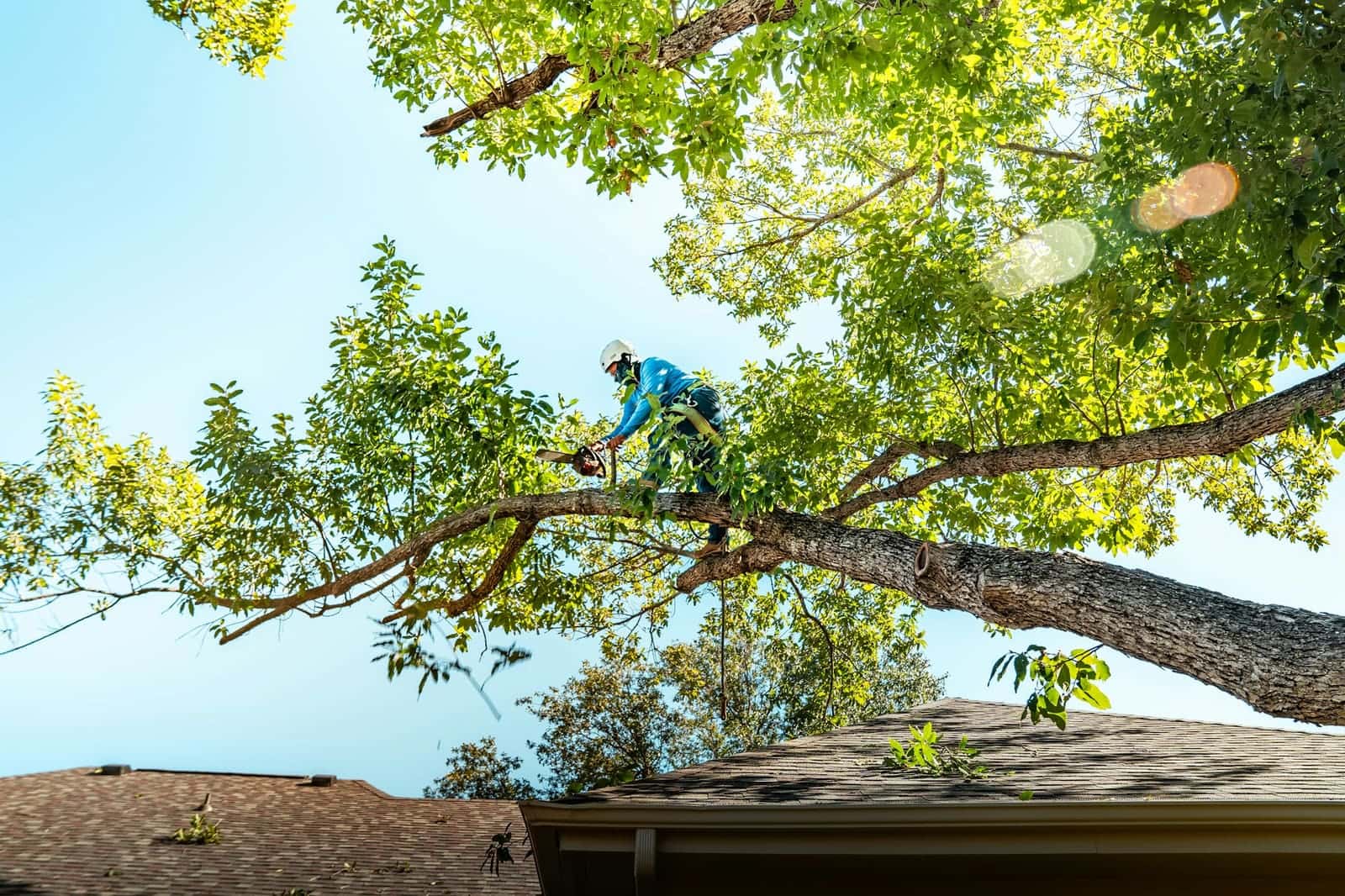
A broken branch still caught in the tree (a "hanger") can drop without warning, days or weeks after a storm. Keep people and cars out from under it and have it removed professionally. Broken branches already on the ground and small enough to handle can be cleaned up yourself. Torn stubs left on the tree should be cut back properly so they don't decay.
What to do and what not to do
What to do
- Look up before walking under any tree after wind, snow or ice.
- Rope off or avoid areas under hangers, including parking spots.
- Pick up small fallen branches that aren't under tension.
- Note split limbs and torn stubs for a pruning visit.
What not to do
- Don't pull on a hanger with a rope or pole from underneath.
- Don't use a ladder with a saw to reach broken limbs.
- Don't leave long torn stubs. They decay back into the trunk.
Is the tree still healthy?
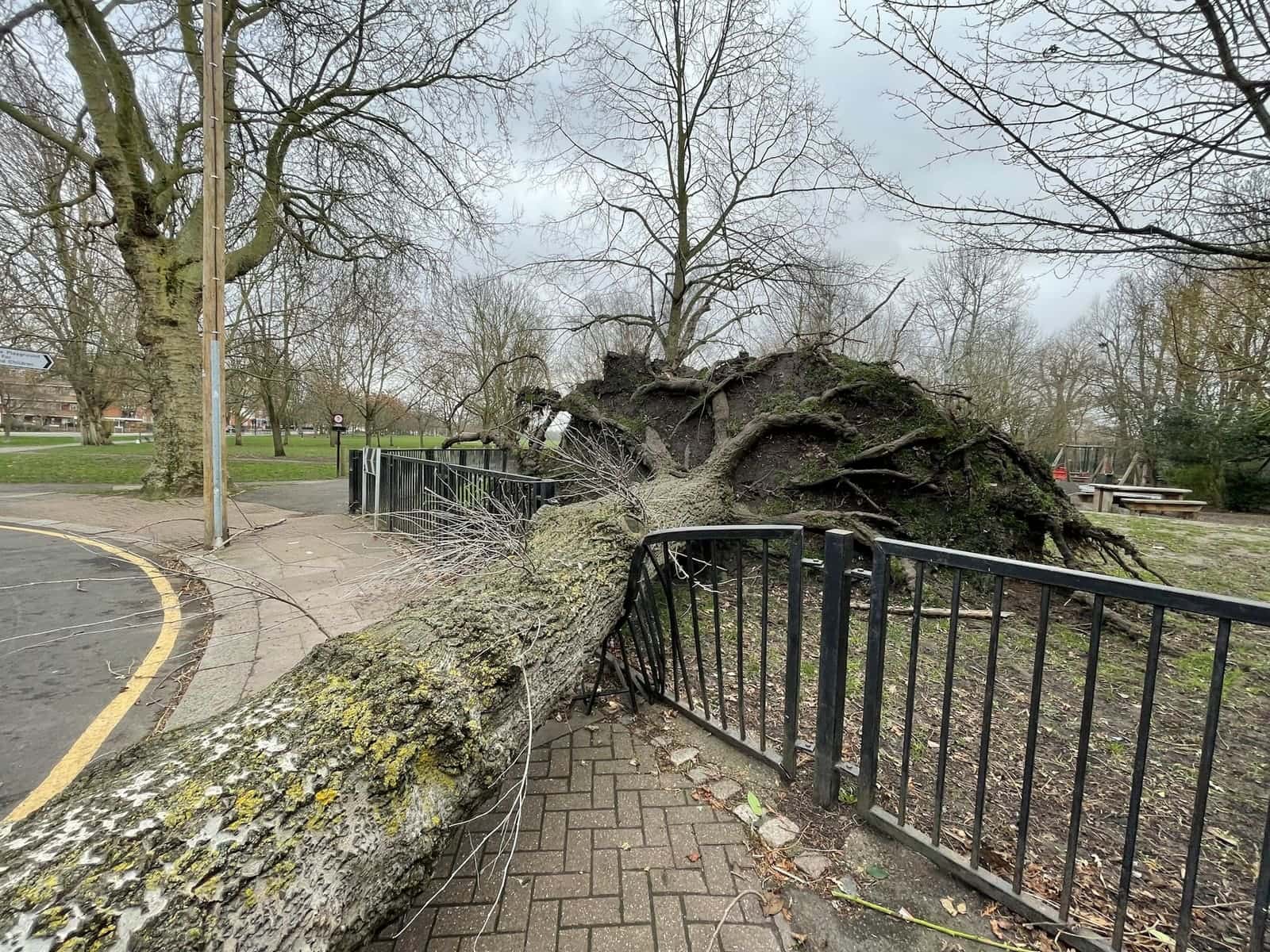
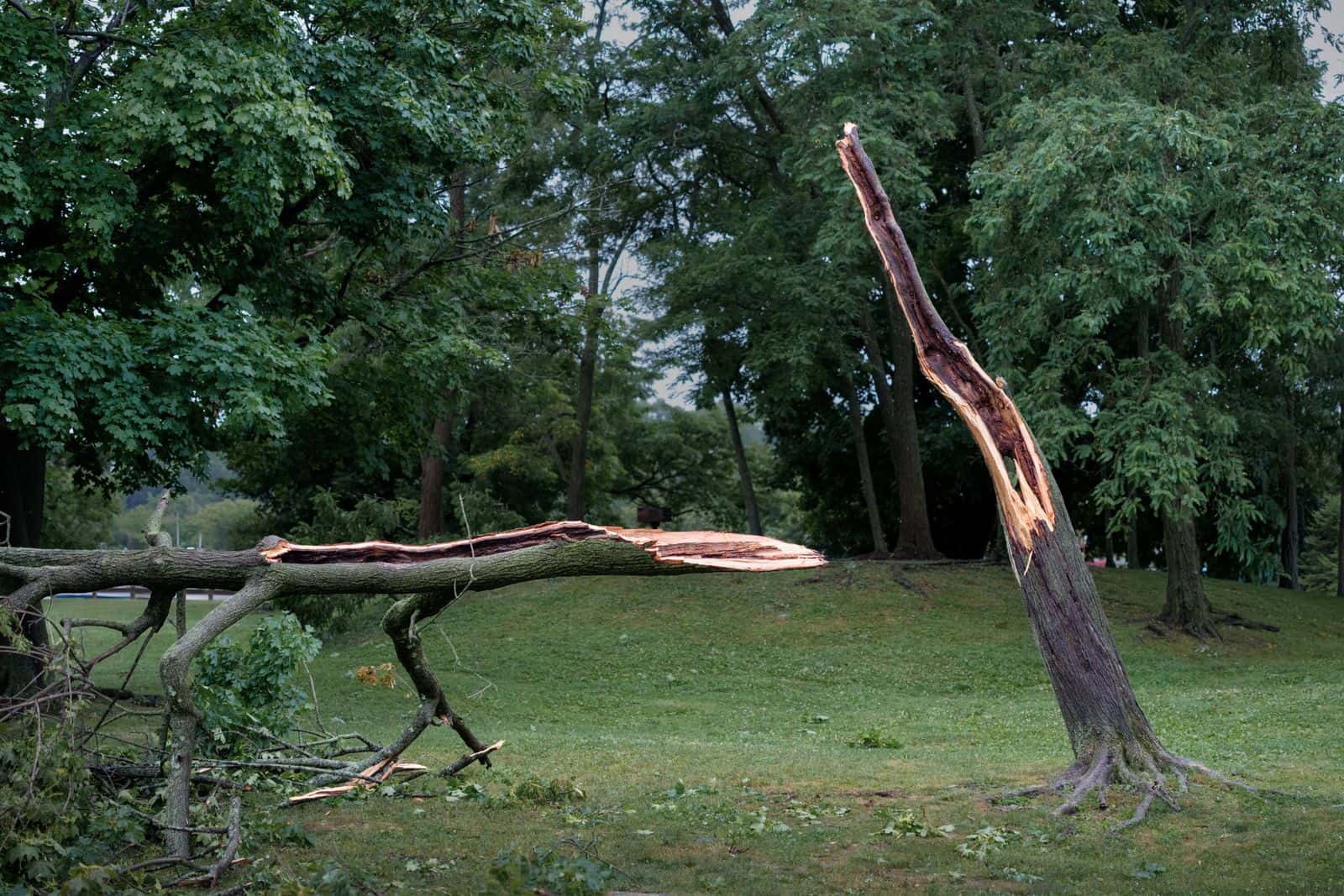
One broken limb doesn't doom a tree. If the trunk and main forks are intact and most of the crown is still there, pruning back to clean cuts is usually enough. If a main fork split, or much of the crown broke, have an arborist evaluate whether the tree can stay.
How to spot hangers
Hangers are easy to miss because leaves hide them. Walk around the tree and look up from several angles, ideally with binoculars. Look for branches with brown or wilting leaves in an otherwise green crown, limbs lying across other branches at odd angles, and bright, freshly exposed wood where a branch tore away. After ice or snow, look again once it melts. Loads that were holding a broken piece in place can release it.
What a proper repair cut looks like
A tree company should remove broken stubs back to the branch collar or to a healthy side branch, not leave a jagged stub or cut flush into the trunk. Torn bark should be neatly trimmed back to sound edges. That's all the "treatment" most wounds need.
Hangers, partial breaks and splits: what each one means
Not all broken branches are equally urgent. The type of break decides how soon it needs attention:
Hanger: a broken limb caught in the crown
- Risk
- Can fall at any time, even in light wind
- Fix
- Removal by a climber or from a lift soon
Limb broken but still attached, hanging down
- Risk
- Will tear further and strip bark
- Fix
- Cut back to a healthy union
Split at a fork
- Risk
- The fork may keep splitting into the trunk
- Fix
- Often removal of one stem; sometimes cabling
Stub left by a storm break
- Risk
- Decay entry point
- Fix
- Recut to the branch collar
Common questions
Can a tree recover from a broken main branch?
Often, if the break is cleanly pruned and the tree kept most of its crown. A split through the trunk or main union usually can't be fixed and may need removal.
Should I seal the wound after a branch breaks?
Generally no. Wound dressings don't prevent decay on most species. The exception is oaks in oak wilt areas, where painting wounds is recommended.
Will a tree grow back after a big branch breaks?
A healthy tree seals the wound and grows new branches from the remaining limbs, but it won't regrow the lost limb in the same place. Clean cuts at the branch collar heal far better than ragged breaks or stubs.