
Tree services
Stump grinding and stump removal
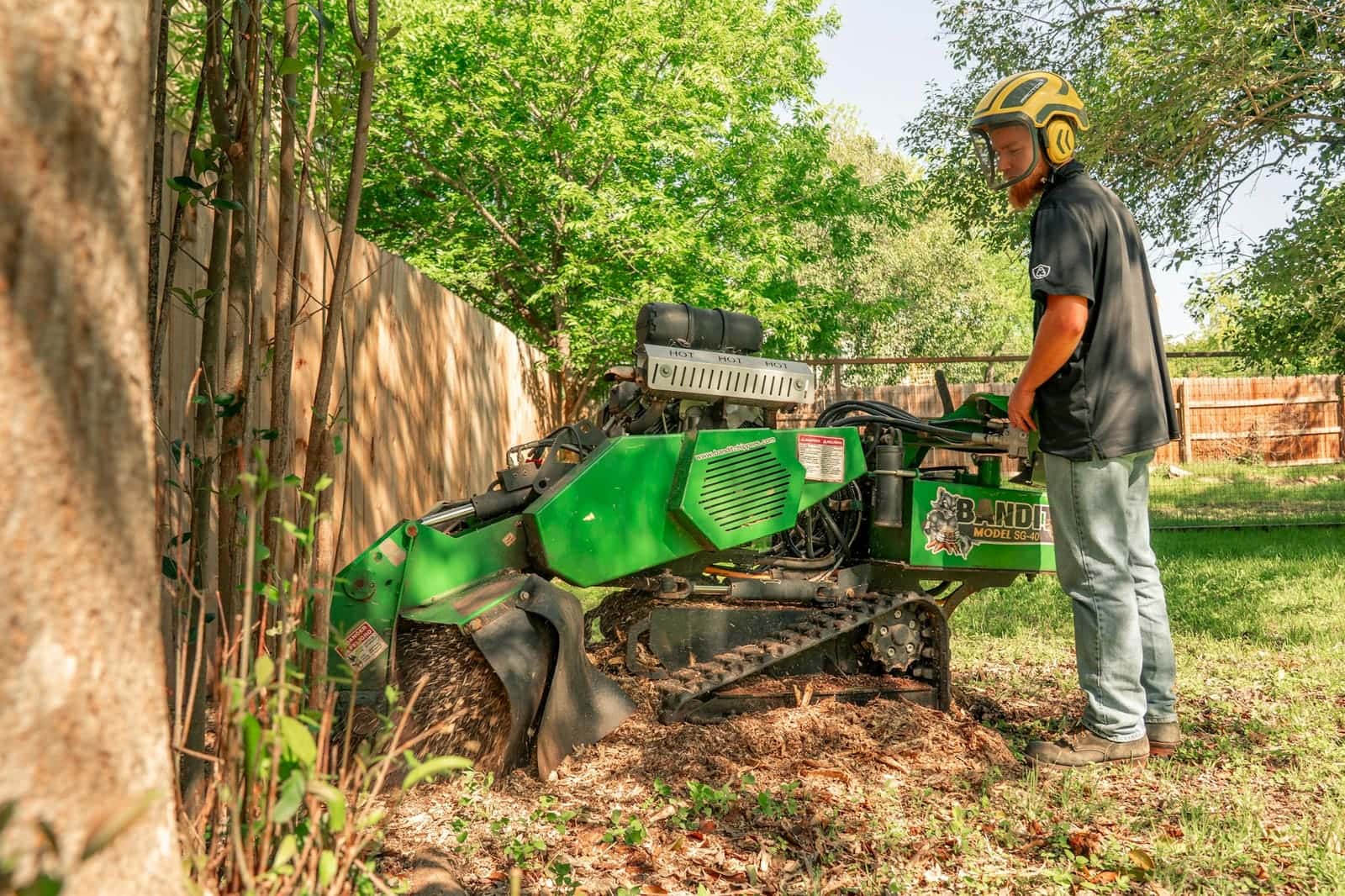
Stump grinding uses a machine with a toothed spinning wheel to chew a stump into chips a few inches to about a foot below ground. The roots are left to decay. Stump removal pulls out the stump and main roots with an excavator. Grinding is faster, cheaper and less disruptive, and it's enough for lawns and most planting.
Reviewed and updated
Grinding or full removal: comparing the two
What happens
- Stump grinding
- The stump is chipped away below the surface; roots stay and decay
- Full stump removal
- The stump and main roots are dug or pulled out with an excavator
Disturbance
- Stump grinding
- A pile of chips and a shallow hole
- Full stump removal
- A large hole and torn-up lawn
Best for
- Stump grinding
- Lawns, beds, replanting a few feet away
- Full stump removal
- Footings, slabs, pools or anything that needs clean soil
Relative cost
- Stump grinding
- Lower
- Full stump removal
- Higher, plus backfill
Reasons to grind or remove a stump
- The stump is a trip hazard or blocks mowing.
- Sprouts keep coming up from the stump or roots.
- You want to replant, re-sod or build where the tree stood.
- The stump is decaying and attracting insects such as termites or carpenter ants.
How a stump is ground
- 1
Mark utilities
Call 811 a few business days ahead so underground lines are marked. Point out irrigation lines and invisible pet fences, which 811 doesn't mark.
- 2
Prep
Rocks and soil around the stump are cleared, and shields are set up to catch flying chips.
- 3
Grind
The wheel works across the stump to the agreed depth, plus any surface roots included in the quote.
- 4
Finish
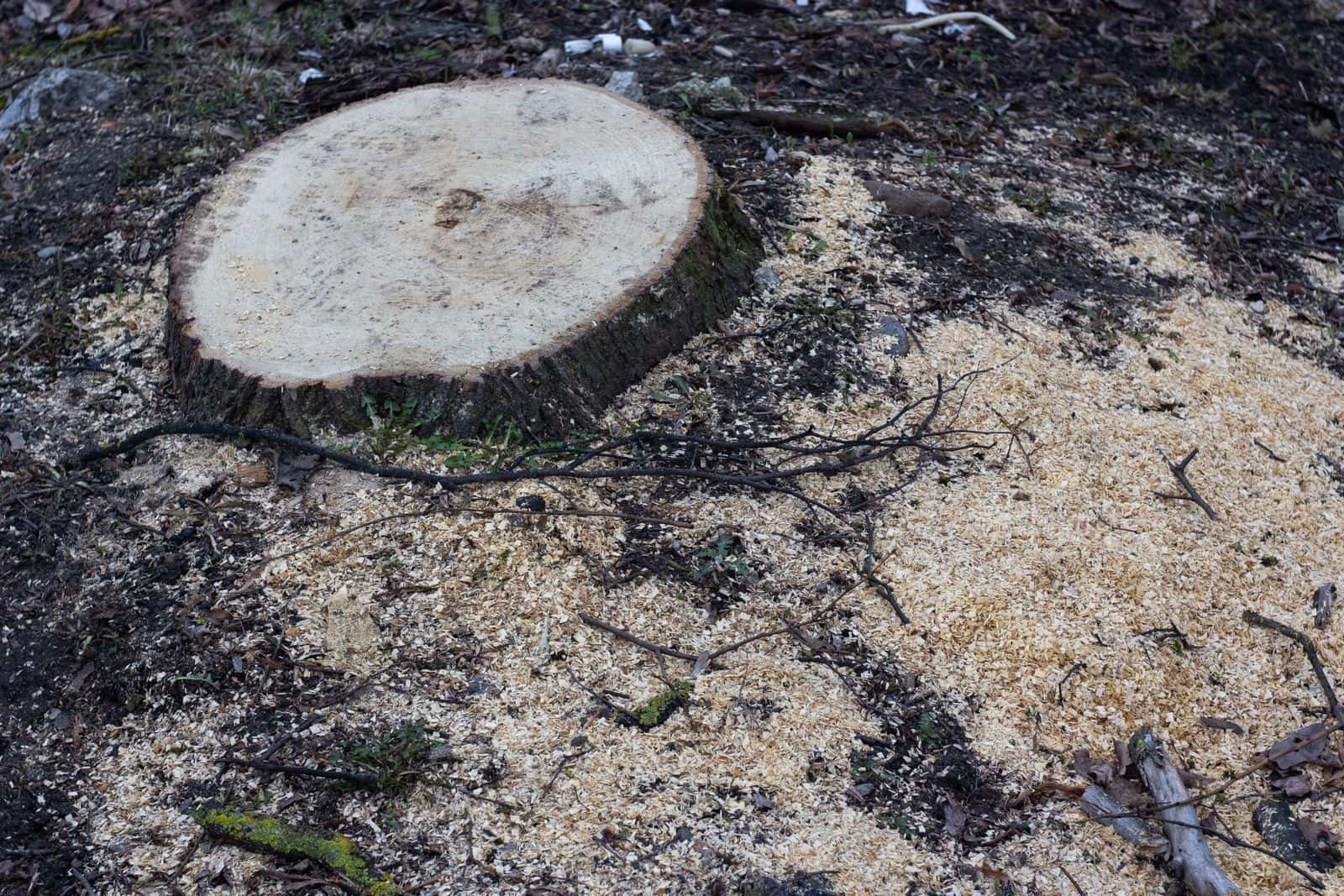
Chips are raked into the hole, left in a pile, or hauled away, and topsoil is added if agreed.
Restoring the spot after grinding
- 1
Deal with the chips
Rake most of the grindings out of the hole. Fresh wood chips mixed into soil tie up nitrogen and settle as they rot.
- 2
Backfill with topsoil
Fill slightly above grade; it will settle over a few weeks.
- 3
Seed, sod or mulch
Grass establishes well once the soil has settled; water it like any new lawn.
- 4
Plant the new tree offset
Put a replacement tree a few feet from the old stump, in undisturbed soil, rather than in the grindings.
What sets the price of stump grinding
Stumps are usually priced by diameter at ground level, then adjusted for what makes the grind slower or the cleanup bigger:
- Stump diameter at ground level, the most common way it's priced
- Wood hardness and whether the stump is fresh or decayed
- Surface roots included in the job
- Access: gate width, slopes, and distance from where the machine parks
- Chip haul-away and backfill
Is grinding enough after a tree is removed?
Usually yes. For a lawn, garden bed or a new tree planted a few feet away, grinding 6 to 12 inches below grade is enough. The remaining roots rot in place over several years, and the spot can be seeded or sodded within weeks.
Grinding isn't enough in a few cases:
- You're building on the spot: footings, a slab, a pool or a patio need the stump and main roots dug out, and disturbed soil compacted.
- The species sprouts from its roots. Trees like tree-of-heaven, black locust, sweetgum, poplars and some elms can send up suckers after grinding; those may need the sprouts cut repeatedly or treated.
- You want to plant in the same hole. Grindings and decaying roots make poor soil; move the new tree over or replace the soil.
- Roots are lifting pavement. Grinding the stump doesn't remove the lateral roots under a driveway or sidewalk; those are cut separately during the repair.
Before the grinder starts
Safe for a homeowner
- Call 811 before any digging or grinding (it's free).
- Flag sprinkler heads and lines near the stump.
- Keep kids and pets indoors while the grinder runs. It throws debris.
Leave these to professionals
- Don't burn a stump out. It's slow, often illegal, and can smolder underground.
- Don't rent a grinder for a stump near buried utilities without a locate.
Stump grinding questions
How deep does stump grinding go?
Commonly 4 to 12 inches below grade. For sod, 4–6 inches is typical. For planting a new tree nearby or laying pavers, ask for 10–12 inches or more, and get the depth written into the quote.
Will the roots grow back after stump grinding?
Most species don't regrow once the stump is ground. Some, like certain elms, poplars, sumac and tree-of-heaven, send up root sprouts for a season or two. Mowing or cutting the sprouts usually finishes them.
Can I plant a new tree where the old stump was?
It's usually better to plant a few feet away. The grindings and decaying roots make poor soil. If you must use the same spot, remove the chips and backfill with topsoil.
Is stump grinding included in tree removal?
Usually not. Most removal quotes cut the stump low and list grinding as an option. Ask for it in writing.
What do I do with stump grindings?
They can be used as mulch once aged, spread thinly on beds, or hauled away. Fresh grindings mixed into soil tie up nitrogen, so they aren't ideal as planting soil.
Cities with stump and root concerns
Soil type, buried utility rules and common resprouting species change how a stump job is planned locally.
Related services
- Tree Removal: most removal quotes leave the stump unless grinding is written in
- Dead Tree Removal: stumps of dead trees are often softer and faster to grind
- Large Tree Removal: very large stumps may need a tracked grinder or an excavator
Need help with a tree?
Call to speak with a local tree-service provider about removal, trimming, stumps or storm damage. Describe the tree and what it's near, and they'll explain the next step.