Tree services
Commercial tree services
Commercial tree services cover tree work on business, multifamily, HOA, school and municipal properties: scheduled pruning, hazard removal, clearance for parking lots and buildings, storm response, and tree inventories that help managers budget and document care.
Reviewed and updated
What a property manager should expect from a contractor
- A certificate of insurance naming the owner or association as additional insured, with liability, auto and workers' compensation coverage
- A written scope per tree or per area, tied to the inventory, not a lump-sum "trim trees" line
- Traffic and pedestrian control plans for work over parking lots, walkways and entrances
- Notice to tenants or residents before work, with parking instructions
- Before-and-after records, and a note of any new hazards found during the work
Signs a property needs a tree plan
- You manage many trees and have no inventory or schedule.
- Limbs overhang parking areas, walkways or roofs.
- Tenant or resident complaints about trees are increasing.
- You need documented hazard inspections for liability.
From inventory to a multi-year plan
- 1
Inventory and assessment
Every tree is recorded with its condition and priority.
- 2
Multi-year plan
Work is grouped by priority and area into an annual budget.
- 3
Scheduled work
Crews work in phases with traffic control and notices to residents.
- 4
Records
Work is logged against the inventory for accountability and insurance.
Storm response planning for managed properties
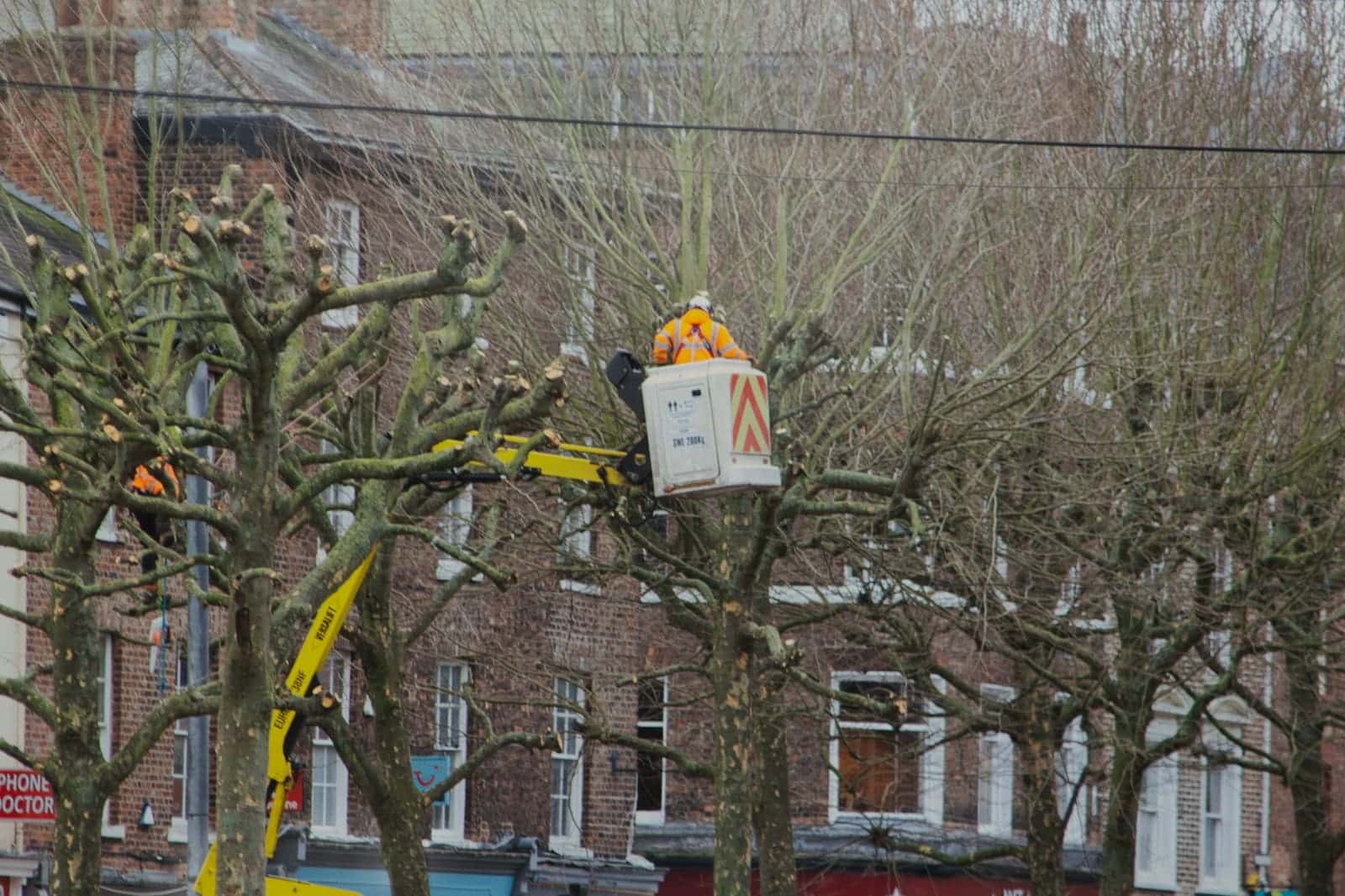
After a major storm, contractors prioritize existing clients and life-safety calls. Properties with a standing agreement, which names contacts, priority areas and pre-approved spending limits, get cleared faster and with less confusion. Decide in advance who can authorize emergency work, and keep the tree inventory where the contractor can see it.
Utilities and rights-of-way on commercial sites
Trees near power lines on commercial properties are subject to the utility's clearance program, and only qualified line-clearance crews may work near energized lines. Trees along public streets may belong to the city even when they're in front of your building. Confirm ownership before budgeting for their care.
Records that protect a property owner
On commercial and association property, the paper trail matters almost as much as the work. When a tree fails, the first questions from insurers and attorneys are usually what the owner knew and what was done about it.
- A tree inventory: location, species, size and condition for each tree, ideally mapped.
- Inspection dates and findings, including storm inspections, with the assessor's name and qualifications.
- Work orders tied to each recommendation, with completion dates.
- Certificates of insurance from every contractor, naming the property owner or association as required by the contract.
- Permits and correspondence with the city or utility for protected trees and right-of-way work.
How commercial tree work is priced
Commercial pricing is usually built per area or per inventory line rather than per visit. The biggest drivers:
- Number and size of trees
- Work windows (nights and weekends cost more)
- Traffic control and parking-lot closures
- Documentation and reporting requirements
- Contract type: per-job vs. annual agreement
Commercial tree questions
What is a tree inventory?
A list or map of every tree on a property with species, size, condition and recommended work. It's the basis for budgeting and shows that hazards were identified.
Is an HOA responsible for trees in common areas?
Generally, yes. Trees in common areas are the association's responsibility, and trees on individual lots are usually the owner's. Your governing documents control the details.
How often should commercial trees be pruned?
Many managers use a 3–5 year cycle, with annual inspections of high-traffic areas and after major storms.
Related services
- Tree Trimming & Pruning: cyclical pruning is the core of most commercial agreements
- Tree Risk Assessment: documented hazard inspections for liability
- Large Tree Removal: crane days on campuses and parking lots
- Storm Damage Tree Removal: how standing agreements speed up storm response
Common property-manager questions
Need help with a tree?
Call to speak with a local tree-service provider about removal, trimming, stumps or storm damage. Describe the tree and what it's near, and they'll explain the next step.