Urgent situations
Storm damage tree removal and cleanup
After a storm, the job is to sort trees into three groups: down and needing removal, damaged but savable with pruning, and standing but newly dangerous. Downed trees on structures come first. Split trunks, uprooted trees and hanging limbs come next. Cosmetic breakage can usually wait for regular pruning.
Reviewed and updated
After the storm: safety before cleanup
Do this now
- Stay inside during the storm and away from windows on the side facing large trees.
- Afterward, look for hangers before walking under any tree.
- Check whether your city is running a curbside debris program before paying to haul brush.
- Keep all receipts. Tree work may count toward insurance or disaster-assistance claims.
Never do this
- Don't run a chainsaw on wood that's bent, pinned or twisted. It can spring violently when cut.
- Don't approach any tree near downed lines. Lines can be live even when the power is out.
- Don't hire a company that wants full payment before starting.
Damage that usually means removal
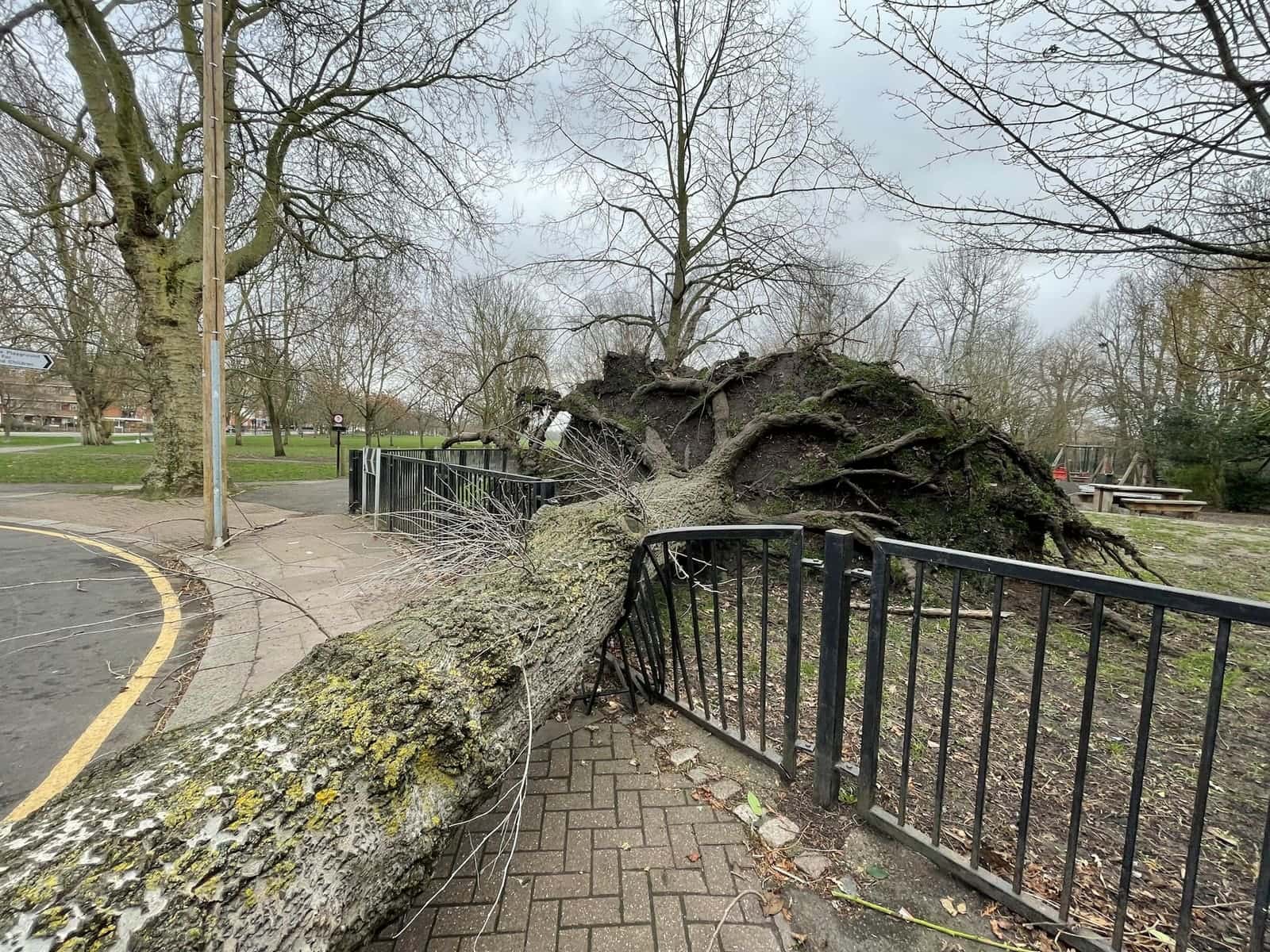
- A tree is uprooted, or the root plate has lifted and the soil is cracked.
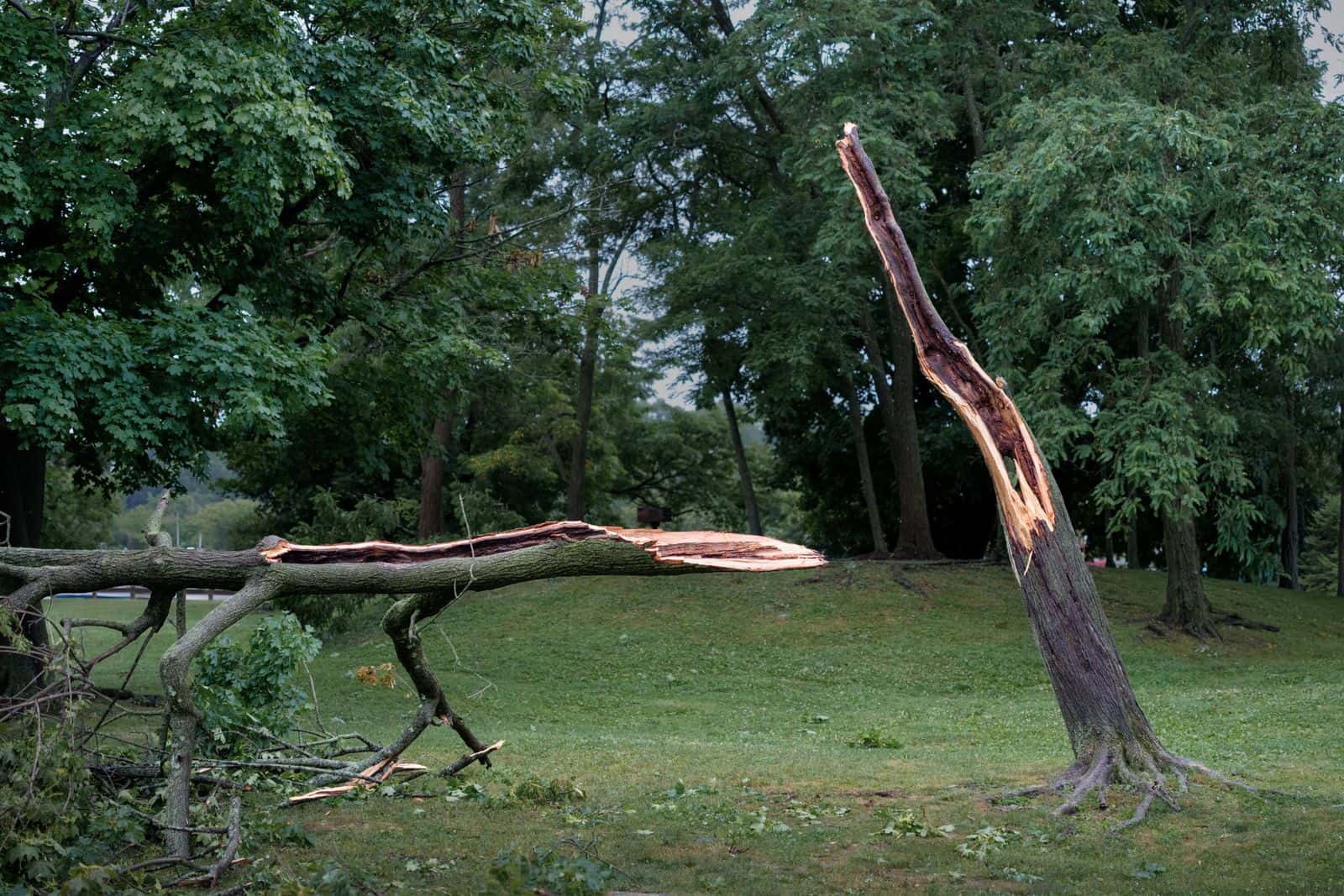
- The trunk or a main fork is split open.
- Large broken limbs are hanging in the crown.
- The tree now leans where it didn't before the storm.
- Ice or wind stripped most of the crown from one side.
Save or remove? How the type of storm changes the answer
Hurricane or long rain-and-wind event: tree uprooted
- Usual outcome
- Remove
- Why
- Once the root plate has failed, the tree can't be safely stood back up at full size
Thunderstorm or downburst: trunk snapped or split to the ground
- Usual outcome
- Remove
- Why
- The structural core is broken
Ice storm: crown broken but trunk and main forks intact
- Usual outcome
- Often saved with restoration pruning
- Why
- Trees regrow from intact limbs over several seasons
Any storm: less than about a third of the crown lost
- Usual outcome
- Usually saved
- Why
- Clean cuts let the tree seal wounds and recover
Lightning strike on a pine
- Usual outcome
- Often removed within weeks
- Why
- Struck pines frequently attract bark beetles and decline
Storm cleanup in the right order
- 1
Triage
Walk the property from a safe distance and list trees on structures, trees on lines, blocked exits, and hangers over walkways.
- 2
Emergency removals
Trees on structures and blocking access are removed first, usually in sections with rigging.
- 3
Hazard pruning
Hangers and broken stubs are removed from trees that will stay, with clean cuts at a branch collar.
- 4
Re-evaluate
Once the urgency passes, have an arborist look at the damaged trees that are still standing and decide what to keep.
The weeks after a storm: hangers, rechecks and follow-up pruning
The danger doesn't end when the wind stops. Broken limbs caught in the crown, called hangers, can fall days or weeks later in a light breeze. Trees that looked fine can show cracks or new lean as the soil dries and settles.
Plan a second walk-through a few weeks out, and book restoration pruning for the trees you're keeping once the emergency work in your area has calmed down. That's also when an arborist's opinion is easiest to get.
What changes the price after a storm
After a regional storm, the same job can cost noticeably more simply because every crew in the area is booked. Beyond demand, these are what change the price:
- Regional demand after a large storm, when crews are booked for days or weeks
- Whether trees are resting on structures or just on the ground
- Tangled, tensioned wood, which is slower and more dangerous to cut
- Debris volume; some cities run free curbside storm-debris pickup
- Crane access for trees lying across roofs
City debris pickup or private hauling?
After large storms, many cities and counties run curbside collection for storm debris, sometimes with federal disaster reimbursement. That pickup is usually free to residents but comes with rules, and it only covers debris you or a contractor has already cut and moved to the curb. It doesn't cover cutting a tree off a roof or taking down a damaged standing tree.
- Separate debris: vegetation (limbs, logs, leaves) goes in its own pile, apart from construction debris, appliances and household trash.
- Place piles at the curb, not in the street, and keep them clear of fire hydrants, mailboxes, power poles, utility boxes and low-hanging lines.
- Don't bag leaves or brush unless your city asks for it; bagged debris is often skipped.
- Watch for your city's deadline. Collection usually runs in passes, and piles set out after the last pass become the owner's problem.
- If you hire a tree company, agree in writing whether it hauls the wood or leaves it at the curb for city pickup. The price is different.
Storm damage questions
Can a storm-damaged tree be saved?
Often, if the trunk is intact, the main branch unions aren't split, and the tree lost less than roughly a third of its crown. Uprooted trees, trunks split to the ground, and trees with most of the crown gone usually need removal.
How soon after a storm should I remove damaged trees?
Immediately for trees on structures, lines or exits. Within days for hangers over walkways and split trunks. Trees with moderate damage can wait for an arborist's opinion. Unnecessary removals are common right after storms.
Does FEMA pay for tree removal?
In federally declared disasters, FEMA Individual Assistance can sometimes help with debris removal needed to make a home safe or accessible, when insurance doesn't cover it. It depends on the declaration. Check DisasterAssistance.gov for your event.
What are hangers and why do they matter?
Hangers are broken limbs caught in the crown. They can fall days or weeks later with a little wind, so they're a leading cause of post-storm injuries. Have them removed before using the area under the tree.
How storms hit trees in different regions
Hurricanes, monsoon microbursts, ice storms and derechos break trees in different ways, and cities handle storm debris differently.
Related services
- Emergency Tree Removal: when a tree is already on the house, a car, a line or the only exit
- Tree Trimming & Pruning: hazard pruning for damaged trees that will stay
- Tree Risk Assessment: a second opinion before removing a storm-damaged tree you value
- Tree Removal: planned removal once the urgent work is done
Need help with a tree?
Call to speak with a local tree-service provider about removal, trimming, stumps or storm damage. Describe the tree and what it's near, and they'll explain the next step.