
Costs
Tree trimming cost: what sets the price
Updated · Cost guide by TreeRemovalServices.net
Short answer
Tree trimming cost depends on the tree's height, the type of pruning (removing deadwood is quicker than detailed structural work), how the crew reaches the canopy, and how many trees are done in one visit. Work near power lines requires specially qualified crews or the utility itself.
What you're paying for
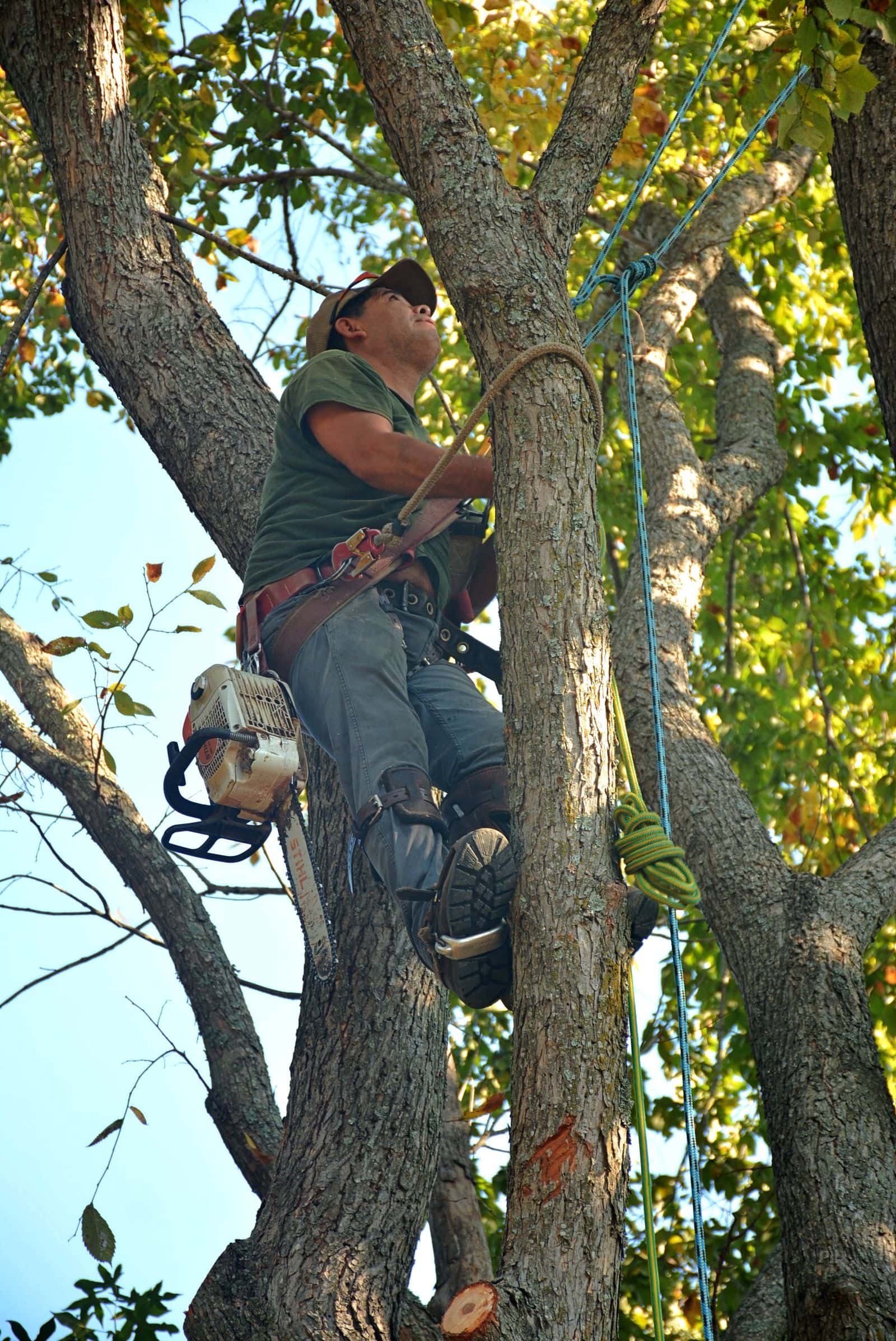
Pruning is labor-heavy. Most of the cost is skilled climber time in the canopy, supported by a ground crew that drags brush, runs the chipper and keeps the drop zone clear. A bucket truck can speed things up where it can reach, but backyard trees often have to be climbed. Disposal (chipping and hauling) adds the rest.
Pruning type changes the time
"Trim the tree" can mean very different amounts of work. Relative effort for the same tree:
Raising (lifting low limbs)
- Relative effort
- Low
- Why
- Work is near the ground; few cuts
Cleaning (deadwood)
- Relative effort
- Low to moderate
- Why
- Climber moves through the whole crown but makes targeted cuts
Thinning
- Relative effort
- Moderate
- Why
- Many selective cuts throughout the crown
Reduction
- Relative effort
- Moderate to high
- Why
- Careful cuts to lateral branches at the crown's edge, often high up
Structural (young trees)
- Relative effort
- Low per tree
- Why
- Small cuts; best value long-term
Other cost drivers
- Height and spread: more canopy means more climbing and cutting time
- Obstacles: roofs, fences and nearby wires
- Number of trees, since several in one visit usually lowers the per-tree cost
- Cleanup: hauling brush versus leaving chips
What to ask for in writing
The pruning objective (for example, "remove deadwood over 2 inches and raise the canopy over the driveway to 14 feet"), the approximate amount of live foliage removed, and confirmation that the company won't top the tree or use climbing spikes on it. A quote that only says "trim oak" can't be compared with anything.
Saving money without hurting the tree
- Prune young trees early and lightly. Small cuts now prevent expensive structural problems later.
- Bundle all trees on the property into one visit.
- Ask about lower-demand months, while respecting local pest timing (like oak wilt windows).
- Keep the chips for mulch.
Common questions
How often should I pay for tree trimming?
Many mature shade trees need attention every 3–5 years; young trees benefit from lighter, more frequent structural pruning, and palms often need yearly frond removal.
Is it cheaper to trim or remove a tree?
A single pruning visit usually costs less than removal. But if a tree needs heavy pruning every year to stay safe, removal and replanting can cost less over time. An arborist can help you compare.
Editorial note: this guide is general information written for homeowners. It isn't a substitute for an on-site assessment by a qualified arborist, or for legal or insurance advice.