Tree services
Large tree removal and crane work
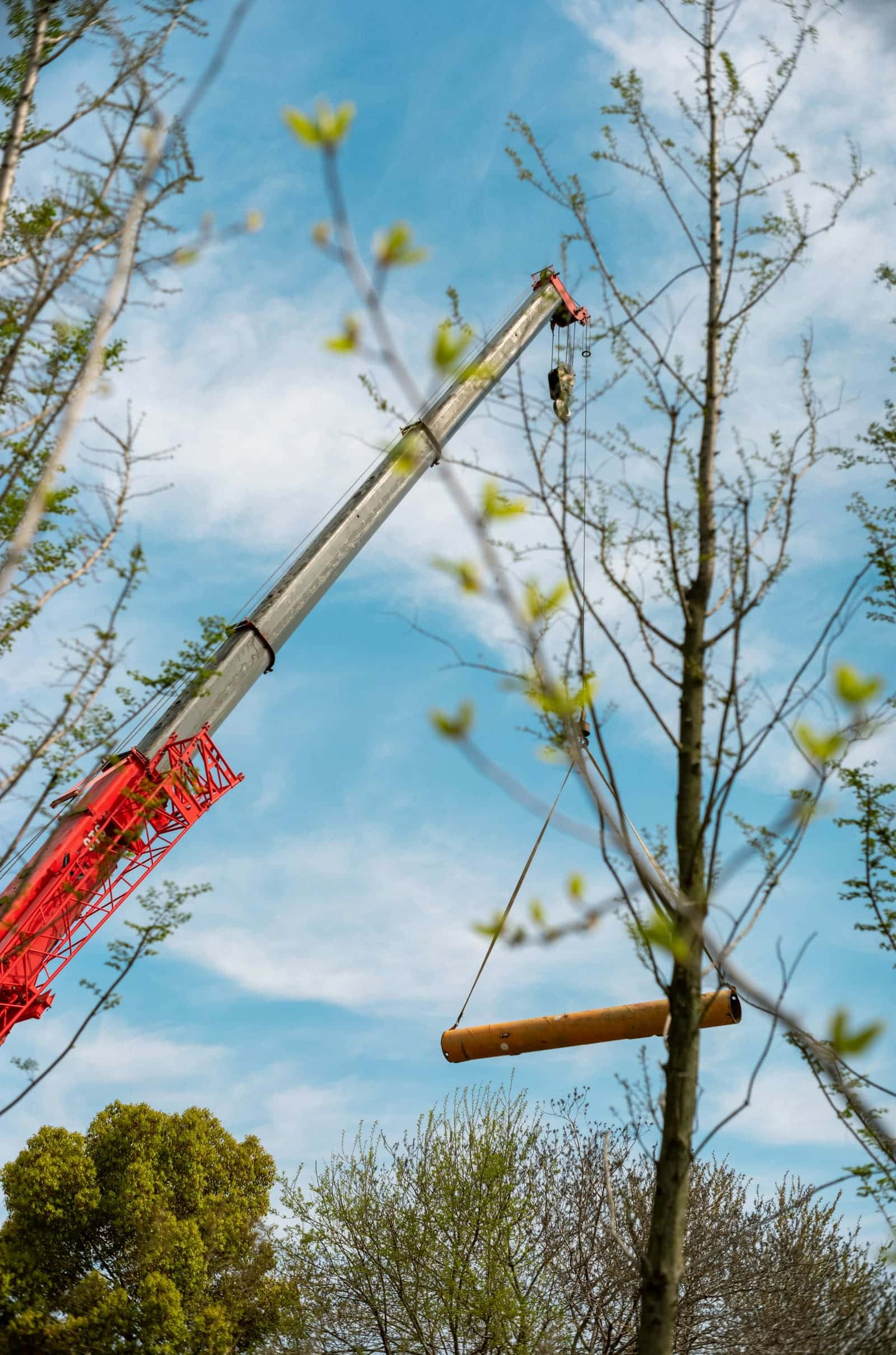
Large trees near buildings are removed in sections that are either lowered on ropes through rigging points in the tree or lifted out by a crane. A crane is often faster and safer for big trees over houses, because each piece is cut only after the crane is holding it.
Reviewed and updated
When a tree counts as a large-tree job
- The tree is too large to fell and too heavy to rig safely by climbing.
- Heavy limbs hang directly over the house, garage or pool.
- The tree is dead or decayed and unsafe to climb.
- The only access is over a house into a fenced backyard.
Crane or rigging? How crews choose
How it works
- Rigged sectional removal
- Pieces are cut and lowered on ropes through points in the tree
- Crane-assisted removal
- Each piece is attached to the crane, then cut and lifted out
Best when
- Rigged sectional removal
- The tree is sound and there's room to lower wood
- Crane-assisted removal
- The tree is decayed, very heavy, or wood can't be lowered without hitting something
Setup needs
- Rigged sectional removal
- Climber, ground crew, rigging gear
- Crane-assisted removal
- Stable setup area, overhead clearance, sometimes a street permit
Typical time
- Rigged sectional removal
- Longer
- Crane-assisted removal
- Often a single day once set up
How a large removal is planned and done
- 1
Site plan
The company decides where equipment sets up, how pieces travel, and where the wood lands, and handles permits for street closures if needed.
- 2
Ground protection
Mats or plywood spread the weight of machines over lawns and driveways.
- 3
Sectional removal
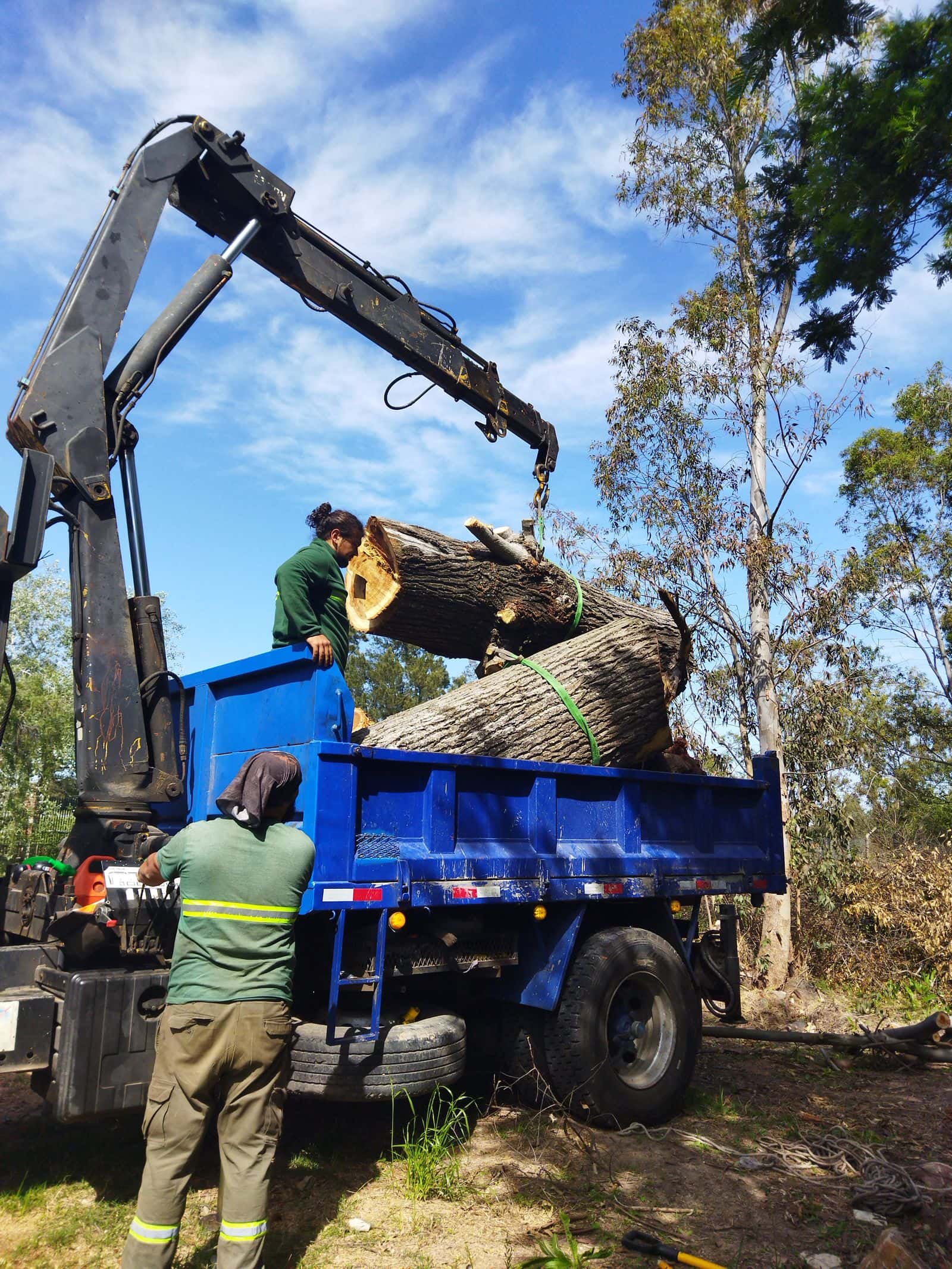
Each piece is rigged or attached to the crane before it's cut, then lowered or lifted to the landing zone.
- 4
Processing
Wood is cut to size, chipped or loaded, and the landing area is cleaned.
Protecting the property during a big removal
- Mats or plywood under machines spread their weight over lawns and driveways.
- Point out septic tanks, drain fields, sprinkler lines and thin driveways before equipment arrives.
- Agree on the landing zone for each piece, and move cars, furniture and planters out of it.
- Ask how roofs, gutters and fences under the canopy will be protected.
- Tell neighbors when a crane will swing over or near their property.
What happens to the wood from a big tree
A large tree can produce several tons of wood, and getting it off the property is a real part of the job. Decide early, because it changes the price:
- Hauled away: the simplest option and the most expensive for big trees, since the wood has to be loaded and dumped.
- Left as rounds: trunk sections cut to a length you can split or move. Cheaper, but heavy and slow to dry.
- Firewood: cut and sometimes split for an added fee. Don't move firewood long distances; it spreads pests like emerald ash borer.
- Lumber: a straight, clear trunk of a valued species can be milled, but yard trees often contain nails, wire or fence staples that damage saw blades, so most sawmills turn them down.
- Chips: limbs are chipped on site; many owners keep the chips for mulch paths and beds.
What drives the price of a large removal
Large-tree jobs are priced around the equipment and the plan as much as the tree. A crane can raise the day rate and still lower the total by cutting days off the job:
- Crane size and hourly rate, including travel and setup
- Trunk diameter and total wood weight
- Number of structures under the canopy
- Street closures, traffic control and permits
- Wood disposal, which is significant for very large trees
On the day: what to do and what to avoid
Safe for a homeowner
- Move vehicles out of the driveway and street frontage the night before.
- Tell neighbors when a crane will be working over or near their property.
- Point out septic tanks, drain fields, and sprinkler lines where equipment might drive.
Leave these to professionals
- Don't allow crane work without confirming the operator and the company's insurance.
- Don't stand anywhere under a suspended load.
Large tree and crane removal questions
When is a crane needed for tree removal?
When pieces are too heavy to lower safely by rope, when the tree is too decayed to climb, or when there's no place to drop wood without hitting something. Crews also use cranes to save time on very large trees.
Can a crane damage my driveway or lawn?
It can, which is why crews use outrigger pads and ground mats. Older or thin driveways can crack under point loads, so discuss setup location and ground protection before the job.
How big is a large tree?
There's no single definition. Companies usually price by trunk diameter, height, limb spread, and what's underneath. Trees over about 60 feet or with trunks over 30 inches are commonly treated as large jobs.
Big-tree rules in researched cities
Large trees are the ones most often protected by local ordinance, so check the city page before planning a removal.
Related services
- Tree Removal: the general removal process and when a tree should come down
- Dead Tree Removal: decayed giants that can't be climbed safely
- Emergency Tree Removal: when a large tree is already on a structure
- Commercial Tree Services: multi-tree sites and planned crane days
Before committing to a big removal
Need help with a tree?
Call to speak with a local tree-service provider about removal, trimming, stumps or storm damage. Describe the tree and what it's near, and they'll explain the next step.