Act soon
There's a dead tree near my house
If a dead tree is tall enough to reach your house, driveway, a road or a neighbor's property, plan to have it removed soon. Dead wood dries out and loses strength, so dead trees shed limbs and eventually fail, often in the first strong wind. They also get harder and more expensive to remove safely the longer they stand.
What to do and what not to do
What to do
- Confirm it's dead: no leaves in the growing season, bark peeling off, brittle twigs that snap.
- Estimate whether it could reach the house (its height is roughly its reach).
- Keep people from lingering under it, especially in wind.
- Check whether your city requires a permit even for dead trees (some do).
What not to do
- Don't climb a dead tree or cut it from a ladder.
- Don't move firewood from a pest-killed tree out of the area.
Why dead trees get worse, not better
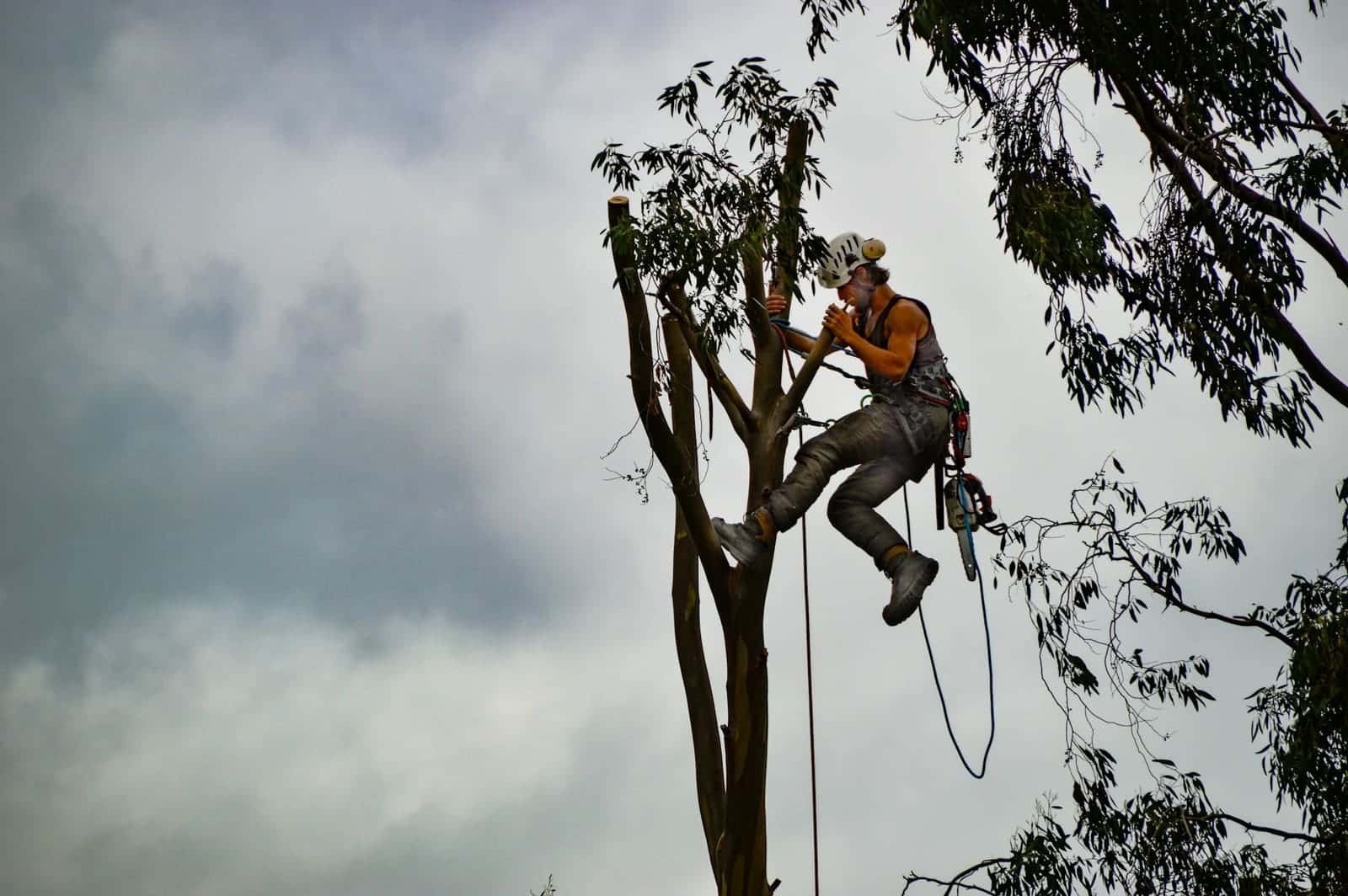
As wood dies, it dries, checks and begins to decay. Fine branches fall first, then larger limbs, then the trunk or roots fail. Climbers can't trust dead limbs for rigging, so removal shifts to bucket trucks, cranes or careful felling, which all cost more. Removing a tree while it still has some sound wood is usually safer and cheaper.
Find out why it died
If a pest like emerald ash borer or bark beetles, or a disease like oak wilt, killed the tree, neighboring trees of the same kind may be next. An arborist can often tell you the cause and whether nearby trees need protection.
Dead, dying or dormant? Quick tests
Check several branches around the crown; a tree can be dead on one side and alive on the other. A tree that's dying back from the top is often removed for the same reasons as a dead one, especially if it can reach the house.
Scratch a twig with a fingernail
- Alive
- Moist green layer under the bark
- Dead
- Dry, brown or gray
Bend a small twig
- Alive
- Flexes before breaking
- Dead
- Snaps cleanly
Buds in late winter
- Alive
- Plump and soft
- Dead
- Shriveled, or none
Bark on the trunk
- Alive
- Firmly attached
- Dead
- Loose, falling off in sheets, with fungus behind it
Spring leaf-out
- Alive
- Leaves appear, even late
- Dead
- No leaves when nearby trees of the same kind have leafed out
Common questions
Is a leafless tree in winter dead?
Not necessarily. Deciduous trees drop leaves every fall. Scratch a twig: green, moist tissue underneath means it's alive. Check again when other trees leaf out in spring.
Am I liable if my dead tree falls on my neighbor's property?
Possibly. Owners are generally expected to act on trees they know, or should know, are dead or dangerous. That's the main situation where liability shifts to the tree's owner.
How quickly does a dead tree near a house become dangerous?
It varies from a few years to many, depending on species, climate and the cause of death. The safe assumption is that a dead tree gets weaker every year, and that small and medium limbs start falling long before the trunk does.
Is a dead tree near my house covered by insurance if it falls?
Damage to your house is usually still covered, but insurers can deny or reduce claims when a known dead tree was left standing. For a neighbor's tree, a dead tree they were warned about can make them liable.