
Houston, TX · Harris County
Tree removal in Houston
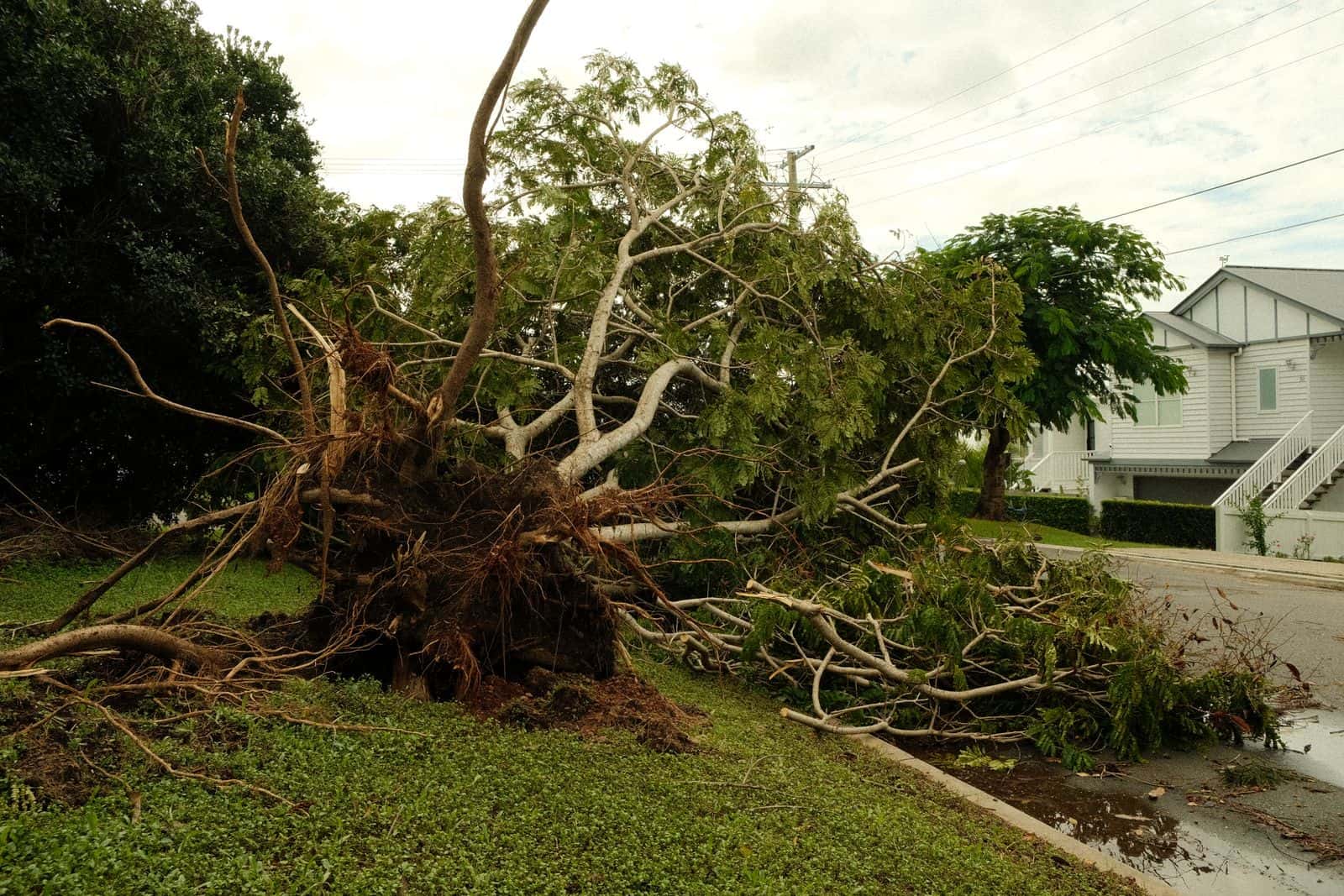
Houston's tree emergencies are driven by wind on waterlogged ground: hurricanes, tropical storms and derechos. The May 2024 derecho and Hurricane Beryl in July 2024 brought down trees across the city. Removing a tree on your own residential lot generally doesn't require a city permit, but any tree on city property or the street right-of-way does.
Houston's flat terrain and dense "gumbo" clay drain slowly, so after days of rain the soil can't hold large trees. Many established neighborhoods (the Heights, Meyerland, Memorial, Bellaire) have big water oaks, loblolly pines and live oaks, some well past their prime. Water oaks in particular develop internal decay as they age and are frequent storm casualties.
Storm response here is a two-part job. First, clearing trees from houses, cars and lines. Then, often weeks later, hazard pruning of trees with hangers and cracked limbs. Crews are stretched thin after a major storm, so preparing before hurricane season matters.
Reviewed and updated
Before June: a hurricane-season checklist for a Houston yard
The cheapest storm work is the work done before the season. Use late winter and spring, when crews have time, to deal with the trees most likely to fail:
- Have any water oak over the house checked for cavities, conks or dead upper limbs.
- Remove dead limbs over the roof, driveway and play areas; they're the first to come down.
- Look for pines that lean toward the house or have resin streaming from bark-beetle holes.
- Keep branches clear of the service line to the house; CenterPoint Energy handles the lines themselves, so call them about anything touching wires.
- Photograph your trees and house now. Insurers ask for before-and-after pictures.
Wind on waterlogged gumbo: why Houston trees come down whole
Hurricanes and tropical storms
Hours of wind on saturated soils uproot whole trees; Beryl (2024) and Ike (2008) caused huge canopy losses.
Derechos and severe storms
The May 2024 derecho brought hurricane-strength gusts downtown and toppled trees across west Houston.
Poorly drained clay
Slow-draining gumbo soils keep roots shallow and lose grip when waterlogged.
Aging water oaks and pines
Decay in older water oaks and wind-snapped pines are the most common emergency calls.
Water oaks, pines and the other trees behind most Houston calls
- Water oak
- Very common; internal decay and failure as it ages
- Live oak
- Wind-resistant when well-structured; prized and worth pruning, not removing
- Loblolly pine
- Snaps and uproots in hurricanes; pine beetles after drought
- Chinese tallow
- Invasive; weak wood; often removed
- Crape myrtle
- Ubiquitous; commonly over-pruned ("crape murder")
Inner-loop lots versus suburban backyards
Tight inner-loop lots and townhome infill leave little room to drop wood, so sectional removal with rigging or a crane is common. Suburban lots often have backyard pools and fences directly under the canopy, which affects access and price.
After a big storm, access decides the order in which crews can work. Jobs where a crane must set up on a narrow inner-loop street, or where a tree is pinned across a pool, take longer to schedule than open-yard removals, so expect those to be quoted and booked separately from quick cleanups.
Which Houston tree services fit which situation
Houston's most-requested job; the local guide covers debris pickup and hiring after a storm.
Trees on roofs, cars or lines after a derecho or hurricane.
Planned removal of declining water oaks and pines before the next season.
Deadwood and roof clearance; avoid heavy thinning that leaves oaks more exposed to wind.
The cleanup that follows removals; soft, wet soil makes grinding quick but messy.
Live oak, water oak or pine: how each one fails in a storm
Knowing the tree changes what you watch for. These are the three that dominate Houston storm calls:
Live oak
- How it usually fails
- Long horizontal limbs break; whole-tree failure is uncommon when roots are healthy
- What to watch for
- Heavy limbs over the roof, old topping cuts, root damage from construction
Water oak
- How it usually fails
- Trunks and big limbs break at hidden decay as the tree ages
- What to watch for
- Mushrooms at the base, cavities, dead upper branches, sap or soft wood
Loblolly pine
- How it usually fails
- Snaps mid-trunk or uproots in saturated soil
- What to watch for
- A new lean, cracked soil at the base, beetle pitch tubes, lightning scars
Houston's tree permits: city trees versus your own yard
- A permit is required to remove or trim any tree on city property, which includes street rights-of-way, esplanades and parks. Permits go through Urban Forestry, and posting and processing periods apply.
- Houston doesn't generally require a permit to remove trees on your own private residential lot, but deed restrictions and HOA rules can.
Sources (checked 2026-10-01)
Rules change and details depend on your exact property. Confirm with the city or county before work starts. This isn't legal advice.
Houston tree questions after storms
Who removes a fallen tree on a Houston street?
Trees blocking public streets and trees on the right-of-way are handled by the City of Houston. Report them through 311. A tree on your own property, including one that fell onto the street from your yard, may still be your responsibility to clean up.
Should I remove my water oak before hurricane season?
Not automatically. Many water oaks are fine for years. But an older water oak near the house with mushrooms at the base, dead limbs or cavities deserves an arborist's look well before June.
How long do I wait for tree service after a Houston hurricane?
After a major storm, crews may be booked for days to weeks. Emergencies involving houses and blocked exits get priority, so make sure the company knows if the tree is on a structure.
Calls are routed to independent local tree-service providers. How calling works
More local guides
Need tree help in Houston?
Call to speak with a local tree-service provider about removal, trimming, stumps or storm damage. Describe the tree and what it's near, and they'll explain the next step.