
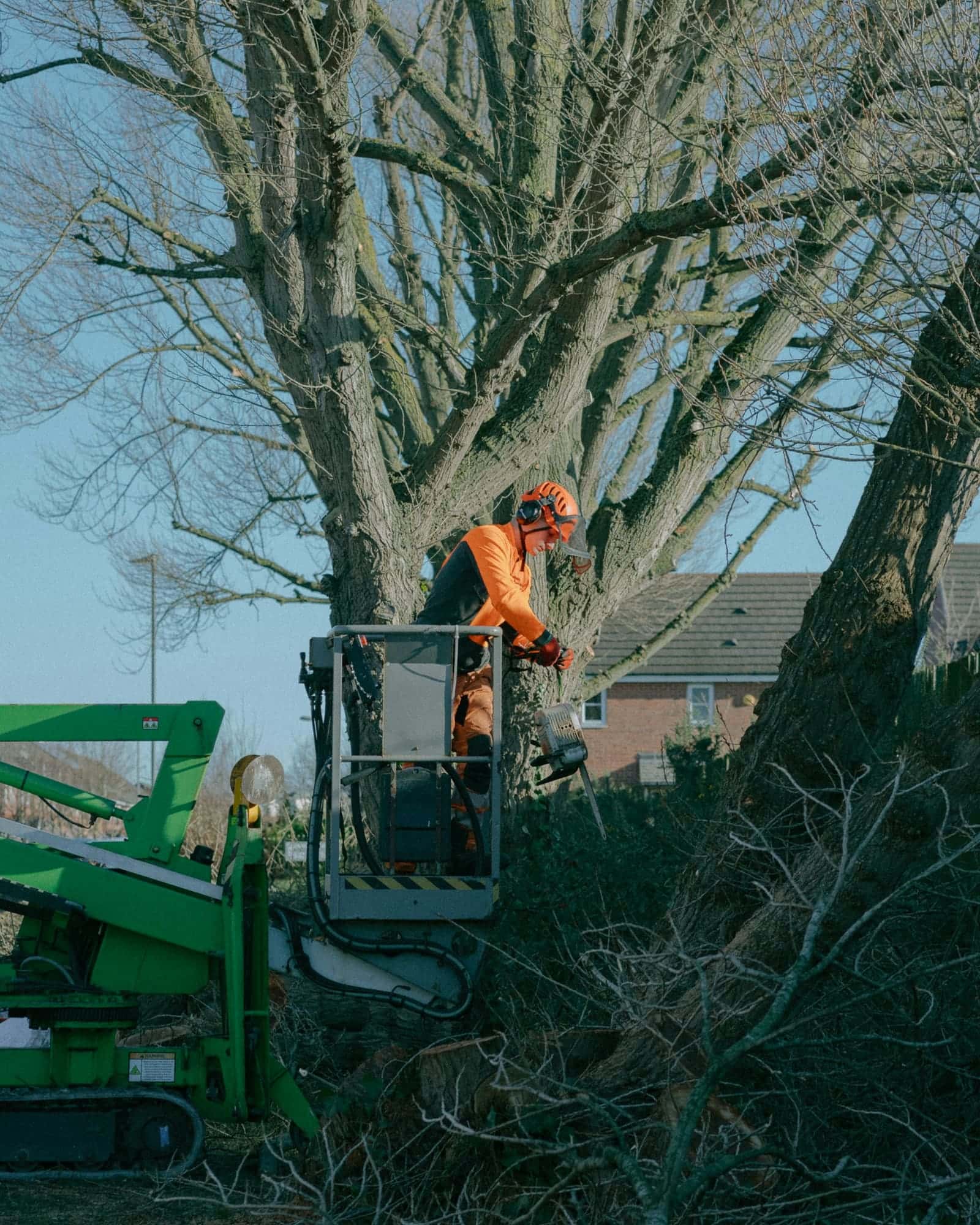
Dallas, TX · Dallas County
Tree removal in Dallas
Most Dallas tree calls follow spring storms (hail, downbursts and tornadoes) or come from long-term stress in the area's expansive clay soils. For a house on a lot under two acres, Dallas's Article X tree rules generally don't require a removal permit. Vacant lots, larger lots and demolition projects are different, as are trees in the street right-of-way.
Dallas neighborhoods like Lakewood, Preston Hollow and Kessler Park have large, mature pecans, cedar elms and live oaks. Many newer subdivisions to the north have younger, fast-growing trees such as Bradford pears and silver maples that don't hold up well in storms. The October 2019 tornado that crossed North Dallas showed how quickly a healthy canopy can be wrecked.
The Blackland Prairie clay under much of the city swells when wet and shrinks when dry. That movement stresses roots, and it's also why tree roots and foundations are a common worry here. Tree roots usually exploit cracks caused by soil movement rather than causing it, and removing a large tree can itself change soil moisture near a slab.
Reviewed and updated
Hail, downbursts and clay: what drives tree calls in Dallas
Spring hail and downbursts
March through June storms strip leaves and snap limbs; downbursts can topple trees without any tornado.
Expansive clay soil
Shrink-swell clay stresses roots in droughts and shifts foundations; tree-versus-foundation questions are common.
Ice events
Freezing rain periodically splits cedar elms and live oaks, as in the February 2021 and 2023 winter storms.
Short-lived ornamentals
Bradford pears and silver maples in newer subdivisions split at weak forks as they mature.
Pecans, cedar elms and the Bradford pears that won't last
- Pecan
- The state tree; large limbs, limb-drop and storm breakage
- Cedar elm
- Tough native street tree; ice breakage
- Live oak and Shumard oak
- Watch for oak wilt; follow Texas oak pruning timing
- Bradford pear
- Splits at weak forks; not protected in Dallas
- Hackberry
- Common volunteer; short-lived and decay-prone; listed as unprotected
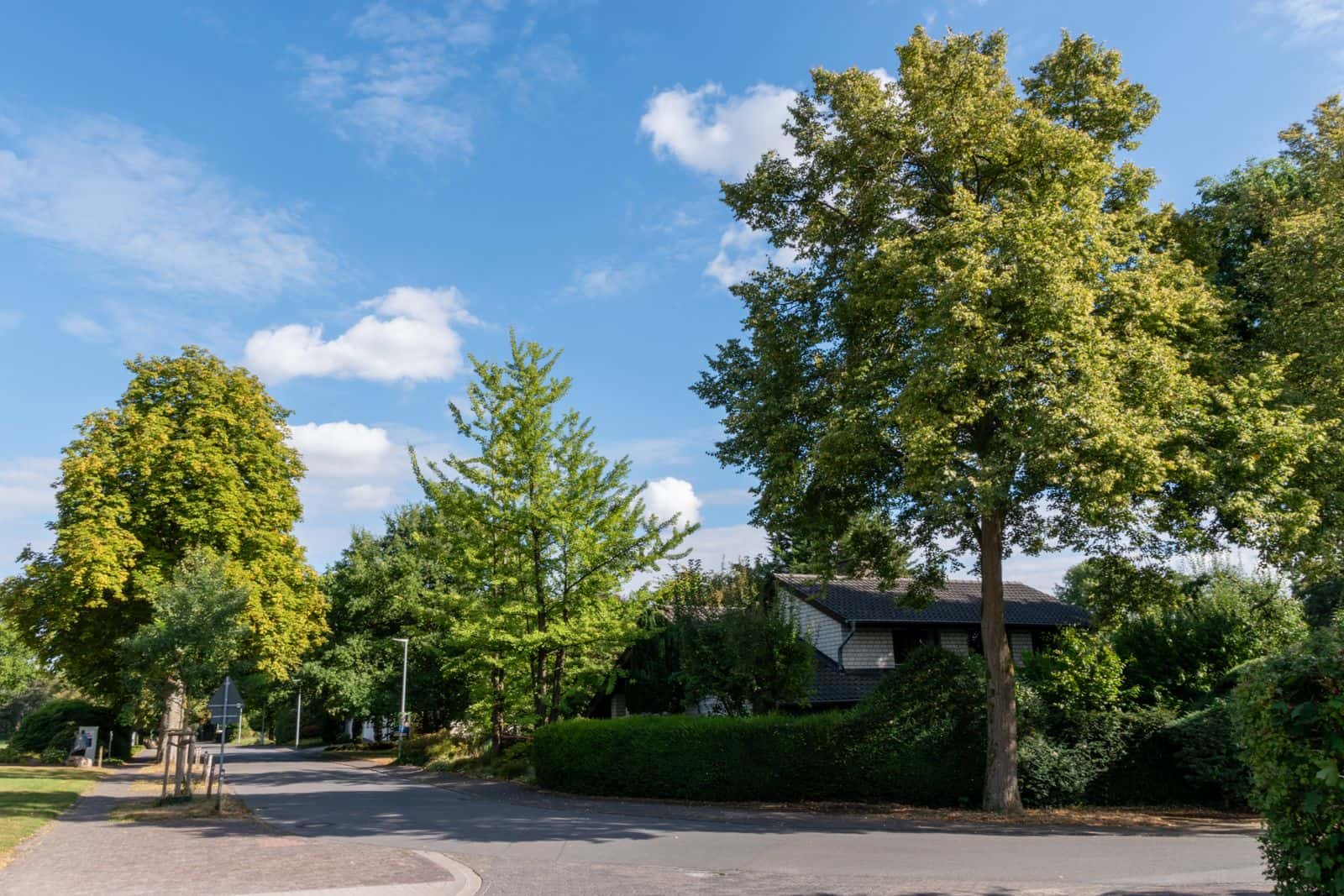
After a spring hailstorm: damage that heals and damage that doesn't
A shredded canopy looks alarming, but leaves come back. Most healthy shade trees in Dallas push a new flush of leaves within a few weeks of a hailstorm, and stripped foliage alone is rarely a reason to remove a tree.
What doesn't heal is structural damage. Walk the yard after the storm and look for these before deciding anything:
- A main fork split open, or a crack running down from a broken limb into the trunk.
- A snapped leader on a young tree, which leaves it with a weak, multi-stemmed top.
- Large broken limbs still caught in the crown over the roof, driveway or alley.
- Bark knocked off thin-barked trees on the side facing the storm; small wounds close, large torn patches invite decay.
Alley lots up front, pools out north: how access changes a Dallas job
Older central neighborhoods have alley-served lots with overhead lines in the back, so many removals are rigged away from alleys and utility drops. North Dallas and suburban lots are larger, with more room for equipment but often with pools and fences under the canopy.
Alley access usually helps, because a bucket truck or chipper can set up behind the house instead of crossing the lawn. The catch is the overhead service drop: Oncor clears trees from its lines, but a crew working near a drop slows down and rigs every piece. On pool lots, expect wood to be lowered on ropes rather than dropped, and ask how the company protects decking and fencing.
When Dallas's Article X tree rules apply
- Article X tree preservation rules generally do not apply to lots smaller than two acres with single-family or duplex use.
- They do apply to vacant lots, lots of two acres or more, and properties where a structure will be demolished. There, protected trees (generally 8 inches or more in diameter) need a removal permit.
- Several fast-growing species, including hackberry, Bradford pear relatives, silver maple and Siberian elm, are listed as not protected.
Sources (checked 2026-10-01)
Rules change and details depend on your exact property. Confirm with the city or county before work starts. This isn't legal advice.
Removing a big tree near a slab on Blackland clay
On expansive clay, a large tree dries the soil around its roots, and the slab may have settled into that pattern over decades. Taking the tree out lets moisture return, and the soil can swell. That's why foundation questions come up so often here.
- 1
Find out what the foundation is doing
If there's existing cracking or uneven floors, a foundation engineer's opinion is worth getting before the tree comes out.
- 2
Ask whether removal is the answer
Root barriers or watering changes can sometimes manage the problem without losing a mature pecan or oak.
- 3
If it comes out, plan the stump
Grinding takes the stump below grade; the root mass is left to decay. Mention the slab so the grinder stays clear of plumbing and the foundation edge.
Which services Dallas homeowners need most
Mostly hail-damaged ornamentals, failing Bradford pears and big trees over alley garages.
Split forks and hung limbs after spring hail and downbursts.
Limbs on roofs or service drops after a downburst or ice event.
Deadwood and clearance on pecans and cedar elms, with oaks pruned outside February–June.
Common after pear and hackberry removals; mention nearby slabs and irrigation.
Dallas tree questions: permits, foundations and oak timing
Do I need a permit to remove a tree in Dallas?
Usually not for a tree on a developed single-family or duplex lot under two acres. You likely do for vacant lots, lots of two acres or more, and demolition projects. Trees in the street right-of-way involve the city. Confirm with the City of Dallas before cutting.
Can tree roots damage a foundation in Dallas?
Roots rarely break a sound foundation directly, but in Dallas's clay soils large trees can dry out soil near a slab during droughts and add to movement. Talk to a foundation engineer before removing a big tree for foundation reasons, since removal can also change soil moisture.
When is the best time to prune oaks in Dallas?
Outside February through June, following Texas A&M Forest Service oak wilt guidance, and with every oak wound painted immediately.
Calls are routed to independent local tree-service providers. How calling works
More local guides
Need tree help in Dallas?
Call to speak with a local tree-service provider about removal, trimming, stumps or storm damage. Describe the tree and what it's near, and they'll explain the next step.