New York City, NY · Five boroughs
Tree removal in New York City
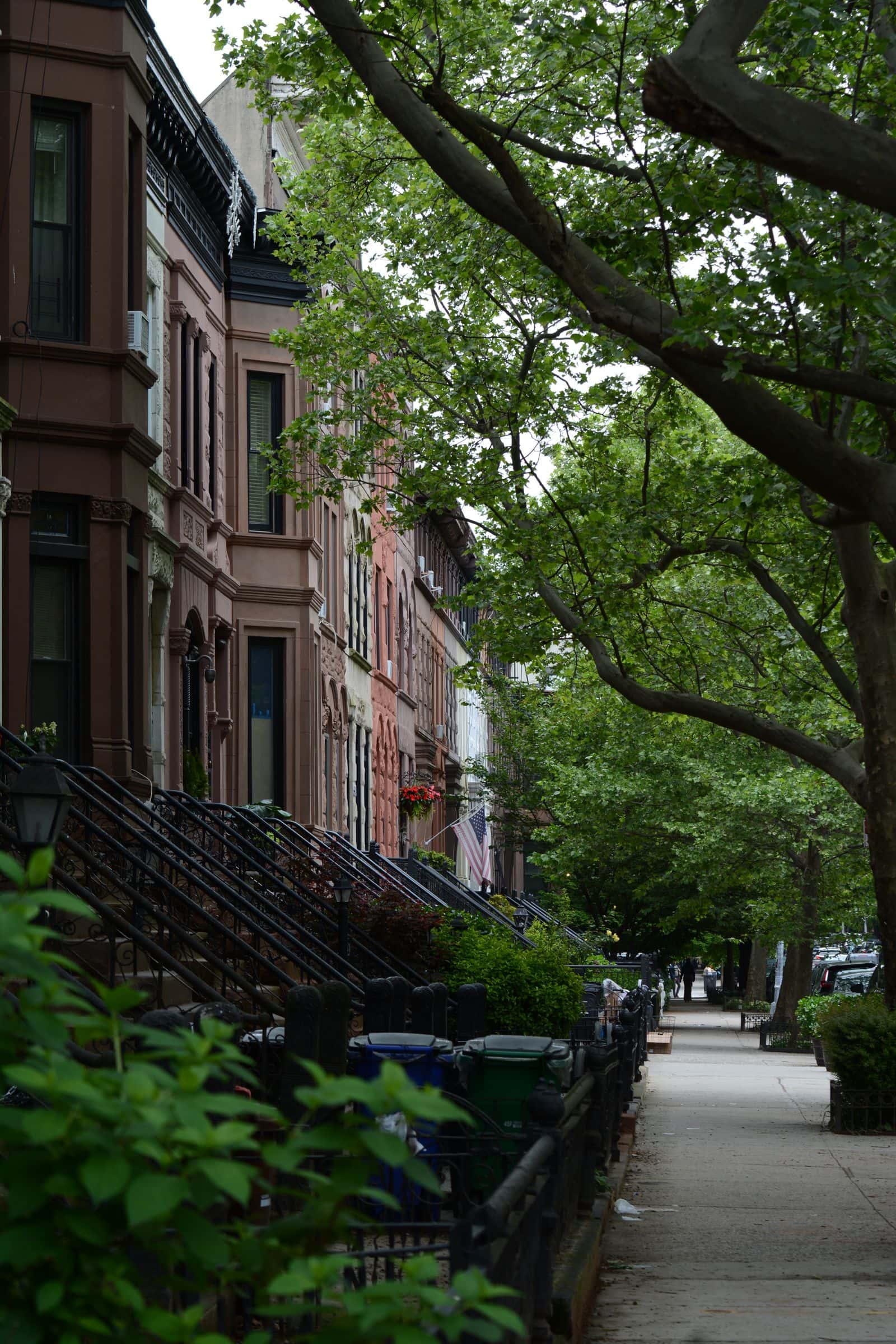
In New York City, the first question is who owns the tree. Street trees in the sidewalk strip belong to the city: any pruning, removal or work within 50 feet requires an NYC Parks permit, and fallen or hazardous street trees are reported to 311. Trees in private backyards are the owner's responsibility and are usually removed piece by piece through tight row-house lots.
The city manages hundreds of thousands of street trees, mostly London planetrees, honeylocusts, pin oaks, lindens and Callery pears. Removing one without permission is a serious offense with heavy fines. If a street tree is damaging your sidewalk or looks dangerous, request an inspection through 311 rather than hiring a company to cut it.
Private trees are a different job. In Brooklyn, Queens and the Bronx, backyard trees often sit behind attached houses with no side access. Wood has to be rigged down in small pieces and carried through a basement or hallway, or lifted out by crane over the roof. That's why backyard tree work here costs more and takes longer than in suburbs.
Reviewed and updated
Street tree rules in New York City
- Street trees are city property. A permit from NYC Parks is required for any work on or within 50 feet of a street tree, including pruning and removal. Unauthorized removal is punishable by fines and possible jail time.
- Report fallen, damaged or hazardous street trees to 311. Private trees on your property are your responsibility; there's generally no citywide permit for them, but landmark districts and development projects can involve review.
Sources (checked 2026-10-01)
Rules change and details depend on your exact property. Confirm with the city or county before work starts. This isn't legal advice.
Spotted lanternfly and tree-of-heaven in the five boroughs
Spotted lanternfly has spread through New York City, and its favorite host, tree-of-heaven, grows in backyards, along fences and in the gaps between buildings across all five boroughs.
Tree-of-heaven is also a removal headache: it grows fast, breaks easily and sends up sprouts from its roots when cut. If one is growing against your foundation or a shared wall, removal is usually worth it, but cutting alone tends to produce a thicket of new sprouts. Ask how the company will prevent regrowth.
City-owned street trees, coastal storms and tight access
City-owned street trees
Permits from NYC Parks for any work on or near them; 311 for hazards and fallen trees.
Coastal storms
Sandy (2012) and Isaias (2020) brought down thousands of trees across the boroughs.
Tight backyard access
Row houses mean rigging, carry-through or crane work for private trees.
Pests
Oak wilt has been confirmed in Brooklyn; emerald ash borer is present in the city.
London planetrees, maples, pears and pin oaks
- London planetree
- Most common street tree; large and generally resilient
- Norway maple
- Common in backyards; shallow roots, girdling roots, storm failures
- Callery pear
- Splits at weak forks as it ages
- Pin oak
- Street and park tree; oak wilt risk
- Tree-of-heaven
- Invasive backyard volunteer; spotted lanternfly host
Hiring for a tight urban backyard job
A backyard removal in Brooklyn or Queens involves more coordination than most suburban jobs. Before agreeing to one:
- 1
Confirm insurance
Neighbors' property is often within reach. Ask for a certificate of insurance sent from the insurer.
- 2
Talk to the neighbors
If limbs hang over their yard, or a crane will swing over their roof, they should know in advance.
- 3
Check street-use needs
A crane or container on the street may need city permits; the company should handle them.
- 4
Settle wood removal
Agree on whether wood comes through the house, over the roof by crane, or both, and what that costs.
New York City tree services
Private backyard trees; street trees go through NYC Parks.
Backyard pruning; never prune a street tree without a permit.
Crane lifts over attached houses.
Private trees on houses after coastal storms; report street trees to 311.
Deciding whether a big backyard tree can stay.
New York City tree questions
A street tree fell on my car in NYC. Who do I call?
Call 911 if anyone is hurt or lines are down. Otherwise report it to 311 so NYC Parks can clear it, and contact your auto insurer. Don't hire a company to cut up a street tree yourself.
Can a tree company remove a tree in my Brooklyn backyard?
Yes. Private backyard trees are the owner's responsibility. Expect rigging and carry-through work or a crane, and confirm the company's insurance, since neighbors' property is often close.
Calls are routed to independent local tree-service providers. How calling works
More local guides
Need tree help in New York City?
Call to speak with a local tree-service provider about removal, trimming, stumps or storm damage. Describe the tree and what it's near, and they'll explain the next step.