Phoenix, AZ · Maricopa County
Tree removal in Phoenix
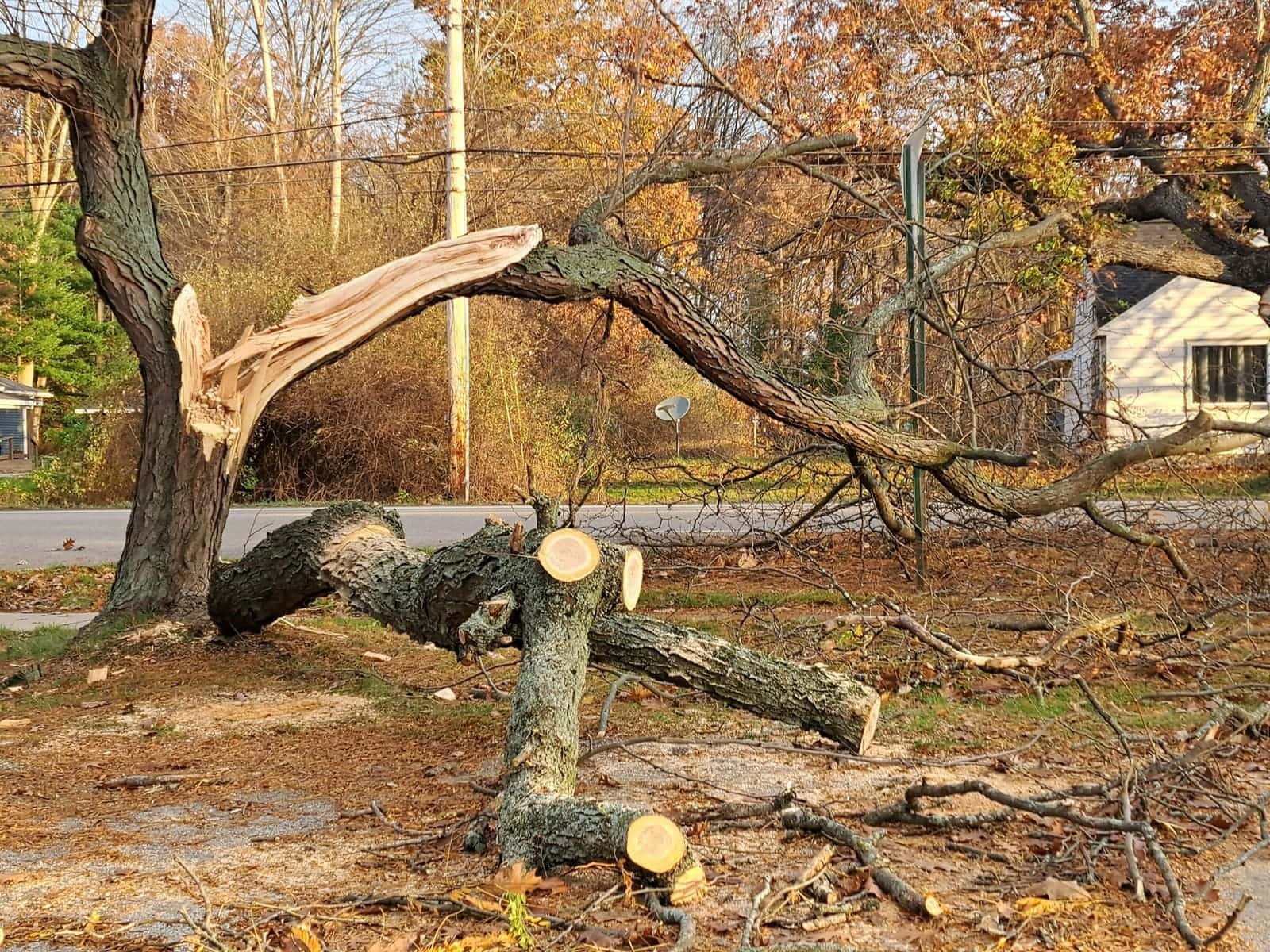
Phoenix tree emergencies peak during the monsoon, June 15 through September 30, when microburst winds push over top-heavy, shallow-rooted trees. Most private-yard removals don't need a City of Phoenix permit. But native palo verde, mesquite and ironwood fall under the Arizona Native Plant Law, which requires notice to the Arizona Department of Agriculture before they're destroyed, and right-of-way trees and HOA rules add their own approvals.
Valley trees are grown almost entirely on irrigation. Frequent, shallow drip watering keeps roots near the surface, while the same water pushes fast, dense crown growth. South American mesquite hybrids and overgrown palo verdes are especially prone to blowing over in the first big monsoon storm of the year.
Heat does its own damage. Over-thinned trees get sunscald on newly exposed bark, and drought-stressed trees attract borers. A good Phoenix pruning job thins weight from the ends of branches while keeping foliage along the limbs to shade the bark.
Reviewed and updated
Monsoon microbursts and shallow irrigated roots
Monsoon microbursts
Sudden downbursts from June 15 to September 30 uproot trees and snap limbs in minutes.
Irrigation-driven shallow roots
Frequent light watering produces poor anchorage; deep, infrequent watering helps.
Extreme heat and sunscald
Over-pruned trees suffer bark damage in 110°F+ summers.
Top-heavy hybrids
Hybrid mesquites grow fast and dense, and fail often in wind.
Watering and pruning that keep Valley trees standing
Most monsoon blow-overs in Phoenix start years earlier with irrigation. Drip emitters placed near the trunk and run often keep roots in a small, shallow pad, while the same water pushes a dense, heavy crown. When a microburst hits, there's little anchoring a lot of sail.
- Move emitters out toward the edge of the canopy as the tree grows, and add more of them.
- Water deeply and less often so roots follow the water down and outward.
- Have dense crowns thinned lightly before June, removing weight from branch ends; heavy thinning exposes bark to sunscald.
- Remove stakes once a young tree can stand on its own, so the trunk builds strength.
Palo verde, mesquite, ironwood and the palms in Valley yards
- Palo verde (blue, foothill, Desert Museum)
- Native or native hybrid; brittle when overgrown
- Mesquite
- Native velvet mesquite and South American hybrids; heavy crowns
- Ironwood
- Slow-growing native; protected
- Date and Mexican fan palms
- Regular dead-frond and fruit removal
- Eucalyptus and Aleppo pine
- Large non-natives; wind and heat stress
Is it the tree or the irrigation? Common causes of decline in the Valley
A thinning desert tree usually has a cause you can fix before removal is on the table:
Yellowing, dieback in summer
- Likely cause
- Too little water reaching the root zone, or salts building up
- What helps
- Deeper, wider watering; occasional long soaks to flush salts
Sudden collapse of a palo verde limb or the whole tree
- Likely cause
- Palo verde root borer in a stressed tree
- What helps
- Remove the dead tree; keep nearby palo verdes well watered
Leafy clumps that stay green in winter on mesquite or palo verde
- Likely cause
- Desert mistletoe
- What helps
- Prune out infected branches before it spreads
Cracked, peeling bark on the sunny side
- Likely cause
- Sunscald after over-thinning
- What helps
- Keep foliage along limbs; prune lightly
Phoenix rules: native plants and the city
- Arizona Native Plant Law: protected native plants, including palo verde, mesquite and ironwood, may not be destroyed without prior notice to the Arizona Department of Agriculture (20 days for areas under one acre).
- The City of Phoenix doesn't generally require a permit to remove a tree on private residential property, but right-of-way trees need city involvement. We could not verify a single city page stating the private-lot rule, so confirm with Planning & Development for your parcel.
Sources (checked 2026-10-01)
Rules change and details depend on your exact property. Confirm with the city or county before work starts. This isn't legal advice.
Block walls, gates and HOA approvals
Most lots are block-walled, so equipment access is through a gate or over the wall. HOAs in master-planned communities commonly require approval before removing front-yard trees.
Measure the gate before a crew comes. A narrow side gate can rule out a stump grinder or loader, and the alternative is lifting equipment or wood over the wall, which takes longer and costs more.
Services Phoenix homeowners use most
Monsoon blow-overs and snapped mesquite; the local guide covers reset-or-remove decisions.
Pre-monsoon weight reduction without over-thinning.
Borer-killed palo verdes and trees that outgrew their space.
Trees on walls, roofs, cars or lines after a storm.
Check gate width; desert hardwoods grind slowly.
Phoenix questions: monsoon, power lines and palo verde
How do I keep my tree from blowing over in the monsoon?
Water deeply and less often so roots grow down and out, and have dense crowns thinned properly before June, removing weight from branch ends rather than stripping interior growth.
A monsoon storm put a tree into the power lines. Who do I call?
The Phoenix area is served by two electric utilities, APS and SRP, depending on where you live. Call the one on your bill, stay well away from the tree, and let the utility clear the line before any tree company works on it.
Do I need permission to remove a palo verde in Phoenix?
Palo verde is a protected native under the Arizona Native Plant Law, so notice to the Arizona Department of Agriculture is required before destroying it. Check HOA rules too.
Calls are routed to independent local tree-service providers. How calling works
More local guides
Need tree help in Phoenix?
Call to speak with a local tree-service provider about removal, trimming, stumps or storm damage. Describe the tree and what it's near, and they'll explain the next step.