
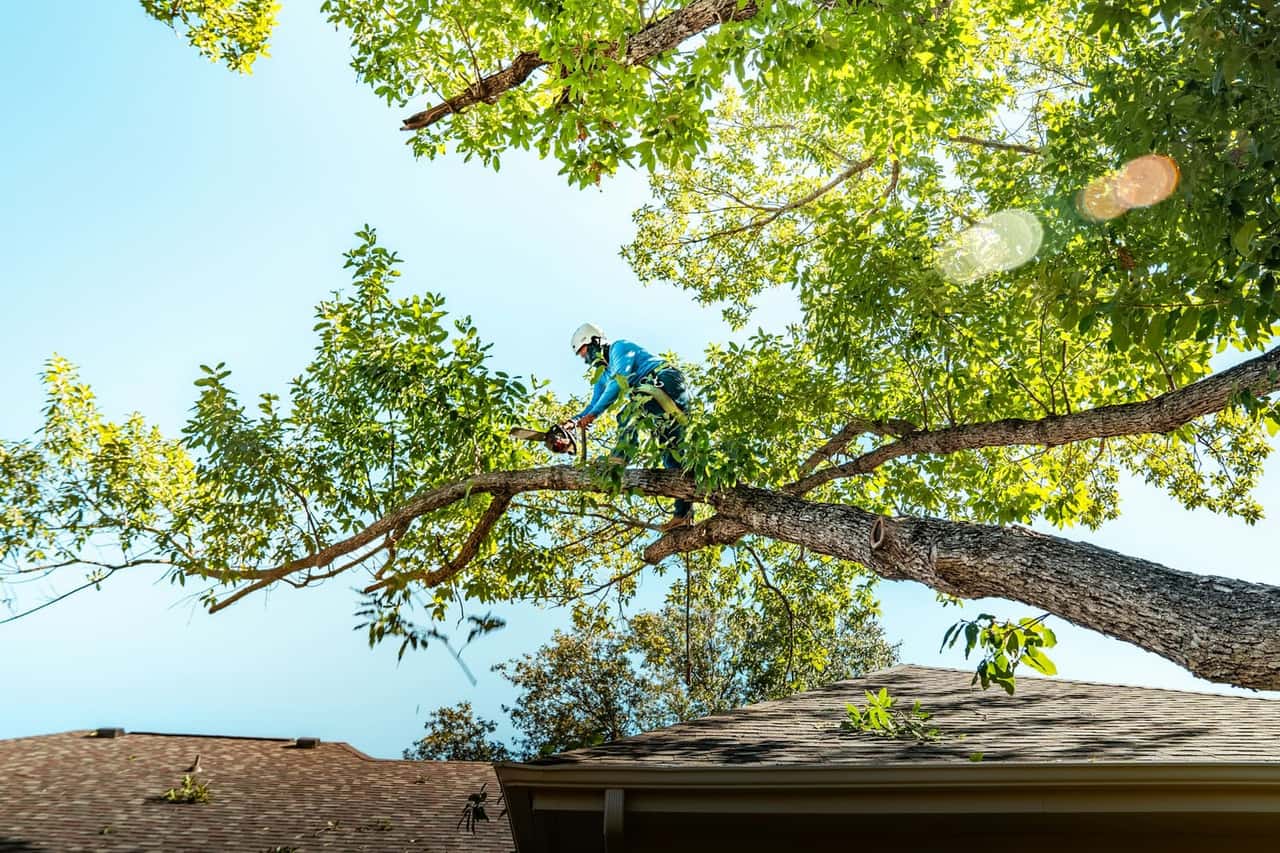
Urgent situations
Emergency tree trimming
Emergency tree trimming removes limbs that are broken, hanging or cracked over a roof, driveway, walkway or road before they fall, while the rest of the tree stays. It's for urgent hazards, not routine shaping. If a limb is touching a power line, stay away from it and call the utility first; only qualified line-clearance workers can cut near energized lines.
By calling, you agree that your call may be recorded and routed to an independent local tree-service provider, who may call or text you back about your request. Calling is free and does not obligate you to hire anyone. See our Privacy Policy.
Get emergency tree trimming help now
Broken, hanging or cracked limbs over a roof, drive or path.
Often needed with: emergency tree removal, storm damage tree removal, tree trimming & pruning, emergency tree cutting.
Call and we'll connect you with a tree-service provider for emergency tree trimming in your area.
Call about a tree emergencyIs it a tree emergency?
Call now if you have any of these:
- A tree on the house, garage or car
- A fallen tree blocking the driveway or road
- A tree or limb touching a power line
- A tree leaning more than it did yesterday, with soil lifting
- Large broken limbs hanging over people or the roof
- A storm-damaged tree that could still fall
Lines first: if a tree touches a power line, stay at least 35 feet away and call the electric utility or 911 before anyone works on it.
What to confirm in a emergency tree trimming quote
Quotes differ mostly in what they include. Ask each provider to put these in writing so you can compare like for like:
- Which limbs are removed now
- How limbs over the roof are lowered
- Debris hauled or left at the curb
- Whether follow-up pruning is a separate visit
- Photos and an itemized invoice for insurance
Last updated
When trimming can't wait
- A broken limb is hanging in the canopy over a roof, driveway or path.
- A large limb has a fresh crack at the trunk.
- A limb is resting on the roof, gutter or a vehicle.
- A branch is blocking a driveway or road and still attached to the tree.
- Ice or snow has bent limbs low over a walkway or entrance.
Do this before the crew arrives
Do this now
- Keep everyone out from under the broken limb, at least its length in every direction.
- Photograph the damage for insurance before anything is moved.
- Call the utility if any limb is on or near a line.
Never do this
- Don't pull on a hanging limb with a rope or vehicle.
- Don't climb a ladder into a storm-damaged tree with a chainsaw.
- Don't touch a limb that's resting on a power line, or anything it's touching.
Hangers, cracks and limbs on the roof
Hangers are broken limbs caught in the crown. They can fall without wind and are one of the leading causes of injury after storms. Cracked limbs, especially where a large limb meets the trunk, are the next most urgent, because the crack can run and the limb can tear off.
Limbs resting on a roof or gutter can be holding more weight than they look. Crews lower them on ropes rather than cutting them where they lie, so the roof isn't damaged further.
What happens once a crew arrives on site
- 1
Make the area safe
The crew keeps people out of the drop zone and checks for lines, tension and other loose limbs.
- 2
Remove hangers first
Broken limbs caught in the crown are cut free and lowered on ropes, not dropped onto the roof.
- 3
Cut back damaged limbs
Cracked or split limbs are removed with proper cuts back to a branch or the trunk.
- 4
Clear the access
Limbs over driveways, walkways and roads are removed so they're safe to use.
- 5
Advise on the rest
The crew tells you whether the tree needs follow-up pruning, an assessment, or removal.
Power lines come first
If any limb is touching or tangled in a line, or a line is down, stay well back and call the utility. Lines can be energized even when the power is out. Only qualified line-clearance workers are allowed to cut near energized lines; general tree crews aren't.
Limbs on the service drop to your house are usually your responsibility after the utility disconnects power; ask the utility how it's handled in your area.
What emergency trimming costs
Emergency trimming is usually priced by the job, and these factors move it:
- How many limbs and how high they are
- Whether limbs are resting on the roof or must be lowered over it
- Access for a bucket truck or the need to climb
- After-hours or storm-surge demand
- Hauling the debris
After the emergency
Emergency trimming makes the tree safe. Once things calm down, a regular pruning visit can clean up smaller damage and rebalance the crown, or an assessment can decide whether the tree should stay.
Keep photos and receipts from the emergency visit for your insurance claim.
Emergency trimming questions
What is a hanging limb or widow-maker?
A broken limb that's caught in the tree's crown instead of falling. It can drop at any time, without warning, which is why it's one of the most common reasons for emergency tree trimming.
Is a cracked limb an emergency?
A fresh crack where a large limb meets the trunk, especially over a house, drive or walkway, should be treated as urgent. Small cracked branches over open lawn can wait for a regular visit.
Can emergency trimming save the tree?
Often, yes. Removing broken limbs with proper cuts lets many trees recover. If the trunk is split or most of the crown is lost, removal may be the safer choice.
Who cuts limbs that are on a power line?
The utility or its qualified line-clearance contractor. Report it to the utility and stay well away. Tree crews without line-clearance qualification are not allowed to work near energized lines.
Should I wait for my insurance adjuster before trimming?
Take photos and video first, then do what's needed to prevent further damage. Most policies expect you to protect your property. Keep receipts for emergency work.
Is it safe to saw off a cracked limb from a ladder?
No. Ladders and chainsaws are a bad mix, and a cracked limb can shift or tear as soon as it's cut. A small branch reachable from the ground with nothing under it is the most a homeowner should tackle; anything overhead or over a structure is a crew job.
Will the tree need more work later?
Often. Emergency work makes the tree safe; follow-up pruning can rebalance the crown and remove smaller damage once things calm down.
Is ice damage an emergency?
Ice-loaded limbs can break suddenly. Stay out from under them until the ice melts, and call if limbs are bent over entrances, drives or the roof. Don't try to knock ice off limbs.
Who handles a neighbor's broken limb hanging over my roof?
Generally, if a healthy tree's limb breaks in a storm, each owner deals with what landed on their property, and you can usually trim what overhangs your side. If the neighbor knew the tree or limb was dead or damaged, they may be responsible. Photograph it and talk to your insurer; see who pays when a tree falls.
How long does an emergency trimming visit take?
Removing a few hanging or cracked limbs usually takes a crew an hour or two once it arrives. Limbs that must be lowered over a roof, or several damaged trees, take longer, and after big storms the wait for a crew is usually longer than the work itself.
What does emergency tree trimming cost?
It depends on how many limbs, their height and what's under them. After-hours work and big storms can raise prices. Ask for the scope in writing even in an emergency.
Before you call about emergency tree trimming
These answers let a provider tell you on the first call what the job involves and roughly how it'll be done.
- What's broken
- Hanging limb, cracked limb, limb on roof
- Where it is
- Over roof, drive, walkway, road
- Lines
- Any limb near a power line?
- Size
- Rough limb thickness and height
- Photos
- Of the limb and what's under it
Safety and permission checks
- Power lines: stay at least 10 feet from overhead lines (OSHA's minimum distance for unqualified workers) and call the utility; only line-clearance-qualified tree workers cut closer.
- Underground lines: call 811 a few days before stump grinding or digging so buried utilities are marked for free.
- Permits: ask the city or county before removing or heavily pruning a large tree; protected-tree sizes and street-tree rules vary by place.
- Who is responsible: a tree on your lot is usually yours, street (right-of-way) trees are usually the city's, and trees on lines are the utility's to clear.
- Doing it yourself: picking up small fallen limbs is a homeowner job; chainsaw work off a ladder, near lines or on anything that could hit a building is not.
Have your answers ready? Call and we'll connect you with a provider serving your area.
Call for tree serviceHow getting emergency tree trimming works
- 1
Tell us what's happening
Call and describe the tree, where it is and how urgent it is.
- 2
Get connected
Your call goes to an independent tree-service provider serving your area.
- 3
The tree is assessed
The provider looks at the tree, what's around it, and access for equipment.
- 4
Scope and price are discussed
You get the plan and price directly from the provider, before any work.
- 5
You decide
There's no obligation; you choose whether and when to go ahead.
TreeRemovalServices.net is a referral service and doesn't perform tree work. How it works
Related tree services
- Emergency Tree Removal servicesA tree on the house, car, driveway or a line, or one about to fall.
- Storm Damage Tree Removal servicesUprooted, split or snapped trees and hanging limbs after wind, ice or hurricanes.
- Tree Trimming & Pruning servicesPruning for clearance over roofs and drives, deadwood removal and storm preparation.
- Emergency Tree Cutting servicesCutting a fallen tree off a car, driveway, fence or road.
- Tree Removal servicesTaking down a tree you no longer want or can't keep, in sections near buildings.
- Dead Tree Removal servicesDead or dying trees that turn brittle and get riskier to climb every season.
- Hazardous Tree Removal servicesLeaning, cracked or decayed trees that could hit something if they fail.
- Large Tree Removal servicesBig trees close to structures that need rigging or a crane.
- Stump Grinding & Removal servicesGrinding stumps below grade so you can replant, sod or build.
- Tree Risk Assessment servicesAn arborist's opinion on whether a tree can stay, before you remove it.
- Commercial Tree ServicesTree work for HOAs, property managers and commercial sites.
- Land Clearing servicesClearing brush, trees and stumps from a lot by mulching or excavation.
- Stump Removal servicesDigging out the stump and root ball where something will be built or planted.
- Tree Cutting servicesBringing a tree down safely: felled in one piece or cut down in sections.
- Palm Tree Removal servicesDead, diseased or unwanted palms, crown first, then the trunk.
- Oak Tree Removal servicesOaks with permits, oak wilt timing and heavy wood to plan around.
- Pine Tree Removal servicesTall, beetle-killed or storm-damaged pines near the house.
Tell us what's happening and we'll connect you with a tree-service provider serving your area.
Call about a tree emergencyWhy these services go together
- Emergency Tree Removal: when the whole tree has failed or is failing
- Storm Damage Tree Removal: cleanup after a storm
- Tree Trimming & Pruning: regular pruning once the emergency is past
- Emergency Tree Cutting: cutting a fallen tree off a car, drive or road
Emergency Tree Trimming by location
By state (51)
- Texas
- Florida
- California
- Arizona
- Georgia
- North Carolina
- Washington State
- Minnesota
- New York
- Colorado
- Illinois
- Ohio
- Pennsylvania
- Michigan
- Tennessee
- Louisiana
- Missouri
- Virginia
- Maryland
- Washington, DC
- New Jersey
- Massachusetts
- Wisconsin
- Kentucky
- South Carolina
- Alabama
- Oklahoma
- Oregon
- Utah
- Indiana
- Nevada
- Iowa
- Arkansas
- Mississippi
- Kansas
- Connecticut
- New Mexico
- Idaho
- Nebraska
- Alaska
- Delaware
- Hawaii
- Maine
- Montana
- New Hampshire
- North Dakota
- Rhode Island
- South Dakota
- Vermont
- West Virginia
- Wyoming
By city (57)
- Dallas, TX
- Houston, TX
- Austin, TX
- San Antonio, TX
- Miami, FL
- Orlando, FL
- Tampa, FL
- Los Angeles, CA
- San Diego, CA
- Sacramento, CA
- Phoenix, AZ
- Atlanta, GA
- Charlotte, NC
- Raleigh, NC
- Seattle, WA
- Minneapolis, MN
- New York City, NY
- Denver, CO
- Chicago, IL
- Columbus, OH
- Cleveland, OH
- Philadelphia, PA
- Pittsburgh, PA
- Detroit, MI
- Nashville, TN
- New Orleans, LA
- St. Louis, MO
- Kansas City, MO
- Fort Worth, TX
- Jacksonville, FL
- Virginia Beach, VA
- Baltimore, MD
- Jersey City, NJ
- Boston, MA
- Milwaukee, WI
- Louisville, KY
- Charleston, SC
- Birmingham, AL
- Tulsa, OK
- Cincinnati, OH
- Memphis, TN
- Richmond, VA
- Fort Lauderdale, FL
- Tucson, AZ
- Portland, OR
- Salt Lake City, UT
- Indianapolis, IN
- Las Vegas, NV
- Tacoma, WA
- San Jose, CA
- San Francisco, CA
- Buffalo, NY
- Cedar Rapids, IA
- Wichita, KS
- Albuquerque, NM
- Boise, ID
- Omaha, NE
By county (14)
By town and neighborhood (8)
Need help with a tree?
Call to speak with a local tree-service provider about removal, trimming, stumps or storm damage. Describe the tree and what it's near, and they'll explain the next step.
By calling, you agree that your call may be recorded and routed to an independent local tree-service provider, who may call or text you back about your request. Calling is free and does not obligate you to hire anyone. See our Privacy Policy.