
Jersey City, NJ · Hudson County
Tree removal in Jersey City
In Jersey City, planting, pruning, removing or otherwise disturbing a City tree (street trees and trees in public spaces) requires a tree work permit from the Division of Parks and Forestry, and removing one without a permit is illegal. Trees in your own backyard are generally your responsibility. Most private jobs involve tight lots between attached homes, with wood carried out to the street.
Jersey City is one of the densest places in the country. Brownstones and row homes in Downtown, Hamilton Park and the Heights have tiny backyards, often reachable only through the house. Trees are climbed and lowered piece by piece, and cranes on the street are sometimes the only option for big ones.
Superstorm Sandy in 2012 flooded low-lying neighborhoods with saltwater, and many street trees died in the following years. Salt from both storms and winter roads, plus small sidewalk tree pits, keeps street trees under stress, and the Shade Tree Committee advises the city on large plantings and removals.
Reviewed and updated
Jersey City's tree work permits
- A valid tree work permit is required to plant, prune, remove or otherwise disturb a City tree. Removal by anyone other than the Division of Parks and Forestry or a city contractor requires its permit, and removal without one is illegal.
- The Shade Tree Committee makes recommendations on large-scale planting and removal of shade trees in rights-of-way, plazas and parks.
Sources (checked 2026-10-01)
Rules change and details depend on your exact property. Confirm with the city or county before work starts. This isn't legal advice.
Dense blocks, flood salt and lanternfly
City tree permits
Any work on a City tree needs a Division of Parks and Forestry permit; unpermitted removal is illegal.
Dense, attached housing
Backyard trees are removed by hand-carry or crane.
Flood and salt stress
Sandy's saltwater flooding and road salt weaken street trees.
Spotted lanternfly
Widespread in New Jersey; tree-of-heaven is common on lots and rail edges.
Small backyard trees that outgrow their space
Many Jersey City backyards hold a tree that was small when it was planted or seeded in, and now fills the whole yard: a Norway maple against the fence, a tree-of-heaven by the foundation, a mulberry over the neighbor's roof.
Removal in a yard this size is about control. Each piece is lowered so it doesn't hit fences, windows or neighboring roofs, then carried out. If the tree is healthy and wanted, crown reduction can buy years, but trees growing against a foundation or wall usually need to come out before roots do damage.
Planning a job on a busy, parked-up street
- Ask where the truck and chipper will park, and whether the company arranges any street-use or parking permission the city requires.
- Tell neighbors which day, especially if a crane will swing over adjoining roofs.
- Expect a short window: crews on dense blocks work fast to free the street.
Planetrees, pears, honeylocusts and tree-of-heaven
- London planetree
- Large, tough street tree
- Callery pear
- Widely planted; splits in storms
- Honeylocust
- Common street tree
- Pin oak
- Large tree on wider streets and parks
- Tree-of-heaven
- Invasive volunteer; lanternfly host
Attached homes with no side access
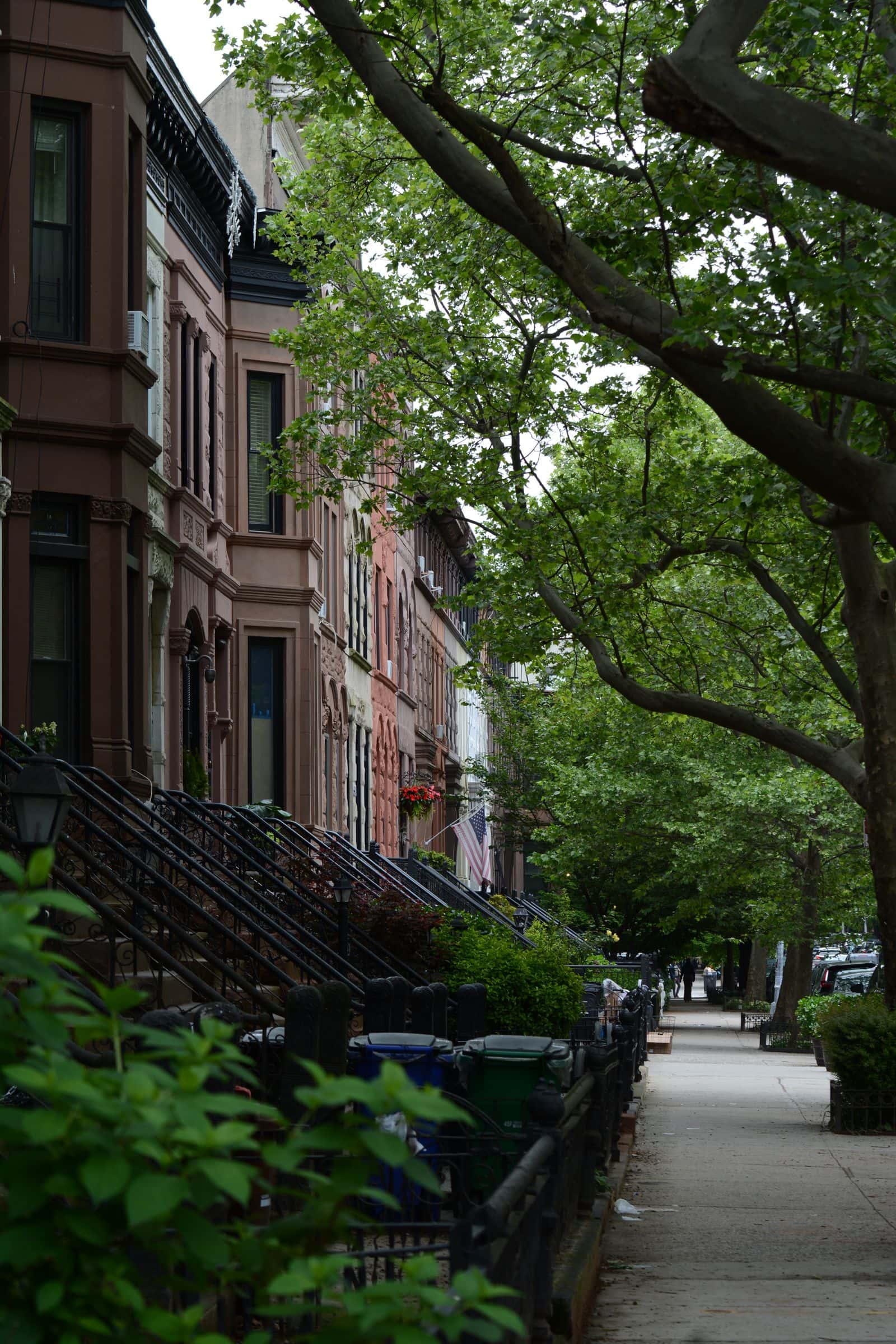
Attached homes with small rear yards and no side access are the norm; parking restrictions and narrow streets affect where trucks and chippers can set up.
Because everything travels through the house, clear a path from the back door to the front before the crew arrives, and agree on how floors will be protected.
Jersey City services
Backyard trees in tight yards.
Backyard pruning; city trees need a permit first.
Crane lifts over attached houses.
Trees damaged by coastal storms and flooding.
Where a small grinder can get through; otherwise stumps are cut flush.
Jersey City questions
Can I prune the street tree in front of my Jersey City home?
Not without a tree work permit from the Division of Parks and Forestry. That applies to pruning, removal and any other disturbance of a City tree.
My backyard flooded in a storm. Could that kill my trees?
It can, especially in low areas near the Hackensack and Hudson waterfront where flooding brings salt. Damage often shows as browning or thin leaves the following season. A tree that declines steadily over a year or two after flooding should be inspected before it becomes a hazard.
Why did so many street trees die after Sandy?
Saltwater flooding soaked the soil in low-lying areas, and salt damage to roots often shows up as decline over the next one to three years.
Calls are routed to independent local tree-service providers. How calling works
More local guides
Need tree help in Jersey City?
Call to speak with a local tree-service provider about removal, trimming, stumps or storm damage. Describe the tree and what it's near, and they'll explain the next step.