
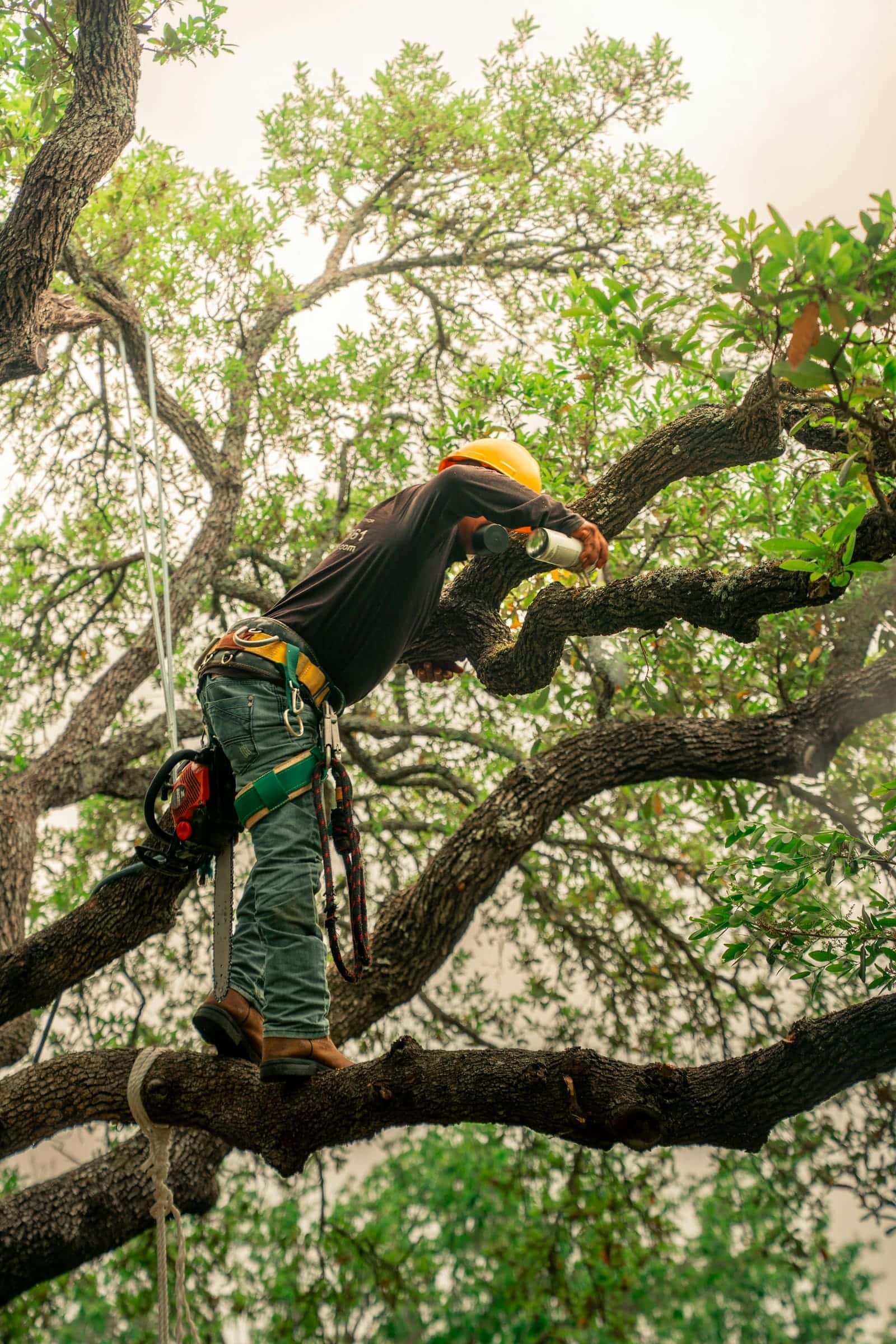
Austin, TX · Travis County
Tree removal in Austin
In Austin, check two things before any tree work. First, size: trees 19 inches in diameter and larger are protected and need a city permit to remove, and heritage trees of certain species at 24 inches or more face much stricter rules. Second, timing: oaks shouldn't be pruned from February through June because of oak wilt.
Austin sits where the Blackland Prairie meets the Hill Country. East of I-35, soils are deeper clay; west, trees grow in thin soil over limestone, with shallow, spreading roots. Live oaks and cedar elms dominate, and connected live-oak root systems mean oak wilt can move tree to tree through whole neighborhoods.
The February 2023 ice storm was a turning point for many Austin homeowners. Freezing rain split live oaks and pecans across the city, left debris piles for weeks, and led to a wave of pruning and removal decisions, many of which required permits for large trees.
Reviewed and updated
Oak wilt, ice and limestone: Austin's tree conditions
Oak wilt
Endemic in Central Texas; red oaks die fast, live oaks spread it through roots. Pruning timing and wound paint matter.
Ice storms
The 2023 ice storm split thousands of live oaks and pecans; ice is Austin's most damaging winter hazard.
Thin soils over limestone
West Austin trees have shallow roots and suffer badly in droughts.
Protected tree rules
Large trees are regulated, so removals often start with a permit application, not a crew.
Planning oak work around the February–June window
Oak wilt shapes the calendar for anyone with live oaks or red oaks. The practical version of the Texas A&M Forest Service guidance:
- 1
Schedule oak pruning and removals for July through January
Midsummer heat and cooler months both reduce the beetle activity that spreads the fungus to fresh wounds.
- 2
If an oak is wounded in spring, paint it immediately
Storm damage, a mower nick or emergency pruning between February and June should be painted the same day.
- 3
Handle red oak firewood carefully
Wood from a red oak that died of oak wilt can carry the fungus. Don't stack it near healthy oaks; ask the company to haul it or follow Texas A&M Forest Service handling advice.
- 4
Watch the neighbors' trees too
Live oaks share roots across property lines, so a wilting oak next door is a reason to have yours looked at.
Austin's protected and heritage tree rules
- Trees 19 inches in diameter (measured 4.5 feet above ground) and larger are protected; removing one requires a permit from the City of Austin.
- Heritage trees, 24 inches and larger of listed species such as live oak, pecan and Texas ash, get additional protection: removal generally needs strong justification (dead, an imminent hazard, or confirmed disease) and mitigation.
Sources (checked 2026-10-01)
Rules change and details depend on your exact property. Confirm with the city or county before work starts. This isn't legal advice.
Live oaks, cedar elms and Ashe juniper in Austin yards
- Live oak
- Dominant, long-lived; oak wilt spreads through root grafts
- Cedar elm
- Common native; ice breakage
- Pecan
- Heritage species at 24 inches; heavy limbs
- Texas red oak
- Highly susceptible to oak wilt
- Ashe juniper
- Hill Country; a heritage-list exception applies to this species
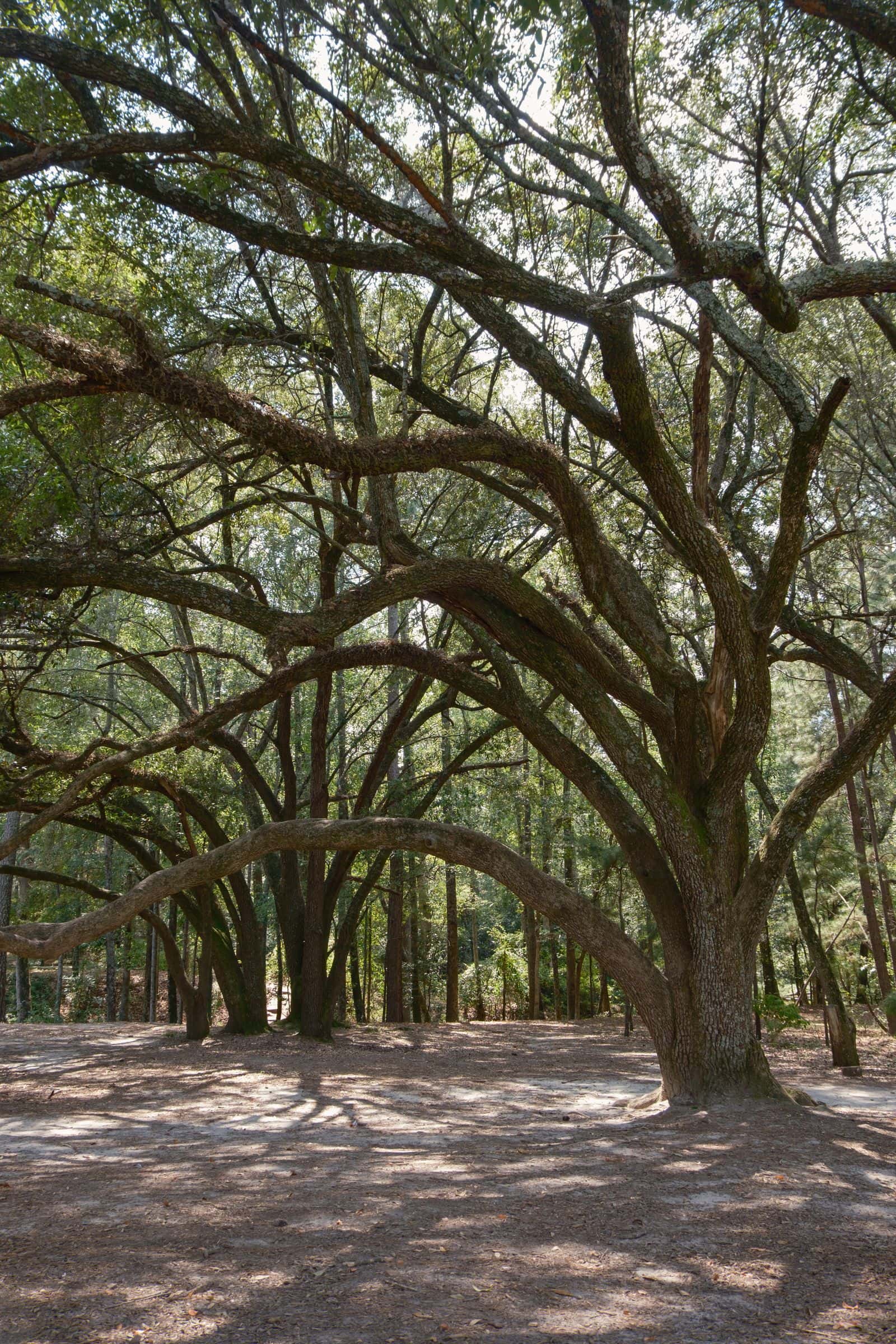
Rocky west-side lots and big central oaks
West Austin lots are often sloped and rocky, limiting equipment and making stump grinding harder. Central neighborhoods have large heritage oaks close to older homes, where crane or carefully rigged work is common.
On thin soil over limestone, stump grinders often hit rock a few inches down, and roots spread wide instead of deep. That affects replanting: a new tree may need to go where soil is deepest, not where the old one stood.
What the 2023 ice storm left behind
Cleanup after the February 2023 storm happened fast, and much of it was done by whoever could get there. Months later, a lot of Austin trees still carry torn stubs, cracked unions and half-removed limbs that need proper cuts.
If a damaged live oak or pecan is still standing, it's worth an arborist's look before the next storm. Ragged stubs can be cut back to a branch collar, and cracked forks can sometimes be cabled. A protected or heritage tree still needs city review before removal, even when it's damaged.
Austin services, matched to the job
Austin's most common request, timed around oak wilt; the local guide covers the pruning calendar.
Useful for ice-damaged heritage oaks and for permit applications.
Ashe juniper clearing and storm-ruined trees, with permits for protected sizes.
Torn crowns and hung limbs after ice storms.
Slower on west-side limestone; ask how deep the machine can reach.
Austin tree questions: permits, live oaks and measuring
What size tree needs a permit in Austin?
Trees 19 inches in diameter or larger (measured at 4.5 feet) are protected and need a permit to remove. Heritage trees of listed species at 24 inches or more have stricter requirements.
When can I prune my live oak in Austin?
Avoid February through June. July through January is the safer window. Paint every wound immediately, whatever the date.
How do I measure a tree's diameter for Austin's rules?
Measure the circumference around the trunk 4.5 feet above the ground and divide by 3.14. A multi-trunk tree is measured by a formula, so check the city's method or ask an arborist.
Calls are routed to independent local tree-service providers. How calling works
More local guides
Need tree help in Austin?
Call to speak with a local tree-service provider about removal, trimming, stumps or storm damage. Describe the tree and what it's near, and they'll explain the next step.