Minneapolis, MN · Hennepin County
Tree removal in Minneapolis
In Minneapolis, dying ash trees (from emerald ash borer) and storm damage from snow, ice and straight-line winds make up much of tree removal demand. Boulevard trees between the curb and sidewalk belong to the Minneapolis Park and Recreation Board: residents can't remove them. Private trees are generally the owner's to manage, though the MPRB can condemn diseased or hazardous private trees.
After Dutch elm disease wiped out much of the city's elm canopy from the 1970s on, many streets were replanted with ash. Emerald ash borer, found in St. Paul in 2009, has since spread across the metro, and the MPRB has been removing and replacing ash along boulevards. Private ash owners face the treat-or-remove decision.
Winter is the working season. Frozen ground lets crews bring in heavy equipment with less damage, and dormant trees don't spread oak wilt through cuts. Summer brings severe thunderstorms and occasional straight-line wind events that flatten trees across neighborhoods.
Reviewed and updated
Ash borer, straight-line winds and ice
Emerald ash borer
Infested ash die within a few years and become brittle; removal gets riskier the longer it waits.
Straight-line winds
Summer storms can topple many trees at once across the metro.
Snow and ice
Wet snow in spring and fall breaks limbs on leafed-out trees.
Oak wilt and Dutch elm disease
Both remain active; avoid pruning oaks from April through July.
Summer storm season and the city's big silver maples
Minneapolis's most destructive tree events often arrive with summer thunderstorms. The May 2011 tornado that crossed North Minneapolis brought down or damaged thousands of trees in a few minutes, and straight-line winds do the same on a smaller scale most summers.
Large silver maples are the usual casualties. They grow fast, form weak forks and develop decay in old pruning wounds. If one stands over your house or garage, have its forks and any cavities checked before summer, and consider reducing long, heavy limbs.
Boulevard trees and private trees in Minneapolis
- Boulevard trees are owned and maintained by the Minneapolis Park and Recreation Board. Residents may not remove them, and significant pruning needs MPRB permission.
- The MPRB inspects for and can condemn diseased or hazardous private trees (such as EAB-infested ash or Dutch elm disease), requiring the owner to remove them.
Sources (checked 2026-10-01)
Rules change and details depend on your exact property. Confirm with the city or county before work starts. This isn't legal advice.
Ash, silver maple, oaks and elms in Minneapolis
- Green ash
- Widely planted; treat or remove
- Silver maple
- Big and brittle; frequent storm breakage
- Bur oak and red oak
- Long-lived; red oaks at risk from oak wilt
- American elm
- Remaining trees need Dutch elm disease vigilance
- Linden and hackberry
- Common replacement boulevard trees
Replanting after ash
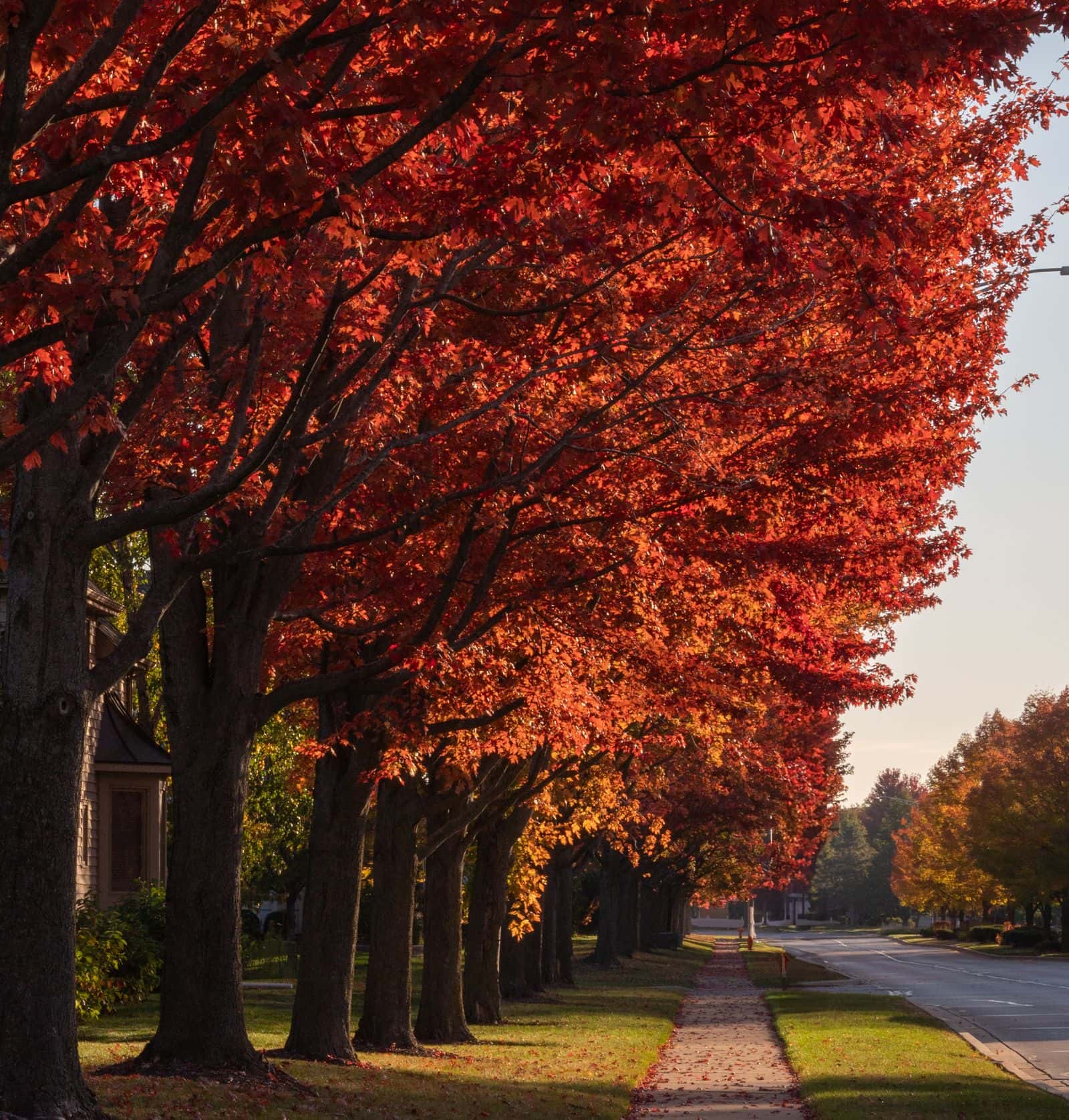
Minneapolis replanted with ash after Dutch elm disease, and lost much of it to emerald ash borer. The lesson for replanting a yard:
- Avoid planting more of whatever already dominates your block.
- Choose species suited to the space at maturity, especially under lines and near foundations.
- Oaks are long-lived but need oak wilt care; prune them only in the dormant season.
- Plant replacements before an old tree comes down when you can, so the yard isn't bare for a decade.
Compact lots with alley access
City lots are compact with alleys, detached garages and overhead lines in the back. Alley access often helps equipment reach backyard trees.
Winter work on frozen ground is common here, and alley access usually lets a bucket truck reach backyard trees without crossing lawns. Detached garages and overhead lines along alleys decide how big trees are taken down.
Minneapolis services through the seasons
Dead ash is the biggest category; the local guide covers ash removal and condemnation.
Winter removals on frozen ground.
Summer straight-line wind and tornado damage.
Oaks and elms pruned in the dormant season.
Often scheduled after the ground thaws.
Minneapolis questions: boulevards, ash and timing
Can I remove the boulevard tree in front of my Minneapolis house?
No. Boulevard trees belong to the Minneapolis Park and Recreation Board. Contact MPRB Forestry about concerns, removal or replacement.
Can I treat my own ash tree for emerald ash borer?
Homeowner soil-drench products exist for small ash trees, but larger trees are usually treated by professionals with trunk injections, which need repeating every few years. Treatment only works on trees that are still fairly healthy.
My ash tree is thinning. Should I remove it?
Thinning at the top, D-shaped exit holes, bark splits and woodpecker damage point to emerald ash borer. If more than about 30% of the canopy is gone, removal is usually the better option; healthier ash can be treated.
When is the best time to remove a tree in Minneapolis?
Winter often works best. Frozen ground lets equipment cross lawns without rutting, dormant trees are lighter and easier to rig, and oak work in winter avoids the April-to-July oak wilt window. Storm-damaged or hazardous trees shouldn't wait for the season, though.
Calls are routed to independent local tree-service providers. How calling works
More local guides
Need tree help in Minneapolis?
Call to speak with a local tree-service provider about removal, trimming, stumps or storm damage. Describe the tree and what it's near, and they'll explain the next step.