
Stumps & cleanup
What happens after a tree is removed?
Updated · Guide by TreeRemovalServices.net
Short answer
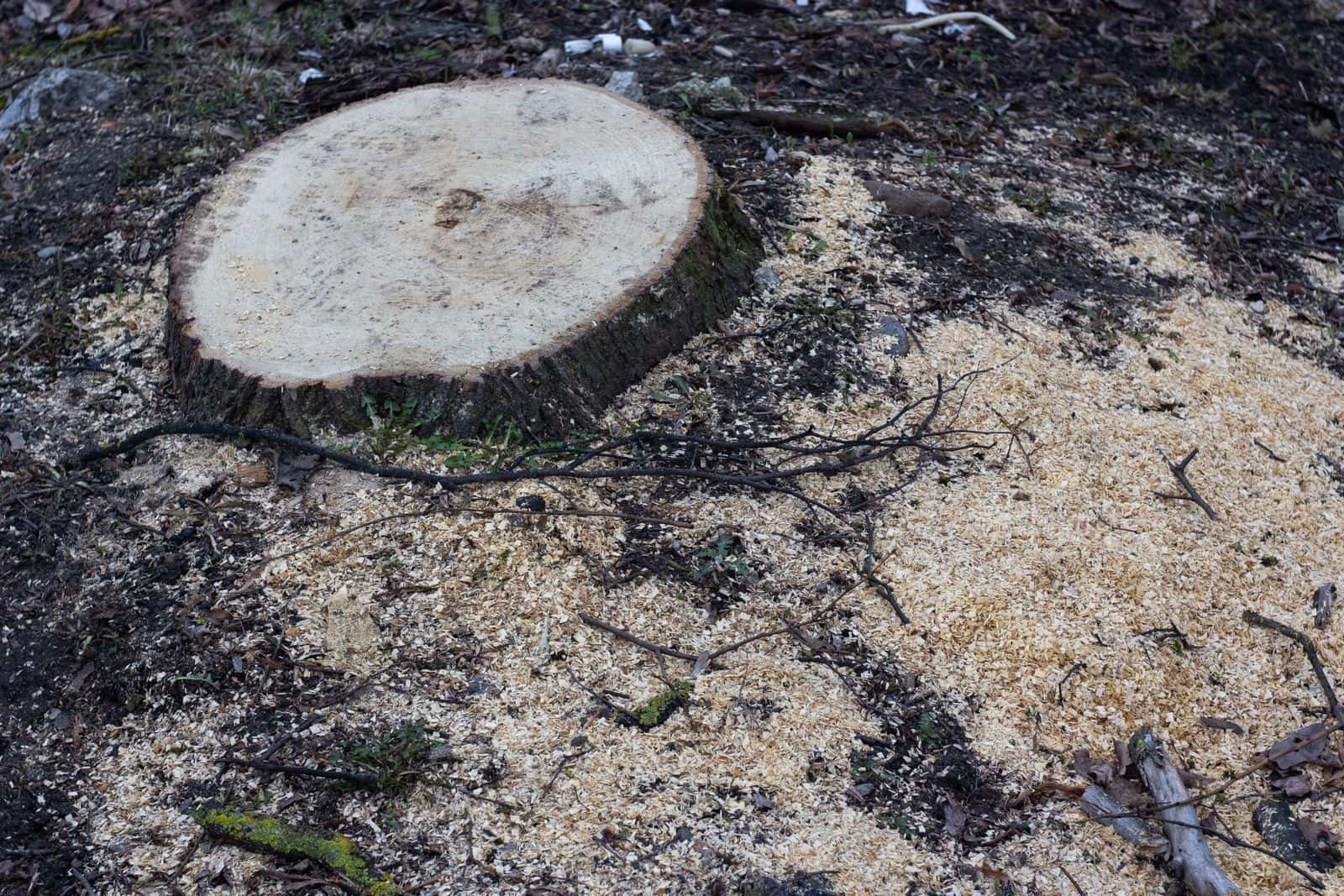
After a tree is removed, you're left with a stump cut a few inches above ground, the root system underground, and usually some lawn wear. Most people grind the stump, fill the hole with topsoil, and reseed or re-sod. Roots decay over several years, which can cause slight settling. Replant a few feet away from the old stump for best results.
Stump options
You can leave it (and let it rot slowly), grind it below grade, or excavate it. For most yards, stump grinding is the practical choice.
Leave it
- What you get
- No cost; it rots over many years
- Watch out for
- Mower damage, trip hazard, sprouts, and fungi or insects living in the wood
Grind it
- What you get
- Stump chipped 6 to 12 inches or more below grade; lawn back within weeks
- Watch out for
- Main roots stay; a slow, slight depression as they decay
Dig it out
- What you get
- Stump and main roots gone; clean soil for building
- Watch out for
- Large hole, heavy equipment and backfill cost
Sprouts, mushrooms and other surprises
A stump that keeps sending up shoots isn't dead yet. Some species, including tree-of-heaven, black locust, sweetgum, poplars and willows, sprout from the stump or roots after the trunk is cut. Cutting sprouts as they appear eventually exhausts the roots; grinding usually ends stump sprouts but not always root suckers further out.
Mushrooms over the old root zone are a sign the roots are decaying, which is what you want. They aren't a threat to the house or healthy trees. Termites and carpenter ants may use a decaying stump left near the house, which is one more reason to grind stumps close to foundations.
Roots and settling
Large roots decay over years. As they do, the soil above can settle, especially where grindings filled the hole. Top up with soil as needed. In expansive clay regions, removing a large tree near a foundation can change soil moisture, so it's worth discussing with a foundation professional.
Repairing the lawn
- Rake out or remove most of the grindings. Fresh wood chips mixed into soil tie up nitrogen and stunt grass.
- Fill the hole with screened topsoil, slightly mounded to allow for settling.
- Seed or sod once the soil is firm; water lightly and often until it's established.
- Fill ruts from equipment with topsoil, or core-aerate compacted areas.
Replanting
Choose a species suited to your region and the space at maturity, and plant away from the old stump, wires, and foundations. Many cities give or subsidize trees, and some require replacement trees as a permit condition.
Think about why the old tree failed. If it was a pest like emerald ash borer, or a species that's short-lived where you live, pick something different. Mixing species across a yard or street means one pest or storm can't take everything at once. Your state's extension service or forestry agency publishes recommended species lists by region.
Common questions
How long does it take tree roots to rot after removal?
Small roots break down within a few years; large roots can take many years, depending on species, size, soil moisture and climate.
Can I plant a new tree where the old one was removed?
Not in the same spot right away. The grindings and decaying roots make poor soil and settle over time. Plant a few feet away in undisturbed soil, or dig out the grindings and replace them with topsoil first.
Does the city haul away the stump after removal?
Usually not. Curbside brush programs take limbs, not stumps or big trunk sections; in Dallas, for example, brush pieces must be under 8 inches thick, so stump wood there is hauled privately. Ask the tree company to include hauling or leave rounds you can handle.
Why is there a sunken spot where my tree used to be?
The grindings and big roots underneath are decaying and the soil is settling. Fill it with topsoil and reseed; it may need topping up for a couple of years.
Editorial note: this guide is general information written for homeowners. It isn't a substitute for an on-site assessment by a qualified arborist, or for legal or insurance advice.