
Pacific Northwest region
Tree removal and tree care in Oregon
In western Oregon, the tree emergencies people remember are ice storms: February 2021's, the worst in about 40 years, and January 2024's, which brought down hundreds of trees in Portland alone. Tall Douglas-firs on saturated winter soil are the main hazard. Rules depend on the city: Portland requires a permit for most private trees 12 inches and larger, while trees on state highway right-of-way need ODOT's written consent.
City guides in Oregon
Most Oregonians live in the Willamette Valley, from Portland through Salem and Eugene, where mild, wet winters let big conifers and broadleaf trees grow huge close to houses. The danger comes when east winds through the Columbia Gorge meet Pacific moisture and coat everything in ice. The February 2021 ice storm knocked out power to more than 350,000 customers at its peak, and Portland General Electric called its response the largest mobilization in its history. In January 2024, ice and wind brought down roughly 400 trees reported in the City of Portland and hundreds more across Washington and Clackamas counties.
Oregon was also where emerald ash borer was first found in the western U.S., in Forest Grove in June 2022, threatening Oregon ash in the valley's wetlands and the ash planted along streets. In southern and eastern Oregon, wildfire and drought matter more than ice: defensible space, beetle-killed pines and fire-damaged trees drive much of the work.
Reviewed and updated
Ice, wind, wet soil and fire in Oregon
Ice storms
Freezing rain in the Willamette Valley and Columbia Gorge, as in February 2021 and January 2024, snaps limbs and topples trees onto lines.
Winter windstorms on wet soil
Saturated soil lets tall Douglas-firs and bigleaf maples uproot in Pacific storms.
Emerald ash borer
Found in Forest Grove in June 2022, the first detection in the western U.S.
Wildfire and drought
Southern and eastern Oregon: defensible space, beetle-killed pines and fire-damaged trees.
Root rot in conifers
Laminated root rot and other fungi weaken Douglas-fir roots, often without obvious signs above ground.
Oregon's storm and fire seasons
Winter is Oregon's emergency season west of the Cascades; summer and fall bring drought and fire risk east and south. Late winter and spring are the window for preventive pruning.
- November–February
- Windstorms and ice storms; most emergency calls
- Late winter–spring
- Good time to reduce weak limbs before the next winter
- Summer–fall
- Drought stress and wildfire season, especially south and east
Oregon tree rules
- Oregon has no single statewide permit for trees on private residential lots; cities set their own rules.
- Portland regulates private trees 12 inches or more in diameter under Title 11; larger removals (a single tree 20 inches or more, or five or more trees 12 inches and up) go through a Type B permit with review and possible replacement.
- Under ORS 377.030, no one may cut, injure or remove trees growing on a state highway right-of-way without ODOT's written consent.
Sources (checked 2026-10-03)
Rules change and details depend on your exact property. Confirm with the city or county before work starts. This isn't legal advice.
Willamette Valley, coast, and the dry side
- The Willamette Valley (Portland, Salem, Eugene) gets the ice storms and winter windstorms, with tall Douglas-firs and bigleaf maples close to houses.
- The coast faces the strongest Pacific windstorms and salt spray, with Sitka spruce and shore pine.
- Southern Oregon (Medford, Grants Pass) and Central Oregon (Bend) deal with wildfire, drought and bark beetles in ponderosa pine.
Douglas-fir, cedar, maple and Oregon's native oaks and ash
- Douglas-fir
- The state tree; very tall, shallow-rooted on wet soil, the biggest storm hazard near houses
- Western redcedar
- Common in yards; drought stress has caused dieback in recent summers
- Bigleaf maple
- Large, heavy limbs; branch failures in ice
- Oregon white oak
- Native oak savanna tree; often protected in city codes
- Oregon ash
- Native in wetlands and along streams; threatened by emerald ash borer
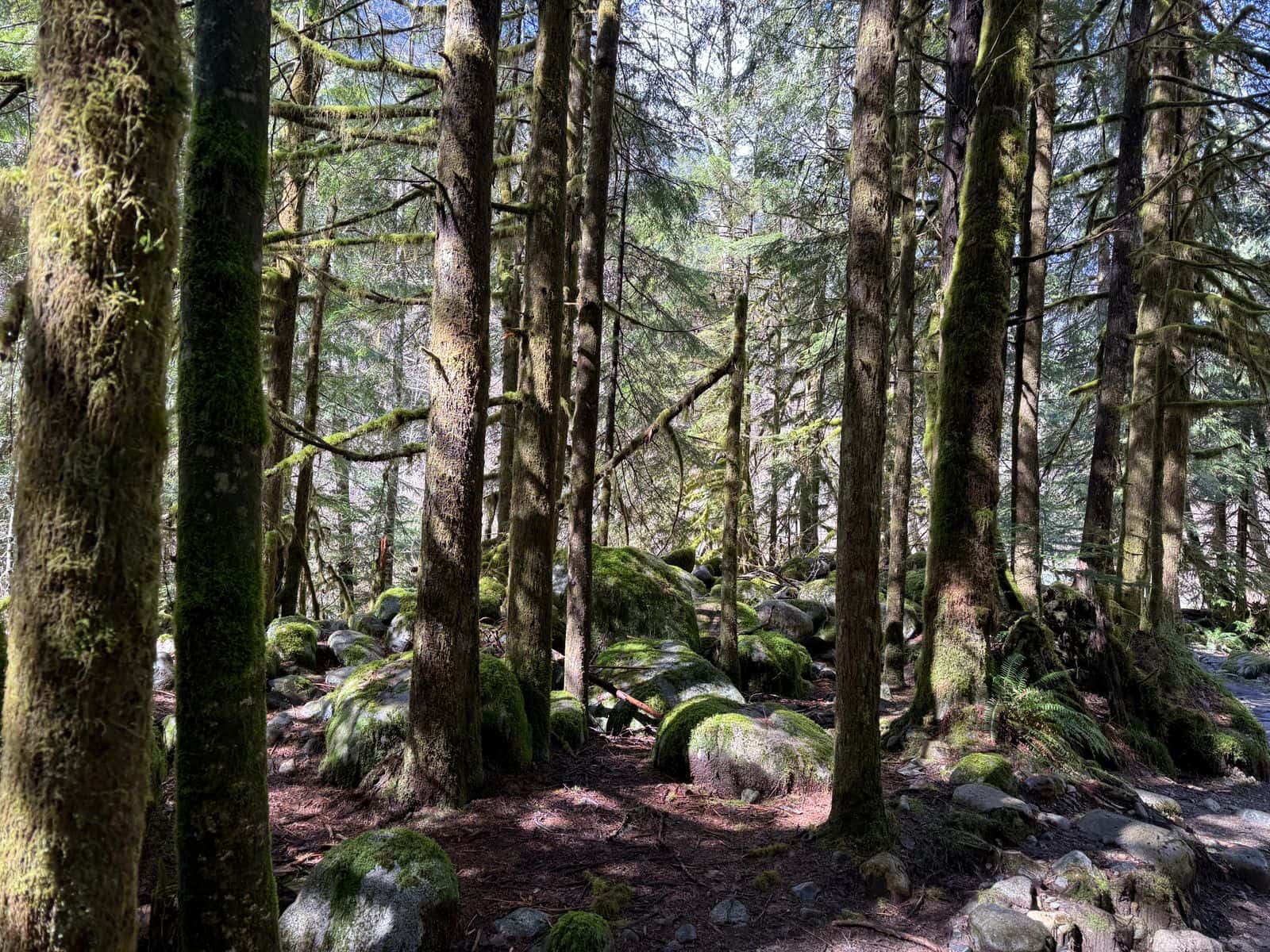
Portland guidance
Portland's Title 11 tree code is one of the most detailed in the country, and its guide covers permits, ice storms and the city's big conifers.
Title 11 permits, ice storms and big Douglas-firs.
Oregon services by risk
After ice storms and winter windstorms.
For leaning or root-rotted Douglas-firs.
For tall conifers that need climbers or cranes.
Reducing bigleaf maple limbs before ice season.
Oregon tree questions
Do I need a permit to remove a tree in Oregon?
There's no statewide permit for private residential trees; it depends on your city. Portland requires permits for most private trees 12 inches and larger. Trees on state highway right-of-way need ODOT's written consent.
Why do so many trees fall in Oregon ice storms?
Freezing rain adds enormous weight to limbs, and big broadleaf trees and conifers close to houses snap or drop limbs onto lines. The February 2021 and January 2024 storms both brought down trees across the Willamette Valley.
Is emerald ash borer in Oregon?
Yes. It was found in Forest Grove in June 2022, the first detection in the western U.S. Ash trees in the Portland area should be watched for thinning crowns and D-shaped exit holes.
Are tall Douglas-firs near my house dangerous?
Healthy, well-rooted firs often stand for decades, but a new lean, root rot, cracked soil at the base or a dead top are warning signs. Wet winter soil is when they're most likely to uproot.
When is the best time to prune trees in Oregon?
Late winter through spring for most structural pruning, so weak limbs are reduced before the next winter storm season.
Who handles a tree on a power line in Oregon?
Your electric utility, such as Portland General Electric or Pacific Power, and 911 for sparks or fire. Stay well away.
Need tree help in Oregon?
Call to speak with a local tree-service provider about removal, trimming, stumps or storm damage. Describe the tree and what it's near, and they'll explain the next step.