
Urgent situations
Emergency tree cutting
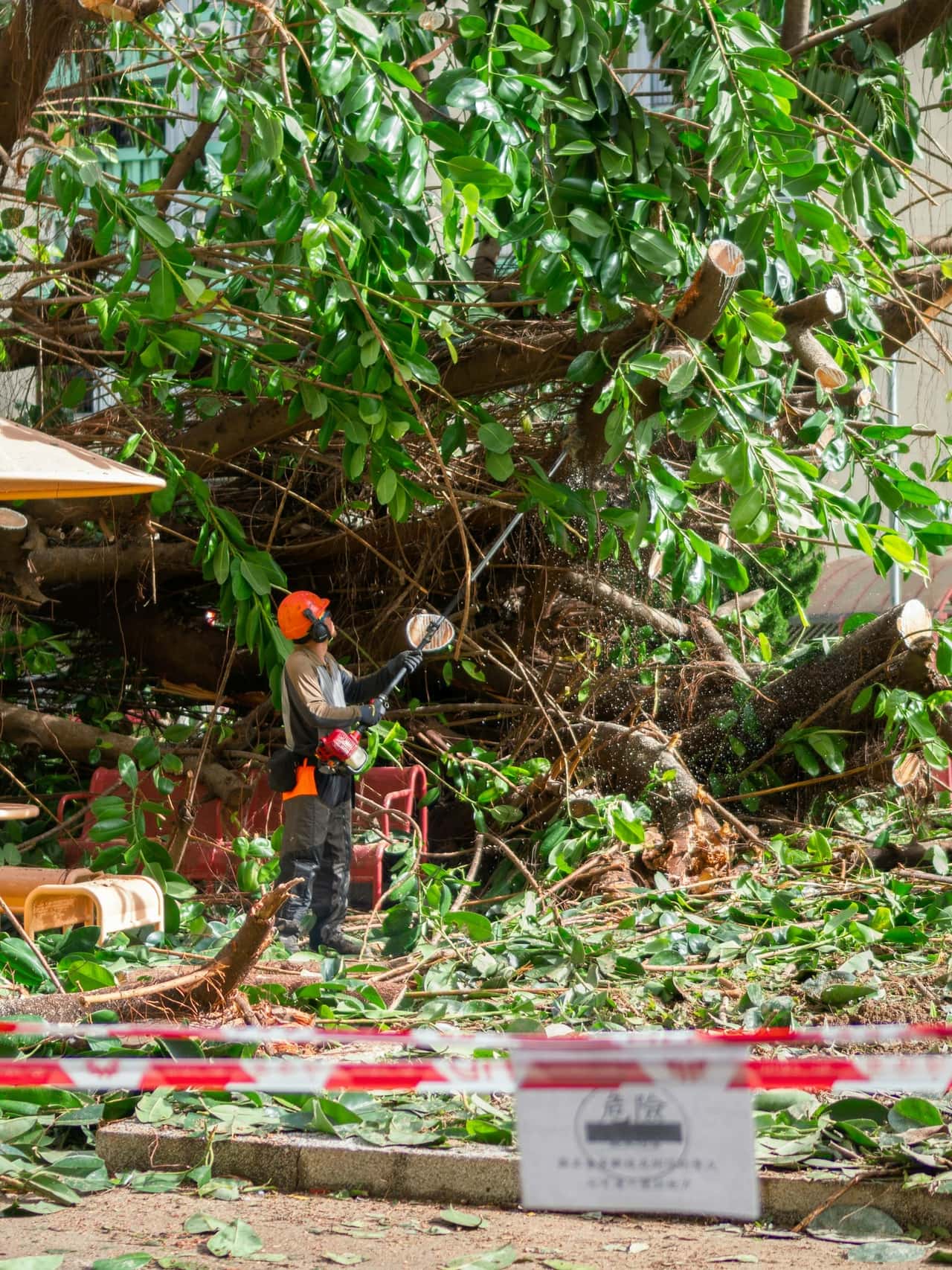
Emergency tree cutting frees what a fallen tree has trapped or blocked: a car, a driveway, a fence, a doorway or a road. Fallen trees are full of stored tension, and cutting the wrong piece first can make a trunk roll or a limb spring up with great force. Check for power lines first, take photos for insurance, then let a crew cut it apart in a safe order.
By calling, you agree that your call may be recorded and routed to an independent local tree-service provider, who may call or text you back about your request. Calling is free and does not obligate you to hire anyone. See our Privacy Policy.
Get emergency tree cutting help now
Cutting a fallen tree off a car, driveway, fence or road.
Often needed with: emergency tree removal, storm damage tree removal, emergency tree trimming, tree cutting.
Call and we'll connect you with a tree-service provider for emergency tree cutting in your area.
Call about a tree emergencyIs it a tree emergency?
Call now if you have any of these:
- A tree on the house, garage or car
- A fallen tree blocking the driveway or road
- A tree or limb touching a power line
- A tree leaning more than it did yesterday, with soil lifting
- Large broken limbs hanging over people or the roof
- A storm-damaged tree that could still fall
Lines first: if a tree touches a power line, stay at least 35 feet away and call the electric utility or 911 before anyone works on it.
What to confirm in a emergency tree cutting quote
Quotes differ mostly in what they include. Ask each provider to put these in writing so you can compare like for like:
- What gets freed first: car, drive, door or road
- How the tree is lifted off structures or vehicles
- Whether the root plate and stump are included
- Hauling or leaving wood at the curb
- Photos and an itemized invoice for insurance
Last updated
When a fallen tree needs cutting now
- A tree is lying on a car, fence, shed or deck.
- A fallen tree is blocking your driveway, garage or only exit.
- A trunk is across a road or sidewalk you're responsible for.
- An uprooted tree is leaning on another tree or structure.
- Bent saplings or limbs are pinned under a fallen trunk.
Before anyone cuts
Do this now
- Look up and around for wires before going near a fallen tree.
- Photograph and video everything for insurance before cutting.
- Keep people, pets and vehicles clear of the trunk and root plate.
Never do this
- Don't cut a trunk or limb that's bent under load yourself.
- Don't stand on the downhill side of a trunk on a slope.
- Don't try to free a car by cutting under the trunk resting on it.
How a crew frees a car, drive or road
- 1
Check for lines and hazards
No cutting starts until it's clear no power or communication line is tangled in the tree.
- 2
Read the tension
The crew finds pinned limbs, spring poles and how the trunk and root plate will move when cut.
- 3
Cut to free and stabilize
Limbs are removed in a safe order, then the trunk is cut in sections so nothing rolls onto people or property.
- 4
Lift off carefully
Pieces resting on cars or structures are lifted off with rigging or equipment rather than dropped.
- 5
Open access, then clean up
The drive or path is cleared first; hauling and stump work can follow.
Why fallen trees are dangerous to cut
A fallen tree is full of stored energy. Limbs pinned under the trunk, bent saplings called spring poles, and a root plate that can tip back into its hole all release that energy when cut. Cutting in the wrong order can make a trunk roll or a limb spring up with enough force to cause serious injury.
Professionals read where the tension is, relieve it in stages, and keep themselves and everyone else out of the path of anything that can move.
What emergency cutting costs
Emergency cutting is priced by the job and how difficult it is to free what's trapped:
- Tree size and how it's lying
- Whether it's resting on a car, roof or fence that must be protected while cutting
- Equipment needed to lift heavy sections off
- After-hours or storm-surge demand
- Hauling, and whether the root plate and stump are included
Insurance and who pays
Photograph and video the tree and damage before anything is cut. Car damage from a falling tree is usually a comprehensive auto claim. Homeowners policies often cover removing a tree that falls on a covered structure, up to a limit; a tree that falls across the yard without hitting anything often isn't covered.
Public roads are cleared by the road authority; driveways and private roads are the owner's responsibility. See who pays when a tree falls.
Clearing a path first
After big storms, the fastest help is often a crew that opens your driveway or frees a car first and comes back for full cleanup. Ask for that split if you need access quickly.
Stumps and root plates from uprooted trees can usually wait; they're stable once the trunk is off.
Emergency cutting questions
What is a spring pole?
A sapling or limb bent under a fallen tree and holding energy like a drawn bow. Cutting it in the wrong place can make it whip up or out with enough force to cause serious injury. Professionals release the tension in stages.
Who removes a tree that fell on my car?
A tree crew cuts and lifts it off. Your auto policy's comprehensive coverage typically handles car damage from a falling tree; photograph everything first and ask your insurer about tree removal costs.
Who clears a tree that fell across the road?
Public roads are usually cleared by the city, county or state road department; call their non-emergency line, or 911 if it's blocking traffic dangerously. A private road or driveway is the property owner's responsibility.
Can a crew just cut a path through to my driveway?
Yes. Opening access first and finishing cleanup later is common after storms, and it can get you out sooner when crews are busy.
Is it safe to cut a fallen tree myself?
Small limbs with no tension on open ground can be. Large trunks, anything resting on a structure or car, pinned limbs and trees near wires are where serious chainsaw injuries happen.
What if the root plate is still attached?
Once the trunk is cut free, a large root plate can tip back into the hole. Crews cut so the stump and roots settle safely, and keep everyone clear of that side.
Does insurance cover emergency tree cutting?
When a covered peril makes a tree fall on a covered structure, many homeowners policies pay to remove it, up to a limit. Trees that fall without hitting anything often aren't covered. See who pays when a tree falls.
Should I wait for the adjuster before cutting?
Photograph the damage, then take reasonable steps to prevent more damage or open access. Insurers generally expect you to mitigate. Keep the invoice.
How fast can a crew come after a storm?
It depends on how widespread the damage is. After big storms, crews prioritize trees on homes and blocked exits. Describing exactly what's trapped or blocked helps.
What emergency tree cutting can include
- Assessment
- What the tree could hit, its condition, and access.
- Job planning
- Whether it can be felled or must come down in sections.
- Sectional removal and rigging
- Limbs and trunk lowered on ropes near buildings.
- Crane work when needed
- For big or decayed trees over structures.
- Brush and debris cleanup
- Chipping branches and raking the work area.
- Wood hauling or leaving rounds
- Agree in advance which you want.
- Stump options
- Grinding is usually a separate line item.
- Property protection
- Mats, plywood or careful drops to protect lawns and drives.
Before you call about emergency tree cutting
These answers let a provider tell you on the first call what the job involves and roughly how it'll be done.
- What's trapped
- Car, driveway, fence, door, road
- Tree size
- Trunk thickness and length
- Lines
- Any wires in the tree?
- Is the root plate up?
- Uprooted or snapped
- Photos
- Before anything is moved
Safety and permission checks
- Power lines: stay at least 10 feet from overhead lines (OSHA's minimum distance for unqualified workers) and call the utility; only line-clearance-qualified tree workers cut closer.
- Underground lines: call 811 a few days before stump grinding or digging so buried utilities are marked for free.
- Permits: ask the city or county before removing or heavily pruning a large tree; protected-tree sizes and street-tree rules vary by place.
- Who is responsible: a tree on your lot is usually yours, street (right-of-way) trees are usually the city's, and trees on lines are the utility's to clear.
- Doing it yourself: picking up small fallen limbs is a homeowner job; chainsaw work off a ladder, near lines or on anything that could hit a building is not.
Have your answers ready? Call and we'll connect you with a provider serving your area.
Call for tree serviceHow getting emergency tree cutting works
- 1
Tell us what's happening
Call and describe the tree, where it is and how urgent it is.
- 2
Get connected
Your call goes to an independent tree-service provider serving your area.
- 3
The tree is assessed
The provider looks at the tree, what's around it, and access for equipment.
- 4
Scope and price are discussed
You get the plan and price directly from the provider, before any work.
- 5
You decide
There's no obligation; you choose whether and when to go ahead.
TreeRemovalServices.net is a referral service and doesn't perform tree work. How it works
Related tree services
- Emergency Tree Removal servicesA tree on the house, car, driveway or a line, or one about to fall.
- Storm Damage Tree Removal servicesUprooted, split or snapped trees and hanging limbs after wind, ice or hurricanes.
- Emergency Tree Trimming servicesBroken, hanging or cracked limbs over a roof, drive or path.
- Tree Cutting servicesBringing a tree down safely: felled in one piece or cut down in sections.
- Tree Removal servicesTaking down a tree you no longer want or can't keep, in sections near buildings.
- Tree Trimming & Pruning servicesPruning for clearance over roofs and drives, deadwood removal and storm preparation.
- Dead Tree Removal servicesDead or dying trees that turn brittle and get riskier to climb every season.
- Hazardous Tree Removal servicesLeaning, cracked or decayed trees that could hit something if they fail.
- Large Tree Removal servicesBig trees close to structures that need rigging or a crane.
- Stump Grinding & Removal servicesGrinding stumps below grade so you can replant, sod or build.
- Tree Risk Assessment servicesAn arborist's opinion on whether a tree can stay, before you remove it.
- Commercial Tree ServicesTree work for HOAs, property managers and commercial sites.
- Land Clearing servicesClearing brush, trees and stumps from a lot by mulching or excavation.
- Stump Removal servicesDigging out the stump and root ball where something will be built or planted.
- Palm Tree Removal servicesDead, diseased or unwanted palms, crown first, then the trunk.
- Oak Tree Removal servicesOaks with permits, oak wilt timing and heavy wood to plan around.
- Pine Tree Removal servicesTall, beetle-killed or storm-damaged pines near the house.
Tell us what's happening and we'll connect you with a tree-service provider serving your area.
Call about a tree emergencyWhy these services go together
- Emergency Tree Removal: a tree on the house or roof
- Storm Damage Tree Removal: storm cleanup across the property
- Emergency Tree Trimming: broken limbs still hanging in the tree
- Tree Cutting: planned cutting when it's not an emergency
Emergency Tree Cutting by location
By state (51)
- Texas
- Florida
- California
- Arizona
- Georgia
- North Carolina
- Washington State
- Minnesota
- New York
- Colorado
- Illinois
- Ohio
- Pennsylvania
- Michigan
- Tennessee
- Louisiana
- Missouri
- Virginia
- Maryland
- Washington, DC
- New Jersey
- Massachusetts
- Wisconsin
- Kentucky
- South Carolina
- Alabama
- Oklahoma
- Oregon
- Utah
- Indiana
- Nevada
- Iowa
- Arkansas
- Mississippi
- Kansas
- Connecticut
- New Mexico
- Idaho
- Nebraska
- Alaska
- Delaware
- Hawaii
- Maine
- Montana
- New Hampshire
- North Dakota
- Rhode Island
- South Dakota
- Vermont
- West Virginia
- Wyoming
By city (57)
- Dallas, TX
- Houston, TX
- Austin, TX
- San Antonio, TX
- Miami, FL
- Orlando, FL
- Tampa, FL
- Los Angeles, CA
- San Diego, CA
- Sacramento, CA
- Phoenix, AZ
- Atlanta, GA
- Charlotte, NC
- Raleigh, NC
- Seattle, WA
- Minneapolis, MN
- New York City, NY
- Denver, CO
- Chicago, IL
- Columbus, OH
- Cleveland, OH
- Philadelphia, PA
- Pittsburgh, PA
- Detroit, MI
- Nashville, TN
- New Orleans, LA
- St. Louis, MO
- Kansas City, MO
- Fort Worth, TX
- Jacksonville, FL
- Virginia Beach, VA
- Baltimore, MD
- Jersey City, NJ
- Boston, MA
- Milwaukee, WI
- Louisville, KY
- Charleston, SC
- Birmingham, AL
- Tulsa, OK
- Cincinnati, OH
- Memphis, TN
- Richmond, VA
- Fort Lauderdale, FL
- Tucson, AZ
- Portland, OR
- Salt Lake City, UT
- Indianapolis, IN
- Las Vegas, NV
- Tacoma, WA
- San Jose, CA
- San Francisco, CA
- Buffalo, NY
- Cedar Rapids, IA
- Wichita, KS
- Albuquerque, NM
- Boise, ID
- Omaha, NE
By county (14)
By town and neighborhood (8)
Need help with a tree?
Call to speak with a local tree-service provider about removal, trimming, stumps or storm damage. Describe the tree and what it's near, and they'll explain the next step.
By calling, you agree that your call may be recorded and routed to an independent local tree-service provider, who may call or text you back about your request. Calling is free and does not obligate you to hire anyone. See our Privacy Policy.