Tree services across Hawaii
Tree Removal & Tree Services in Hawaii
Compare tree removal, palm and tropical tree trimming, storm cleanup, stump grinding and hazardous-tree help in Hawaii, on Oahu, Maui, the Big Island and Kauai. Choose your service or city below, or call if you're not sure which option fits.
By calling, you agree that your call may be recorded and routed to an independent local tree-service provider, who may call or text you back about your request. Calling is free and does not obligate you to hire anyone. See our Privacy Policy.
Tree services available across Hawaii
- Tree Removal servicesTaking down a tree you no longer want or can't keep, in sections near buildings.
- Emergency Tree Removal servicesA tree on the house, car, driveway or a line, or one about to fall.
- Storm Damage Tree Removal servicesUprooted, split or snapped trees and hanging limbs after wind, ice or hurricanes.
- Tree Trimming & Pruning servicesPruning for clearance over roofs and drives, deadwood removal and storm preparation.
- Dead Tree Removal servicesDead or dying trees that turn brittle and get riskier to climb every season.
- Hazardous Tree Removal servicesLeaning, cracked or decayed trees that could hit something if they fail.
- Large Tree Removal servicesBig trees close to structures that need rigging or a crane.
- Stump Grinding & Removal servicesGrinding stumps below grade so you can replant, sod or build.
- Tree Risk Assessment servicesAn arborist's opinion on whether a tree can stay, before you remove it.
- Commercial Tree ServicesTree work for HOAs, property managers and commercial sites.
- Land Clearing servicesClearing brush, trees and stumps from a lot by mulching or excavation.
- Stump Removal servicesDigging out the stump and root ball where something will be built or planted.
- Tree Cutting servicesBringing a tree down safely: felled in one piece or cut down in sections.
- Palm Tree Removal servicesDead, diseased or unwanted palms, crown first, then the trunk.
- Oak Tree Removal servicesOaks with permits, oak wilt timing and heavy wood to plan around.
- Pine Tree Removal servicesTall, beetle-killed or storm-damaged pines near the house.
- Emergency Tree Trimming servicesBroken, hanging or cracked limbs over a roof, drive or path.
- Emergency Tree Cutting servicesCutting a fallen tree off a car, driveway, fence or road.
Call from anywhere in Hawaii and we'll connect you with a tree-service provider serving your area.
Call for tree serviceWhich tree service do you need in Hawaii?
| If… | Ask for |
|---|---|
| Tree is healthy, but branches are dead, broken or over the roof | Tree Trimming & Pruning services |
| Tree is dead, badly damaged or structurally unsafe | Tree Removal servicesDead Tree Removal servicesHazardous Tree Removal services |
| Tree has fallen, is on a structure or could fall any moment | Emergency Tree Removal services |
| Storm left broken, hanging or uprooted trees | Storm Damage Tree Removal services |
| Very large tree close to the house or other structures | Large Tree Removal services |
| Tree is gone but the stump is still there | Stump Grinding & Removal services |
| Not sure whether the tree needs to come down | Tree Risk Assessment services |
Need a tree removed in Hawaii?
Match what you're seeing to the service that fixes it.
- Dead tree near the houseDead Tree Removal servicesTree Removal services
- Tree leaning toward the houseHazardous Tree Removal servicesTree Risk Assessment servicesEmergency Tree Removal services
- Cracked or split trunkHazardous Tree Removal servicesTree Risk Assessment services
- Tree fell or broke in a stormStorm Damage Tree Removal servicesEmergency Tree Removal services
- Tree on the house or carEmergency Tree Removal services
- Fallen tree blocking the drivewayEmergency Tree Removal servicesStorm Damage Tree Removal services
- Broken or hanging limbsTree Trimming & Pruning servicesStorm Damage Tree Removal services
- Branches over the roofTree Trimming & Pruning services
- Roots lifting the driveway or near the foundationTree Removal servicesStump Grinding & Removal services
- Large tree too close to the houseLarge Tree Removal servicesTree Risk Assessment services
- Stump left after a removalStump Grinding & Removal services
Emergency tree service in Hawaii
Call now if you have any of these:
- A tree on the house, garage or car
- A fallen tree blocking the driveway or road
- A tree or limb touching a power line
- A tree leaning more than it did yesterday, with soil lifting
- Large broken limbs hanging over people or the roof
- A storm-damaged tree that could still fall
Lines first: if a tree touches a power line, stay at least 35 feet away and call the electric utility or 911 before anyone works on it.
What to confirm in a tree removal quote in Hawaii
Quotes differ mostly in what they include. Ask each provider to put these in writing so you can compare like for like:
- Cutting the tree down, and whether it's felled or taken down in sections
- Hauling the limbs, or chipping them and leaving the chips
- Hauling the trunk, or leaving rounds cut to firewood length
- Stump grinding: included or extra, and how deep
- Raking and blowing the work area
- Any permit or utility coordination
Before you call about a tree in Hawaii
These answers let a provider tell you on the first call what the job involves and roughly how it'll be done.
- Standing, leaning or down?
- And if leaning, whether the lean is new
- Dead or alive?
- Leaves, bare branches, falling bark
- Cracked or split?
- Trunk cracks, split forks, hanging limbs
- What it's touching or could hit
- Roof, car, fence, pool, a neighbor's property
- Power lines nearby?
- Including the line into the house
- Blocking access?
- Driveway, road, doors
- Rough size
- Taller than the house? Trunk thicker than a dinner plate?
- How to reach it
- Gate width, backyard access, slope, street parking
- Stump and wood
- Ground stump? Wood hauled or left?
- Photos
- Wide shot plus close-ups of damage, if asked
Safety and permission checks
- Power lines: stay at least 10 feet from overhead lines (OSHA's minimum distance for unqualified workers) and call the utility; only line-clearance-qualified tree workers cut closer.
- Underground lines: call 811 a few days before stump grinding or digging so buried utilities are marked for free.
- Permits: ask the city or county before removing or heavily pruning a large tree; protected-tree sizes and street-tree rules vary by place.
- Who is responsible: a tree on your lot is usually yours, street (right-of-way) trees are usually the city's, and trees on lines are the utility's to clear.
- Doing it yourself: picking up small fallen limbs is a homeowner job; chainsaw work off a ladder, near lines or on anything that could hit a building is not.
Have your answers ready? Call and we'll connect you with a provider serving your area.
Call for tree serviceHow getting tree service in Hawaii works
- 1
Tell us what's happening
Call and describe the tree, where it is and how urgent it is.
- 2
Get connected
Your call goes to an independent tree-service provider serving your area.
- 3
The tree is assessed
The provider looks at the tree, what's around it, and access for equipment.
- 4
Scope and price are discussed
You get the plan and price directly from the provider, before any work.
- 5
You decide
There's no obligation; you choose whether and when to go ahead.
TreeRemovalServices.net is a referral service and doesn't perform tree work. How it works
Local conditions
What can affect tree work in Hawaii
The storms, pests, trees and permit rules below explain which services are in most demand in Hawaii, and when.
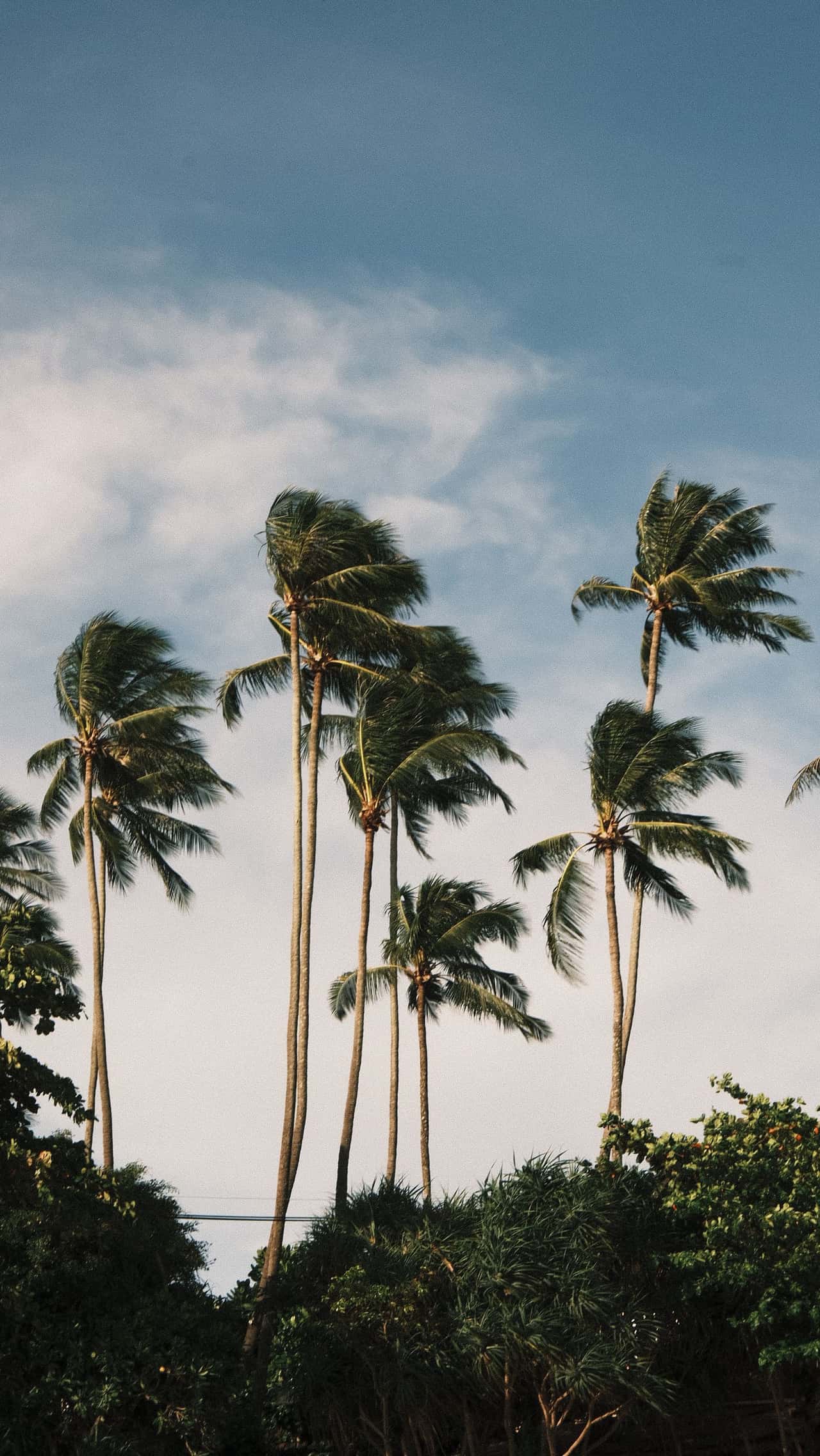
In Hawaii, the most common hazard tree is albizia, a fast-growing invasive with brittle wood that drops large limbs and blocks roads in storms. Coconut palms need regular trimming so fronds and nuts don't fall on people, and hurricanes and strong trade winds test every large tree. Oahu also protects designated exceptional trees.
Albizia can grow several feet a year and reach well over 100 feet, with wide, heavy limbs and weak wood. It's common along roads and streams on the Big Island, Oahu and Kauai, and it's behind many storm-related outages and road closures. Removing large albizia near homes is often a priority project.
Last updated
Albizia: Hawaii's problem tree
Albizia was planted for reforestation in the last century and spread widely. It can grow several feet a year and reach heights well over 100 feet, with brittle wood that fails in ordinary trade winds. Large albizia near homes, roads and power lines are usually removed rather than pruned, because regrowth is fast and the wood stays weak.
Albizia, storms, palms and ʻōhiʻa disease
Albizia
Brittle, fast-growing invasive that drops huge limbs in wind.
Hurricanes and Kona storms
Rare direct hits are severe; Kona storms bring wind and heavy rain.
Coconut palms
Untrimmed fronds and nuts fall on people, cars and roofs.
Rapid ʻŌhiʻa Death
Fungal disease killing native ʻōhiʻa on Hawaii Island and Kauai.
Hawaii services by need
For large albizia over homes.
For monkeypod and banyan outgrowing lots.
Regular coconut and palm trimming.
After Kona storms and hurricanes.
After albizia and palm removal.
Albizia, palms, monkeypod and banyan
- Albizia
- Invasive, brittle; top hazard tree
- Coconut palm
- Needs regular frond and nut removal
- Monkeypod
- Huge spreading crowns over yards
- Banyan
- Aerial roots; outgrows small lots
- ʻŌhiʻa
- Native; threatened by Rapid ʻŌhiʻa Death
Hawaii tree rules
- Honolulu designates exceptional trees that are protected on public and private property; removal or major work on one requires city review.
- Moving ʻōhiʻa plant material and wood between islands is restricted to slow Rapid ʻŌhiʻa Death.
Sources (checked 2026-10-04)
Rules change and details depend on your exact property. Confirm with the city or county before work starts. This isn't legal advice.
Preparing trees for hurricane season
- Remove coconuts and dead fronds; leave the green fronds.
- Reduce or remove albizia that can reach the house.
- Prune monkeypod and banyan limbs over roofs.
- Clear limbs away from service lines through the utility.
Hawaii's storm calendar
Central Pacific hurricanes are rare but serious, and Kona storms bring wind and heavy rain in winter. Palm trimming and albizia work happen year-round, ideally before the hurricane season starts in June.
- June–November
- Central Pacific hurricane season
- Winter
- Kona storms; heavy rain and southerly wind
- Year-round
- Palm trimming roughly every few months to a year
Hawaii tree questions
Why is albizia so dangerous in Hawaii?
It grows extremely fast with wide, heavy limbs and weak wood, so large branches break in ordinary wind and whole trees fall in storms.
How often should coconut palms be trimmed in Hawaii?
Usually every several months to a year, depending on the tree. Removing nuts and dead fronds keeps them from falling on people and roofs.
Can I remove an exceptional tree on Oahu?
Not without city review. Honolulu protects designated exceptional trees, even on private property.
Can I move ʻōhiʻa wood to another island?
No. Inter-island movement of ʻōhiʻa is restricted to slow Rapid ʻŌhiʻa Death.
When is hurricane season in Hawaii?
June through November. Trim palms and reduce albizia near the house before it starts.
How much does albizia removal cost?
Large albizia near homes often need climbing and rigging, which costs more. See tree removal cost factors.
Tree services in Hawaii
- Tree Removal in Hawaii
- Emergency Tree Removal in Hawaii
- Storm Damage Tree Removal in Hawaii
- Tree Trimming & Pruning in Hawaii
- Stump Grinding & Removal in Hawaii
- Dead Tree Removal in Hawaii
- Hazardous Tree Removal in Hawaii
- Large Tree Removal in Hawaii
- Tree Risk Assessment in Hawaii
- Commercial Tree Services in Hawaii
- Land Clearing in Hawaii
- Stump Removal in Hawaii
- Tree Cutting in Hawaii
- Palm Tree Removal in Hawaii
- Oak Tree Removal in Hawaii
- Pine Tree Removal in Hawaii
- Emergency Tree Trimming in Hawaii
- Emergency Tree Cutting in Hawaii
Need tree service in Hawaii?
Call to speak with a local tree-service provider about removal, trimming, stumps or storm damage. Describe the tree and what it's near, and they'll explain the next step.
By calling, you agree that your call may be recorded and routed to an independent local tree-service provider, who may call or text you back about your request. Calling is free and does not obligate you to hire anyone. See our Privacy Policy.