
Cook County, IL
Tree removal in Cook County, Illinois
In unincorporated Cook County, removing larger trees from unimproved or partly improved land needs a county Tree Removal Application under the Tree Preservation, Landscaping and Screening Ordinance. Chicago and the suburbs each set their own rules: Chicago's parkway trees belong to the city, and many suburbs require permits even for private trees.
Cook County at a glance
- County ordinance
- Chapter 126: Tree Preservation, Landscaping and Screening (unincorporated areas)
- Trees covered
- Deciduous trees over 6 in. trunk diameter; evergreens 10 ft or taller, on unimproved or partly improved land
- Applies to
- Unincorporated Cook County only; Chicago and suburbs have their own rules
- Main pest
- Emerald ash borer, confirmed in Illinois in 2006
- Forest Preserves
- 70,000+ acres of public natural land run by the Forest Preserves of Cook County
Reviewed and updated
Who sets the rules for your address
Cook County is made up of Chicago, more than a hundred suburbs and pockets of unincorporated land. The county's own tree rules only apply in the unincorporated areas. Inside Chicago, the Department of Streets and Sanitation's Bureau of Forestry owns and maintains parkway trees; inside a suburb like Oak Park, Evanston or Skokie, that village or city sets its own permit requirements, which are often stricter than the county's.
The quickest way to know which rules apply is your property tax bill or the county's GIS map: if your address lists a municipality, its code applies; if it's in a township with no municipality, the county ordinance does.
The unincorporated Cook County tree permit
The county's Tree Preservation, Landscaping and Screening Ordinance (Chapter 126) requires a Tree Removal Application to the Department of Building and Zoning before removing trees on unimproved or partially improved land in unincorporated areas. It covers deciduous trees with a trunk diameter over 6 inches, measured 6 inches above the ground, and evergreens 10 feet or taller.
In practice, this mostly affects land being developed or lots with room for new construction. A homeowner removing one dead tree from an established, built-out lot is in a different position than someone clearing a parcel, but if your lot is large or partly wooded, check with Building and Zoning first.
Emerald ash borer across the county
Emerald ash borer was first confirmed in Illinois in June 2006, near Lily Lake in Kane County, about 40 miles west of Chicago, and it spread through the Cook County suburbs within a few years. Ash had been planted widely as a replacement for elms lost to Dutch elm disease, so many blocks lost most of their street trees.
Untreated ash in yards are now usually dead or declining, and dead ash get brittle fast. If one is next to a garage, a fence line or a neighbor's house, it should come down before it drops limbs or fails. See dead ash removal in Chicago.
Storms: derechos, downbursts and lake-effect ice
Summer derechos and downbursts cross the county from the west, like the August 2020 derecho that split and uprooted trees across Chicago and the suburbs. Silver maples, Callery pears and declining ash are the usual casualties. In winter, freezing rain and heavy snow add weight to limbs over alleys, garages and service drops.
ComEd owns the lines across most of the county; a tree on a line goes to ComEd or 911, never to a tree crew first.
Forest Preserve land next to your yard
The Forest Preserves of Cook County manage more than 70,000 acres of woods, prairies and wetlands, and many suburban backyards border them. Trees on preserve land belong to the Forest Preserves, even when they lean over your fence. Don't cut or remove them; report a hazardous preserve tree to the Forest Preserves. You can generally trim branches that cross onto your property, as long as you don't damage the tree.
Removal day in tight suburban lots
- 1
Assessment and quote
The company looks at the tree, the drop zone, access for equipment, and nearby targets like the roof, wires and fences. The written quote should say what's included.
- 2
Permits and utilities
If your jurisdiction requires a permit, it's secured first. If the tree is near power lines, the utility may need to make the line safe before anyone climbs.
- 3
Removal
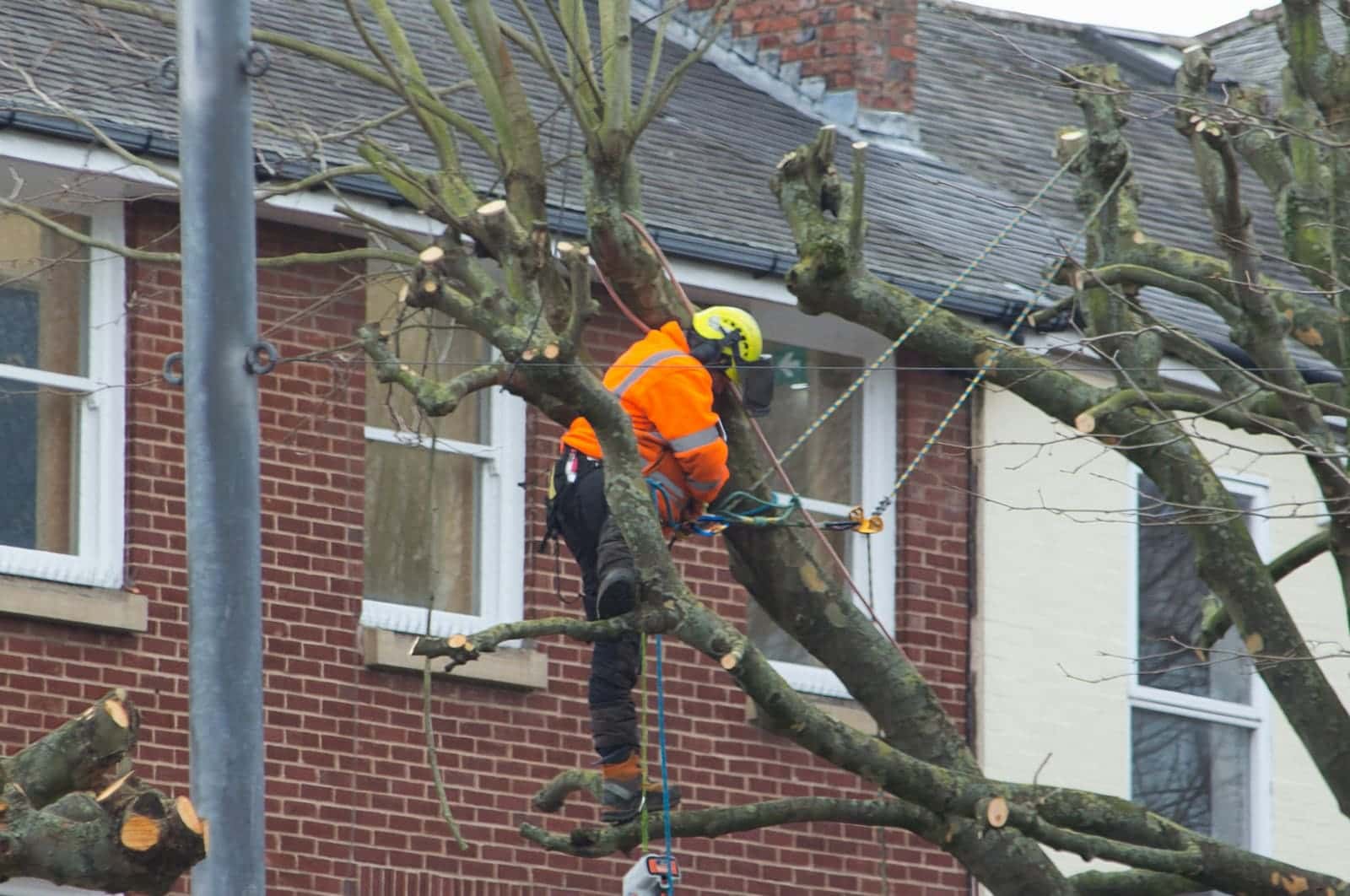
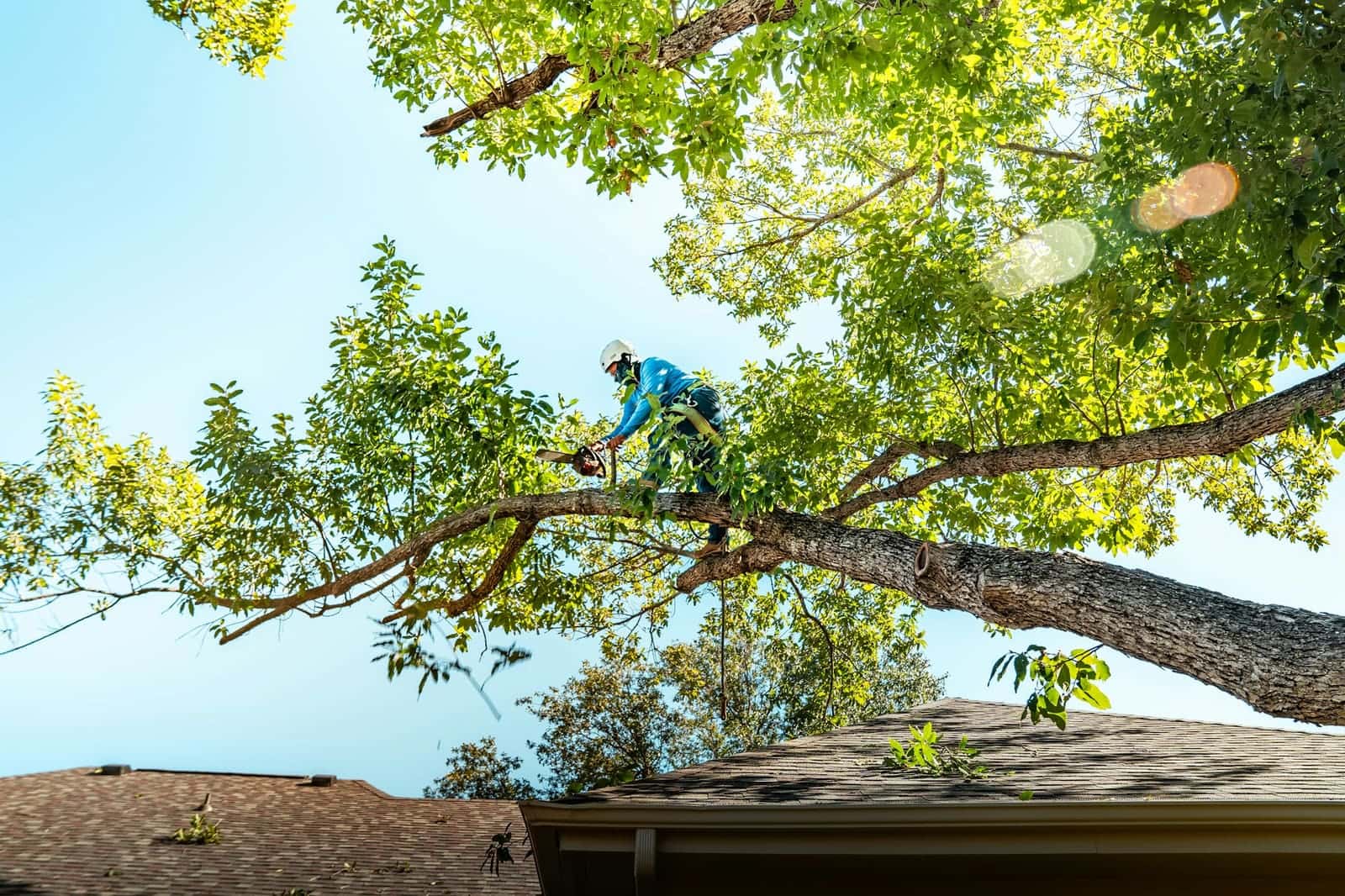
Limbs come off first, then the trunk in sections. Pieces are lowered on ropes (rigging) or lifted out with a crane. Ground crew keep everyone out of the drop zone.
- 4
Cleanup
Brush is chipped, wood is hauled or left as agreed, and the site is raked. The stump is cut low unless grinding is part of the job.
Storm cleanup: what to do and what to leave
Safe for a homeowner
- Photograph the tree and anything it's leaning toward. It helps with quotes and insurance.
- Measure around the trunk at chest height (4.5 ft). Dividing by 3.14 gives the diameter many permit rules use.
- Clear cars, furniture and pets away from the tree before the crew arrives.
- Ask each company for its certificate of insurance, sent directly from the insurer.
Leave these to professionals
- Don't cut a tree yourself if it could hit anything on the way down, or if any part is within 10 feet of a power line.
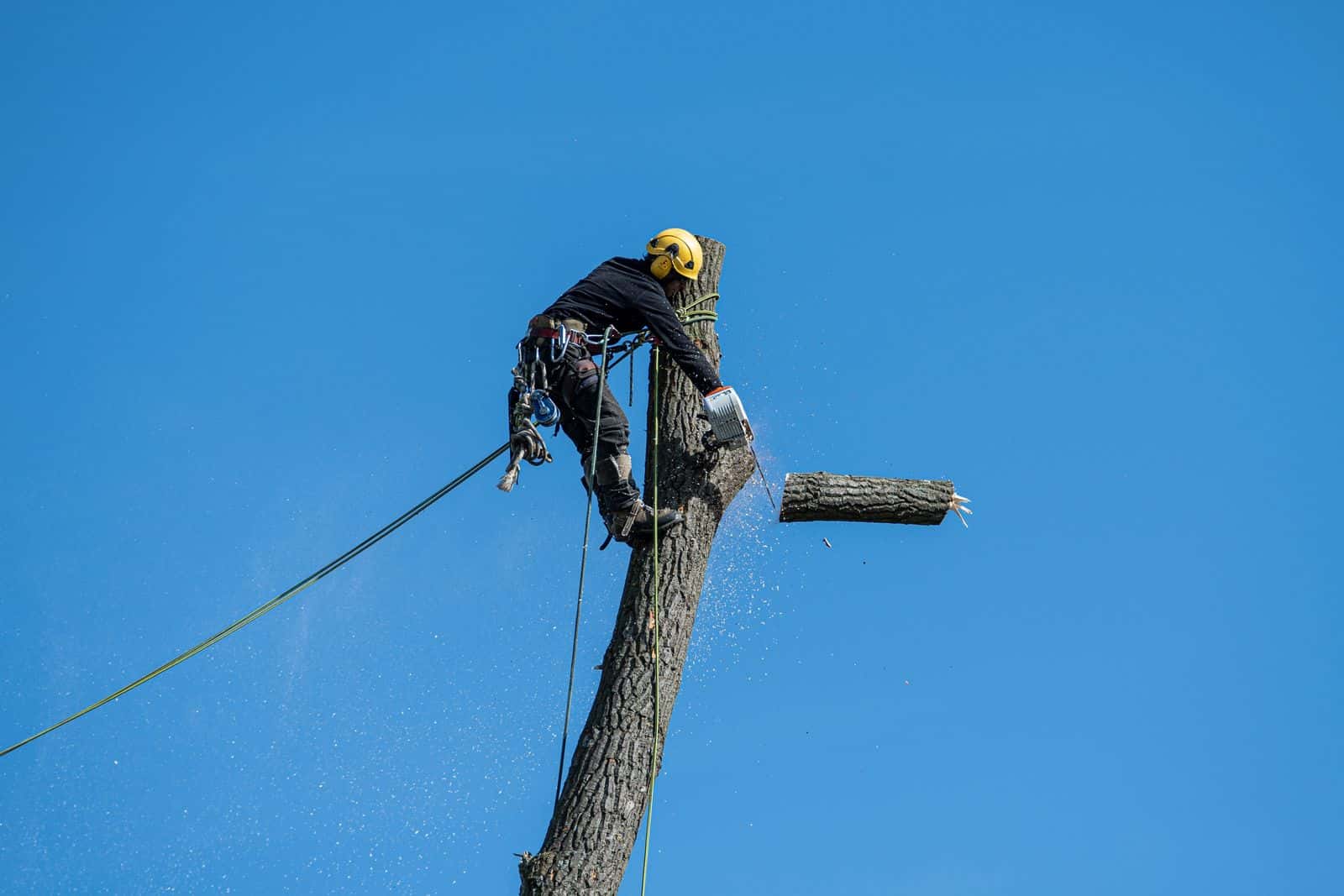
- Don't climb with a chainsaw. Aerial cutting is one of the most dangerous jobs in tree work.
- Don't remove a protected tree without checking local rules. Fines and replanting requirements can be significant.
Services around Cook County
For dead and declining ash, the most common removal in the county.
After derechos and summer downbursts.
For silver maples and lindens over roofs and alleys.
After removal; call JULIE (811) first.
Chicago guidance
Chicago's rules are different from the county's: the city owns and maintains parkway trees, and private removals inside the city generally don't need a city permit.
Parkway trees, 311 and Chicago's ash and storm history.
Cook County tree removal questions
Do I need a permit to remove a tree in unincorporated Cook County?
On unimproved or partly improved land, yes, for deciduous trees over 6 inches in trunk diameter and evergreens 10 feet or taller: file a Tree Removal Application with the Department of Building and Zoning. If you live in a city or village, that municipality's rules apply instead.
Do Cook County suburbs require tree removal permits?
Many do, and some cover private trees above a certain size. Rules differ by village and city, so check your municipality's code or public works department before scheduling.
Who removes the tree between the sidewalk and street in Cook County?
Usually the city or village that owns the parkway. In Chicago, request service through 311. In a suburb, call public works. In unincorporated areas, contact the township or county highway department, depending on who maintains the road.
Can I cut down a tree on Forest Preserve land behind my house?
No. Preserve trees belong to the Forest Preserves of Cook County. Report a hazardous tree to them; you can usually trim branches that overhang your property without harming the tree.
When did emerald ash borer reach Cook County?
It was first confirmed in Illinois in June 2006 in Kane County, west of Chicago, and spread into Cook County soon after. Untreated ash in the area are now mostly dead or declining.
Is a dead ash tree in my Cook County yard dangerous?
Yes, if it can reach anything. Dead ash become brittle and drop limbs or fail without warning, and removal gets riskier the longer it stands.
Should I treat my ash tree or remove it in Cook County?
Treat a healthy, valuable ash with most of its canopy; remove one with heavy dieback (roughly a third of the crown or more) before it turns brittle. A certified arborist can tell you which you have.
Who handles a tree on a power line in Cook County?
ComEd serves most of the county. Report a tree on a line to ComEd and call 911 for sparks, fire or injuries. Stay well away.
How much does tree removal cost in Cook County?
It depends on the tree's size, alley or driveway access, nearby lines and whether a lift or crane is needed; dead ash often cost more because they can't be climbed. See the tree removal cost guide.
Do I have to call JULIE before stump grinding in Illinois?
Yes. Contact JULIE (Illinois 811) before grinding so underground utilities are marked. Private lines like sprinklers and lighting aren't marked, so flag those yourself.
Who removes trees near me in Cook County?
Insured local tree services, ideally with an ISA-certified arborist. You can call us to reach an independent provider serving your part of the county.
Sources for the local facts on this page
- Cook County: Tree removal application (Chapter 126) (checked 2026-10-03)
- Cook County: Forest Preserves (checked 2026-10-03)
- Illinois Department of Agriculture: Emerald ash borer (checked 2026-10-03)
Tree service in Cook County
Call to speak with a local tree-service provider about removal, trimming, stumps or storm damage. Describe the tree and what it's near, and they'll explain the next step.