Act now
A tree fell on my house: what to do now
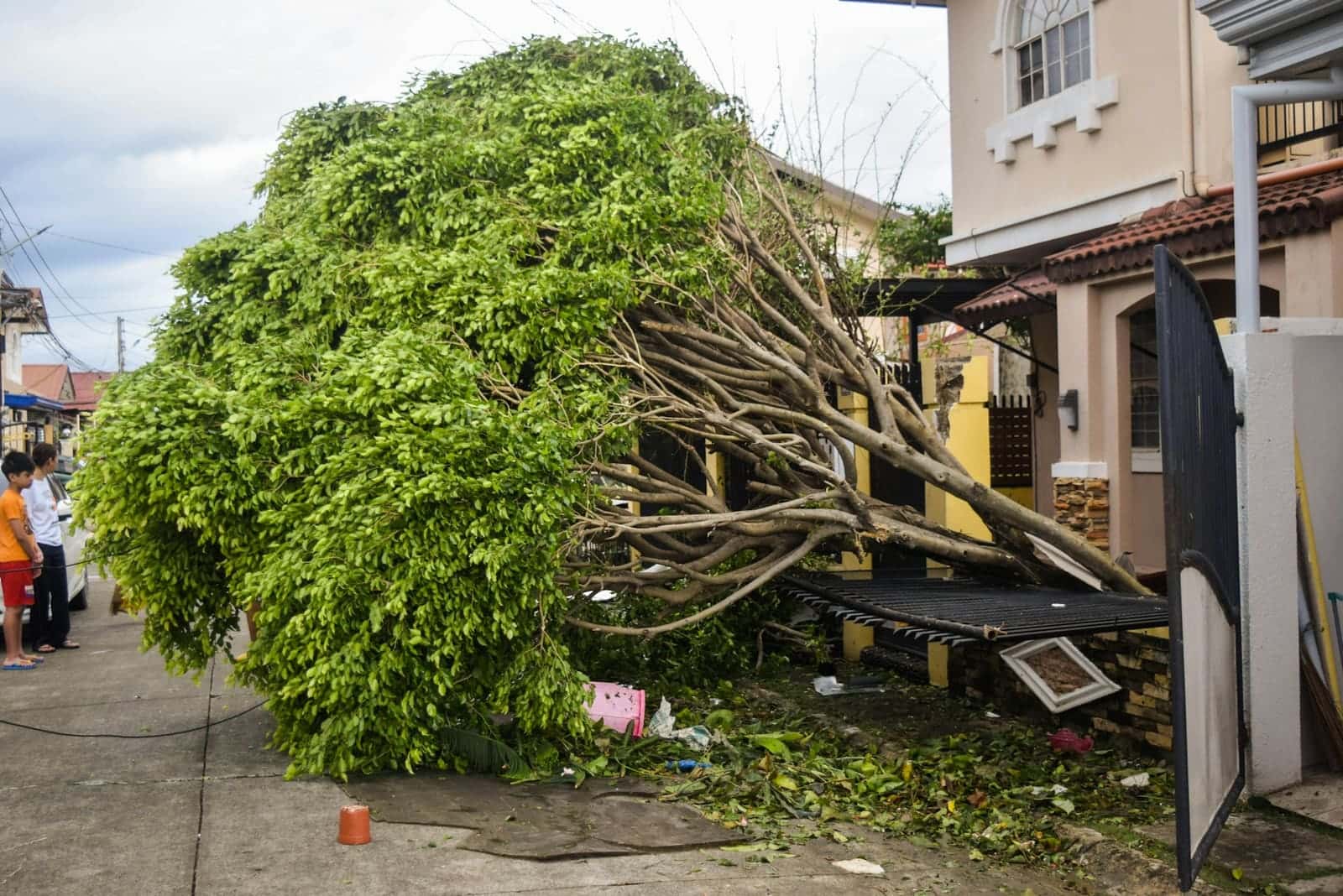
Get everyone out of the damaged part of the house. Call 911 if anyone is hurt, you smell gas, or a power line is down. Shut off gas and electricity only if it's safe to reach them. Photograph the damage from a safe distance, call your insurer, then call a tree service for emergency removal. Don't try to cut or move the tree yourself.
What to do and what not to do
What to do
- Move everyone, including pets, out of rooms under or next to the tree.
- Call 911 for injuries, gas smell, fire, or wires down.
- If you smell gas, leave the house and call the gas utility from outside.
- Photograph and video the tree, roof, interior damage and anything the tree touched.
- Call your homeowners insurer to start a claim, and ask what they need before removal.
- Call a tree service. Tell them the tree is on the house so it's triaged correctly.
What not to do
- Don't go on the roof or into the attic under the tree.
- Don't cut branches holding the tree up. The weight can shift into the house.
- Don't touch or go near any wire, even if the power is out.
- Don't sign an assignment of benefits or pay in full to a door-knocker.
What happens next
Removing a tree from a house is its own specialty. Expect this order:
- A crew assesses how the tree is resting and whether the structure is stable.
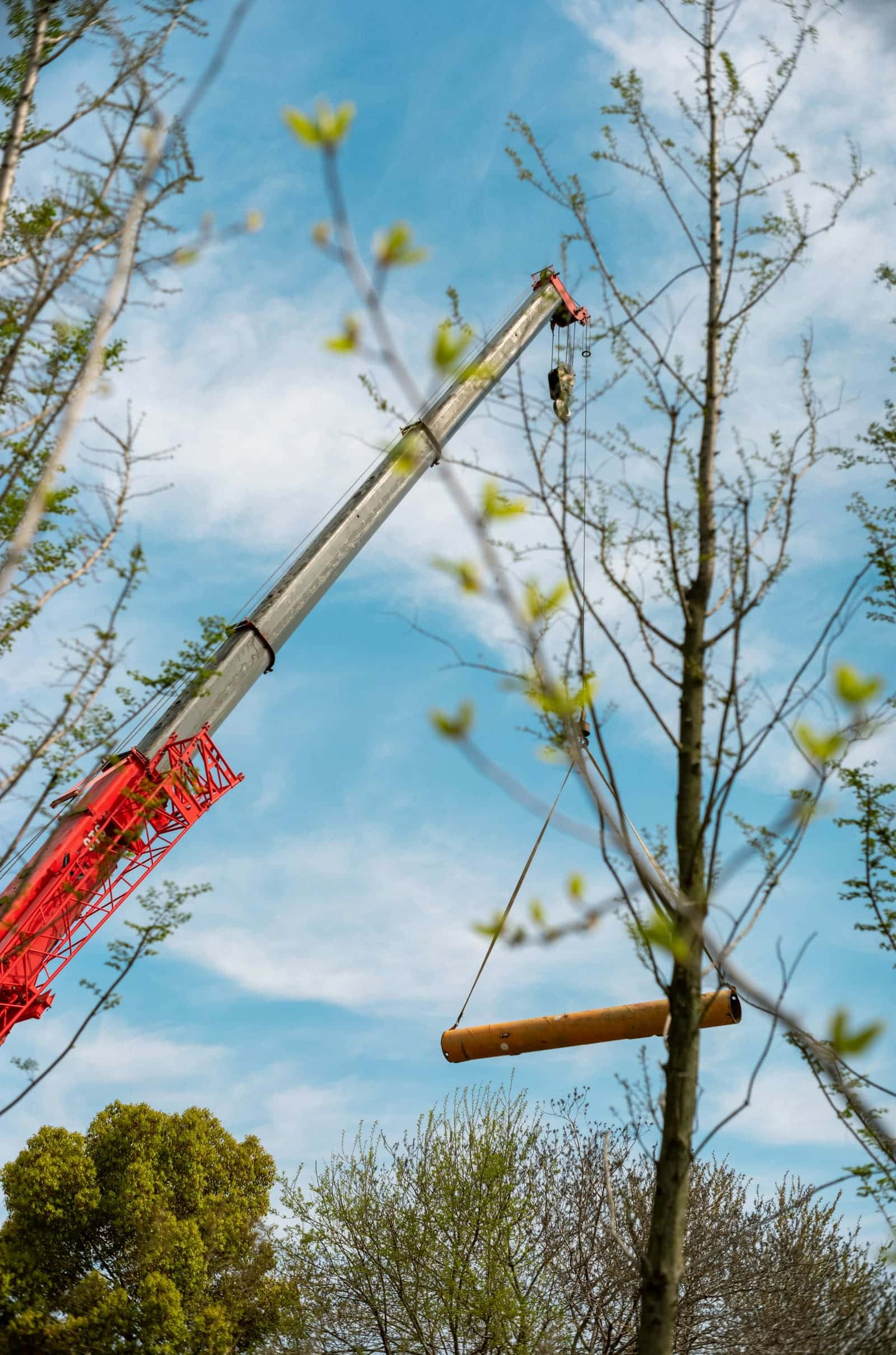
- The tree is stabilized with ropes or a crane so cutting doesn't let it shift.
- It's removed from the top down, piece by piece.
- A roofer or restoration company tarps the roof and covers openings. Often it's a different company.
- You'll get itemized invoices for the insurer: removal, tarping, and repairs are usually separate lines.
Insurance basics
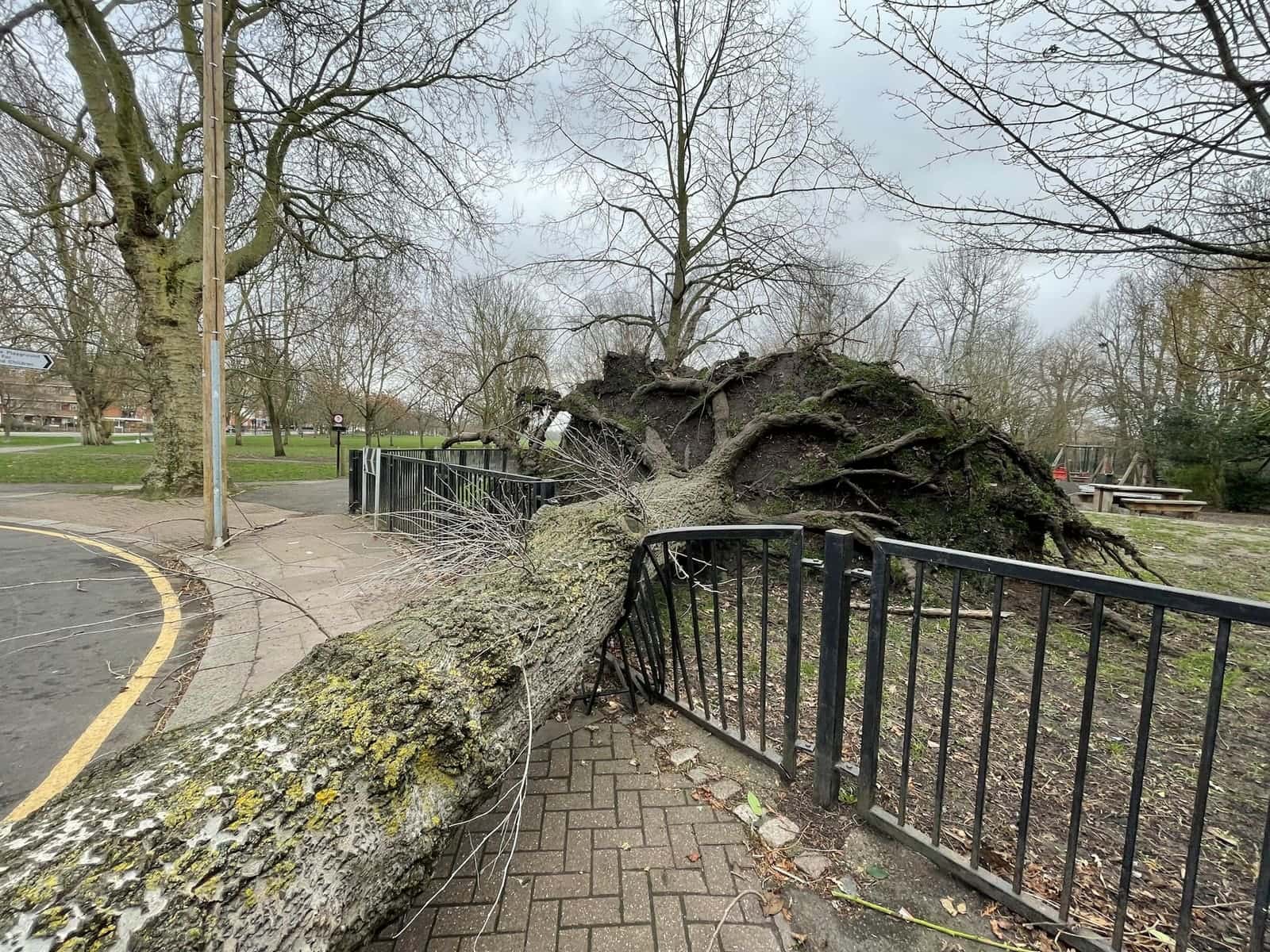
Standard homeowners policies generally cover damage to your house from a falling tree, and typically cover removal of the tree from the structure up to a limit, regardless of whose tree it was. Coverage for removing a tree that fell in the yard without hitting anything is often limited or excluded. Read your policy or ask your agent, and see who pays when a tree falls.
How bad is it? Reading the damage from outside
Whether you can stay in the house tonight depends on what the tree hit, not how big it looks. These are the signs structural engineers and insurers look for first:
Leaves and small limbs on the roof, shingles intact
- What it usually means
- Surface damage only
- Next step
- Photograph it; schedule removal and a roof inspection
Daylight through the ceiling, sagging drywall or wet insulation
- What it usually means
- Roof deck or rafters are broken
- Next step
- Keep everyone out of that room; tarp once the weight is off
Doors or windows that suddenly stick, new wall cracks
- What it usually means
- The frame has shifted
- Next step
- Have a contractor or engineer look before anyone sleeps there
A trunk resting on the roof ridge or a wall
- What it usually means
- The tree's weight is still loading the structure
- Next step
- Don't remove it piecemeal yourself; it needs a crane or rigged removal
Common questions
Can I stay in my house if a tree fell on it?
Not in rooms under or near the tree, and not at all if you smell gas, see structural sagging, or wires are involved. If in doubt, leave until a professional has assessed it.
Who pays if my neighbor's tree falls on my house?
Usually your own homeowners insurance pays for damage to your house, whoever owned the tree. If the neighbor knew the tree was dead or dangerous and ignored it, your insurer may seek reimbursement from them.
Should I stay in my house if a tree fell on it?
Not in the rooms under or next to the damage, and not at all if you smell gas, see sparking wires, or the ceiling is sagging. If the damage is confined to the roof surface and the rest of the house is dry and sound, many people stay, but let the tree crew and your insurer confirm it.
How long does it take to get a tree removed from a roof?
The removal itself is often a few hours to a day once a crew is on site, longer if a crane is needed. After a widespread storm, waiting for a crew is the slow part; ask for the tree to be made safe first, then removed fully.