Act soon
A tree is leaning toward my house
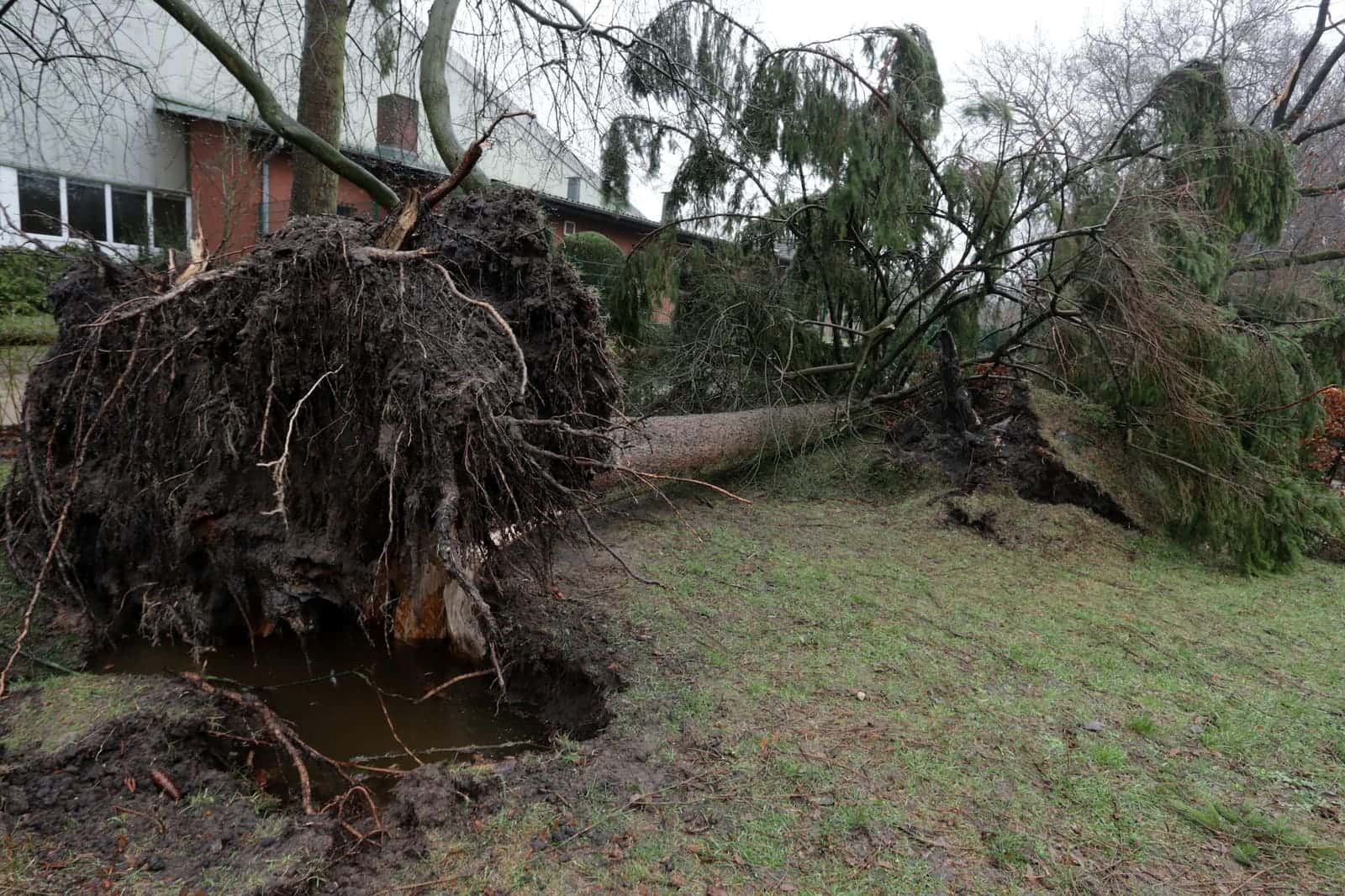
A lean that has been there for years, with the trunk curving back upward, is usually the tree's natural growth and not an emergency. A lean that's new or getting worse, especially with cracked or lifted soil on the side away from the lean, means the roots are failing. Keep people out of the area and get it assessed right away.
What to do and what not to do
What to do
- Look at the base: is soil lifted, cracked or mounded on the side opposite the lean?
- Compare with old photos (street-view images help) to see whether the lean is new.
- Check for exposed or snapped roots, and for cracks where the trunk meets the ground.
- If the lean is new, keep cars and people out of the fall zone and call for an assessment.
What not to do
- Don't try to pull a leaning tree upright with a vehicle or cable.
- Don't cut roots or dig on the high side of the lean.
- Don't wait for the next storm if the lean appeared after the last one.
Old lean vs. new lean
When it started
- Usually OK
- Years ago
- Warning
- Recently, or after a storm
Trunk shape
- Usually OK
- Curves back toward vertical at the top
- Warning
- Straight along the lean
Soil at the base
- Usually OK
- Flat and undisturbed
- Warning
- Lifted, cracked or mounded opposite the lean
Roots
- Usually OK
- Intact
- Warning
- Exposed, snapped or cut by construction
Trunk
- Usually OK
- Solid
- Warning
- Cracks, cavities, or fungus at the base
What an arborist might recommend
Options range from monitoring, to reducing the weight of the crown on the leaning side, to removal. Cabling can support weak branch unions but won't hold up a tree whose roots are failing. Correcting a lean is mostly possible on young trees, not mature ones.
Measure it yourself: a simple lean check
Leans are easier to judge with a record than from memory:
- Mark a reference: drive a stake in line with the trunk from a spot 20 to 30 feet away, or photograph the tree from a fixed point, such as the same corner of the driveway.
- Check the soil at the base: on the side away from the lean, look for cracked, mounded or lifted soil, or roots that have popped up. That is the root plate starting to pull out.
- Repeat after wind and heavy rain: a lean that changes after a storm is active. Compare against your stake or photo.
- Note what's in range: measure the distance to the house against the tree's height. If the tree could reach the house, roof or a bedroom, treat an active lean as urgent.
Common questions
How much lean is too much for a tree?
There's no fixed angle. A tree with a stable, old lean can be fine at a steep angle, while a small new lean with root-plate movement is dangerous. Change over time and soil movement matter more than the angle.
Will my insurance pay to remove a leaning tree before it falls?
Usually not. Most policies pay after a covered loss, not for preventive removal. That's the owner's maintenance responsibility.
How much lean is too much for a tree?
There's no safe angle by itself. A tree that has leaned the same way for years, with the trunk curving back upright, is often stable at a steep angle. A tree that has started leaning recently, or leans more after storms, can fail at a slight angle. Change over time and soil movement matter more than degrees.
Can a leaning tree be pulled straight with cables?
Only young, small trees. Staking or guying can correct a sapling's lean. On a mature tree, cables can support a weak fork in the crown, but they can't hold up a tree whose roots are failing; that tree usually needs removal or major crown reduction.