
Stumps & cleanup
Stump grinding vs. stump removal: which do you need?
Updated · Guide by TreeRemovalServices.net
Short answer
For most yards, stump grinding is enough: a machine chips the stump to 6 to 12 inches or more below grade and the roots decay in place. Full stump removal digs out the stump and main roots, leaving a large hole; it's mainly needed when you're building, paving or installing a pool where the stump was.
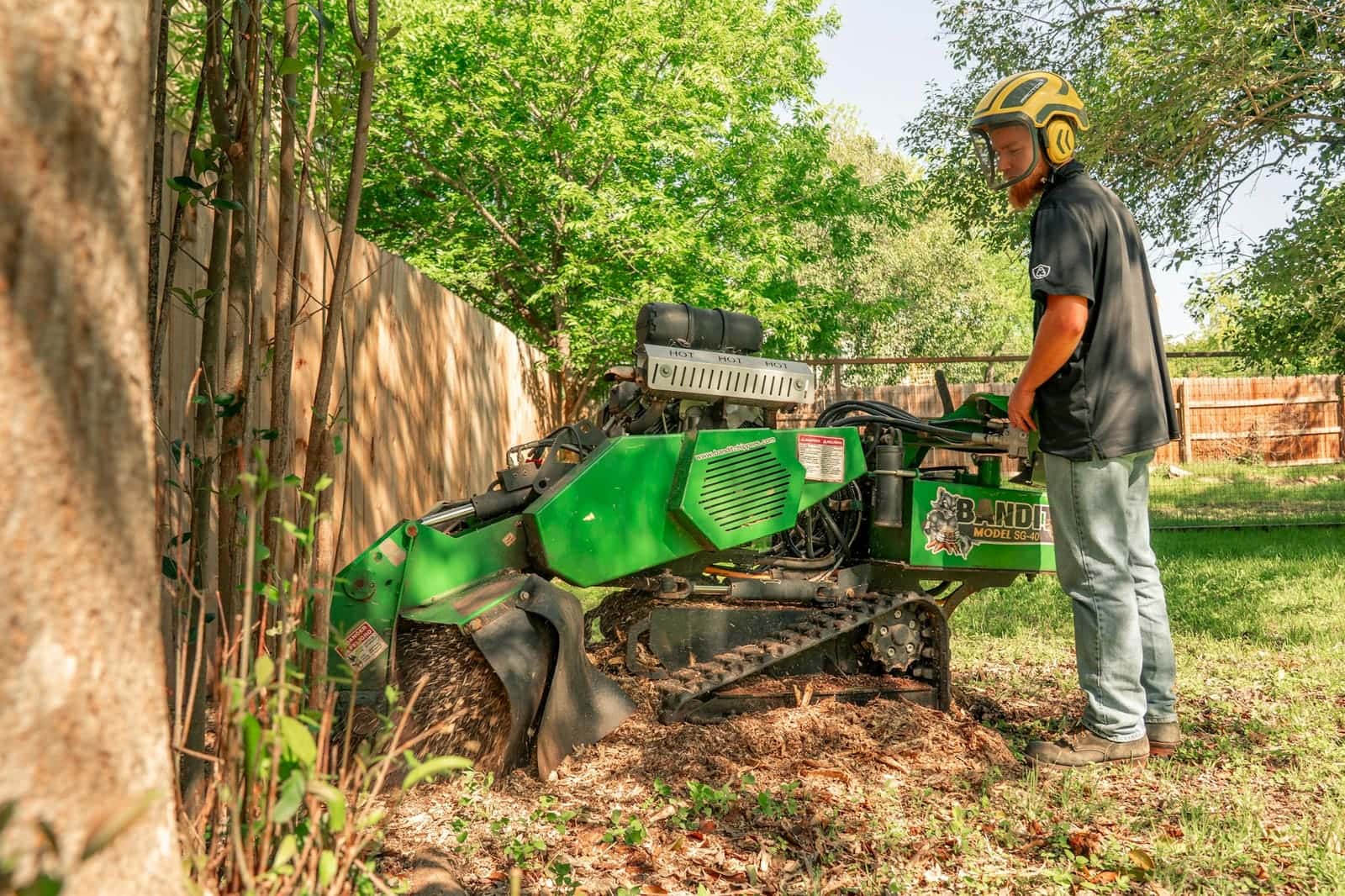
Side by side
Both get rid of the stump you see; they differ in what's left underground and what it costs.
What happens
- Stump grinding
- Stump chipped below grade
- Stump removal
- Stump and main roots dug out
Roots
- Stump grinding
- Left to decay
- Stump removal
- Mostly removed
Yard damage
- Stump grinding
- Small area; chips to clean up
- Stump removal
- Large hole; heavy equipment
Typical use
- Stump grinding
- Lawns, beds, replanting nearby
- Stump removal
- Construction, paving, pools
Relative cost
- Stump grinding
- Lower
- Stump removal
- Higher
When grinding is the right call
If you want lawn, a bed or a new tree a few feet away, grinding is faster, cheaper and less disruptive. Ask the company how deep they'll grind: 6 to 12 inches is typical for lawn, deeper for planting. Remove most grindings and backfill with soil, because chips settle as they decay.
When you need the roots out
Foundations, footings, driveways, patios and pools need stable ground without decaying wood. In those cases, removal by excavator, or grinding much deeper and wider plus root removal, is the right approach. Your builder or engineer should specify what's needed.
Utilities, rock and resprouting
Three things change how either job goes:
- Call 811 before either: both dig below grade.
- Shallow rock, as in Miami limestone or Nashville and Austin karst, can limit grinding depth.
- Some species, like Callery pear, Chinese tallow, tree-of-heaven and ficus, resprout from stumps and roots; grind deeper and remove sprouts.
Replanting where a tree was
It's usually better to plant the new tree a few feet away from the old stump, out of the decaying roots. If you want the same spot, remove the grindings, backfill with good soil and let it settle before planting. See what happens after a tree is removed.
Common questions
Is stump grinding or removal cheaper?
Grinding is usually much cheaper; removal needs heavier equipment and leaves a big hole to fill.
Will roots keep growing after stump grinding?
Most species' roots die and decay. Some, like Callery pear and tree-of-heaven, send up sprouts that need removing.
Can I build over a ground stump?
Not for structures or pavement; decaying roots settle. Builders usually want the stump and roots removed.
Editorial note: this guide is general information written for homeowners. It isn't a substitute for an on-site assessment by a qualified arborist, or for legal or insurance advice.