Tree services
Tree risk assessment
A tree risk assessment is an arborist's evaluation of how likely a tree (or part of it) is to fail, what it would hit, and how bad the consequences would be. The result is a risk rating and recommendations: monitor, prune, support with cables, or remove.
Reviewed and updated
When an assessment is worth paying for
- A large tree within reach of the house, with any visible defect.
- A new lean, cracking soil, or roots cut by construction.
- Fungal growth at the base.
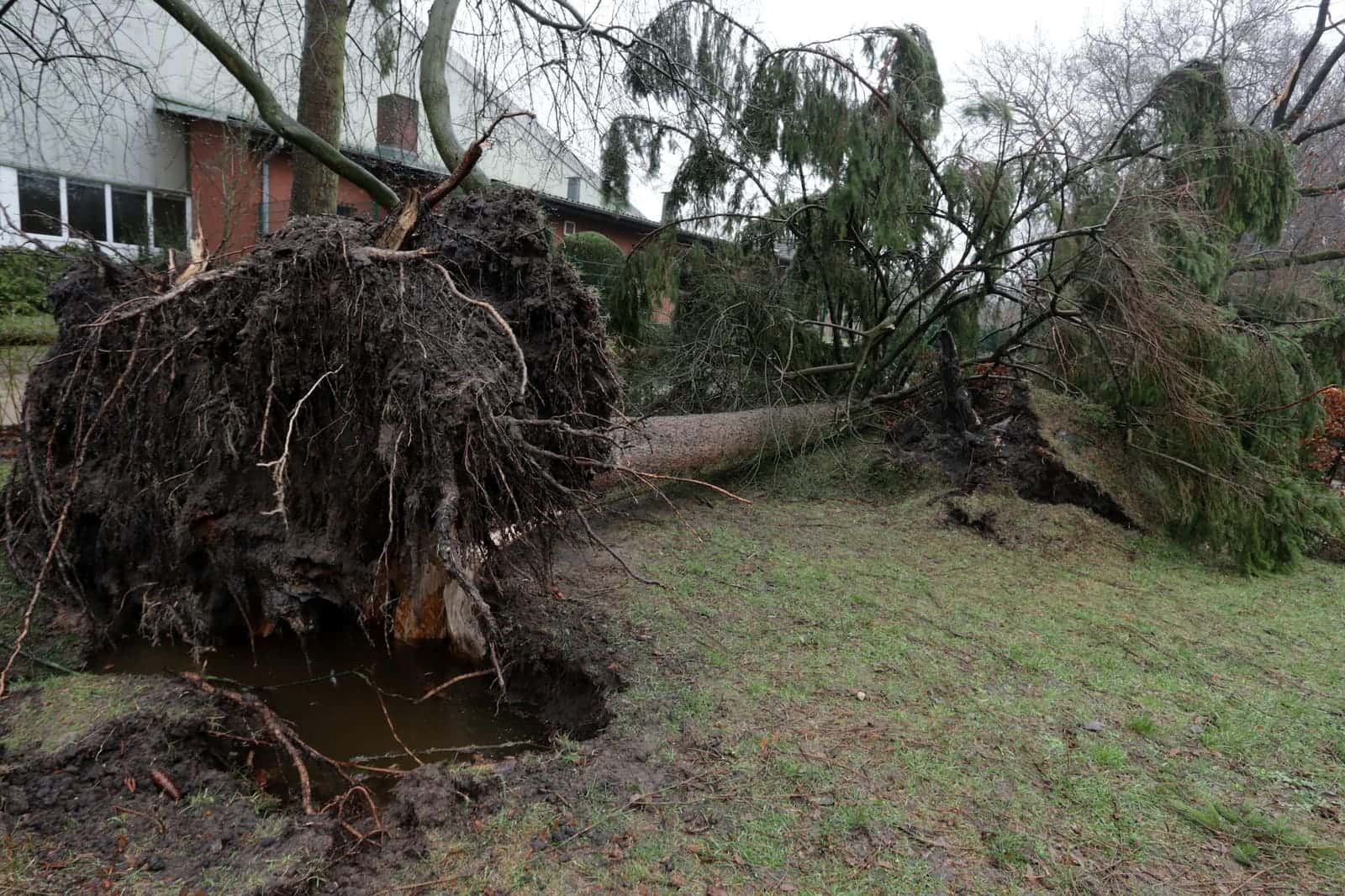
- Storm damage on a tree you'd like to keep.
- A permit, HOA or neighbor dispute where you need a documented opinion.
Defects an arborist looks for
Decay and cavities
- Where to look
- Trunk, base, old pruning wounds
- Why it matters
- Hollow wood can't carry the load of the crown
Cracks
- Where to look
- Trunk and the joints of big limbs
- Why it matters
- A crack is a failure that has already started
Weak unions
- Where to look
- Forks where two stems meet with bark pinched between them
- Why it matters
- These split under wind, ice or the tree's own weight
Root problems
- Where to look
- Soil around the base; roots cut by construction
- Why it matters
- Most whole-tree failures start in the roots
Lean
- Where to look
- The whole trunk
- Why it matters
- A new or increasing lean is more serious than an old, stable one
Dead limbs and hangers
- Where to look
- The crown
- Why it matters
- These fall without warning
How an assessment is done
- 1
Scope
Agree on which trees and what level of assessment. A basic visual assessment is enough for most homeowners.
- 2
Inspection
The arborist examines roots, root collar, trunk, branch unions and crown, and notes targets and site conditions.
- 3
Advanced testing (if needed)
Tools like a sounding mallet, resistance drill or sonic tomography check for hidden decay.
- 4
Report
A written rating with mitigation options and a recommended re-inspection interval.
After the assessment: options besides removal
- Prune the defective part, such as a decayed or cracked limb, and keep the rest of the tree.
- Reduce the crown so a weak tree carries less weight and catches less wind.
- Cable and brace a weak fork so it can't spread apart.
- Move the target instead of the tree, such as a play set, parking spot or patio table.
- Monitor on a schedule, with a re-inspection after major storms.
- Remove the tree when the risk can't be brought down to an acceptable level; see hazardous tree removal.
What an assessment costs depends on
An assessment is priced on the arborist's time and the level of detail you need, not on the tree's size alone:
- Number of trees assessed
- Level of assessment (visual vs. advanced testing)
- Whether a formal written report is needed for a permit or legal purpose
- Travel and site access
Levels of assessment and what the report should contain
Tree risk assessment in the U.S. follows the ANSI A300 standard, which describes three levels, and the International Society of Arboriculture trains assessors through its Tree Risk Assessment Qualification (TRAQ).
- A useful report names the tree and its location, the defects found, what the tree or part could hit, the likelihood of failure, and a risk rating.
- It should list mitigation options, from pruning to removal, and a re-inspection interval.
- Ask for it in writing; a city permit office, insurer or neighbor may want to see it.
Level 1: limited visual
- What it involves
- A quick look from one side, often for many trees
- Typical use
- Surveying a street, campus or storm-damaged area for obvious problems
Level 2: basic
- What it involves
- A detailed ground-level inspection all the way around the tree, with simple tools like a mallet and probe
- Typical use
- Most residential assessments
Level 3: advanced
- What it involves
- Tests for internal decay or root problems, aerial inspection, or other specialized methods
- Typical use
- Valuable or protected trees where the basic look isn't conclusive
Between inspections
Safe for a homeowner
- Walk around your trees after every major storm and note changes.
- Keep construction equipment and soil piles off root zones.
- Photograph a defect over time. Change is often more telling than the defect itself.
Leave these to professionals
- Don't rely on a removal company alone to tell you whether removal is needed. Consider an independent arborist opinion for valuable trees.
- Don't ignore mushrooms at the base of a large tree near the house.
Risk assessment questions
Can a tree company tell me whether my tree is dangerous?
Many can, but a company that profits from removal has an obvious conflict. For a valuable tree or a disputed situation, pay for an independent assessment from an ISA Certified Arborist, ideally TRAQ-qualified.
What does TRAQ mean?
Tree Risk Assessment Qualification, a credential from the International Society of Arboriculture. It trains arborists to use a standard, documented method to evaluate tree risk.
How do I find a certified arborist?
The ISA has a public "Find an Arborist" directory at treesaregood.org where you can check whether someone's certification is current.
Does a leaning tree always need to come down?
No. Many trees grow with a lean and are stable. A lean that's new or worsening, especially with soil heaving on the opposite side, is the concern. An arborist can tell an old, compensated lean from a lean that signals root failure.
Local risk factors by city
Soil, storm exposure and common species change what an assessor looks for first.
Related services
- Tree Trimming & Pruning: the most common outcome: prune the defect and keep the tree
- Tree Removal: when the risk can't be reduced enough any other way
- Dead Tree Removal: if the assessment confirms the tree is dead
- Storm Damage Tree Removal: post-storm decisions on damaged trees
Need help with a tree?
Call to speak with a local tree-service provider about removal, trimming, stumps or storm damage. Describe the tree and what it's near, and they'll explain the next step.