Orlando, FL · Orange County
Tree removal in Orlando
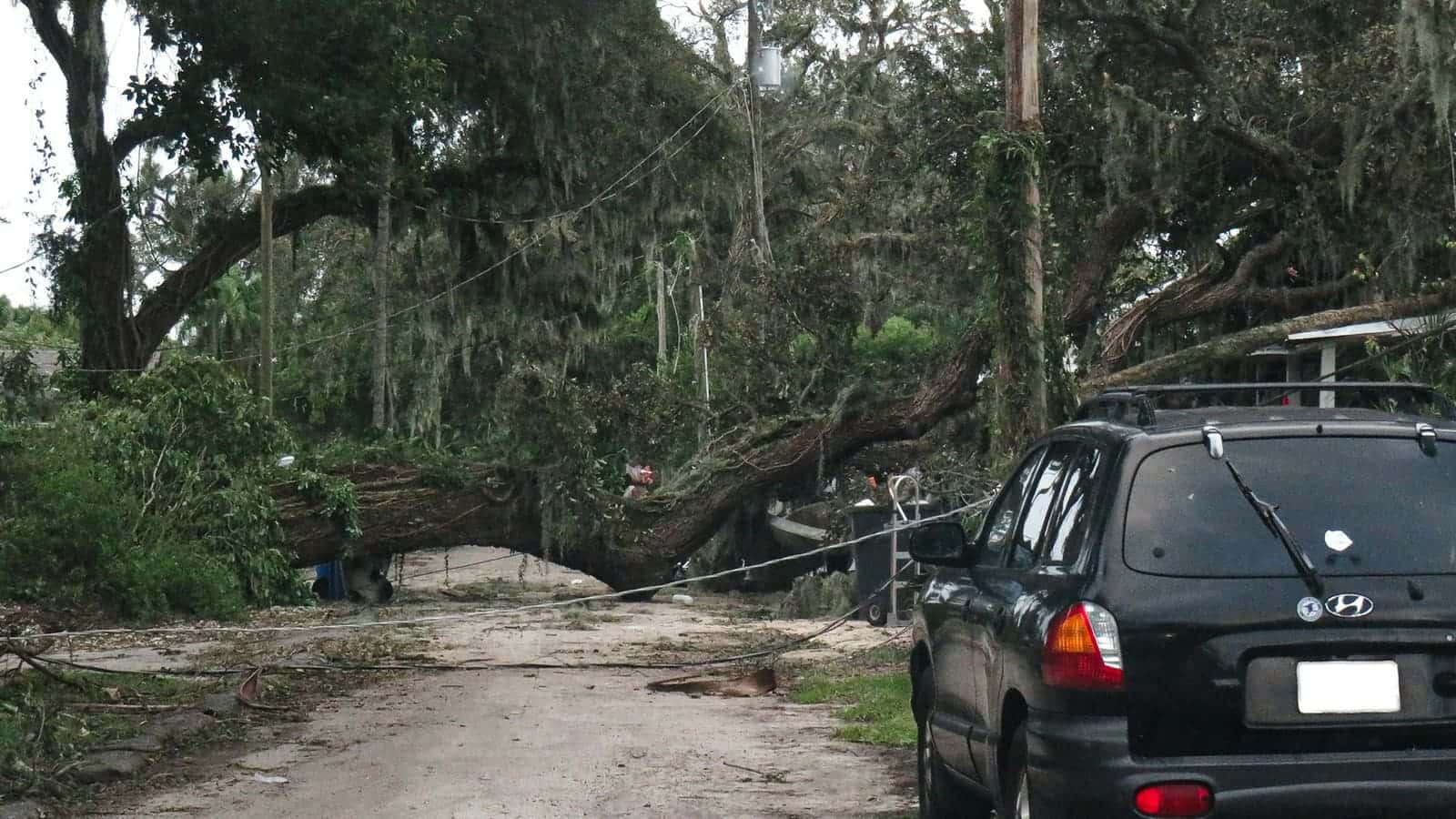
Orlando's most common tree problem is aging laurel oaks: fast-growing mid-century trees that are now decaying and failing, especially in storms. Hurricane Ian in 2022 and Milton in 2024 brought down trees across Central Florida. The City of Orlando regulates removal of trees 6 inches in diameter and larger, but Florida's §163.045 exemption applies on single-family lots with an arborist's risk documentation.
Central Florida is far enough inland that hurricanes arrive weakened, but their rain saturates sandy soil for days, and long hours of tropical-storm wind still push over shallow-rooted trees. Orlando also has one of the highest lightning rates in the country, and lightning-struck oaks and pines often decline over the following months.
Neighborhoods like College Park, Delaney Park and the areas around Lake Eola have grand live oaks, many draped in Spanish moss (which isn't a parasite and isn't harmful in itself). Live oaks are wind-tough and worth keeping; laurel and water oaks of the same age often aren't.
Reviewed and updated
Laurel oaks, live oaks and the rest of Orlando's canopy
- Laurel oak
- Short-lived; decay and failure after 50–70 years
- Live oak
- Wind-resistant; often a heritage tree in Orlando
- Southern magnolia and bald cypress
- Long-lived natives; treated as heritage species by the city
- Slash pine
- Lightning and beetle risk
- Sabal palm
- Very wind-resistant when not over-pruned
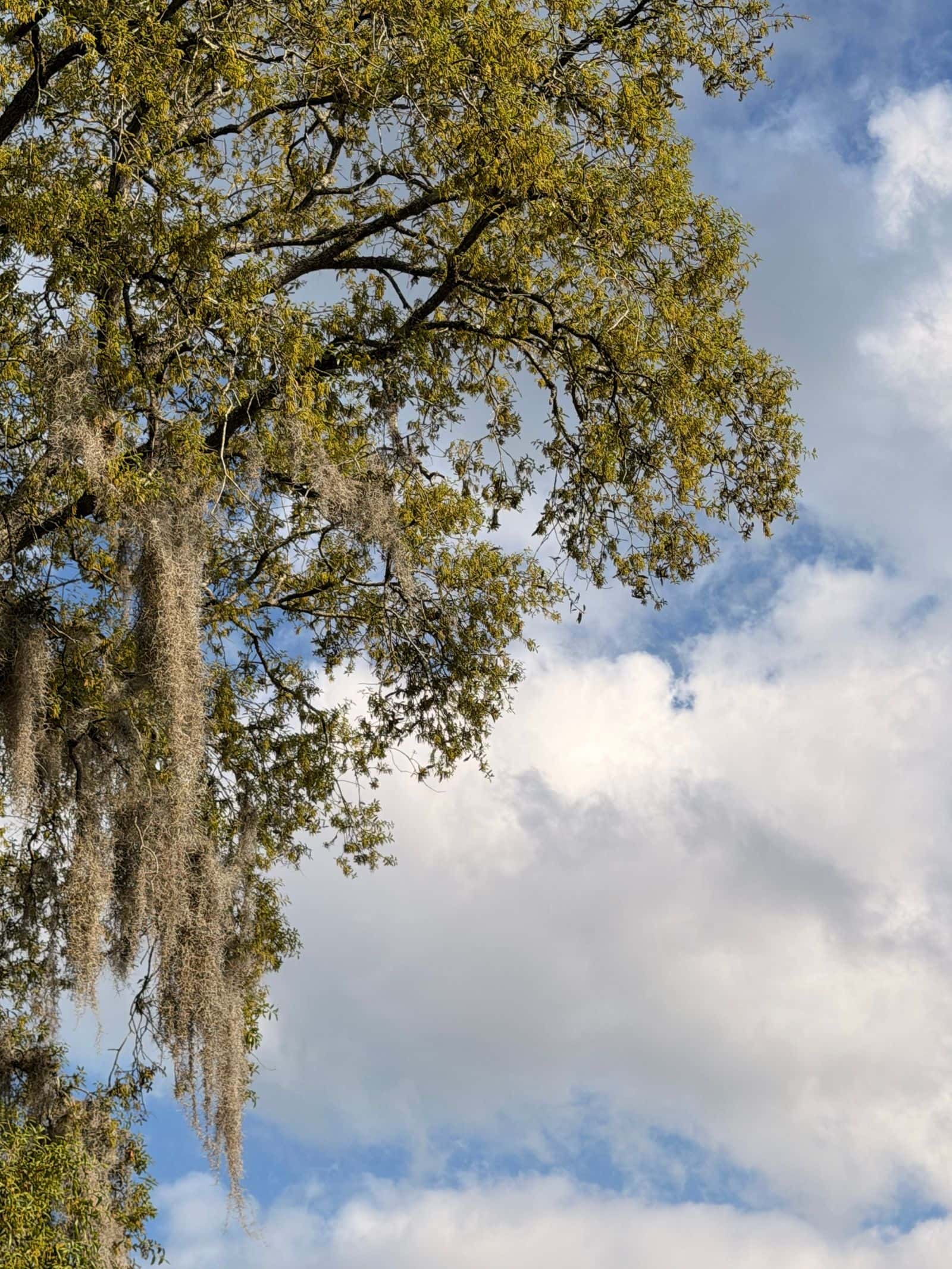
Laurel oak or live oak? Telling them apart before deciding
The two are easy to confuse, and the difference matters: one is often a removal candidate as it ages, the other is usually worth keeping.
Shape
- Laurel oak
- Upright, rounded crown; branches angle upward
- Live oak
- Broad and spreading; long, low horizontal limbs
Leaves
- Laurel oak
- Narrow and glossy; drops most leaves briefly in late winter
- Live oak
- Small, leathery, with edges often curled under; stays green year-round
Typical problem
- Laurel oak
- Internal decay and branch failure as it ages
- Live oak
- Heavy limbs over roofs; root damage from construction
Usual decision
- Laurel oak
- Inspect closely if it's mature and near the house
- Live oak
- Prune and protect; removal is rarely the first answer
Why Orlando trees fail: decay, inland storms and lightning
Aging laurel oaks
Short-lived oaks planted decades ago are decaying and failing; they're the city's most common removals.
Inland hurricanes
Ian (2022) and Milton (2024) caused widespread failures well inland through wind on saturated sand.
Lightning
Central Florida is a lightning hot spot; struck trees may die slowly.
Sandy soils and high water table
Shallow roots lose grip when the ground is waterlogged.
Lakefront lots and older neighborhoods
Lakefront lots and older neighborhoods have large oaks close to homes with limited equipment access. Newer suburban developments have more room but younger, sometimes poorly structured trees.
Around Orlando's lakes, the water table can sit close to the surface for days after a tropical storm. Crews may wait for the ground to firm up before bringing in equipment, and trees on lake edges deserve a check for a shifted root plate after any storm that saturated the soil.
After a tropical storm: what to recheck in the following weeks
Inland Central Florida usually sees weakened storms, but long rain events still loosen sandy soil and stress decaying trees. Damage isn't always obvious the day after.
In the weeks after a storm, look again for leaves browning on one limb (often a crack you can't see), soil heaved or cracked on one side of a tree, new mushrooms at the base of laurel oaks, and broken branches lodged in the crown. Any of these on a tree that can reach the house is worth an inspection before the next storm in the same season.
Orlando's tree removal application and the state exemption
- The City of Orlando requires an application to remove trees 6 inches DBH or larger, and mature live oaks, bald cypress and southern magnolias are treated as heritage trees with additional requirements.
- For a decaying laurel oak at a single-family home, the state's documented-hazard exemption usually matters more than the city ordinance; it's explained on the [Florida page](/tree-removal/florida/).
Sources (checked 2026-10-01)
Rules change and details depend on your exact property. Confirm with the city or county before work starts. This isn't legal advice.
Orlando services, from laurel oaks to lightning
Aging laurel oaks near houses are the most common removal.
Documenting a laurel oak's decay, which can also matter for permits.
Cleanup after inland tropical storms.
Reducing heavy limbs on live oaks rather than removing them.
Quick in sandy soil; plan where replacement trees will go.
Orlando tree questions
Is my laurel oak dangerous?
Not necessarily, but older laurel oaks commonly develop decay at the base and in major limbs. Mushrooms at the base, cavities, and dead limbs over the house are reasons to get an arborist's assessment.
Who handles a tree on power lines in Orlando?
In most of the city, OUC (Orlando Utilities Commission) is the electric utility; some surrounding areas are served by Duke Energy. Report any tree touching a line to your utility and keep away. After major storms, utilities clear lines first, and private tree cleanup follows.
Is Spanish moss killing my tree?
No. Spanish moss isn't a parasite. Heavy moss is often a sign the tree is already thin and sunlit, but the moss itself isn't the cause.
Calls are routed to independent local tree-service providers. How calling works
More local guides
Need tree help in Orlando?
Call to speak with a local tree-service provider about removal, trimming, stumps or storm damage. Describe the tree and what it's near, and they'll explain the next step.