
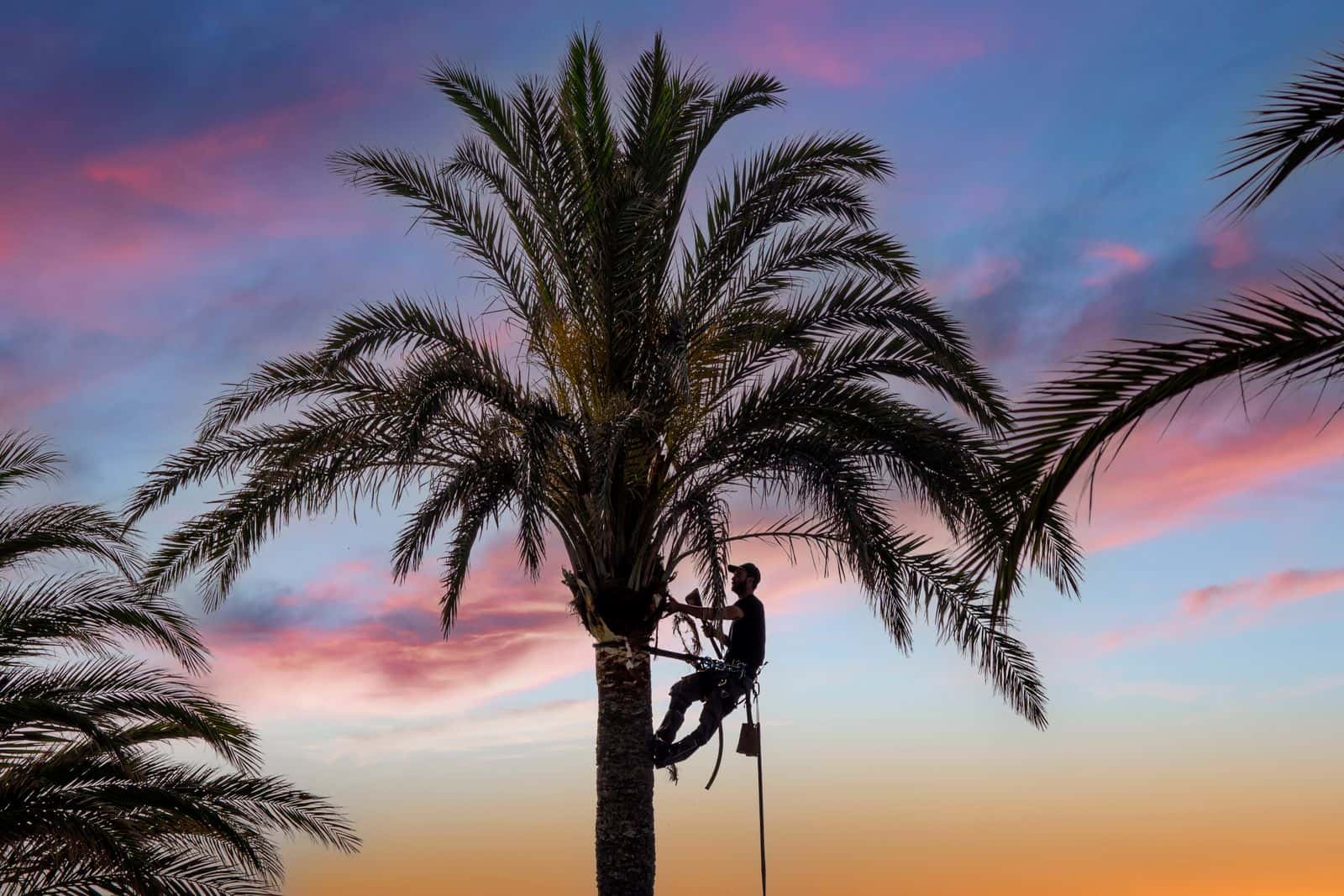
Fort Lauderdale, FL · Broward County
Tree removal in Fort Lauderdale
On a developed single-family lot in Fort Lauderdale, removing a tree 8 inches or more in diameter (measured 4.5 feet up) needs a city permit unless an ISA Certified Arborist or landscape architect documents that it's an unacceptable risk, which Florida law exempts. Mangroves on canal and waterfront lots fall under separate state trimming rules. Hurricane readiness drives most tree work here.
Fort Lauderdale's canals put hundreds of homes on the water, and that shapes tree work: equipment access from the street side only, salt exposure, seawalls close to big trees, and mangroves along the shoreline that state law protects. Hurricane Wilma in October 2005 crossed South Florida as a major hurricane and brought down large trees and power lines across Broward County; big ficus trees uprooted dramatically.
The city regulates removals more closely than many Florida cities. Permit thresholds depend on whether the lot is a developed single-family home and whether redevelopment is planned, and Florida Statute 163.045 overrides the city on single-family property when a qualified professional documents a hazardous tree.
Reviewed and updated
Hurricanes, canals and shallow soil
Hurricanes
Season runs June 1 to November 30; Wilma (2005) showed how ficus and dense, top-heavy trees fail.
Canal and waterfront lots
Seawalls, docks and mangroves limit where trees can be dropped and equipment can go.
Shallow soil over limestone
Limited rooting depth makes big trees easier to topple in saturated ground.
Ficus and invasive species
Large ficus roots lift pavement and damage pipes and seawalls.
Trees on canal lots and near seawalls
Waterfront lots add constraints a dry lot doesn't have. Trees between the house and the seawall usually can't be felled toward the water or reached by a crane parked on the canal side, so they're climbed and taken apart in small pieces, carried out through the side yard, or lifted over the house from the street.
Many canal homes can only be reached from the street, and pools, screen enclosures and docks often sit under the canopy. HOA and condo properties usually need association approval on top of the city permit.
Big trees growing close to a seawall can push against it as their roots grow and can pull sections loose if they uproot in a hurricane. A tree that's lifting the cap or cracking the wall is worth a professional opinion before storm season, and seawall repairs may need their own permits.
Mangrove trimming rules for waterfront owners
Up to 10 feet
- Who may trim
- Homeowner
- Limit
- Trim to no lower than 6 feet; on frontage over 150 feet, about two-thirds of the trees
10 to 24 feet
- Who may trim
- A professional mangrove trimmer
- Limit
- Per state rules; no lower than 6 feet
Over 24 feet
- Who may trim
- Only with a permit
- Limit
- Apply through the state or delegated local program
Ficus, palms and wind-firm natives
- Ficus
- Huge, fast-growing and shallow-rooted; uprooted widely in Wilma
- Royal and coconut palms
- Remove coconuts and dead fronds; keep green fronds
- Live oak and gumbo limbo
- Among the more wind-resistant choices
- Black olive
- Dense crowns that benefit from thinning
- Red and white mangroves
- Shoreline trees with their own state trimming rules

Fort Lauderdale's permit thresholds and the arborist exemption
- On a developed single-family lot with no redevelopment planned, a city permit is required to remove a dicot or conifer 8 inches or more in diameter at 4.5 feet above grade; the threshold drops to 3 inches when redevelopment is anticipated and on other property types.
- Florida Statute 163.045 bars the city from requiring a permit, fee or mitigation on residential property when an ISA Certified Arborist or Florida licensed landscape architect documents that a tree poses an unacceptable risk.
- Under Florida's Mangrove Trimming and Preservation Act, a homeowner may trim riparian mangroves up to 10 feet tall to no lower than 6 feet; mangroves 10 to 24 feet tall must be trimmed by a professional mangrove trimmer, and taller ones need a permit.
Sources (checked 2026-10-01)
Rules change and details depend on your exact property. Confirm with the city or county before work starts. This isn't legal advice.
Fort Lauderdale or Miami-Dade rules? Check which city you're in
Miami-Dade County's Chapter 24 applies there instead, with its own exemption for non-specimen trees under 18 inches on single-family lots and a rule that treats hatracking as removal.
For comparison, a Central Florida city with its own permit rules and hurricane exposure further from the coast.
Fort Lauderdale services
Palm and canopy thinning before hurricane season.
Permitted removals and large ficus near seawalls and pools.
The written arborist finding that qualifies a hazardous tree for the state exemption.
Post-hurricane cleanup.
Trees on houses, enclosures and docks.
Fort Lauderdale tree questions
Do I need a permit to remove a tree from my Fort Lauderdale yard?
On a developed single-family lot, yes for a tree 8 inches or more in diameter at 4.5 feet, unless an arborist documents it as an unacceptable risk under Florida law. Smaller trees and certain cases are exempt; confirm with the city before cutting.
Can I trim the mangroves behind my house?
Within limits. Homeowners can trim mangroves up to 10 feet tall to no lower than 6 feet. Taller mangroves up to 24 feet must be trimmed by a professional mangrove trimmer, and anything larger needs a permit.
Should I remove my ficus before hurricane season?
If it's large, close to the house or seawall, and has a dense crown or damaged roots, often yes. Ficus uprooted widely in Hurricane Wilma. A smaller, well-thinned ficus away from structures can be kept.
Calls are routed to independent local tree-service providers. How calling works
More local guides
Need tree help in Fort Lauderdale?
Call to speak with a local tree-service provider about removal, trimming, stumps or storm damage. Describe the tree and what it's near, and they'll explain the next step.