Florida · hurricanes and tropical storms
Storm damage tree removal in Florida
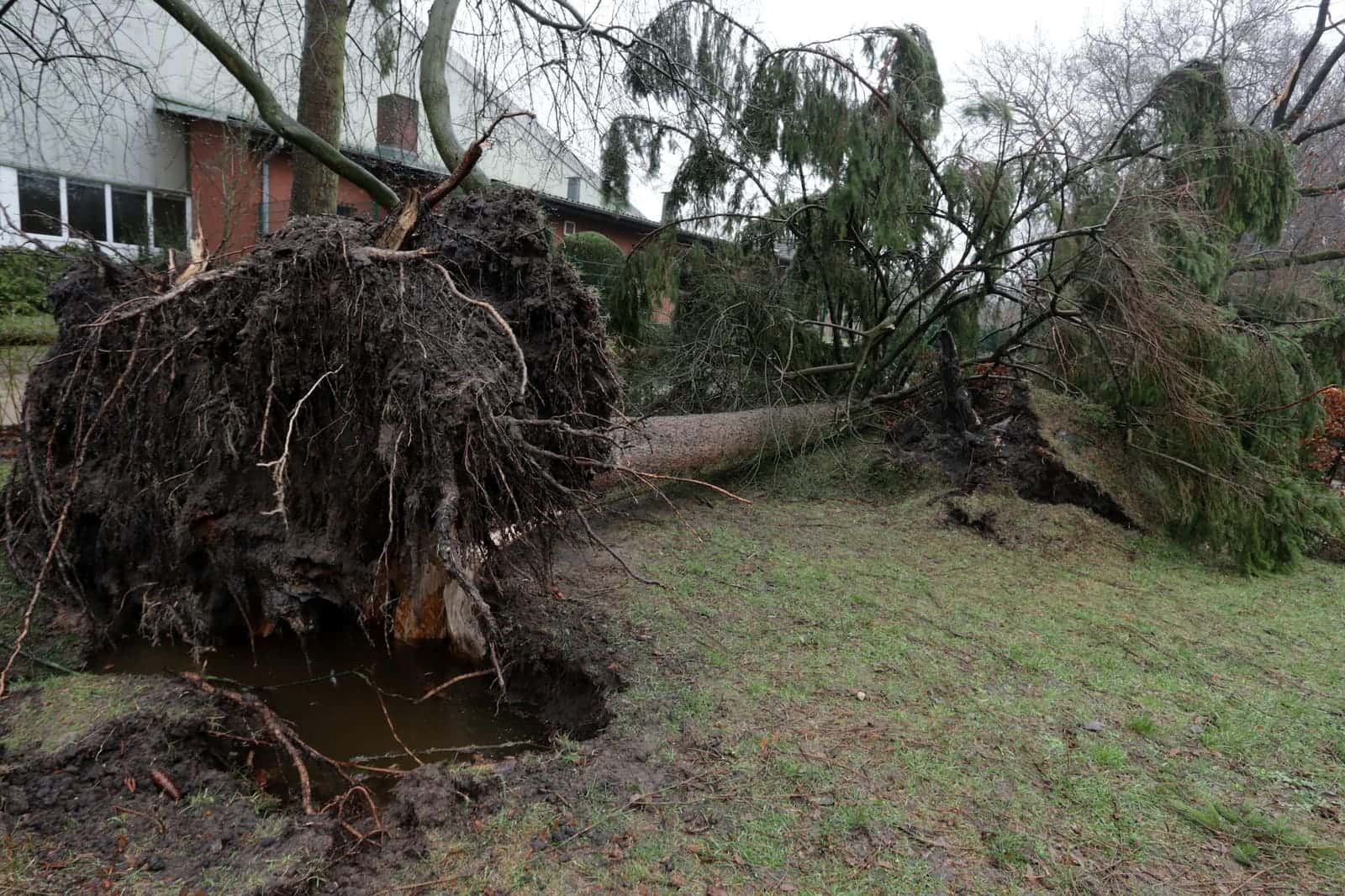
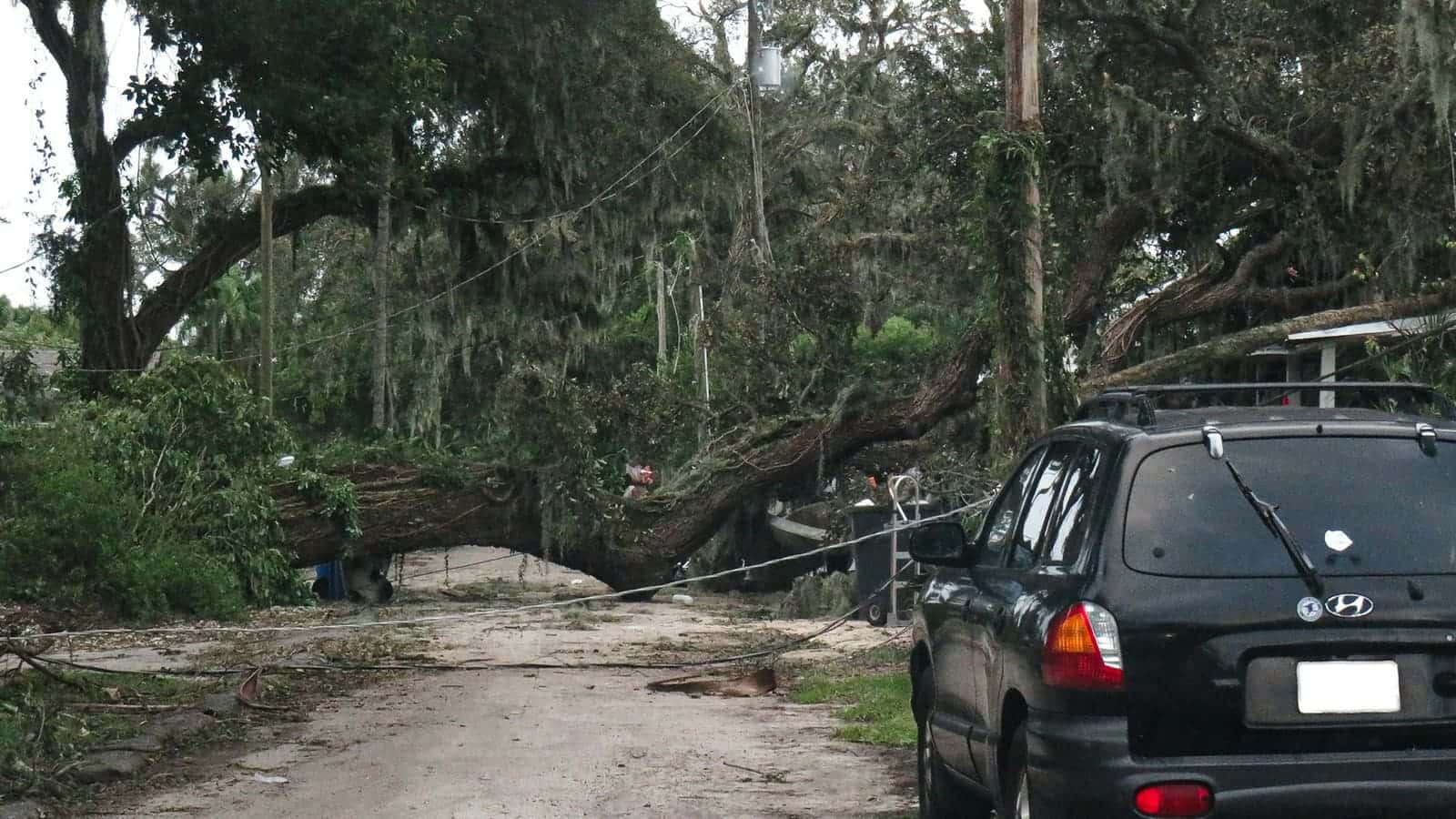
After a Florida hurricane, get trees off houses, cars and lines first, then deal with leaning and split trees before the next storm. Under Florida Statute 163.045, a city or county can't require a permit, fee or replanting to remove a tree on a single-family lot if an ISA-certified arborist or a Florida licensed landscape architect documents that it poses an unacceptable risk.
Florida at a glance
- Season
- Atlantic hurricane season runs June 1 to November 30
- State law
- Fla. Stat. 163.045: no local permit for documented high-risk trees on single-family lots
- Most wind-firm
- Live oak, sand live oak, sabal palm (UF/IFAS ratings)
- Most likely to fail
- Sand pine and other low-rated species; any tree with decay or root damage
- Lines down
- Call your electric utility, never the tree crew first
Reviewed and updated
What to do in the first 48 hours after a Florida hurricane
- 1
Check for lines and gas before you walk the yard
Treat every downed or sagging line as live and stay well back. Report it to your utility (FPL, Duke Energy, TECO or your co-op) and call 911 for sparks, fire or a gas smell.
- 2
Photograph before anything is cut
Take wide shots and close-ups of where each tree struck, its root plate or break, and the damage underneath. Insurers and FEMA both ask for this.
- 3
Triage by what's at risk
Trees on the house or blocking the only exit come first, then hangers over walkways and driveways, then trees leaning with lifted soil, then everything on the ground.
- 4
Get the house dried in
Once the tree is off, a tarp or temporary repair limits further damage, which most policies expect you to do. Keep every receipt.
The Florida law that skips the city permit for dangerous trees
Many Florida cities and counties normally require a permit to remove larger trees. Florida Statute 163.045 creates an exception for residential property, defined as a single-family detached home actively used as a residence. If the owner has documentation from an ISA-certified arborist or a Florida licensed landscape architect that a tree poses an unacceptable risk to persons or property, the local government may not require a notice, application, approval, permit, fee or mitigation for pruning, trimming or removing it, and may not require a replacement tree.
The documentation has to be an onsite assessment done under the ISA's Tree Risk Assessment Best Management Practices and signed by the arborist or landscape architect. "Unacceptable risk" means removal is the only practical way to reduce the tree's risk below moderate. The law doesn't cover condos, townhome associations or commercial property, and it doesn't override HOA covenants; check those separately.
- Get the assessment in writing before the tree is cut, and keep it.
- Mangroves and trees in protected natural areas have their own rules.
- Right-of-way trees belong to the city or county even when they fall into your yard.
Which Florida trees go down in hurricanes
University of Florida IFAS researchers rated common urban trees for wind resistance using damage surveys after hurricanes. Live oak, sand live oak and sabal (cabbage) palm are among the most wind-resistant; sand pine rated poorly. Within any species, the trees that fail are usually those with decay, codominant stems with included bark, roots cut by construction, or crowns left dense or lopsided.
That's why a storm-damage visit should look past the obvious. A live oak that lost a limb may be fine with a clean pruning cut; a pine that is now leaning with lifted soil, or a laurel oak with a crack at a main fork, is a removal candidate before the next storm.
Broken limbs, trunk and crown intact
- Usually means
- Repairable
- Next step
- Prune cleanly to the branch collar
New lean, soil heaved on one side
- Usually means
- Root failure
- Next step
- Keep clear; plan removal
Crack at a main fork or in the trunk
- Usually means
- Structural failure
- Next step
- Removal or arborist assessment
Palm with a bent or snapped trunk
- Usually means
- Not recoverable
- Next step
- Remove
Palm with stripped fronds, bud intact
- Usually means
- Often recovers
- Next step
- Wait and watch new fronds
Storm debris pickup vs. paying a crew to haul
After declared storms, Florida counties and cities usually run separate curbside collection for storm vegetation, often with FEMA reimbursement. It only covers debris you place at the curb, separated from construction debris, and kept clear of hydrants, meters, mailboxes and storm drains. Cutting a tree off your house and moving it to the curb is still a private job.
Ask your tree crew for two prices: cut and stack at the curb, and cut and haul. When county pickup is running, the first is usually cheaper. Check your county's storm-debris announcements for dates before you agree.
Insurance, deductibles and documenting tree damage
Florida homeowners policies generally cover removing a tree that damaged an insured structure, often with a dollar cap per tree or per loss, and many policies carry a separate hurricane deductible, frequently a percentage of the dwelling coverage. A tree that fell in the yard without hitting anything is commonly not covered.
Ask the tree company for an itemized invoice that separates removal from the structure, hauling, and any stump work. That lets an adjuster match each line to the policy. Read who pays when a tree falls for neighbor-tree situations.
When storm cleanup needs a professional
Do this now
- Stay inside during the storm and away from windows on the side facing large trees.
- Afterward, look for hangers before walking under any tree.
- Check whether your city is running a curbside debris program before paying to haul brush.
- Keep all receipts. Tree work may count toward insurance or disaster-assistance claims.
Never do this
- Don't run a chainsaw on wood that's bent, pinned or twisted. It can spring violently when cut.
- Don't approach any tree near downed lines. Lines can be live even when the power is out.
- Don't hire a company that wants full payment before starting.
Hiring after a Florida storm without getting burned
Out-of-state crews arrive within days of a major Florida hurricane. Most are legitimate; some aren't. Ask for a written quote, a certificate of insurance sent directly from the insurer, and a local address and phone number. Avoid anyone who wants full payment up front, pressures you to sign an assignment of your insurance benefits at the door, or can't say where the debris will go.
If you need the arborist documentation for the 163.045 exemption, ask the company whether an ISA-certified arborist on staff will do the assessment, or hire one separately. The hiring guide has a full checklist.
Preparing Florida trees before the next season
The best time to reduce storm risk is late winter and spring, well before June 1. Have dead limbs removed, dense crowns thinned to the ANSI A300 standard, and trees with decay, lean or cracks assessed. Don't top trees or strip palms with a "hurricane cut"; both make them weaker. Remove coconuts and fully brown fronds from palms near the house.
The hurricane season guide covers what to cut and what to leave.
Florida cities with local storm guidance
Miami-Dade's pruning rules and palm care before hurricane season.
Gulf surge, oaks and Tampa's tree rules.
Inland wind damage and Orlando's permit rules.
Pines, oaks and Northeast Florida storms.
Broward rules and coastal wind.
Florida storm damage questions
Do I need a permit to remove a storm-damaged tree in Florida?
Not if it's on a single-family home lot and you have written documentation from an ISA-certified arborist or Florida licensed landscape architect that it poses an unacceptable risk; Fla. Stat. 163.045 bars local permits, fees and replanting requirements in that case. Without that documentation, your city or county's normal permit rules apply.
Who removes a tree that fell from the road right-of-way onto my Florida property?
The city, county or FDOT, depending on who maintains the road. Report it to the local public works department or 311. Don't pay a private crew to remove a public tree without checking first.
How fast can I get a tree off my house after a Florida hurricane?
For a tree on an occupied house, often within a day or two in a local storm, but after a major hurricane it can be a week or more as crews triage. Describe exactly what the tree is resting on when you call, since structure-and-access calls go first.
Will my Florida county pick up the tree debris after a hurricane?
Usually, if the storm is declared and you put vegetation at the curb, separated from construction debris and away from hydrants and drains. Check your county's storm-debris schedule; pickup rounds can take weeks.
How can I tell if a hurricane-damaged palm will survive?
Look at the bud at the top: if new fronds emerge from the center within a few months, the palm is usually recovering, even if it lost every old frond. A snapped or sharply bent trunk, or a bud that rots and smells, means it won't recover and should be removed.
Should I replant with live oaks or sabal palms after losing trees in a Florida hurricane?
They're good choices: UF/IFAS ratings put live oak, sand live oak and sabal palm among the most wind-resistant species. Give them room for roots, plant them well away from the house, and have young trees pruned for good structure.
What does an arborist's tree risk assessment cost in Florida?
Fees vary by the number of trees and whether a written report is needed. Ask for the price up front and whether the report meets the 163.045 documentation standard. See tree risk assessment.
Is a leaning pine after a Florida storm an emergency?
If it wasn't leaning before and the soil is lifted or cracked on the opposite side, yes: its roots have failed. Keep people and cars out of the area it could reach and get it removed before the next wind event.
Does FEMA pay to remove trees from private property in Florida?
Generally not for individual homeowners' trees, except limited assistance in some declared disasters when the debris makes a home unsafe or inaccessible and isn't covered by insurance. Local debris programs paid with FEMA reimbursement handle curbside pickup.
Who can I call for storm tree removal in Florida?
A licensed, insured local tree service. You can call us to reach an independent provider serving your part of Florida; if a tree is on your house right now, see tree fell on house.
Sources for the local facts on this page
- Florida Statutes §163.045: Tree pruning, trimming, or removal on residential property (checked 2026-10-03)
- UF/IFAS Gardening Solutions: Wind-resistant trees (checked 2026-10-03)
- UF/IFAS EDIS FR173: Wind and Trees, Lessons Learned from Hurricanes (checked 2026-10-03)
Storm damage cleanup in Florida
Call to speak with a local tree-service provider about removal, trimming, stumps or storm damage. Describe the tree and what it's near, and they'll explain the next step.